


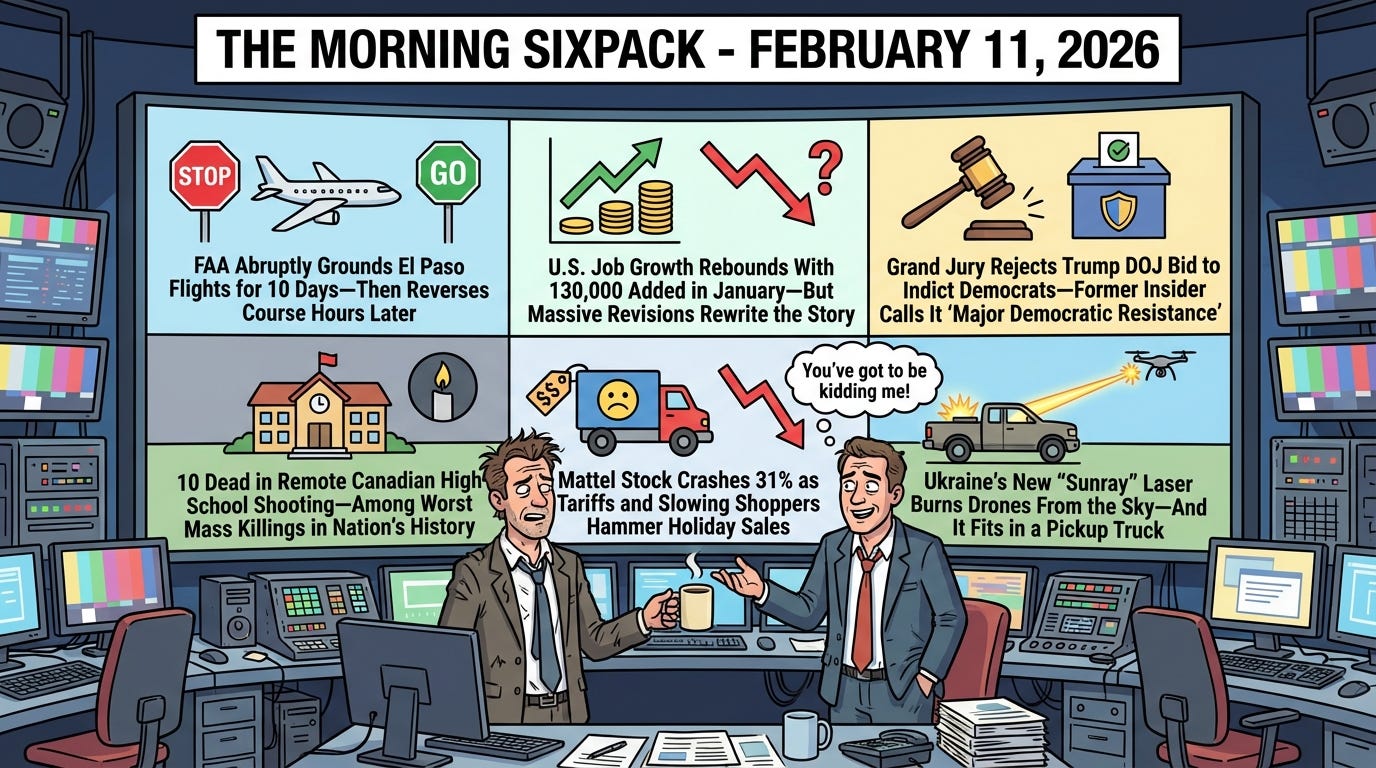
FAA Abruptly Grounds El Paso Flights for 10 Days—Then Reverses Course Hours Later
For a few chaotic hours, the federal government effectively shut down the skies over an entire American city.
The Federal Aviation Administration slammed the brakes on air traffic over El Paso late Tuesday, issuing a temporary flight restriction that grounded all flights up to 18,000 feet for what was supposed to be 10 days. The move immediately halted operations at El Paso International Airport and classified the surrounding area as “National Defense Airspace,” warning that violators could be intercepted, detained, or worse.
The reason? “Special security reasons,” according to the FAA. Behind the scenes, sources briefed by the agency told CNN the real driver was military activity out of nearby Biggs Army Airfield at Fort Bliss. Drones, helicopters, unmanned aircraft operations, and even laser countermeasure systems were operating dangerously close to civilian flight paths. The Department of Defense reportedly could not assure the safety of commercial aircraft—so the FAA pulled the plug.
The impact was instant. Controllers informed stunned pilots that a ground stop would begin at 6:30 a.m. for 10 days. “So the airport is totally closed?” one pilot asked, laughing in disbelief. “Well, we’ll be here, but no air traffic,” the controller replied. Another controller put it bluntly: “It’s a complete ground stop … not even medevac are allowed to fly.” For a metro area of nearly 700,000 people and an airport that handled 3.5 million passengers in the first 11 months of 2025, this was no small disruption.
Then, just hours later Wednesday morning, the FAA reversed itself. The agency announced on social media that “there is no threat to commercial aviation. All flights will resume as normal.” Airlines had already issued waivers. Travelers were scrambling for rental cars. One passenger told a local affiliate, “I just kind of saw all the cops here and the news cameras… I gotta figure out what’s going on.” Even local news leaders said they hadn’t seen anything like it since 9/11.
In the end, what was framed as a 10-day national defense shutdown turned into a same-night reversal—raising questions about coordination between the Pentagon and the FAA, and how an entire city’s airspace can be closed “on short notice” without a clearer public explanation.
Source: CNN
Editor: When you declare a 10-day shutdown of American airspace and threaten “deadly force,” maybe have the follow-up plan ready. Coordination shouldn’t be optional when you’re grounding a city the size of El Paso.
U.S. Job Growth Rebounds With 130,000 Added in January—But Massive Revisions Rewrite the Story
The U.S. job market just posted its strongest month in over a year—but the government quietly slashed nearly a million jobs from prior counts.
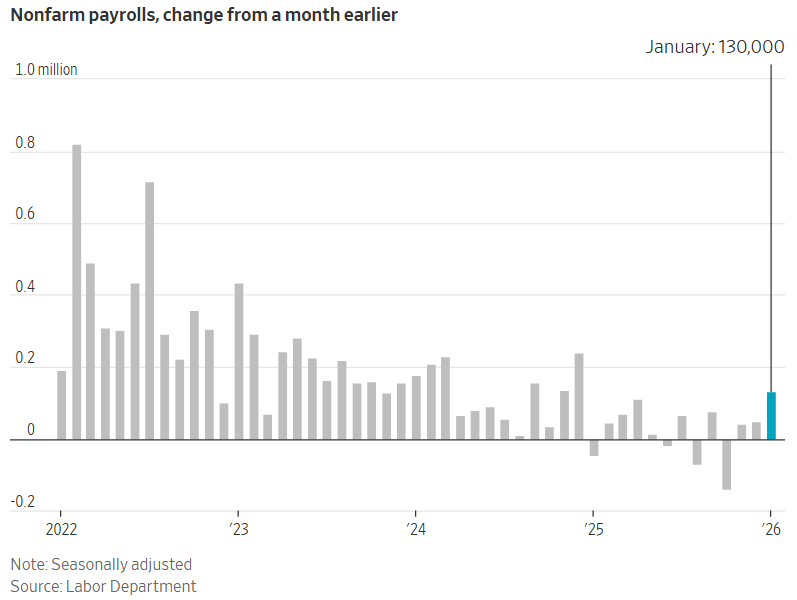
The economy added 130,000 jobs in January, easily beating expectations of 55,000 and rebounding from a revised 48,000 in December. The unemployment rate dipped to 4.3%, and markets cheered, with the Nasdaq jumping 0.7% and the S&P 500 and Dow each rising about 0.5% at the open.
But here’s the part that changes the narrative: sweeping revisions from the Labor Department dramatically cut job totals going back nearly two years. The U.S. added just 1.2 million jobs in 2024—not the 2 million previously reported. And 2025’s gains were revised down to 181,000 from 584,000. That’s not a tweak—that’s a rewrite.
January’s gains were heavily concentrated in healthcare and social assistance—home health aides and residential care workers continue to carry the labor market. Construction and manufacturing also added jobs. But transportation, warehousing, information, financial services, and government payrolls shrank. In other words, the hiring strength remains narrow.
The report likely reinforces the Federal Reserve’s wait-and-see stance. After three consecutive rate cuts last year, the Fed held steady in late January, with Chair Jerome Powell pointing to firmer growth and signs of stabilization. A declining jobless rate, fewer involuntary part-time workers, and a drop in long-term unemployment all suggest the labor market isn’t cracking—at least not yet.
Still, businesses remain cautious. Companies are hesitant to hire amid tariff uncertainty, rising costs, AI-driven efficiency pushes, and federal workforce reductions. The job market isn’t collapsing—but it’s not booming either. It’s selective, uneven, and increasingly defined by who isn’t hiring.
Source: The Wall Street Journal (free)
Editor: 130,000 jobs looks great—until you realize the government just erased nearly a million from the scoreboard. When revisions are this big, confidence in the headline number starts to wobble.
Grand Jury Rejects Trump DOJ Bid to Indict Democrats—Former Insider Calls It ‘Major Democratic Resistance’
A federal grand jury just refused to help the Trump Justice Department criminalize political speech—and that’s a far bigger story than it looks.
The Trump administration sought to indict six Democratic lawmakers after they released a video last fall urging U.S. service members not to follow unlawful orders during controversial Caribbean strikes targeting suspected drug traffickers. President Donald Trump blasted the lawmakers as “seditious” and even called their actions “punishable by death.” His Justice Department pushed for charges. On Tuesday, a grand jury said no.
That rejection prompted Miles Taylor, a former Homeland Security official in Trump’s first administration, to call it “one of the most important acts of democratic resistance of Trump’s second term.” Writing on his Substack, Taylor argued the real story isn’t that the lawmakers avoided indictment—it’s that ordinary citizens inside the system refused to go along.
“These grand jurors weren’t activists and protesters tweeting resistance hashtags. They were citizens performing a civic duty,” Taylor wrote. “When confronted with an attempt to criminalize political speech, they drew a line.” He added that the episode signals that efforts to weaponize the justice system may be hitting quiet but consequential resistance from within.
Taylor also noted this isn’t the first time a grand jury has declined to advance a Trump DOJ prosecution, citing previous failed efforts involving New York Attorney General Letitia James and even a lesser-known case involving a man accused of throwing a sandwich at a federal immigration officer. The pattern, he argued, sends a message: “The public is not playing along with Trump’s repression…you still have to get past the people in the room.”
For an administration that has leaned heavily on rhetoric about law and order, this moment underscores a simple reality—grand juries are independent, and they don’t take orders from the White House.
Source: Raw Story
Editor: When a grand jury refuses to indict after the president calls something “punishable by death,” that’s not politics—that’s guardrails holding. The system only works if regular citizens decide it will. This time, they did.
10 Dead in Remote Canadian High School Shooting—Among Worst Mass Killings in Nation’s History
A quiet mountain town in British Columbia became the site of one of Canada’s deadliest mass casualty events in decades.
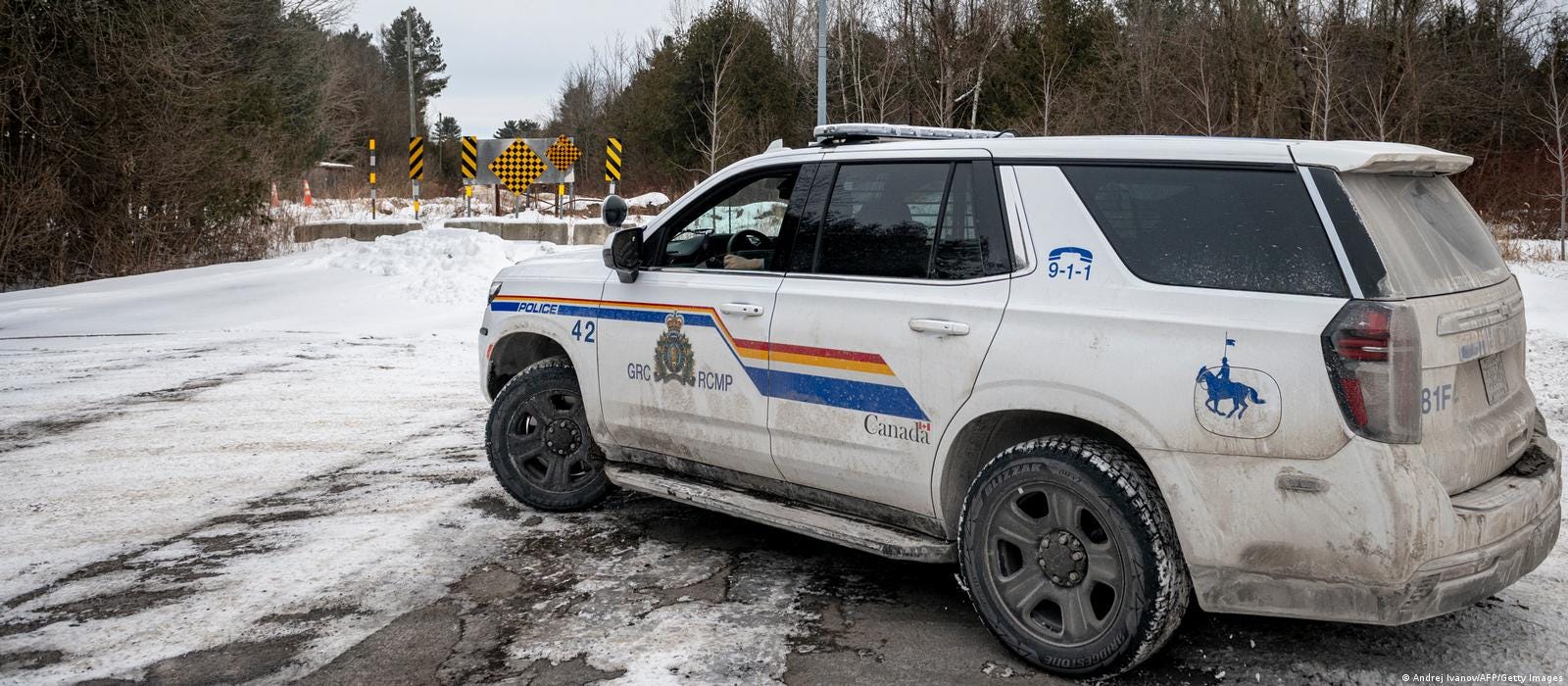
Ten people—including the shooter—are dead after a gunman opened fire Tuesday at Tumbler Ridge Secondary School in western Canada. Six victims were found inside the school, two more at a nearby residence believed connected to the attack, and another died en route to a hospital. Police say the suspected shooter was also found dead from what appeared to be a self-inflicted injury.
Authorities described the assailant as female—an uncommon detail in North American mass shootings, which are overwhelmingly carried out by men. At least two victims remain hospitalized with life-threatening injuries, and as many as 25 others were treated for non-life-threatening wounds. Police have not confirmed how many of the victims were minors.
Parents gathered at a local community center awaiting word about their children. “It was a situation that you really never want to face again … the sight of what I saw was devastating,” said local pastor George Rowe. A 17-year-old student said his class was locked down for more than two hours as the horror unfolded.
The shooting took place in Tumbler Ridge, a remote municipality of about 2,400 people in the foothills of the Rocky Mountains, roughly 1,155 kilometers northeast of Vancouver. The school serves around 160 students in grades seven through 12 and will remain closed for the rest of the week as counseling services are made available.
The attack now ranks among the deadliest in Canadian history, recalling the 2020 Nova Scotia rampage that left 22 dead and the 1989 École Polytechnique massacre in Montreal. Prime Minister Mark Carney postponed a planned defense policy announcement following the tragedy, saying, “I am devastated by today’s horrific shootings in Tumbler Ridge, B.C. My prayers and deepest condolences are with the families and friends who have lost loved ones to these horrific acts of violence.”
Canada has stricter gun laws than the United States, including licensing requirements and recent limits on handguns and certain assault-style weapons. But even in a country with tighter regulations, the reality hit home in a place where tragedies like this are supposed to feel distant.
Source: Reuters
Editor: A town of 2,400. A school of 160 kids. Ten lives gone. Canadians like to believe this is “something that happens somewhere else.” It doesn’t. Not anymore.
Mattel Stock Crashes 31% as Tariffs and Slowing Shoppers Hammer Holiday Sales
Barbie’s parent company just delivered a brutal reminder that tariffs and cautious consumers are colliding at checkout.
Shares of Mattel plunged 31% after the toymaker reported weak December sales, blaming U.S. tariffs and retailer hesitation for the slump. The company, which manufactures most of its toys overseas, said uncertainty around trade policy led stores to delay orders during the critical holiday stretch.
The fallout didn’t stop at toys. Exports of French wine to the U.S. also fell amid rising protectionism, adding pressure to an industry already dealing with oversupply and soft demand from China. Tariffs aren’t just a line item—they’re reshaping buying behavior.
The bigger issue may be the American consumer. December sales growth came in below November’s pace, and purchases of furniture, clothing, and other tariff-exposed goods declined. When discretionary categories wobble during the holidays, that’s not a seasonal blip—it’s a signal.
Meanwhile, the job market has shown only modest growth, raising fresh concerns that the labor market may be cooling just as higher prices and policy uncertainty weigh on spending. For companies dependent on holiday splurges, that’s a tough backdrop.
Mattel’s slide may be company-specific—but it’s also a snapshot of an economy where tariffs, inflation fatigue, and cautious consumers are starting to show up in earnings reports.
Source: Semafor
Editor: When Barbie can’t sell in December, you know wallets are tightening. Tariffs were pitched as leverage—turns out they’re also a tax on pink convertibles and Dreamhouses.
Ukraine’s New “Sunray” Laser Burns Drones From the Sky—And It Fits in a Pickup Truck
Ukraine has built a battlefield laser that silently incinerates drones—and it’s cheap enough to mass-produce.
In an empty winter field, Ukrainian engineers mounted what looked like a hobbyist’s telescope onto the roof of a pickup truck. Seconds after a small drone lifted into the sky, the operator gave the command: “Fire!” There was no sound. No visible beam. Then the drone ignited midair—“as if struck by invisible lightning”—and dropped in flames.
The prototype system, known as Sunray, has not been previously reported. Its creators say they developed it in roughly two years for just a few million dollars and expect to sell it for a few hundred thousand per unit. In a war defined by drone swarms and constant aerial threats, that price point matters.
Laser weapons aren’t new. The U.S. Navy’s HELIOS system, built by Lockheed Martin under a $150 million contract signed in 2018, was installed on a destroyer in 2022 to counter drones. But those systems are massive, ship-mounted platforms. Ukraine’s version is mobile, compact, and designed for a battlefield where agility is survival.
The appeal is obvious: lasers don’t run out of bullets in the traditional sense, and each “shot” costs far less than a missile interceptor. As drones become cheaper and more abundant, defenders need tools that flip the cost equation. A system that quietly burns incoming threats out of the sky without explosive munitions could reshape air defense at the tactical level.
For a country forced to innovate under fire, Sunray represents a shift from reactive defense to technological leapfrogging. If it scales—and if it performs reliably outside of controlled tests—it could change how modern armies think about protecting troops from the constant buzz overhead.
Source: The Atlantic
Editor: A laser in the back of a pickup truck that fries drones for a fraction of a missile’s cost? That’s not sci-fi—that’s the future of asymmetric warfare. And the Pentagon is definitely taking notes.