



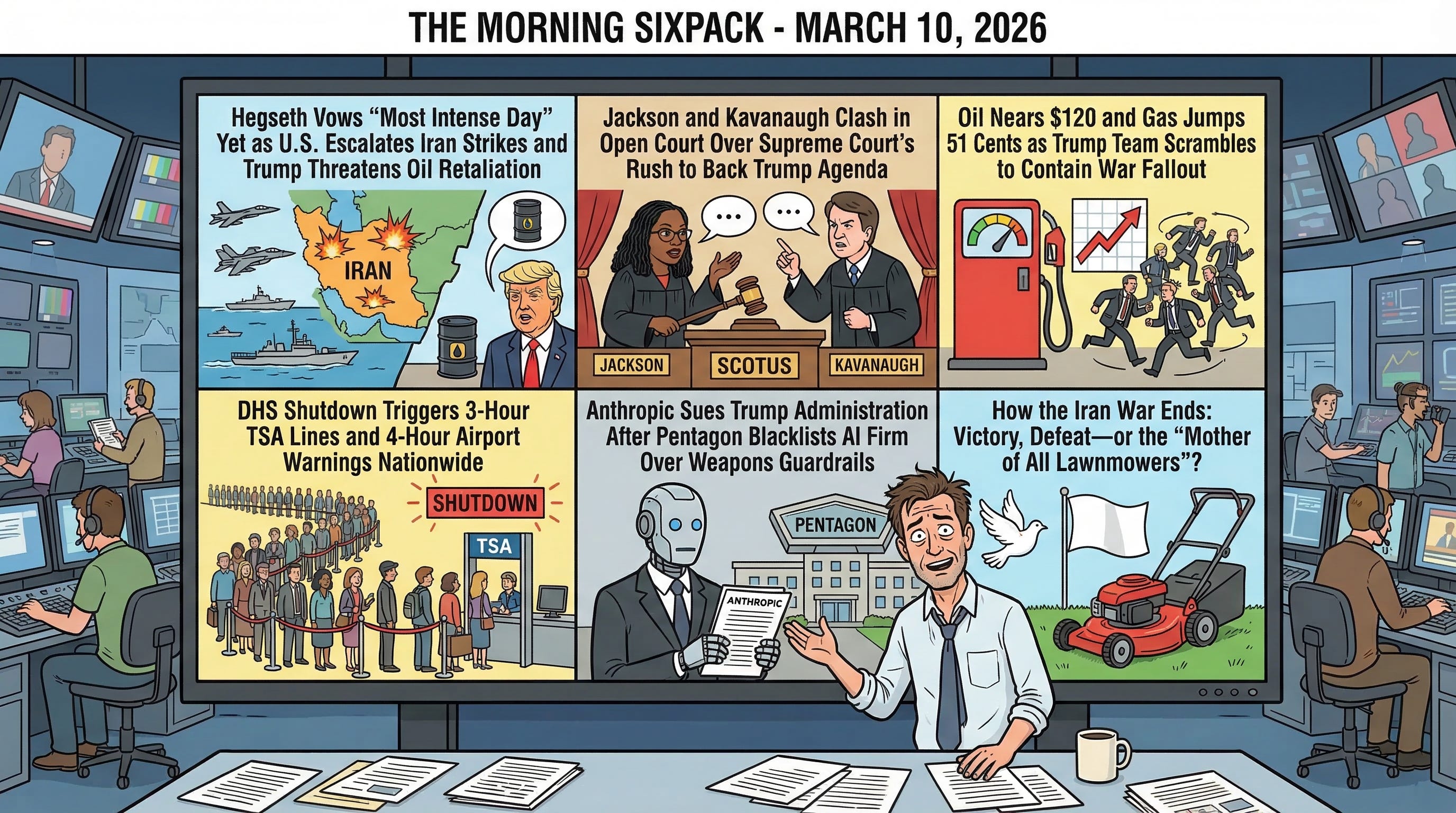
The war with Iran just hit its most intense phase—and the markets are feeling every missile.
Defense Secretary Pete Hegseth vowed the “most intense day of strikes” yet as oil flirted with $120 and gas prices jumped 51 cents in a week. The White House is publicly calm but privately scrambling as the Strait of Hormuz choke point sends shockwaves through energy markets and into American wallets.
On the Supreme Court stage, the tension wasn’t about missiles—it was about process. Justices Ketanji Brown Jackson and Brett Kavanaugh sparred openly over emergency orders that have allowed Trump policies to move forward. Jackson warned of a “warped” legal process; Kavanaugh pushed back that administrations of both parties test the limits. When sitting justices debate each other in public, you know the docket is hot.
Meanwhile, the DHS shutdown is turning airports into endurance tests. TSA lines are stretching up to three hours as unpaid officers work through staffing shortages and the agency’s own wait-time tools go dark. Airports are telling passengers to arrive four hours early. That’s not travel planning—that’s survival strategy.
In Silicon Valley, the AI wars have gone legal. Anthropic is suing the Trump administration after the Pentagon blacklisted it for refusing to loosen guardrails on autonomous weapons and surveillance. The fight could define who sets the rules for AI in warfare—the coders or the commanders.
And zooming out, what does victory even look like? One leading foreign-policy voice says the most likely endgame is the U.S. reopening Gulf shipping lanes while Iran’s regime survives. Not regime change. Not collapse. More like trimming the hedges and calling it a day.
From oil shocks to courtroom clashes, this week’s stories all orbit the same question: how much pressure can the system take before something gives? Stay tuned.


