


Israel and Iran traded direct missile attacks Monday, marking the first open exchange between the two rivals since a ceasefire was declared two months ago.
Israel and Iran Exchange Missiles as Trump Declares: “I Call the Shots”
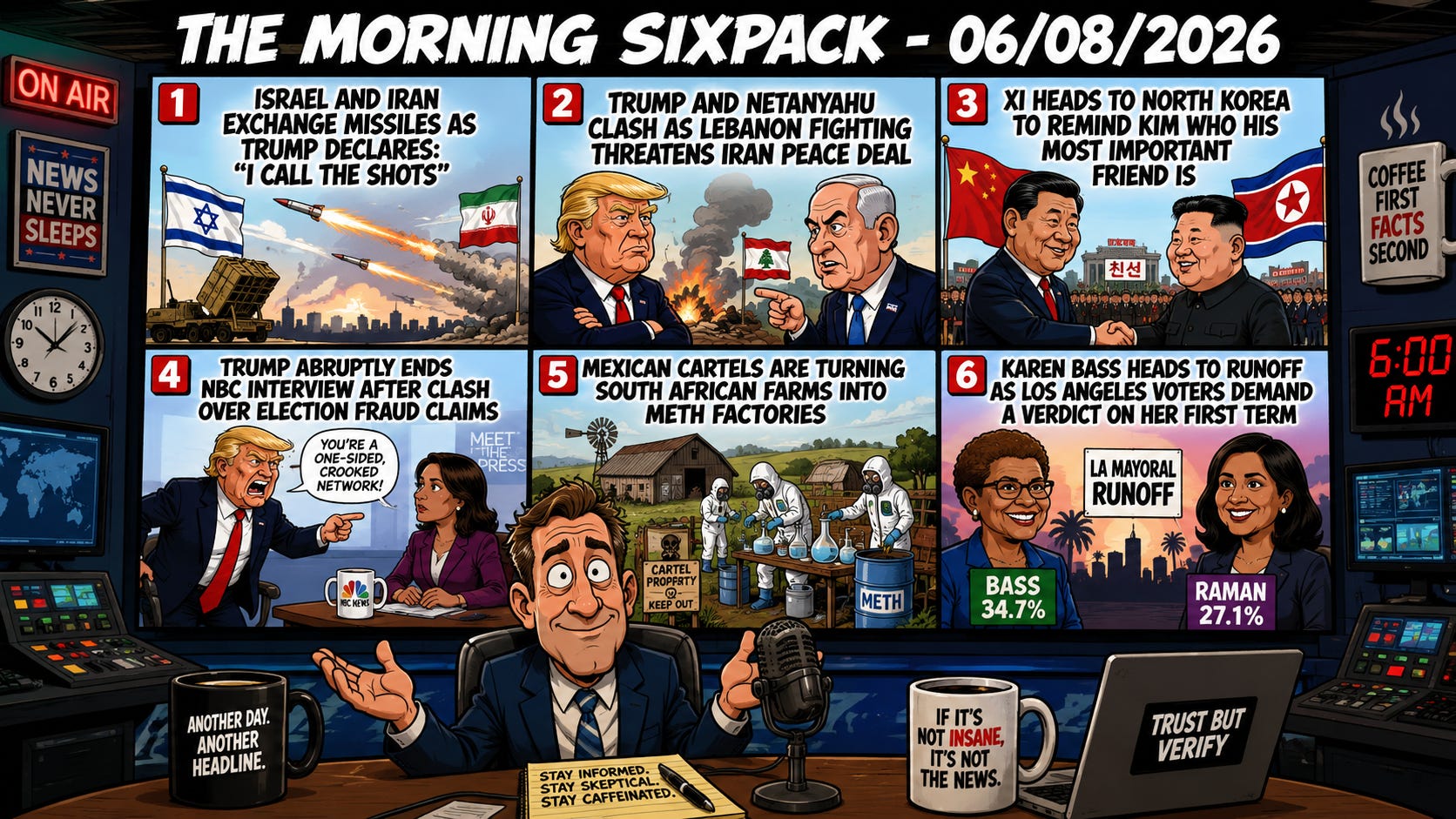
President Trump jumped into the middle of the crisis, publicly demanding both sides stop firing. Shortly afterward, Iran’s military announced it was halting attacks for now, claiming Israel had “learned a lesson.” An Israeli official also indicated Israel would stop targeting Iran, though operations against Hezbollah in Lebanon would continue.
The flare-up began when Iran launched nearly 30 ballistic missiles at Israeli military targets. Israel said its air defenses intercepted the incoming missiles, with falling debris sparking brush fires but causing no reported casualties. Israel responded hours later with strikes on Iranian air defense systems, military facilities and targets near a major petrochemical complex.
Trump later claimed he had personally convinced Israeli Prime Minister Benjamin Netanyahu not to escalate further. “He won’t have any choice,” Trump told the Financial Times. “I call the shots. I call all the shots. He doesn’t call the shots.” Meanwhile, Israeli Ambassador Yechiel Leiter made clear Israel would retaliate against any attacks on its territory.
The exchange highlights just how shaky the April ceasefire has become. Hezbollah rockets from Lebanon, Houthi missile launches from Yemen and continued fighting across the region have steadily chipped away at the agreement. Monday’s barrage was a reminder that while diplomats keep talking about peace, the missiles keep showing up for work.
Source: NPR
Editor: Two countries exchanged ballistic missiles, multiple militias joined the fun and everyone ended the day talking about a ceasefire. International diplomacy increasingly resembles a group project where nobody read the assignment.
A growing rift between President Trump and Israeli Prime Minister Benjamin Netanyahu is complicating efforts to end the wider Middle East war, with Lebanon emerging as the biggest point of disagreement.
Trump and Netanyahu Clash as Lebanon Fighting Threatens Iran Peace Deal
According to The Wall Street Journal, Iran has tied any broader peace agreement to an end to fighting between Israel and Hezbollah in Lebanon. That put fresh pressure on Trump after Iran launched missile attacks on Israel following Israeli strikes against Hezbollah positions in Beirut. While Trump publicly demanded that both sides stop “shooting,” Israel quickly responded with attacks inside Iran.
The disagreement reflects a widening divide between Washington and Jerusalem. Trump wants a deal that calms the region, lowers pressure on global energy markets and gives voters a break from rising fuel prices. Netanyahu appears far less interested in compromise, believing Israel still has an opportunity to further weaken both Hezbollah and Iran before any final settlement is reached.
The tension reportedly boiled over last week when Trump intervened to stop a major Israeli attack on Beirut. The Journal reports that earlier calls between the two leaders became so heated that Trump warned Netanyahu he would be in prison without American support amid his ongoing corruption cases. By the time they spoke again Sunday, the yelling had reportedly subsided, but the disagreement remained.
The larger issue is that Iran appears to see daylight between the United States and Israel. As long as Tehran believes Washington and Jerusalem aren’t fully aligned, it has more room to maneuver diplomatically and militarily. That’s not exactly the negotiating leverage Trump was hoping to bring into a peace process already hanging by a thread.
Source: The Wall Street Journal (gift)
Editor: Trump wants a peace deal, Netanyahu wants more leverage, Hezbollah wants a fight and Iran wants concessions. Somewhere in the middle are diplomats trying to convince everyone they’re attending the same meeting.
Chinese President Xi Jinping arrived in North Korea for his first visit in seven years, signaling that Beijing intends to remain Pyongyang’s most important ally despite the country’s growing relationship with Russia.
Xi Heads to North Korea to Remind Kim Who His Most Important Friend Is
North Korean leader Kim Jong Un rolled out the red carpet for Xi’s arrival, greeting him personally at the airport before escorting him through an elaborate state welcome featuring a 21-gun salute, military honors and carefully choreographed crowds waving Chinese and North Korean flags. The visit marks Xi’s first overseas trip of 2026 and comes as China seeks to reinforce its influence across a rapidly shifting geopolitical landscape.
During talks with Kim, Xi called for deeper “strategic coordination and cooperation” and pledged expanded partnerships in trade, agriculture, technology, health care and construction. He also stressed that China’s commitment to North Korea would remain unchanged “no matter how the international situation changes.” The timing is notable as Pyongyang has drawn significantly closer to Russia, supplying troops and military support for Moscow’s war effort while receiving economic and security benefits in return.
For Beijing, the visit serves as a reminder that China remains North Korea’s primary economic lifeline and diplomatic protector. While Chinese leaders have concerns about Kim’s expanding nuclear weapons program, they also view North Korea as a critical buffer against U.S. influence in Asia. Xi’s trip comes just weeks after hosting both Russian President Vladimir Putin and President Trump in Beijing, reinforcing China’s effort to position itself as a central power broker on the world stage.
The visit also highlights the increasingly complicated relationships forming among China, Russia and North Korea. Kim is trying to extract benefits from both powers without becoming overly dependent on either. Xi, meanwhile, appears intent on ensuring that as global alliances shift, North Korea remains firmly anchored in Beijing’s orbit.
Source: CNN
Editor: Kim gets Russian weapons deals, Chinese investment and occasional attention from American presidents. For a country under heavy sanctions, that’s a surprisingly active social calendar.
President Trump cut short an NBC News interview after being pressed to provide evidence for his repeated claims that the 2020 election was rigged and that recent California primary results were fraudulent.
Trump Abruptly Ends NBC Interview after Clash Over Election Fraud Claims
During the interview with “Meet the Press” moderator Kristen Welker, Trump defended his foreign policy decisions, pushed back on criticism of his Iran strategy and revisited longstanding grievances about what he calls the weaponization of government against political opponents. He also voiced support for compensating people he believes were unfairly targeted during the Biden administration.
The interview turned confrontational when Welker challenged Trump’s assertions about election fraud and asked him to provide evidence supporting his claims. Trump insisted the 2020 election was “rigged” and expanded his criticism to California’s recent primary election. Welker repeatedly noted there was no evidence supporting those allegations and continued pressing for specifics.
That exchange quickly escalated. Trump accused the network of bias and attacked Welker personally before ending the interview. “You’re a one-sided, crooked network. Sorry. Let’s call it quits because I’ve had enough. Thank you, darling. Have a good time,” Trump said before standing up, touching Welker, and walking away.
The moment highlighted a recurring pattern for Trump, who often welcomes aggressive questioning until it collides with one of his core political narratives. Foreign policy disagreements, economic debates and media criticism may be fair game. Asking for receipts on election fraud claims remains a different category altogether.
Source: Yahoo News
Editor: If your argument can survive questions about bombing Iran but not questions about evidence, the problem probably isn’t the interviewer.
Mexican drug cartels are increasingly using remote South African farms as methamphetamine production hubs, transforming the country from a drug transit route into a manufacturing center.
Mexican Cartels Are Turning South African Farms into Meth Factories
Authorities say four major meth labs linked to Mexican nationals have been uncovered across South Africa in just two years. The latest raid took place on a remote farm in Swartruggens, where police seized nearly 500 kilograms of methamphetamine, large quantities of chemicals and firearms. Five Mexican nationals were arrested alongside South African suspects and now face court proceedings.
Investigators say the operations follow a consistent pattern: isolated farmland, distance from major population centers and local support networks that help keep production hidden. Organized crime researchers believe Mexican cartels are no longer simply shipping meth into Africa. Instead, they are sending chemists directly into the region to manufacture drugs closer to consumers, reducing transportation costs and lowering the risk of interception.
Experts point to corruption as a key reason the model is thriving. Crime analysts and former law enforcement officials told Al Jazeera that cartel operations benefit from weak oversight and allegations of police and political protection. Some argue it would be nearly impossible for large-scale laboratories to operate for extended periods in remote communities without local authorities noticing suspicious activity.
The concern for South Africa is that shutting down individual labs may not solve the larger problem. Analysts warn the networks are highly adaptable and capable of quickly relocating operations. What began as a trafficking route has evolved into something much more entrenched: an international drug manufacturing industry planting roots thousands of miles from Mexico.
Source: Al Jazeera
Editor: Every time authorities shut down one of these operations, another seems to pop up somewhere else. It’s less a war on drugs and more an endless game of criminal real estate development or whack-a-mole.
Los Angeles Mayor Karen Bass and City Councilmember Nithya Raman are projected to advance to a November runoff, setting up a high-stakes referendum on Bass’s turbulent first term.
Karen Bass Heads to Runoff as Los Angeles Voters Demand a Verdict on Her First Term
With most ballots counted, Bass led the field with roughly 35 percent of the vote, while Raman secured second place with about 27 percent. The two Democrats easily outpaced Republican reality television personality Spencer Pratt, who narrowly missed advancing despite a surprisingly competitive showing in the officially nonpartisan race.
Bass entered the election as the favorite but carried considerable baggage into the campaign. Her first term was defined by crises ranging from devastating California wildfires to ongoing battles over homelessness and public safety. Critics hammered her over an overseas trip as wildfires erupted and argued that conditions across the city have not improved fast enough. Bass has countered by highlighting declining street homelessness and progress on housing initiatives.
Raman has positioned herself as a progressive alternative capable of delivering change without abandoning Democratic priorities. The close polling leading into Election Day suggested many voters were willing to consider new leadership, even in a city that remains overwhelmingly Democratic. With no candidate clearing the 50 percent threshold required to win outright, the contest now heads to a one-on-one showdown.
The runoff will test whether voters see Bass as a leader who navigated extraordinary challenges or a mayor who failed to meet expectations. Either way, Los Angeles residents now have five months to decide whether the city’s recent struggles demand continuity or a course correction.
Source: The Hill
Editor: Los Angeles has spent years searching for solutions to homelessness, affordability and public safety. Voters just decided the answer might be one of the same two Democrats who have already been arguing about them.