


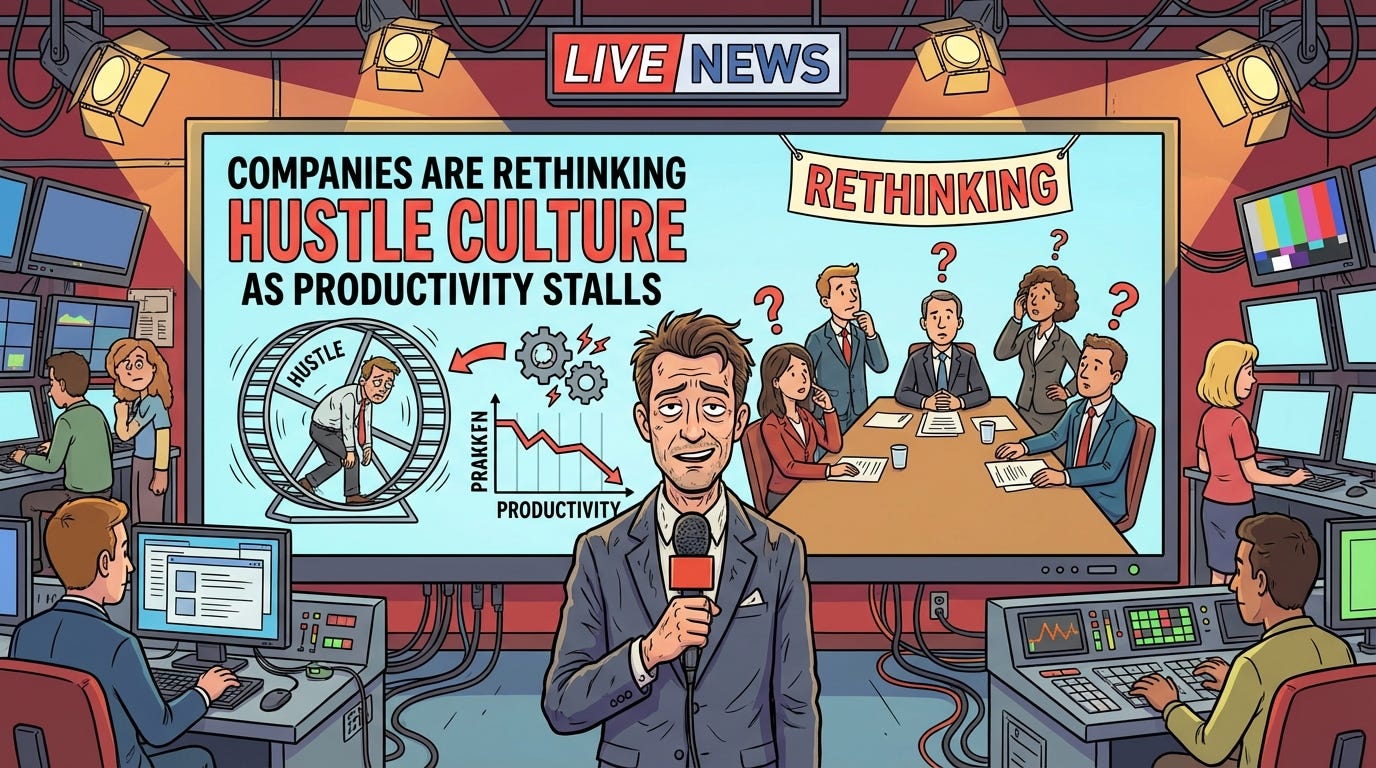
For decades, hustle culture sold a simple promise: more hours, more effort, more visibility would naturally lead to better results. That assumption is now quietly unraveling inside many organizations.
In 2025, a growing number of companies are pulling back from hustle-first norms—not because they’ve gone soft, but because the data no longer supports the approach. Productivity gains have flattened across several sectors, even as employee effort and availability remain high. At the same time, burnout, disengagement, and turnover costs continue to rise.
The result is a slow but meaningful shift in how work is evaluated.
From visibility to output
Managers are increasingly questioning performance signals that reward effort over outcomes, including
Long hours logged online
Rapid response times to emails and messages
Packed calendars filled with standing meetings
While these signals once implied commitment and productivity, many leaders now see them as poor proxies for actual results. High visibility doesn’t necessarily mean high impact—and in some cases, it actively undermines it.
In response, some teams are experimenting with output-based measures that focus on completed work, decision quality, and progress toward clear goals rather than constant presence.
Why hustle culture is losing credibility
Executives point to several converging pressures behind the shift:
Diminishing returns from overwork. Beyond a certain point, longer hours no longer produce better outcomes—and may reduce them.
Rising turnover and replacement costs. Burnout-driven attrition is expensive, especially for experienced roles that are difficult to backfill.
Retention challenges among senior talent. Mid- and late-career employees are increasingly unwilling to trade sustainability for optics.
In sectors like technology and professional services, internal data shows productivity per employee has stagnated or declined despite sustained high effort. The signal is hard to ignore: working harder is no longer the same as working better.
What replaces it
The emerging alternative to hustle culture is less about doing less work and more about removing unnecessary friction. Early adopters are emphasizing:
Fewer, more intentional meetings
Clear, limited priorities instead of shifting demands
Protected blocks of focus time
Explicit boundaries around availability and response expectations
These changes aim to preserve energy for high-value work rather than spreading attention thin across constant interruptions.
Critics note that these shifts are uneven and often limited to senior or high-leverage roles. Frontline employees and service-based teams may see fewer benefits, at least initially. Still, momentum is building as more companies confront the same constraints.
Hustle culture isn’t disappearing overnight—but its status as the default operating system for productivity is fading.
Related coverage:
→ Why Burnout Is Rising Among U.S. Workers in 2025, According to New Data
→ How Knowledge Workers Are Restructuring the Workday