


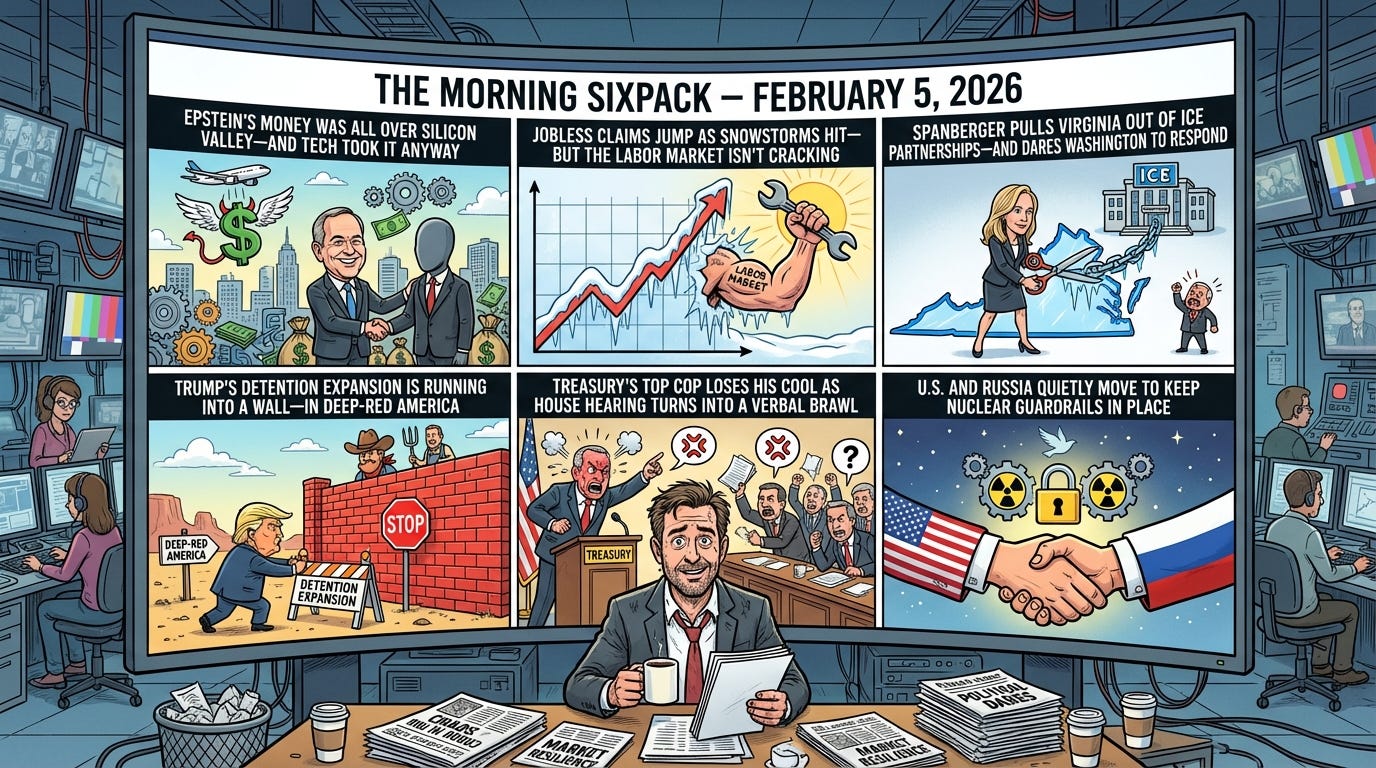
Epstein’s Money Was All Over Silicon Valley—and Tech Took It Anyway
Silicon Valley didn’t just cross paths with Jeffrey Epstein—it cash-checked him, advised him, and helped him get richer long after everyone knew exactly who he was.
New Justice Department disclosures show the disgraced financier quietly embedding himself in some of tech’s most important companies, including Coinbase, while cultivating power players like Peter Thiel for access, advice, and credibility. This wasn’t ignorance. This was comfort.
In 2014—six years after his sex-crime conviction—Epstein put $3 million into Coinbase, then a scrappy Bitcoin startup. The company took the money anyway, and as Coinbase grew into a crypto giant, Epstein’s stake ballooned into a multimillion-dollar payday. Internal emails show founders knew exactly who he was. They still wanted the check.
Epstein also leaned heavily on Thiel, who advised him on potential investments in Palantir and talked him out of dropping $100 million into Spotify. Thiel later said to “hold off,” adding, “Somewhat more bullish on Palantir, but I think there is no need to rush.” Epstein ultimately invested $40 million into Thiel’s Valar Ventures—worth about $170 million years later.
Beyond crypto and data mining, Epstein chased wearable tech (Jawbone), space (SpaceX), cybersecurity, and media influence—often aided by bankers, founders, and PR fixers who helped open doors even as his abuse of girls and young women was widely known. One investor even suggested hiding Epstein’s name entirely to avoid “spooking” founders. Problem solved, right?
The files don’t just map Epstein’s money—they map Silicon Valley’s moral flexibility. Prestige, access, and upside consistently beat out judgment, accountability, or even basic shame. Epstein didn’t sneak in. He was invited.
Source: The New York Times
Editor: Tech loves to preach values—right up until the wire transfer clears. The real takeaway here isn’t that Epstein found his way into Silicon Valley; it’s how many people eagerly showed him around, pulled up a chair, and asked how big the check would be. #PedoFiles
Jobless Claims Jump as Snowstorms Hit—but the Labor Market Isn’t Cracking
Jobless claims spiked last week, but this wasn’t a warning siren—it was a weather report.
New data out of Washington show initial unemployment claims jumped by 22,000 to 231,000, well above expectations, as snowstorms and freezing temperatures slammed large parts of the country late in January. Economists say the increase likely reflects temporary disruptions rather than a sudden turn in the labor market.
Even with the bump, hiring and firing remain muted. Economists describe the current environment as “low hire, low fire,” a pattern that’s held despite recent layoff announcements from United Parcel Service and Amazon. The bigger issue, they say, is uncertainty—from tariffs to artificial intelligence—keeping companies cautious about staffing.
Continuing claims, a proxy for hiring momentum, also rose, climbing to 1.844 million. That suggests people are taking longer to find new jobs, even as overall conditions remain stable. Businesses appear to be waiting things out rather than making aggressive moves.
The claims data won’t affect January’s jobs report, delayed by last month’s brief government shutdown. Payroll growth is expected to come in around 70,000 jobs, with unemployment holding steady at 4.4%—numbers unlikely to push the Federal Reserve off its current rate pause.
For now, the takeaway is boring by design: the labor market is wobbling, not weakening. Weather fades. Trends matter.
Source: Reuters
Editor: When a snowstorm can move the data more than corporate layoffs or AI anxiety, that’s not a jobs crisis—that’s a reminder to stop doom-scrolling the weekly numbers and look at the trendline.
Spanberger Pulls Virginia Out of ICE Partnerships—and Dares Washington to Respond
Virginia is officially done lending its badge to federal immigration enforcement—and Gov. Abigail Spanberger made sure there was no ambiguity about who’s in charge.
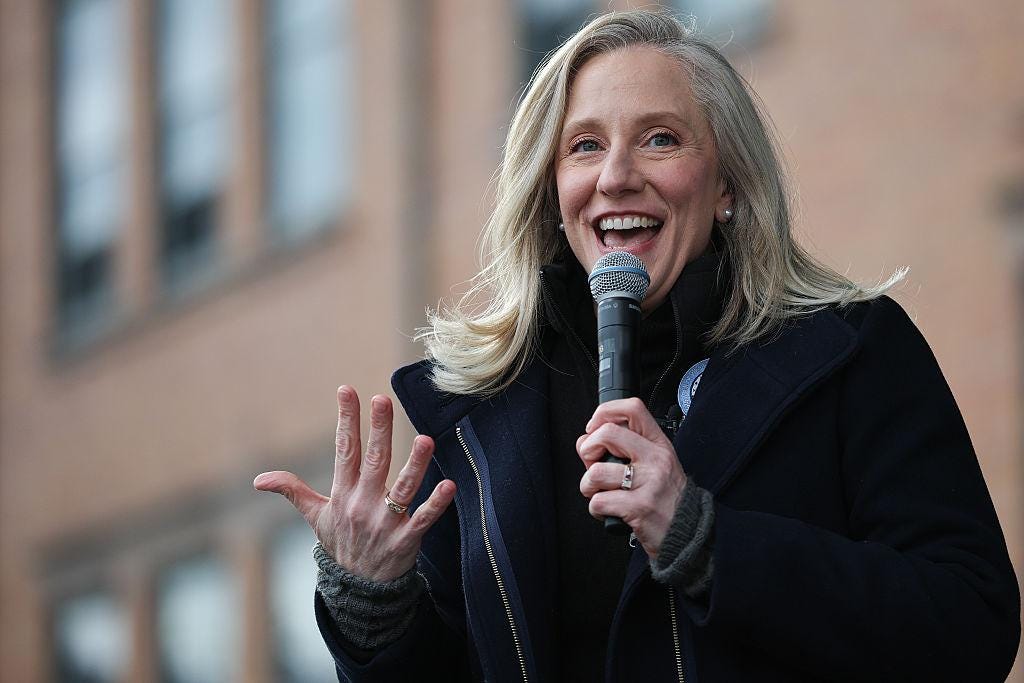
On Wednesday, Abigail Spanberger ordered state law enforcement agencies to dissolve any remaining 287(g) agreements with U.S. Immigration and Customs Enforcement, formally cutting off partnerships that deputized state officers to carry out federal immigration enforcement.
Spanberger said those agreements blurred lines of authority and eroded public trust, citing botched enforcement efforts in other states. “The bad tactics, the bad training, the bad vetting… that is degrading trust in law enforcement,” she said, drawing a sharp contrast between criminal arrests with judicial warrants and civil immigration enforcement.
The move builds on an executive order she signed shortly after taking office, reversing a policy from her Republican predecessor that mandated participation in 287(g) programs. It also places Virginia alongside states like Maryland and New York that are moving to ban or unwind such agreements, particularly amid stepped-up enforcement under President Donald Trump.
Republicans warned the decision would weaken public safety, but Spanberger pushed back, saying her administration found state police involvement in immigration enforcement had been minimal—and that pulling back would free officers to focus on emergencies and crime prevention rather than “enforcement theater.”
Asked whether the White House might retaliate with increased ICE activity, Spanberger didn’t blink. “Taking Virginia law enforcement—state agency personnel—and basically giving them over to ICE is something that ends today,” she said.
Source: The Washington Post (free)
Editor: This isn’t anti-law enforcement—it’s anti-confusion. States enforcing federal civil immigration law has always been a political workaround masquerading as public safety, and Spanberger just unplugged it. Now let’s see who actually believes in federalism when it cuts the other way.
Trump’s Detention Expansion Is Running into a Wall—In Deep-Red America
Even Trump country doesn’t want immigration detention centers dropped into their backyards—and that’s turning the administration’s enforcement fantasy into a political mess.
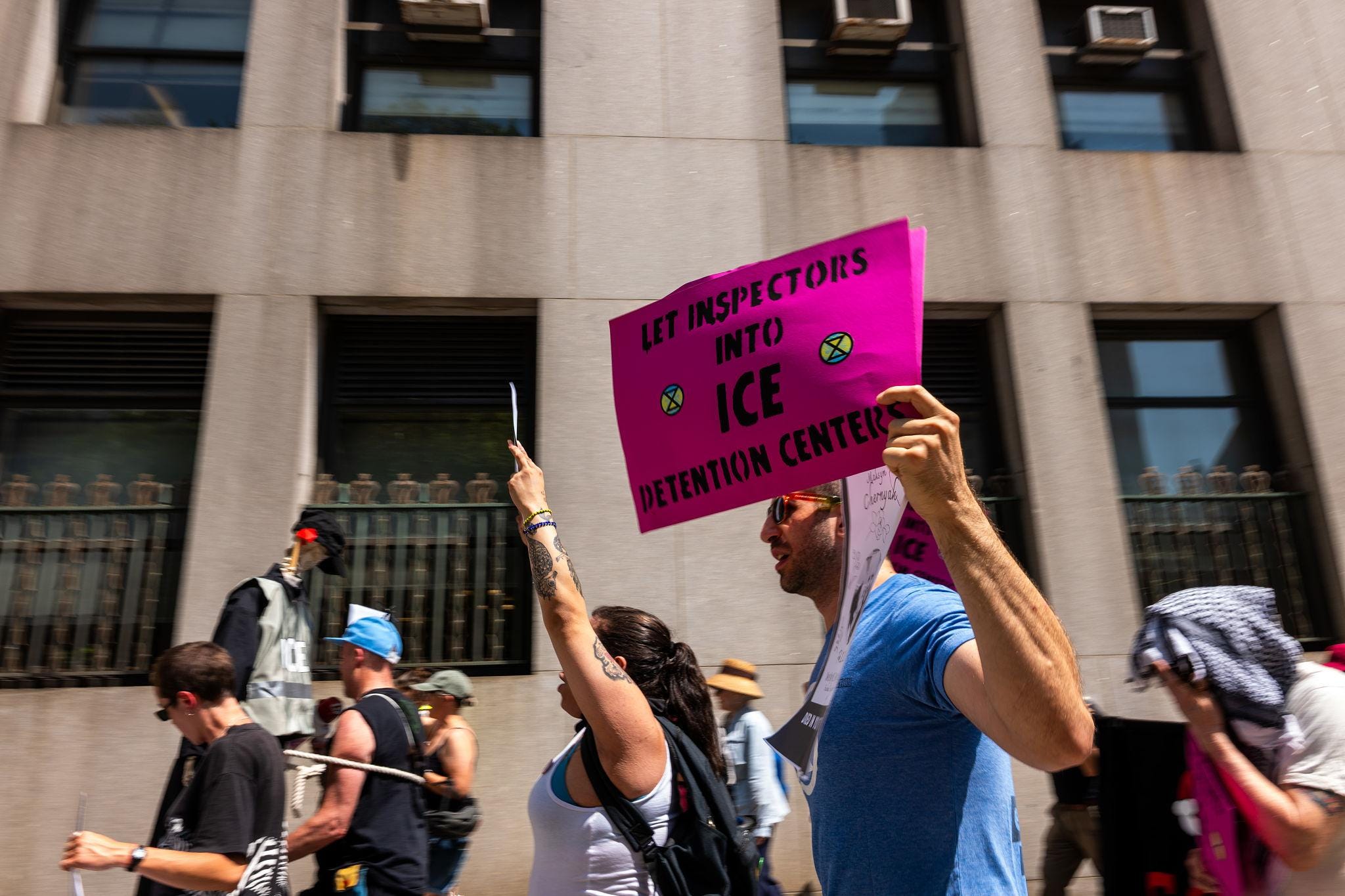
As Stephen Miller pushes U.S. Immigration and Customs Enforcement to hit 3,000 arrests a day, internal documents show the Department of Homeland Security scrambling to convert industrial warehouses into detention facilities across 23 towns in at least eight states. The problem: locals keep revolting—even in places that overwhelmingly voted for Donald Trump.
In Hanover County, Virginia—where Trump won by 26 points—hundreds protested after DHS quietly announced plans to occupy a 40-acre warehouse without local consultation. Episcopal Bishop Marc Stevenson captured the backlash bluntly: “To welcome such a facility over the welcome of human beings is to question the values that shape our community.” Within 48 hours, the property owner pulled the plug.
The pattern is repeating nationwide. In Oklahoma City, Republican Mayor David Holt confirmed a proposed detention deal collapsed after residents erupted. In Roxbury, New Jersey, opposition mobilized before DHS could even formalize its bid, with locals warning their town would be permanently branded as “the town with the jail.”
The revolt comes amid heightened scrutiny of ICE tactics following the January killings of two U.S. citizens in Minnesota and polling that shows 64 percent of Americans oppose mass detention while immigration cases are pending. That’s a problem for an administration already sitting on a record 73,000 detainees—and trying to justify a $45 billion detention buildout funded by Trump’s “One Big Beautiful Bill.”
Warehouses may be cheap and fast to convert, but they’re proving politically radioactive. The administration wants space for 80,000 detainees. What it’s getting instead is bipartisan fury, zoning fights, and deals collapsing in real time.
Source: The Daily Beast
Editor: Turns out “law and order” polls great until it comes with razor wire, floodlights, and a federal logo down the street. MAGA voters didn’t sign up to live next to a detention complex—and now DHS is learning what local control actually looks like. #NIMBY
Treasury’s Top Cop Loses His Cool as House Hearing Turns into a Verbal Brawl
What was supposed to be sober oversight of the U.S. financial system turned into a shouting match as Treasury Secretary Scott Bessent spent a House hearing trading insults with Democrats.
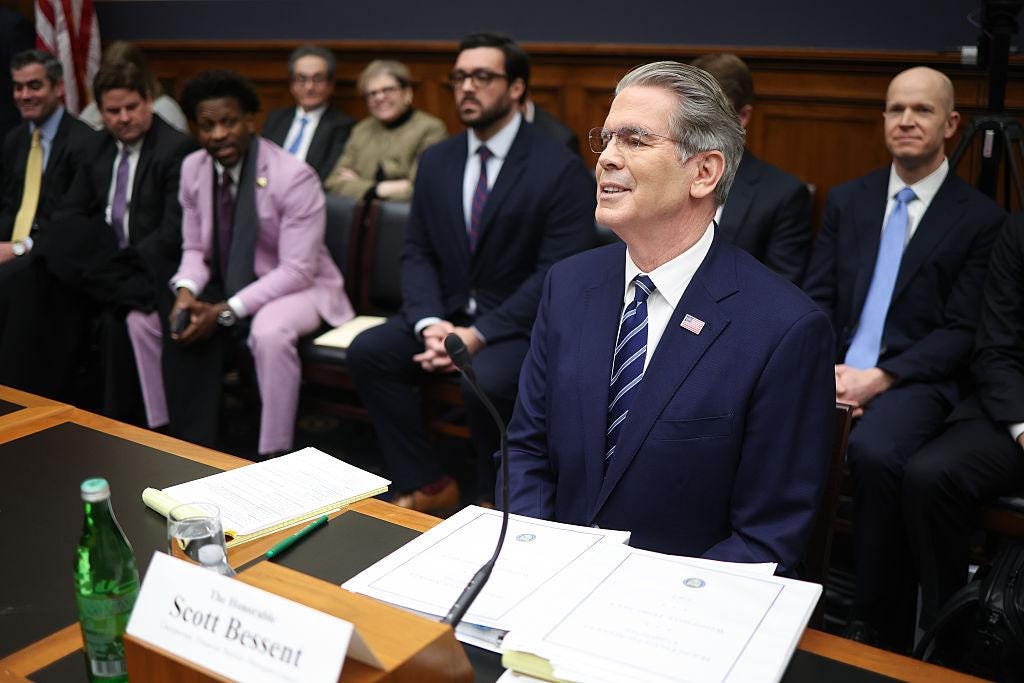
Appearances by treasury secretaries are usually policy-heavy and personality-light. Not this one. During testimony before the House Financial Services Committee, Scott Bessent repeatedly clashed with Democratic lawmakers over tariffs, immigration, crypto investigations, and the Trump family’s financial dealings—often responding with sarcasm or outright mockery.
The sparks flew early when Bessent called Rep. Sylvia Garcia “confused” while she pressed him on housing affordability and undocumented immigrants. “Don’t be demeaning to me, alright?” Garcia shot back. Later, after Rep. Stephen Lynch complained that Bessent wasn’t answering questions, the secretary snapped: “Well, the questions have to be serious.”
Things escalated further when Rep. Maxine Waters asked committee leaders, “Can someone shut him up?” and Rep. Gregory Meeks dropped an F-bomb accusing Bessent of “covering for the president” over foreign investment tied to Trump-linked crypto ventures.
Former Treasury officials watching from the sidelines were stunned. Graham Steele, who served under Janet Yellen, said Bessent’s posture broke with long-standing norms meant to keep Treasury above “hand-to-hand political combat.” Political scientists say the behavior reflects a Trump-era reward system where belligerence toward Congress is seen as a feature, not a bug.
The most consequential moment may not have been the insults at all, but Bessent’s willingness to defend President Donald Trump’s right to interfere with Federal Reserve decision-making—an argument critics warn chips away at institutional independence. Bessent gets another round Thursday, when he heads to the Senate Banking Committee. Odds of calm? Not great.
Source: Associated Press
Editor: When the Treasury secretary starts acting like a cable-news panelist, it’s not just embarrassing—it’s a signal that institutional guardrails are now optional. Oversight hearings aren’t supposed to sound like open mic night.
U.S. and Russia Quietly Move to Keep Nuclear Guardrails in Place
With the world’s nuclear safety net about to snap, Washington and Moscow are scrambling to keep at least one restraint from disappearing.
The U.S. and Russia are nearing an agreement to continue observing the New START nuclear arms control treaty even after it formally expires, according to sources familiar with the talks. Negotiations over the past 24 hours—reportedly taking place in Abu Dhabi—have produced a draft plan, though final approval from Donald Trump and Vladimir Putin is still pending.
New START is the last major agreement limiting the nuclear arsenals of the two countries, which together control roughly 85 percent of the world’s nuclear warheads. Without it, there would be no inspections, no data exchanges, and no formal limits—just trust, vibes, and worst-case assumptions.
The talks come as the treaty is set to expire Thursday, a deadline that has quietly alarmed arms-control experts while barely registering in public debate. Even an informal agreement to “observe” the pact would preserve some predictability and reduce the risk of rapid escalation or miscalculation.
Axios reports that senior figures from both sides have been involved in the discussions, underscoring how high the stakes are. This isn’t about goodwill—it’s about preventing a full return to unconstrained nuclear competition at a moment when global tensions are already stretched thin.
Source: Axios
Editor: Amazing how fast diplomacy gets religion when the alternative is flying blind with thousands of nuclear warheads. If New START survives on a handshake and crossed fingers, it still beats pretending guardrails are optional at 85% of the planet’s nukes.