


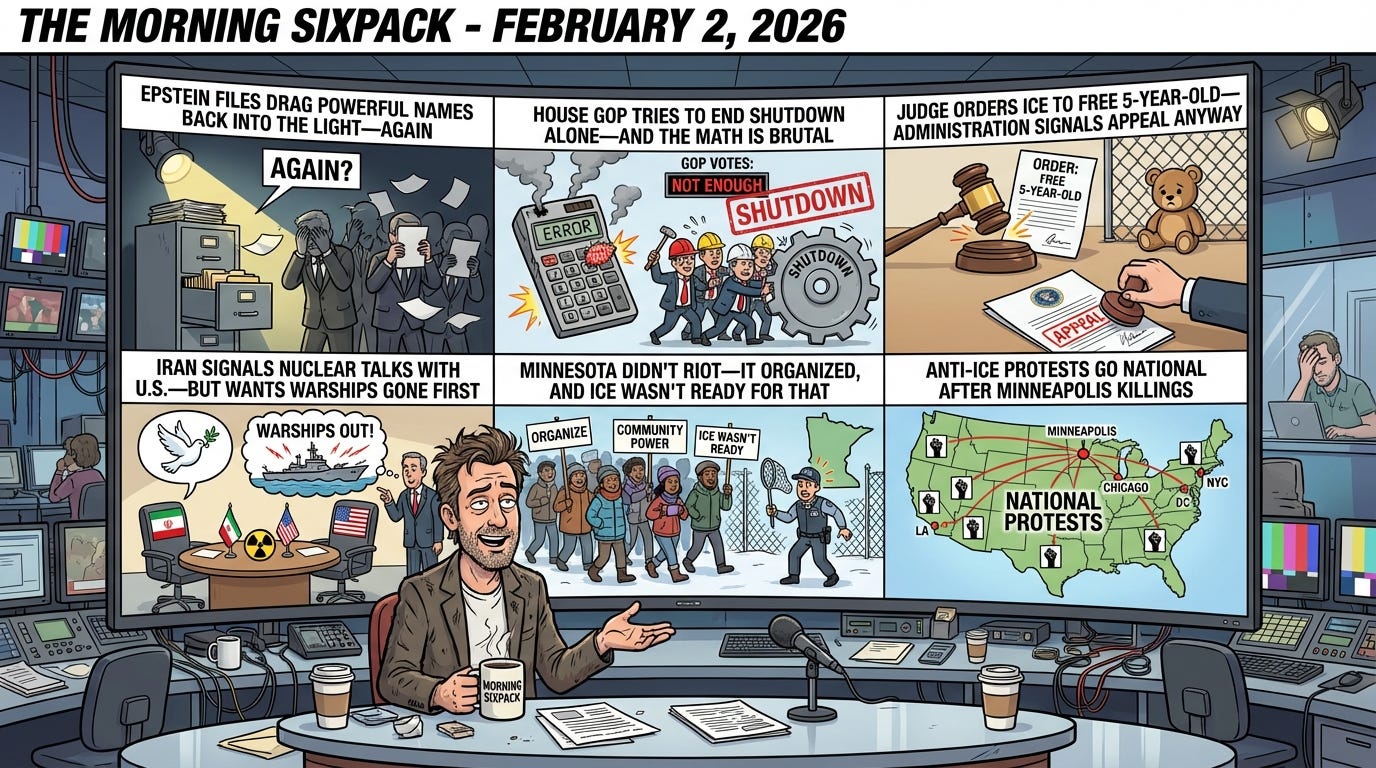
Epstein Files Drag Powerful Names Back into the Light—Again
The Justice Department’s Epstein document dump doesn’t allege new crimes, but it does reopen old questions powerful men hoped were buried for good.
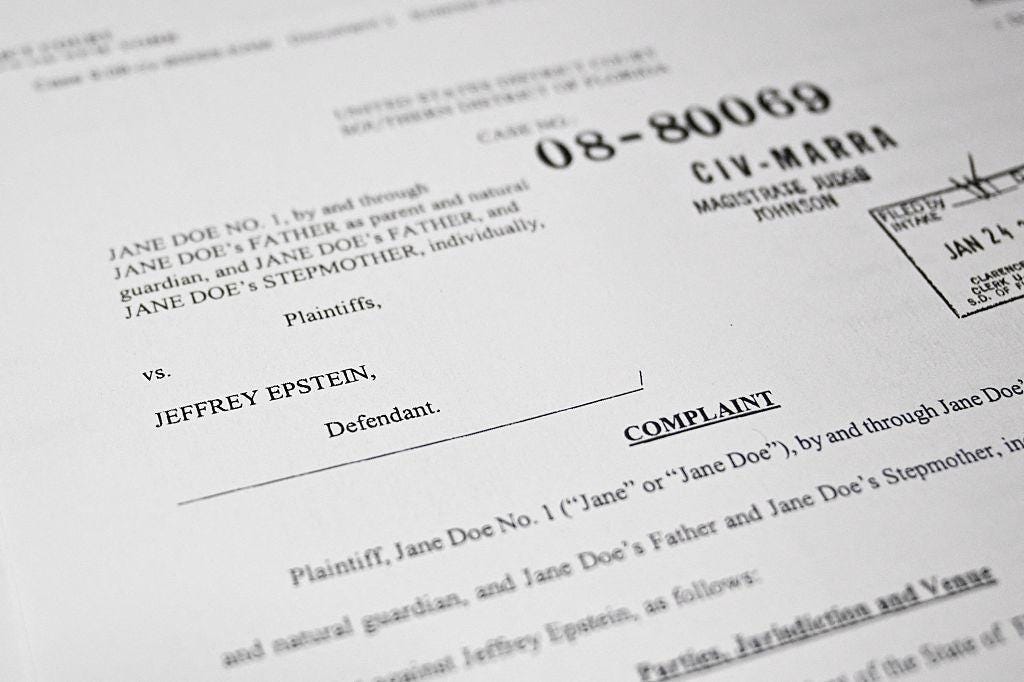
A newly released trove tied to federal investigations of Jeffrey Epstein reads like a global Rolodex of influence—tech billionaires, former presidents, royalty, media executives, and political fixers. None have been charged. All deny involvement in Epstein’s abuse. But the records show many maintained contact with him long after he was publicly known as an alleged predator.
The most radioactive name remains Andrew Mountbatten-Windsor, formerly Prince Andrew. His name appears hundreds of times, including in emails about Buckingham Palace dinners and offers to introduce him to young women. He has denied allegations from Virginia Giuffre, yet was stripped of royal titles by King Charles III—a quiet admission that optics matter, even when charges don’t follow.
The files also revive uncomfortable proximity for U.S. power players. Donald Trump and Bill Clinton both appear repeatedly, largely via gossip, photos, and public tips. Tech and finance titans like Elon Musk, Richard Branson, Sergey Brin, and Larry Summers surface in emails, invitations, and social chatter—most stressing regret, distance, or limited contact.
Then there’s the supporting cast: Steven Tisch discussing women via email; Brett Ratner (Melania director) photographed with Epstein and associates; Steve Bannon texting Epstein about politics and a reputation-rehab documentary; Ehud Barak visiting Epstein after his 2008 plea; and Howard Lutnick appearing to contradict earlier claims about cutting ties. Add in Casey Wasserman emails with Ghislaine Maxwell, and a Slovak official resigning after photos emerged, and the theme is consistent: no charges, plenty of smoke.
This release doesn’t rewrite legal history—but it does underscore how access, status, and second chances clustered around Epstein for years. Accountability may stop short of courtrooms, but reputations don’t enjoy statutes of limitation.
Source: AP News
Editor: Powerful people insisting they “never saw anything” while circling the same man for decades isn’t exoneration—it’s a reminder that elite bubbles are remarkably soundproof.
House GOP Tries to End Shutdown Alone—and the Math Is Brutal
House Republicans are racing to reopen the government with virtually no margin for error and even less Democratic help.
Lawmakers return to Washington this week facing a partial government shutdown that began early Saturday after funding lapsed—and House Speaker Mike Johnson is trying to muscle through a deal backed by Donald Trump but rejected by most Democrats. The problem: Republicans can afford to lose almost no one in their razor-thin majority.
Democrats have privately made clear they’re not inclined to bail Johnson out. House Minority Leader Hakeem Jeffries told Johnson that Democrats want tougher restrictions on immigration enforcement before supporting any funding deal—particularly after deadly ICE shootings in Minneapolis reignited outrage over accountability.
The Senate cut a temporary fix with the White House, extending Homeland Security funding for two weeks while passing the rest of the government funding through September. But because the House hasn’t approved those changes, agencies shuttered anyway—leaving Johnson to predict the shutdown could end “at least by Tuesday,” assuming his conference holds.
That’s a big assumption. The House Rules Committee—stacked with conservative hard-liners—meets Monday in what will be the first real test of GOP unity. Rep. Chip Roy says Republicans don’t want service members “held hostage,” while Rep. Anna Paulina Luna is demanding a proof-of-citizenship voting bill be attached, a move that would almost certainly boomerang the package back to the Senate.
If Democrats stay unified—and several have hinted they will—Republicans are on their own, trying to govern with one vote to spare while juggling immigration politics, internal demands, and a ticking shutdown clock. Washington dysfunction, now with extra arithmetic.
Source: The Washington Post (free)
Editor: When you brag about being able to govern alone, you don’t get to complain that the numbers are hard—especially when half your caucus treats shutdowns like leverage instead of failure.
Judge Orders ICE to Free 5-Year-Old—Administration Signals Appeal Anyway
A federal judge ordered ICE to release a 5-year-old child and his father, and by Sunday they were finally home in Minnesota—though the administration is already hinting it may fight the ruling.
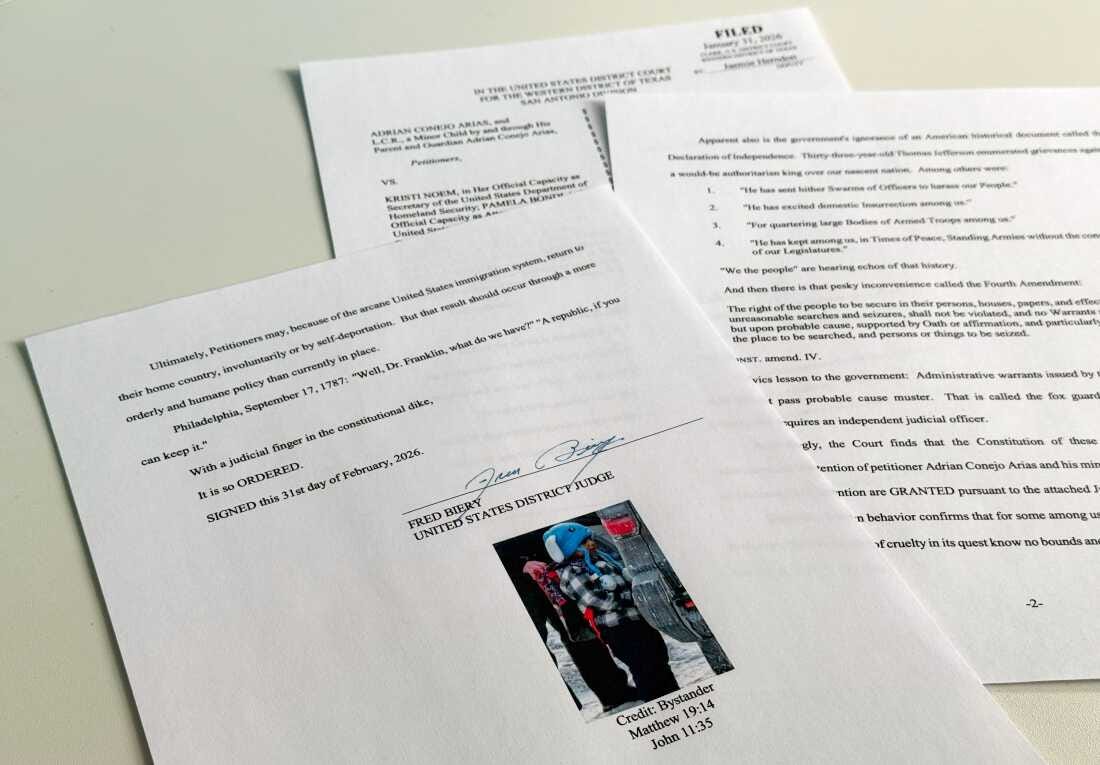
Five-year-old Liam Conejo Ramos and his father, Adrian Alexander Conejo Ramos, were released from Immigration and Customs Enforcement custody after U.S. District Judge Fred Biery ordered their detention ended “as soon as practicable.” The pair had been held for weeks following their arrest in Minnesota, then transferred to a family detention center in Texas.
The Department of Homeland Security confirmed the release but wasted no time pushing back. DHS spokesperson Tricia McLaughlin insisted, “ICE did NOT target or arrest a child,” while reiterating the Trump administration stance that it will aggressively pursue detention and removal of undocumented immigrants.
Deputy Attorney General Todd Blanche went further, signaling the government may appeal. “The immigration law…is much different than our typical criminal process,” he said on This Week with George Stephanopoulos, promising the administration would challenge the ruling if needed.
The family’s return home became a political moment. Rep. Joaquin Castro personally escorted Liam and his father back to Minnesota, while Rep. Ilhan Omar welcomed them publicly with a simple message: “Welcome home Liam.” Local school officials said they hope the case leads to other detained children being released.
DHS continues to dispute the family’s account, claiming no record exists of their asylum appointment through the former CBP One app and alleging Liam’s father tried to flee and abandoned his child—claims the family and their advocates strongly deny. For now, the boy is home. The legal fight, apparently, is not.
Source: CBS News
Editor: If your response to a judge freeing a kindergartener is to threaten an appeal, maybe stop insisting this is about “common sense” and admit it’s about proving a point—no matter who’s caught in it.
Iran Signals Nuclear Talks With U.S.—But Wants Warships Gone First
Iran says it’s ready to restart nuclear talks with the U.S., but only if Washington eases off the military pressure first.
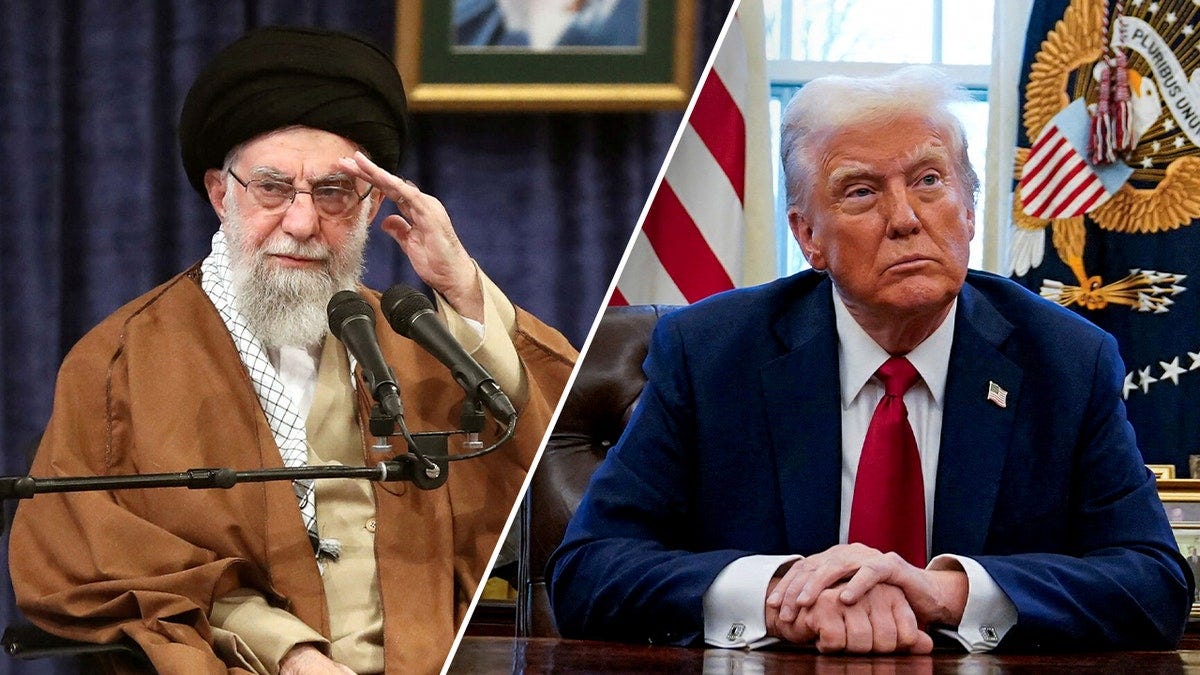
According to Reuters, Tehran is weighing the terms for renewed diplomacy after both sides signaled interest in reopening negotiations aimed at avoiding another Middle East conflict. Two officials say U.S. envoy Steve Witkoff and Iranian Foreign Minister Abbas Araqchi could meet in Turkey within days—assuming conditions line up.
Those conditions remain the problem. Donald Trump has demanded zero uranium enrichment, limits on Iran’s ballistic missiles, and an end to Tehran’s backing of regional proxies. Iran has long rejected all three, though officials now say they may show flexibility on enrichment—including handing over 400 kilograms of highly enriched uranium—if talks resume without preconditions.
Iranian officials also made clear what they want first: U.S. naval assets moved away from their coast. “Now the ball is in Trump’s court,” one official said, as Tehran pushes for sanctions relief and a cooling-off period following last year’s U.S. strikes on nuclear sites at Natanz and Isfahan.
The backdrop is grim. Iran’s regional influence has been battered by Israeli strikes on its proxies and the fall of Syrian ally Bashar al-Assad, while satellite images show limited repairs at bombed nuclear facilities and new construction that analysts say could signal preparations for future strikes. Meanwhile, the U.N. nuclear watchdog is still asking a basic question: where did Iran’s enriched uranium go?
Source: Reuters
Editor: When diplomacy comes wrapped in aircraft carriers and “take it or else” demands, it’s less a negotiation and more a staring contest—with nuclear material sitting on the table.
Minnesota Didn’t Riot—It Organized, And ICE Wasn’t Ready for That
Minnesota didn’t respond to ICE raids with chaos or violence—it responded with neighbors protecting neighbors, and that shattered Washington’s assumptions.

In a sweeping, deeply reported piece for The Atlantic, Adam Serwer documents what happened after the Trump administration surged federal immigration agents into Minnesota: fear, yes—but also food drives, patrols, whistles, cameras, and a mass refusal to look away. Churches became supply depots. Parents became couriers. Ordinary people became observers. And two of them—Alex Pretti and Renée Good—were murdered by federal agents for it.
The crackdown followed President Donald Trump’s fixation on Minnesota, a state he’s falsely claimed to have “won,” and his decision to flood Minneapolis with masked, armed agents after a fraud story involving Somali Minnesotans. The result wasn’t submission. It was what locals call “ICE Watch”—loosely organized, deliberately nonviolent patrols that follow agents, alert neighborhoods, and often force arrests to be abandoned in public view.
Serwer’s reporting makes clear this wasn’t cosplay resistance. Volunteers were followed home. License plates photographed. Agents showed up at people’s houses. Protesters faced tear gas in subzero temperatures. School attendance in some districts dropped by as much as 40 percent. And yet, tens of thousands kept showing up—not as activists chasing attention, but as neighbors refusing to let families disappear quietly.
The administration and its allies labeled the movement violent. The evidence shows the opposite. Observers are trained to obey traffic laws and avoid confrontation. When situations escalated, it was federal agents who chose force. Of the three homicides in Minneapolis this year, two were committed by federal officers. That reality—not slogans—is what finally forced a tactical retreat and the removal of Border Patrol official Gregory Bovino from the city.
The core idea Serwer identifies is simple and devastating to MAGA ideology: “neighborism.” The belief that your neighbors are your neighbors, regardless of where they were born. Minnesota didn’t fracture along racial or cultural lines. It fused. And in doing so, it exposed the lie that diversity erodes social cohesion—or that only the armed and masked are brave.
Source: The Atlantic
Editor: The administration sent guns and intimidation and expected fear. What it got was casseroles, carpools, whistles, and people willing to stand unarmed in the street. History tends to remember which side that puts you on.
Anti-ICE Protests Go National After Minneapolis Killings
After two protesters were murdered by federal agents in Minneapolis, resistance to ICE is no longer local—it’s everywhere.
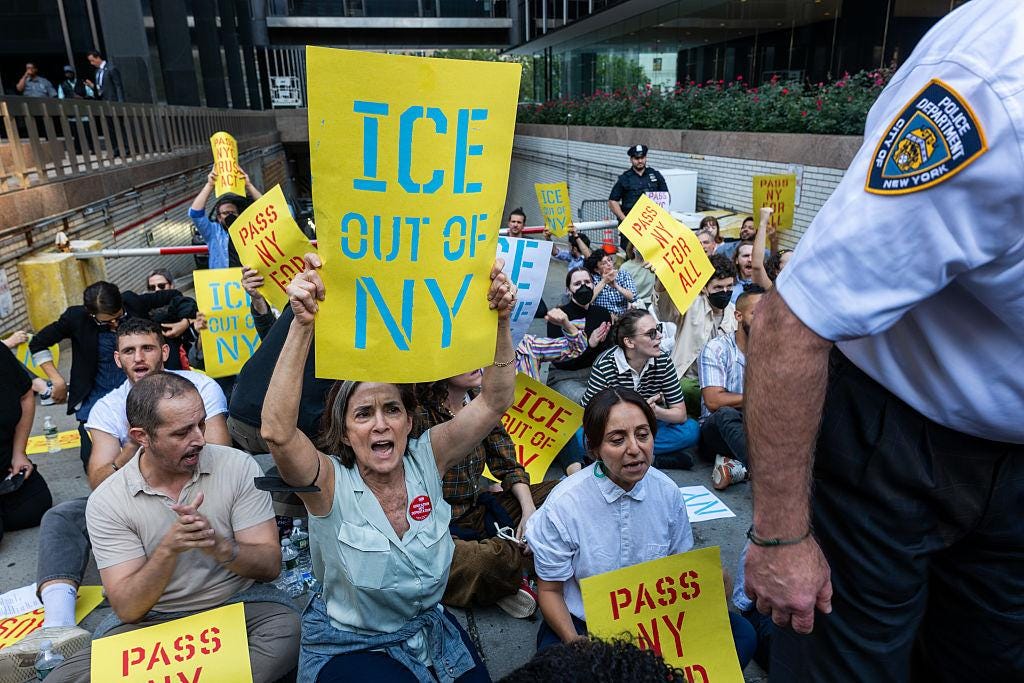
Organizers called for coordinated protests across all 50 states this past weekend, building on a surge of anger toward the Trump administration’s immigration enforcement tactics. The demonstrations follow the murders of Renée Good and Alex Pretti—both U.S. citizens—by federal agents in Minneapolis, events that transformed simmering opposition into a nationwide mobilization.
In Minneapolis, advocacy groups including the Twin Cities Coalition for Justice held a Saturday march and rally at Bryant Square Park, preceded by church bells ringing across Minneapolis and St. Paul. The symbolism is deliberate: faith communities, schools, unions, and neighborhood groups have become central to the pushback, especially as fear spreads through immigrant communities and school attendance drops.
Nationally, the group 50501—short for 50 states, 50 protests, one movement—is organizing an “ICE Out of Everywhere” day of action. Demonstrations are planned at detention centers, ICE offices, airline facilities, and congressional offices, with organizers saying protests will continue until federal agents are “permanently removed from our streets.”
Friday’s lead-up already showed the scale: walkouts from schools and workplaces, shuttered businesses, and rallies in cities from New York to Los Angeles—often in brutal winter weather. Musicians Bruce Springsteen and Tom Morello played a benefit concert in Minneapolis, while thousands marched nationwide.
The protests are also about accountability. Organizers point to not just the Minneapolis killings, but other deaths involving ICE agents, recent arrests of demonstrators—including journalists—and the use of surveillance tools to track protesters. For critics of Donald Trump’s immigration agenda, this weekend is about drawing a bright line: enforcement without restraint has consequences.
Source: The New York Times
Editor: When protests spread from frozen Minneapolis to all 50 states, it’s not a “messaging problem”—it’s a legitimacy problem. Calling people agitators doesn’t bring them back to life, and it definitely doesn’t quiet the streets.