


When the White House starts calling a ceasefire “on life support,” the diplomatic spin cycle is already overheating.
Pakistan’s Iran Gamble Is Starting To Blow Up In Public
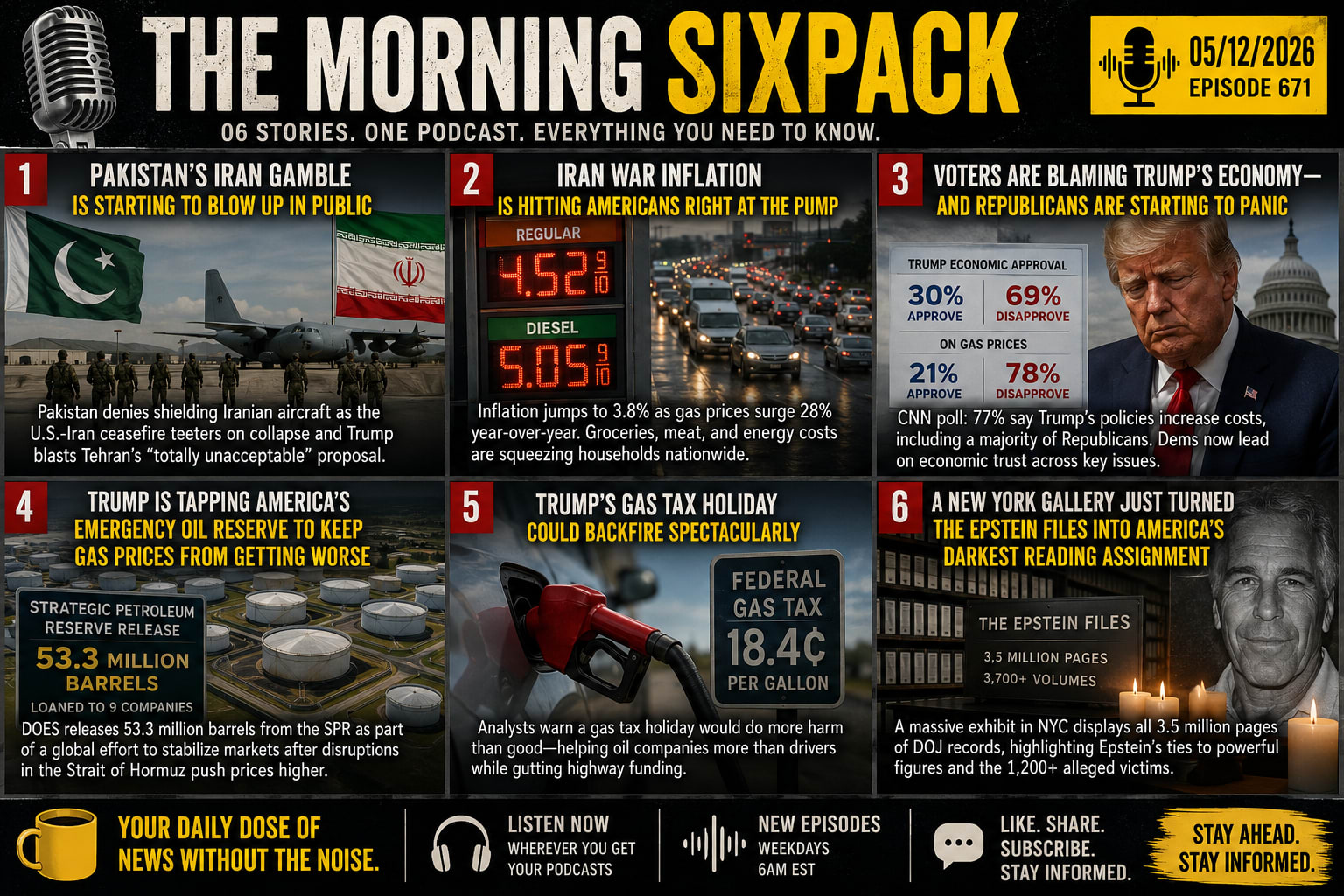
Pakistan is denying reports it secretly sheltered Iranian military aircraft as the shaky U.S.-Iran ceasefire it helped broker edges toward collapse. Islamabad insists the planes parked at a Pakistani air base were tied to diplomacy—not military protection—but Washington clearly isn’t buying the clean version of the story.
Pakistan’s Foreign Ministry blasted reports claiming Iran moved military aircraft to Nur Khan Air Base after the April 8 ceasefire to shield them from possible U.S. strikes. Islamabad says both American and Iranian aircraft used the base during talks in April and called the allegations “misleading and sensationalised.”
But the political damage was already underway. CNN reported some Trump officials believe Pakistan has been presenting Iran’s position to Washington in softer terms than reality warrants. Senator Lindsey Graham piled on by demanding a “complete reevaluation” of Pakistan’s role as mediator. Meanwhile, Trump publicly torched Iran’s latest proposal as “TOTALLY UNACCEPTABLE” and compared the ceasefire to a dying patient with a one percent chance of survival.
Iran, for its part, isn’t backing down. Tehran wants sanctions lifted, frozen assets released, and full sovereignty over the Strait of Hormuz before serious nuclear talks even begin. Iranian Parliament Speaker Mohammad Bagher Ghalibaf warned there was “no alternative but to accept the rights of the Iranian people,” while U.S. officials continue demanding Iran abandon its nuclear ambitions entirely. Translation: both sides are still negotiating from different planets.
China, Qatar, Saudi Arabia, Egypt, and now even BRICS diplomats are circling the crisis trying to keep the whole thing from detonating into a wider regional war. But Israel’s Prime Minister Benjamin Netanyahu made clear military action remains very much on the table if diplomacy fails. That’s the uncomfortable reality here: everybody keeps talking about “peace talks” while quietly preparing for the next round of escalation.
Source: Al Jazeera article
Editor: Pakistan volunteered to be the middleman in one of the world’s messiest geopolitical knife fights. Now everyone involved is accusing everyone else of lying while aircraft mysteriously “park themselves” at military bases. Terrific vacation spot for diplomacy.
Nothing says “economic recovery” quite like paying luxury-car prices to fill up a Honda Civic.
Iran War Inflation Is Hitting Americans Right at the Pump
U.S. inflation jumped again in April as the Iran conflict sent energy prices soaring and pushed gasoline above $4.50 a gallon nationwide. After months of cooling inflation, the White House now has a geopolitical oil shock parked directly in the middle of the economy—and consumers are the ones eating the bill.
The Labor Department reported consumer prices climbed 3.8% year-over-year in April, with gasoline prices surging 28% compared to last year. Monthly inflation rose 0.6% from March, driven largely by energy costs after Iran restricted access through the Strait of Hormuz following the U.S.-Israel strikes that began in late February. Core inflation—which strips out food and energy—remained more contained at 2.8%, suggesting the broader economy hasn’t fully absorbed the shock yet.
But average Americans are already feeling it. Grocery prices climbed 0.7% in a single month, meat prices are rising again, and businesses are starting to warn about consumer pullbacks. Appliance giant Whirlpool Corporation said revenue dropped nearly 10% and described current conditions as a “recession-level industry decline.” That’s corporate-speak for “people stopped buying stuff because gas is eating their paycheck.”
The inflation spike also puts the Federal Reserve in a political pressure cooker. President Donald Trump has been hammering Fed Chair Jerome Powell for not cutting interest rates faster, but war-driven energy inflation makes that far riskier. Trump ally Kevin Warsh is expected to take over the Fed soon, though even a more aggressive rate-cutting approach may not matter much if oil markets stay unstable.
The bigger issue is that this inflation problem isn’t being driven by consumer demand or pandemic aftershocks anymore—it’s geopolitics. One blocked shipping route in the Middle East and suddenly the entire American economy gets smacked in the face by fuel costs. That’s the danger of building a modern economy around global supply chains while pretending energy security solved itself years ago.
Source: Associated Press report
Editor: Americans spent two years hearing inflation was “cooling.” Then one Middle East conflict lit the gasoline market on fire and reminded everyone the economy still runs on oil, not hashtags.
When your own voters hate gas prices this much, the campaign ads practically write themselves.
Voters Are Blaming Trump’s Economy—And Republicans Are Starting To Panic
A new CNN poll shows most Americans believe Donald Trump’s policies are making life more expensive, with even Republicans turning on him over inflation and gas prices. After years of hammering Democrats on the economy, the GOP suddenly owns the economic anger it spent the Biden era weaponizing.
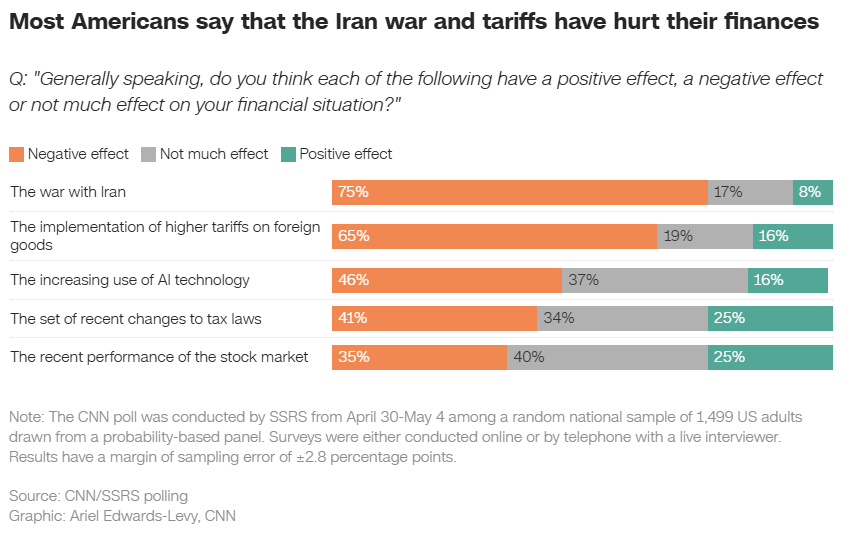
The CNN/SSRS poll found 77% of Americans—including a majority of Republicans—say Trump’s policies have increased the cost of living in their communities. Trump’s economic approval rating has cratered to just 30%, while only 21% approve of how he’s handling gas prices. Even among Republican voters, frustration is boiling over as inflation and energy costs keep climbing.
What makes this politically dangerous is that Democrats now lead Republicans on economic trust issues that the GOP historically dominated. Democrats hold advantages on inflation, helping the middle class, healthcare costs, and cost of living. That’s a complete reversal from the Biden years, when Republicans enjoyed double-digit leads on economic credibility. The shift appears driven less by Democratic enthusiasm and more by voters deciding Republicans aren’t fixing anything either.
Still, nobody should confuse this for a Democratic victory lap. Huge chunks of the country say they trust neither party on core economic issues, especially independents. Americans remain deeply cynical about the political system overall, with most believing the economy is rigged toward powerful interests. That creates a giant “none of the above” problem hanging over both parties heading into the midterms.
The economy remains the dominant issue for voters by a massive margin, but there’s an important wrinkle buried in the numbers: many Americans no longer believe elections dramatically improve their personal finances. That’s a brutal sign of political exhaustion. Voters still care about inflation—they just increasingly doubt anybody in Washington actually has a plan beyond yelling at the Federal Reserve on cable TV.
Source: CNN poll report
Editor: Republicans spent years branding themselves as the “kitchen table economics” party. Then gas prices blew past $4.50, groceries got ugly again, and suddenly the kitchen table looks more like a stress test.
Nothing calms an election-year panic quite like draining the country’s emergency oil stash one cavern at a time.
Trump Is Tapping America’s Emergency Oil Reserve To Keep Gas Prices From Getting Worse
The White House is releasing another 53 million barrels of crude oil from the Strategic Petroleum Reserve as the Iran war keeps squeezing global energy markets. Washington is trying to slow the political and economic fallout from soaring gasoline prices before voters turn the midterms into a referendum on fuel costs.
The Department of Energy said nine companies—including Exxon Mobil, Trafigura, and Marathon Petroleum—will borrow 53.3 million barrels of crude from the SPR. The release is part of a broader International Energy Agency agreement involving more than 30 countries collectively injecting roughly 400 million barrels into global markets after Iran disrupted traffic through the Strait of Hormuz.
The administration has already loaned out about 80 million barrels this spring and plans to release a total of 172 million barrels. Officials argue the loans will eventually be repaid in crude oil—with premiums as high as 24%—allowing the government to stabilize markets “at no cost to taxpayers.” That’s the sales pitch anyway. Politically, this is really about preventing $5 gas from becoming the defining symbol of Republican economic management before November.
The backdrop here is ugly. The Strait of Hormuz normally handles about 20% of the world’s oil supply, and Iran’s actions there have rattled markets hard enough for International Energy Agency chief Fatih Birol to call this the biggest energy crisis ever. U.S. gas prices are already averaging $4.52 per gallon nationally, according to AAA—the highest levels since 2022.
Meanwhile, the Strategic Petroleum Reserve itself is looking less “strategic” by the month. The reserve now holds roughly 384 million barrels total, spread across underground caverns in Texas and Louisiana. That sounds massive until you realize the world burns through that amount of oil in less than four days. If the conflict escalates further, Washington may discover that emergency stockpiles disappear a lot faster than campaign talking points.
Source: Reuters report
Editor: The SPR was designed for catastrophic disruptions. Unfortunately for Washington, the catastrophe now comes with polling data attached to it.
Washington’s latest economic strategy appears to be: “What if we fix inflation with less math and more vibes?”
Trump’s Gas Tax Holiday Will Backfire Spectacularly
Donald Trump is floating a federal gas tax holiday as Americans choke on $4.50 gasoline, but analysts warn the move could actually worsen the energy mess long term. Suspending the gas tax might sound great in a campaign speech, but the math behind it is a lot uglier than the applause line.
The federal gas tax currently adds 18.4 cents per gallon to regular gasoline, with the money flowing directly into the Highway Trust Fund that helps maintain roads and infrastructure. Trump says he’s open to suspending it while the Iran conflict keeps oil markets chaotic, and lawmakers from both parties have flirted with similar ideas before—including Hillary Clinton, John McCain, and Joe Biden during previous gas-price spikes.
But critics say the policy usually benefits oil companies more than drivers. Analysts point to research from the Wharton School of the University of Pennsylvania showing earlier fuel-tax suspensions only partially lowered prices for consumers, while energy companies pocketed much of the difference. Since wholesalers pay the tax upfront, there’s no guarantee stations pass savings directly to drivers—especially when demand surges because gas suddenly appears “cheaper.”
The timing also matters politically. Trump and Republicans are staring at brutal polling on inflation and fuel costs as the Iran conflict drags on and the Strait of Hormuz remains unstable. A gas tax holiday offers a quick headline and temporary relief optics, but it also blows a hole in federal highway funding at the exact moment infrastructure costs keep climbing. The federal gas tax hasn’t been raised since 1993, meaning inflation already hollowed out much of its purchasing power decades ago.
The deeper problem is that a tax holiday doesn’t solve the actual cause of the spike: global oil disruption tied to the Middle East conflict. If Iran keeps restricting shipping through Hormuz, fuel prices likely stay elevated regardless of what Washington does with an 18-cent federal tax. That’s why critics argue this is more political aspirin than economic surgery—something designed to ease voter anger without addressing the structural energy problem underneath it.
Source: Raw Story report
Editor: Every few years Washington rediscovers the gas tax holiday like it’s some revolutionary economic breakthrough. Then everybody acts surprised when oil companies enjoy the holiday a lot more than drivers do.
Nothing says “institutional failure” quite like needing 17,000 pounds of paperwork to catalog it all.
A New York Gallery Just Turned The Epstein Files into America’s Darkest Reading Assignment #PedoFiles
A massive New York exhibit is displaying all 3.5 million pages of the Jeffrey Epstein files in physical form, turning one of America’s ugliest scandals into a public archive of power, abuse, and unanswered questions. The installation doesn’t just document Epstein’s crimes—it quietly reminds visitors how many influential people managed to orbit him for years without consequence.
The “Donald J. Trump and Jeffrey Epstein Memorial Reading Room,” now open in Tribeca through May 21, contains more than 3,700 volumes of Department of Justice records tied to Epstein. Organized by the nonprofit Institute for Primary Facts, the exhibit includes timelines, evidence archives, and tributes to the more than 1,200 potential victims the DOJ identified during its investigation.
One detail highlighted in the exhibit involves a 2016 email exchange where Epstein allegedly asked a redacted woman for a “naughty selfie” before later asking whether she knew “someone willing to travel, 22-25, educated. Personable.” Read today, the messages carry an especially ugly undertone given the sex trafficking allegations surrounding Epstein and the extensive pattern of recruitment documented in court records.
The exhibit also heavily focuses on Epstein’s long relationship with Donald Trump, tracing connections from the late 1980s through Epstein’s eventual expulsion from Mar-a-Lago in 2007 after alleged misconduct involving a teenage girl. The White House responded by insisting Trump has been “totally exonerated” regarding Epstein and claiming he “has done more for Epstein’s victims than anyone.” Meanwhile, organizers say they subjected every displayed claim to extensive legal and factual review before opening the installation.
There’s another uncomfortable layer here: even with millions of pages now public, access remains restricted because the DOJ reportedly failed to properly redact some survivor identities in earlier releases. So while journalists and law enforcement can review the files directly, most visitors are limited to viewing curated displays and timelines. In other words, after years of secrecy, incompetence still managed to follow the records into public view.
Source: WIRED report
Editor: America somehow built an entire tourist attraction around the fact that wealthy, connected people spent years pretending not to notice Jeffrey Epstein. The gift shop would probably be subpoenaed.