


ICE is executing a nationwide office land grab—largely out of public view—and federal records show it’s barreling into cities, suburbs, and sensitive community spaces at full speed.
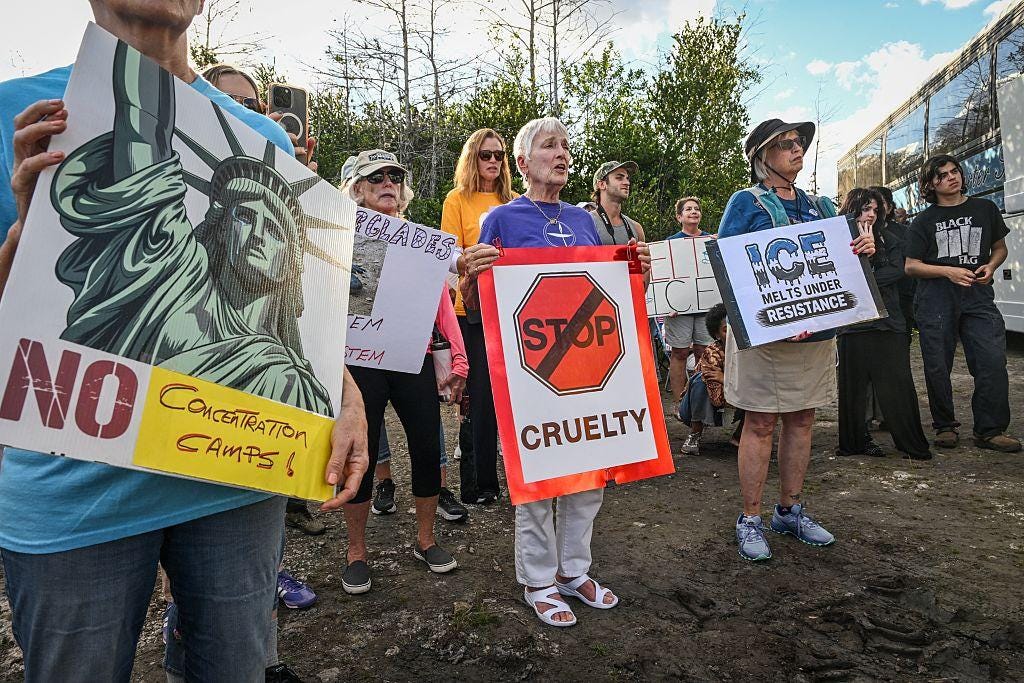
Over just a few months, Immigration and Customs Enforcement, with backing from Department of Homeland Security, has launched a secretive expansion campaign involving more than 150 new leases and office buildouts across nearly every state. These aren’t remote outposts—they’re offices next to preschools, churches, hospitals, and schools, often right in major metro areas. The message is unmistakable: ICE wants to be everywhere, all at once.
To make it happen, DHS leaned hard on the General Services Administration, asking it to sidestep normal leasing rules, suppress public listings, and invoke “unusual and compelling urgency.” In plain English: move fast, don’t ask questions, and don’t advertise. One internal email explicitly warned that publicizing locations could endanger ICE personnel—even though there’s no documented history of attacks on ICE offices.
This surge tracks directly to Donald Trump’s return to office and his administration’s “One Big Beautiful Bill Act,” which handed ICE nearly $80 billion and the green light to double in size. ICE now claims more than 22,000 officers nationwide, with thousands more attorneys and agents coming online—each one needing space, desks, and proximity to enforcement and detention hubs.
What’s striking isn’t just the scale, but the placement. ICE offices are cropping up near childcare centers in California, elementary schools in Connecticut, medical campuses in Pennsylvania, and worship centers from Maryland to Maine. In multiple states, new offices sit within easy driving distance of warehouses already flagged—or quietly purchased—for immigrant detention. This isn’t random real estate; it’s logistical chess.
Taken together, the documents paint a blunt picture: ICE’s future footprint isn’t limited to the border or big-city field offices. It’s woven into everyday civic life, block by block, lease by lease—often without the communities around it knowing until the locks are changed and the signage goes up.
Source: WIRED
Editor: This isn’t about office space—it’s about normalization. When immigration enforcement quietly moves next to preschools and churches, the policy goal isn’t efficiency; it’s presence. You don’t hide leases unless you know people wouldn’t like what they’re seeing.
Now, here’s the REAL STORY, as far as I’m concerned:
Here’s how ICE’s physical surge could shape the 2026 midterms—and why it matters politically more than it might look at first glance.
First, Immigration and Customs Enforcement becoming visibly embedded in daily community life turns immigration from an abstract border issue into a local one. When ICE offices show up near schools, churches, and hospitals, voters don’t need cable news to tell them immigration enforcement is expanding—they see it on their commute. That visibility tends to harden opinions, not soften them, and it activates voters who might otherwise sit out a midterm.
Second, the surge gives Republicans a tangible artifact of “border security” to campaign on—even far from the border. GOP candidates can point to bricks-and-mortar ICE offices as proof that enforcement is happening “everywhere,” reinforcing the national-security framing favored by Donald Trump and his allies. It’s easier to sell a policy when it has an address and a parking lot.
Third, Democrats face a structural trap. In swing districts and suburbs, ICE’s proximity to sensitive locations creates backlash risk—but opposing it outright invites attacks framing Democrats as “anti-law enforcement.” Expect a lot of strained messaging about “oversight,” “process,” and “community impact,” rather than direct opposition. That ambiguity can depress base turnout while still failing to win over enforcement-first voters.
Fourth, turnout dynamics shift in key states. Latino, immigrant-adjacent, faith-based, and civil-liberties voters are more likely to mobilize when enforcement feels personal and immediate. That helps Democrats in places like California, New York, Illinois, and New Jersey—but it could also supercharge conservative turnout in exurban and rural districts where ICE expansion is framed as protection rather than intrusion.
Fifth—and most importantly—this surge nationalizes local races. School boards, city councils, and House races suddenly become referendums on immigration enforcement infrastructure. Once that happens, nuance dies. Candidates are forced into binary positions, and the midterms become less about inflation or healthcare and more about whether voters are comfortable living next door to the machinery of deportation.
Bottom line: ICE’s expansion isn’t just an enforcement strategy—it’s a political positioning move. By the time ballots are cast in 2026, immigration won’t feel like something happening “somewhere else.” It’ll feel like it moved in down the street, and voters will respond accordingly—loudly, emotionally, and at the polls.