


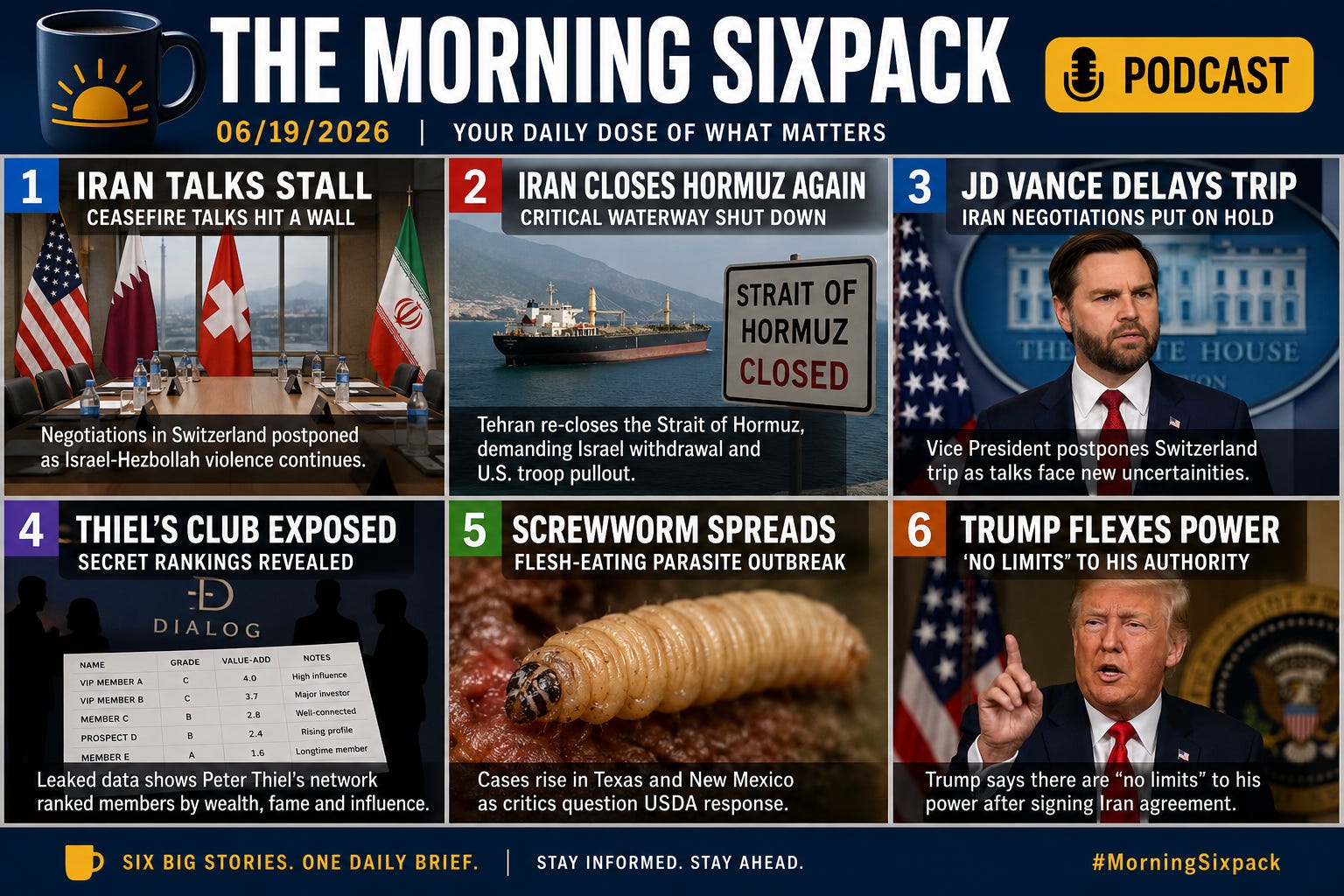
Washington and Tehran can’t even get to the same room for ceasefire talks, and Israel’s campaign in Lebanon is already testing whether this deal has any legs.
US-Iran Ceasefire Talks Hit the Brakes as Lebanon Fighting Threatens Fragile Deal
The first major test of the new US-Iran ceasefire framework has already run into trouble after planned talks in Switzerland were postponed. The delay came as Iran reportedly held back its delegation amid Israel’s continuing military operations in southern Lebanon.
A deal that was signed just days ago is suddenly looking a lot less settled.
The talks at Switzerland’s Burgenstock Resort were supposed to tackle the technical details of a 60-day negotiation period outlined in the memorandum of understanding signed Wednesday. Instead, both sides are heading back to the drawing board while mediators scramble to keep momentum alive.
Iran signaled it remains interested in negotiations, but parliamentary speaker Mohammad Bagher Ghalibaf made clear that Tehran’s “red lines” remain in place. One of Iran’s central demands is an end to Israeli attacks in Lebanon. As Ghalibaf warned: “If the enemy seeks to be excessive, we have proven that our fingers are on the trigger and we have no hesitation in giving a crushing response to the enemy.”
The White House had been preparing for Vice President JD Vance to travel to Switzerland to lead the discussions, but the trip was abruptly canceled. The administration blamed the complicated logistics of the negotiations, though growing frustration over Israel’s actions in Lebanon appears to be creating fresh tension inside the broader diplomatic effort.
Source: Al Jazeera report on the postponed US-Iran talks
Editor: Nothing boosts confidence in a peace process quite like canceling the first meeting before anyone arrives. At this pace, the ceasefire may need its own ceasefire.
Iran just slammed the Strait of Hormuz shut again, proving that “ceasefire” apparently means something very different in Tehran than it does everywhere else.
Iran Re-Closes Strait of Hormuz, Putting US-Iran Deal on Immediate Collision Course
Just two days after signing a memorandum of understanding with Washington, Iran has re-closed the Strait of Hormuz and threatened to target ships that ignore its orders. The move effectively freezes the fledgling US-Iran diplomatic process before formal negotiations can even begin.
One of the world’s most important shipping lanes is back in the middle of a geopolitical standoff.
In a statement broadcast over maritime radio frequencies, Iran’s Revolutionary Guard declared the strait would remain closed until Israel withdraws from southern Lebanon, the naval blockade is fully lifted, and US forces leave the region. Tehran warned that “any vessel that defies this directive will be targeted.”
The announcement came as planned US-Iran talks in Switzerland were postponed and after US Central Command said it had already begun lifting restrictions on Iranian ports. Critics argue Iran is exploiting language in the agreement that allows the blockade’s removal to occur in phases. As OSINT613 President Simcha Brodsky noted, Tehran is using that timeline gap to claim the blockade has not yet been “completely lifted” while simultaneously tying the dispute to Israel’s military operations in Lebanon.
The closure also raises fresh concerns about Iran’s newly established Persian Gulf Strait Authority, which is now requiring ships to obtain permits before transiting the waterway. While the agreement temporarily prevents Tehran from charging transit fees, the framework explicitly leaves the door open for future charges once the 60-day negotiation period expires.
Source: New York Post report on Iran’s Strait of Hormuz closure
Editor: For a government that just signed a deal promising de-escalation, Tehran sure seems eager to test every loophole before the ink has dried. Lawyers everywhere are taking notes.
The White House says negotiations are moving forward, but when your lead negotiator cancels the trip and the other side doesn’t show up, the optics aren’t exactly screaming “breakthrough.”
JD Vance Grounds Switzerland Trip as Questions Swirl Around US-Iran Deal
Vice President JD Vance abruptly postponed a planned trip to Switzerland for nuclear negotiations with Iran, injecting new uncertainty into a ceasefire agreement that is barely 48 hours old. The delay comes as tensions over Lebanon, sanctions relief and shipping through the Strait of Hormuz continue to complicate the fragile diplomatic effort.
The agreement may be signed, but the hard part appears to be getting everyone to honor it.
The White House blamed difficult logistics for the postponement, though reports suggested Iran was also delaying its delegation over Israel’s ongoing military operations in Lebanon. Vance, who has become the administration’s chief public defender of the agreement, insisted Tehran must meet US demands before receiving additional economic relief. “As they dial up their good behavior, we can dial up the economic relief,” he said. “If they dial down their good behavior, we can turn it off.”
Despite the uncertainty surrounding the talks, administration officials told lawmakers that Iran plans to invite inspectors from the International Atomic Energy Agency to examine nuclear facilities and help account for enriched uranium stockpiles. The agreement also requires Iran to formally renounce nuclear weapons ambitions and dilute highly enriched uranium under international supervision.
Vance also delivered unusually sharp criticism toward Israel as its operations against Hezbollah continue to complicate the broader diplomatic landscape. While the US has lifted its blockade and commercial shipping has begun moving through the Strait of Hormuz again, the White House is clearly concerned that continued fighting in Lebanon could jeopardize the entire framework before substantive negotiations even begin.
Source: Associated Press report on JD Vance delaying Switzerland talks with Iran
Editor: Diplomatic progress is apparently measured by canceled flights, delayed meetings and promises that everyone is still committed to talking later. Airline loyalty programs may end up logging more miles than the negotiators.
Turns out the world’s elite weren’t just networking—they were apparently being scored like Uber drivers by a secret algorithm nobody knew about.
Peter Thiel’s Private Club Secretly Ranked Members by Fame, Wealth and Influence
A leaked database reveals that Peter Thiel’s invitation-only Dialog network secretly graded members and guests based on wealth, fame, influence and perceived value to the group. The rankings helped determine everything from seating assignments and ticket prices to networking introductions and who might eventually be shown the door.
Nothing says “exclusive intellectual community” quite like an algorithm deciding whether you’re important enough to sit at the cool table.
According to documents obtained by WIRED, Dialog assigned attendees grades ranging from A to C, with the coveted “C” designation reserved for the most famous and influential figures. Staff notes evaluated members based on factors including assets under management, public recognition, organizational prestige and social-media reach. In one case, actor Josh Brolin received VIP status largely because of his Hollywood profile and millions of Instagram followers.
The records also show Dialog tracked members’ political leanings, maintained “value-add” scores, created networking and dating matches, and flagged certain people who should never be paired together. Staff reportedly reviewed and adjusted rankings after each retreat, with members potentially losing invitations due to declining influence, poor cultural fit or insufficient value to the community.
Perhaps most striking, the leak included sensitive personal information on nearly 200 attendees and prospects, including private contact information, birthdays, emergency contacts and other personal details. While Dialog publicly describes itself as a nonpartisan community dedicated to thoughtful discussion among leaders from diverse backgrounds, the internal records paint a picture of a highly structured social ecosystem where status is carefully measured, monitored and managed.
Source: WIRED report on Dialog’s internal ranking system
Editor: Every exclusive club insists it’s about ideas, not status. Then somebody leaks the spreadsheet and suddenly everyone’s got a score, a seating chart and a note explaining why they’re not famous enough to sit near the Avengers guy.
A flesh-eating parasite is spreading through Texas and New Mexico, and critics say Washington is treating it like a paperwork problem instead of an agricultural emergency.
Flesh-Eating Screwworm Outbreak Raises Questions About USDA Response
The return of the New World screwworm to the United States has ranchers, veterinarians and local officials questioning whether the federal government is moving aggressively enough to contain a pest that literally eats living tissue. With 12 confirmed animal cases and concerns that more infections may be undetected, pressure is mounting on the USDA to step up its response.
Experts say the outbreak could take years to eliminate—and the government may already be behind the curve.
Agriculture Secretary Brooke Rollins has downplayed the threat, while critics argue staffing cuts, delayed action and a shortage of sterile flies have left the government struggling to respond. The USDA has declined to declare an emergency despite recommendations from experts and despite its own response playbook suggesting such a move could unlock additional federal resources. Ranchers fear quarantines, lost income and unclear guidance if the infestation spreads further.
The screwworm, once largely confined to South America, lays eggs in wounds or body openings of warm-blooded animals. When the larvae hatch, they feed on living tissue, creating painful and potentially serious infections. While the risk to the general public remains low, the parasite can infest cattle, sheep, goats, dogs, wildlife and even humans. Officials acknowledge the current supply of sterile flies—the primary eradication tool—is insufficient, with major new production facilities still months or years away.
Perhaps most troubling for officials is the possibility that the outbreak is already larger than reported. Some cases have appeared far from previously known infestations, and veterinarians say they still don’t know exactly how the parasite reached certain animals. As retired APHIS administrator Kevin Shea put it: “Even under the best of circumstances we’re talking about years. It’s not hopeless, we know how to do this. But it’s going to be painful and costly.”
Source: Washington Post report on the New World screwworm outbreak
Editor: Somewhere in Washington, a bureaucrat is probably drafting a task force memo while flesh-eating maggots are drafting their own expansion plans. Nature has a way of ignoring government timelines.
Most presidents talk about the limits of executive power. Donald Trump just said the quiet part out loud.
Trump Says There Are ‘No Limits’ to His Power After Iran Deal
President Trump declared there are “no limits” to his power in a new interview reflecting on the Iran conflict, a remark that is already fueling debate as his administration struggles to defend a controversial agreement with Tehran. The comments come as negotiations over the deal have stalled and criticism mounts from both parties.
When a president says he knows there are limits—but then says there are no limits—the wording tends to get people’s attention.
Speaking with Axios, Trump was asked whether the Iran war taught him that there are boundaries to presidential authority. His response was blunt: “I haven’t learned that lesson yet. I know there are, but there are no limits. We defeated them totally militarily.” He also argued that the agreement he signed with Iran this week effectively amounted to an “unconditional surrender,” despite the deal providing sanctions relief and a massive reconstruction fund in exchange for future nuclear concessions.
The agreement has drawn fierce criticism from several Republicans, including Sen. Bill Cassidy, who reportedly called it the “worst foreign policy blunder in decades.” Meanwhile, technical negotiations that were supposed to begin in Switzerland have already been postponed amid continuing clashes between Israel and Hezbollah in Lebanon. Vice President JD Vance, who has become the administration’s chief defender of the agreement, delayed his planned trip and acknowledged the timeline remains uncertain.
Trump’s comments are likely to intensify broader debates over executive authority, particularly as his administration continues to push the boundaries of presidential power across multiple fronts. Whether supporters view the remarks as confidence and critics see them as overreach, the quote is certain to become part of the political conversation far beyond the Iran deal itself.
Source: The Hill report on Trump’s comments about presidential power
Editor: Every White House communications team eventually gets a sentence they’d really like back. This one probably arrived before the coffee got cold.