

That’s a direct collision course with both Washington and Israel, which have demanded the uranium be removed as part of any lasting agreement.
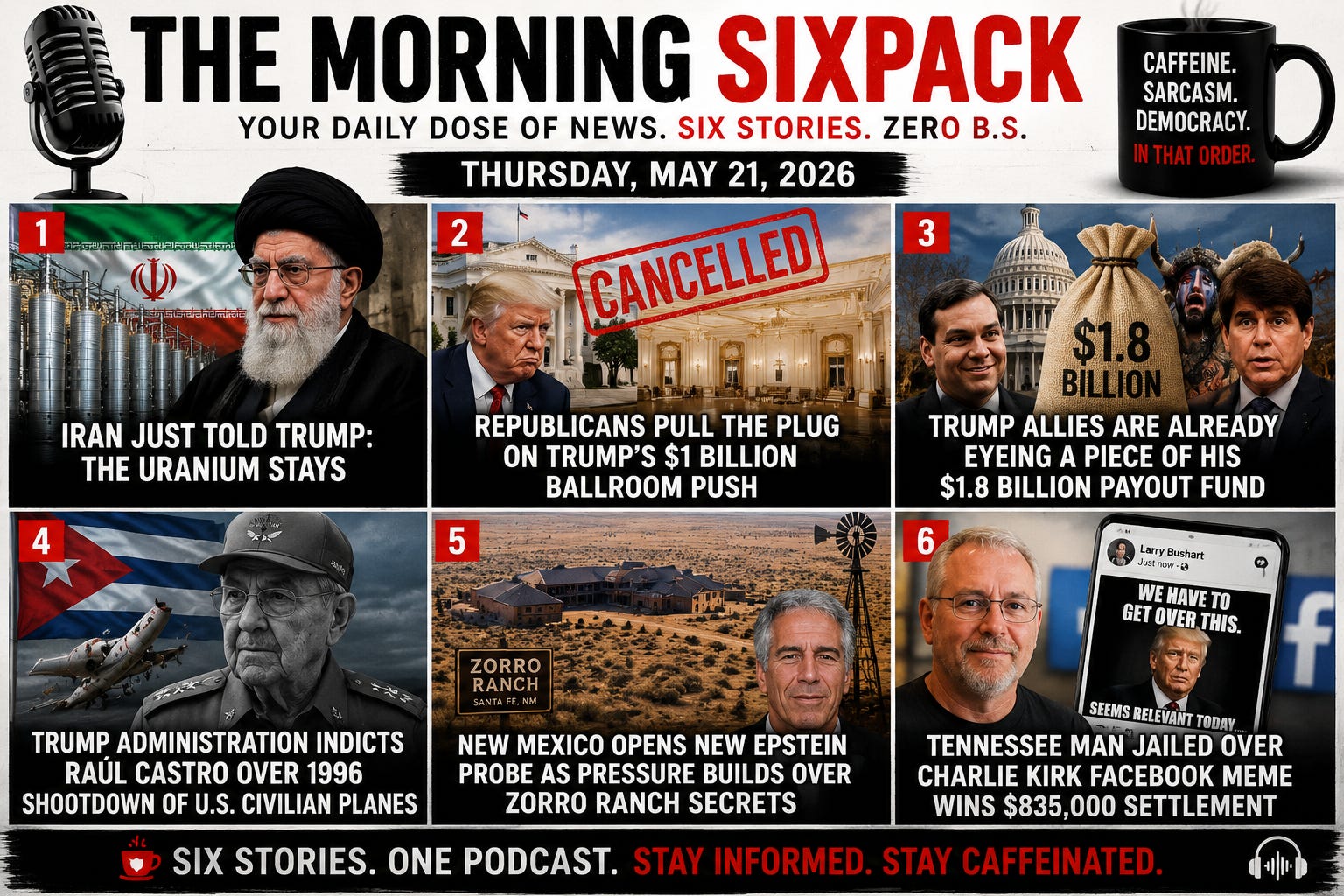
Iran Just Told Trump: The Uranium Stays
Iran’s new Supreme Leader has reportedly ordered that the country’s near-weapons-grade uranium never leave Iranian soil—even as Trump pushes for a peace deal tied to disarmament. Tehran is basically saying: thanks for the ceasefire, now keep your hands off the nuclear stash.
According to Reuters, Ayatollah Mojtaba Khamenei issued the directive as Iranian officials grow increasingly convinced the U.S. could use the current ceasefire as cover to regroup for more strikes. One Iranian source summed it up plainly: “The Supreme Leader’s directive, and the consensus within the establishment, is that the stockpile of enriched uranium should not leave the country.”
That’s a problem for Donald Trump, who reportedly assured Israel that Iran’s enriched uranium would be shipped out under any final deal. Israeli Prime Minister Benjamin Netanyahu has repeatedly said the war doesn’t end until the uranium is gone, Iran’s proxy networks are dismantled, and its missile capabilities are crushed. In other words, everyone’s negotiating from completely different planets.
Iran had previously floated sending out part of its 60% enriched uranium stockpile, but that changed after renewed threats of military action. Now Tehran says it may consider alternatives like diluting the material under International Atomic Energy Agency supervision instead of exporting it. Meanwhile, the IAEA estimates Iran still possesses hundreds of kilograms of highly enriched uranium, though the exact amount surviving recent strikes remains unclear.
Source: MSN / Reuters
Editor: Nothing builds international trust quite like two nuclear-capable enemies negotiating peace while openly discussing which bombing campaign comes next.
The proposal was already colliding with voter anger over inflation and affordability—and now it’s become a full-blown GOP headache.
Republicans Pull the Plug on Trump’s $1 Billion Ballroom Push
Senate Republicans are backing away from a plan to spend $1 billion on White House security upgrades tied to Donald Trump’s proposed ballroom after members of their own party revolted over the price tag and lack of details. Turns out even some Republicans looked at “taxpayer-funded presidential ballroom” and decided maybe this wasn’t the hill to die on.
The funding fight exploded as Senate Republicans tried to jam the money into a broader $70 billion immigration enforcement bill before the Memorial Day recess. But senators like Thom Tillis and John Kennedy openly questioned the idea, with Tillis calling it a “bad idea” and Kennedy admitting the votes simply weren’t there.
The White House reportedly wanted roughly $220 million specifically tied to ballroom-related security upgrades, with the remaining funds earmarked for screening centers, training, and other Secret Service measures. But even Republicans started asking the obvious question: why are taxpayers financing luxury-adjacent projects while Americans are struggling with grocery bills and healthcare costs? Louisiana Sen. Bill Cassidy put it bluntly: “People can’t afford groceries and gasoline and healthcare, and we’re going to do a billion dollars for a ballroom?”
At the same time, another Trump-backed provision—a $1.776 billion settlement fund for allies claiming political persecution—is creating fresh fractures inside the GOP. Democrats are preparing amendment votes to block or restrict the payouts, while Republican leaders scramble to salvage enough support to move the broader immigration package forward. Senate Majority Leader John Thune admitted there are still “ongoing vote issues.” That’s congressional code for “this thing’s a mess.”
Trump, meanwhile, responded the only way he knows how: publicly torching Senate Republicans on social media, demanding they kill the filibuster and fire the Senate parliamentarian after procedural rulings complicated his plans. The bigger problem for Republicans is that the infighting is no longer quiet. Trump’s endorsement battles, internal Senate resentment, and spending fights are all spilling into public view at the exact moment the party is trying to project unity heading into the election stretch.
Source: AP News
Editor: Somewhere in Washington, a consultant actually pitched “ICE funding plus luxury ballroom security package” with a straight face. That person should probably never touch a focus group again.
The fund hasn’t even fully launched yet, and people are already talking about cashing checks, clearing reputations, and rewriting the history of Jan. 6.
Trump Allies Are Already Eyeing a Piece of His $1.8 Billion Payout Fund
Trump supporters ranging from Jan. 6 rioters to George Santos and Rod Blagojevich are lining up to apply for a new $1.8 billion “anti-weaponization” fund backed by the Trump administration. Apparently the hottest growth industry in Washington is now “former defendant seeking taxpayer-funded vindication.”
According to The Washington Post, attorneys tied to Trump allies are scrambling for details about who qualifies, how much money can be claimed, and who will distribute the funds. Vice President JD Vance reportedly said “anybody can apply for it,” opening the door to a parade of applicants that already includes Jan. 6 defendants, former Trump aides, and politically connected figures who insist they were unfairly prosecuted.
One of the loudest voices is Mark McCloskey—the St. Louis lawyer famous for waving firearms at racial justice protesters outside his mansion in 2020. McCloskey now represents Jan. 6 defendants and says enthusiasm around the fund is intense: “Everybody’s very excited about it. It’s the first ray of light we’ve seen in a long time.” Former Congressman George Santos says he may apply not for money, but for an official apology over what he claims was selective prosecution. Rod Blagojevich, meanwhile, is still chasing “vindication” years after his corruption conviction and Trump pardon.
The deeper political problem for Republicans is that the fund is rapidly turning into a symbol of grievance politics run wild. Democrats are already threatening investigations and amendments to block payouts to people convicted of violent crimes or tied to the Capitol riot. Some Republicans are uneasy too, especially after reports surfaced that applicants could include people accused or convicted of unrelated serious offenses who later received Jan. 6 pardons.
And then there’s the optics. One Jan. 6 participant interviewed by the Post openly said she hopes to receive $10 million while predicting the collapse of the dollar and the banking system. That’s probably not the testimonial you put in the promotional brochure. Meanwhile, Trump allies are framing the entire effort as repayment for political persecution, with one attorney praising Trump for making sure the money “will go to American patriots.” Washington hasn’t seen this level of public score-settling tied to taxpayer money in a very long time.
Source: The Washington Post (gift)
Editor: Nothing says “national healing” quite like creating a multibillion-dollar compensation fund where George Santos and Jan. 6 defendants are comparing notes on reimbursement strategy.
The indictment dramatically escalates tensions between the U.S. and Cuba as Trump openly flirts with regime-change rhetoric once again.
Trump Administration Indicts Raúl Castro Over 1996 Shootdown of U.S. Civilian Planes
Federal prosecutors have charged former Cuban leader Raúl Castro with murder and conspiracy for the 1996 shootdown of two civilian aircraft operated by a Miami exile group. After nearly three decades, Washington is no longer treating this as Cold War history—it’s treating it like unfinished business.
The charges accuse Castro—then Cuba’s defense minister—of ordering Cuban fighter jets to shoot down two unarmed Brothers to the Rescue planes over the Florida Straits in February 1996. Four Americans were killed. Prosecutors also charged five Cuban military pilots in the secret indictment, which was filed in April and unsealed Wednesday. Acting Attorney General Todd Blanche declared: “For nearly 30 years, the families of four murdered Americans have waited for justice.”
Trump administration officials are making clear this isn’t symbolic. Blanche confirmed an arrest warrant has been issued and bluntly stated the U.S. expects Castro to appear “by his own will or by another way.” That language immediately fueled speculation about whether the administration could pursue a strategy similar to the recent capture of former Venezuelan leader Nicolás Maduro, who was brought to New York earlier this year to face charges.
The timing matters. Trump has spent months increasing pressure on Cuba after Maduro’s removal destabilized the island’s oil supply. The administration has tightened blockades, amplified talk of “friendly takeover” scenarios, and openly pushed for political change in Havana. Secretary of State Marco Rubio, speaking directly to Cubans in Spanish, urged citizens to embrace “new leadership” and a free-market economy. Cuba’s government responded by condemning the indictment as political theater designed to justify future military aggression.
For families of the victims, though, the announcement landed differently. Marlene Alejandre-Triana, whose father died in the attack, called the move “long overdue.” The 1996 shootdown became one of the defining flashpoints in modern U.S.-Cuba relations after Cuban MiG jets blasted the civilian Cessnas out of the sky just outside Cuban airspace. Previous administrations stopped short of indicting Castro himself. Trump’s team clearly decided restraint was overrated.
Source: AP News
Editor: Somewhere in Havana, the phrase “by another way” probably landed with all the warmth of a drone buzzing outside the window at 2 a.m.
The new effort includes a formal Truth Commission, search operations on the ranch, and subpoenas that could force witnesses to testify.
New Mexico Opens New Epstein Probe as Pressure Builds Over Zorro Ranch Secrets
New Mexico officials are reopening investigations into Jeffrey Epstein’s sprawling Zorro Ranch amid mounting demands from survivors, activists, and lawmakers for answers about what happened there for decades. The state is finally doing what a lot of powerful people spent years avoiding: asking uncomfortable questions about a property everyone seemed to know about but nobody wanted to fully investigate.
The push gained momentum after protests outside the ranch earlier this year, where demonstrators—including Virginia Giuffre’s brother, Sky Roberts—called for accountability. Giuffre, one of Epstein’s most prominent accusers before her 2025 death, said she was abused at the ranch. Roberts praised New Mexico officials for taking what he called “the first initiative” toward uncovering the truth.
The ranch itself has long been wrapped in rumors, allegations, and unanswered questions. Located outside Santa Fe, the 10,000-acre property included a mansion, private airstrip, and vast stretches of desert scrubland. Over the years, allegations ranged from abuse and trafficking to whispers about hidden crimes on the property. Court filings tied some of Epstein’s earliest abuse accusations directly to the ranch.
Now New Mexico’s attorney general has reopened an investigation that was previously shut down in 2019 after federal prosecutors in New York intervened. State authorities have already searched the ranch with cadaver and rescue dogs, while a newly created bipartisan Truth Commission is preparing to subpoena witnesses and collect testimony tied to the sprawling desert compound. Democratic state Rep. Andrea Romero says investigators are examining whether local systems enabled Epstein or simply looked the other way. “Why did their case never make it to the state nor federal government to hold that to account?” Romero asked.
The commission’s work is being funded through a $2 million settlement tied to a bank that conducted business with Epstein. Officials say they’ve already received a flood of tips involving former ranch workers, possible accomplices, and residents from nearby Stanley, New Mexico. Republican commission member Andrea Reeb emphasized that support for the investigation cuts across party lines: “Everybody wants to know the truth.” An initial report is expected by July 31.
Source: NPR
Editor: Amazing how a billionaire’s private desert compound could generate decades of allegations, rumors, and whispered warnings—and yet somehow official curiosity only arrived after the owner was dead and the documentaries were already streaming.
The case is rapidly becoming one of the clearest examples yet of how political outrage and social media panic can collide with free speech rights.
Tennessee Man Jailed Over Charlie Kirk Facebook Meme Wins $835,000 Settlement
A Tennessee man who spent 37 days in jail over Facebook posts about the killing of Charlie Kirk has reached an $835,000 settlement with the sheriff who arrested him. Turns out tossing someone in jail over memes is a legally risky strategy once the Constitution enters the chat.
Larry Bushart, a 61-year-old retired law enforcement officer from Tennessee, was arrested after sharing memes critical of Charlie Kirk and Turning Point USA following Kirk’s fatal shooting last year. One meme reused Donald Trump’s own comment after a prior school shooting: “We have to get over this.” Local authorities claimed Bushart’s posts constituted threats of mass violence against a nearby high school. His bail was set at an eye-popping $2 million.
The charge eventually collapsed, and Bushart sued Perry County Sheriff Nick Weems for violating his constitutional rights. According to the lawsuit, the sheriff’s office knowingly misrepresented the meaning of the posts despite understanding the meme referenced a previous school shooting in Iowa—not a threat against Tennessee schools. Body camera footage reportedly showed even responding officers were confused about why Bushart was being investigated in the first place.
Bushart’s legal team, backed by the Foundation for Individual Rights and Expression, framed the settlement as a major First Amendment victory. Attorney Adam Steinbaugh said: “No one should be hauled off to jail in the dark of night over a harmless meme just because the authorities disagree with its message.” Bushart himself called the result vindication, saying free participation in civil discourse is “crucial to a healthy democracy.”
The broader fallout from Kirk’s killing has already triggered multiple lawsuits and settlements around the country involving speech-related punishments. A Tennessee professor previously won a settlement and his job back, while an Iowa public defender was rehired after being fired over online comments. Bushart’s payout now appears to be among the largest connected to the aftermath. And yes, after all this, Bushart says he promised his wife he’d stay off Facebook. Probably the healthiest settlement condition anyone could negotiate.
Source: The New York Times
Editor: America somehow built a legal system where reposting memes can get you jailed with a $2 million bail, but also rich enough afterward to make the county wish it had just ignored Facebook like everyone else.