


The Morning Sixpack stays free because the news that shapes your life should not be hidden behind a paywall. Paid subscribers are not paying for access. They are helping fund the research, writing, and independent voice that goes into every issue. Become a paid subscriber and help keep smart, honest news analysis free for everyone.
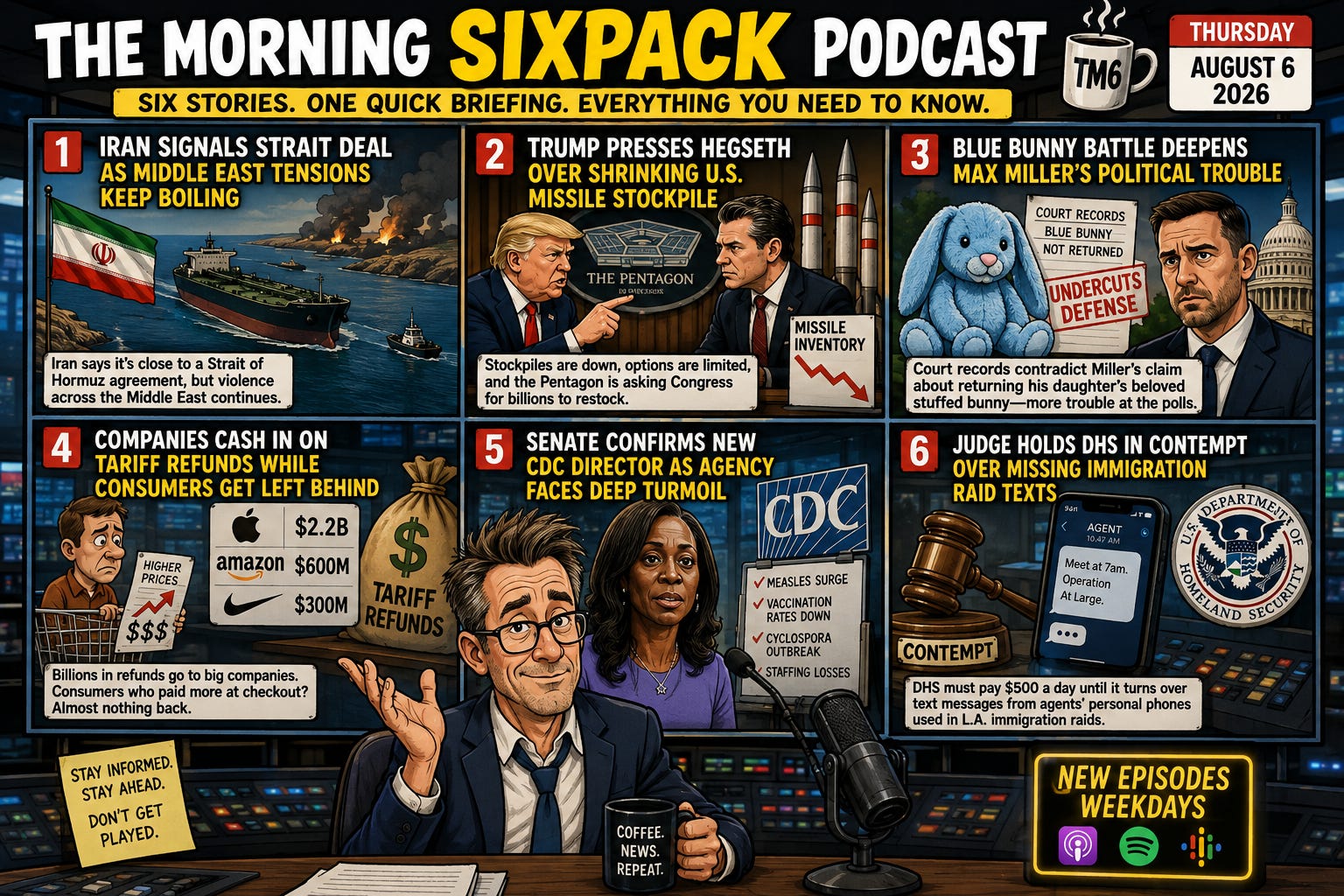
Iran says a Strait of Hormuz deal is nearly done, but in the Middle East, "almost finished" has a habit of becoming tomorrow's crisis.
Iran Signals Strait Deal as Middle East Tensions Keep Boiling
Iran says it’s in the final stage of negotiating a Strait of Hormuz agreement with Oman, even as violence continues across the region from Lebanon to Iraq.
If the deal moves forward, it could reshape one of the world’s most important shipping lanes—but only if Washington and Tehran stop treating diplomacy like a contact sport.
The proposed agreement would govern cooperation over the Strait of Hormuz, the narrow waterway that carries roughly one-fifth of the world’s oil and natural gas. Iranian Foreign Ministry spokesman Esmail Baghaei said the draft is nearly complete and suggested outside interference—pointing at the U.S.—could still derail it. Iran has also indicated the agreement depends on the U.S. lifting restrictions affecting its ports.
Meanwhile, commercial shipping remains on edge. Lloyd’s List Intelligence reported at least two Greek-controlled vessels were struck in the Strait over the past week, while others received warnings from groups claiming ties to Iran’s Revolutionary Guard. Traffic has improved from recent lows but remains dramatically below pre-war levels. As maritime analyst Bridget Diakun put it, “This is one data point. It’s not indicative that owners are more confident in the situation.”
Elsewhere, the fighting hasn’t let up. Two Israeli soldiers were killed in southern Lebanon in the first Israeli combat deaths since June’s fragile ceasefire with Hezbollah. The deaths came as Israeli and Lebanese negotiators met in Rome to discuss implementing the truce, while Israel continued strikes in southern Lebanon after accusing Hezbollah of violating the agreement.
The broader region remains volatile. Israel charged settler Yinon Levi with reckless manslaughter in the 2025 killing of Palestinian activist Awdah Hathaleen—an unusually rare prosecution in the West Bank. Iraq is threatening legal action against armed militias that refuse to disarm by Sept. 30, while Sudan’s war continues to endanger the ancient Meroe pyramids, one of Africa’s most important archaeological treasures.
Source: Associated Press
Editor: Everybody says they want stability in the Middle East. The scoreboard keeps suggesting otherwise.
Running low on missiles is what happens when wars last longer than the sales pitch.
Trump Presses Hegseth Over Shrinking U.S. Missile Stockpile
President Donald Trump reportedly confronted Defense Secretary Pete Hegseth over dwindling U.S. missile inventories that are limiting military options against Iran.
It’s a lot easier to promise overwhelming force than it is to replace the weapons after they’re fired.
According to a Washington Post report, Trump challenged Hegseth during last week’s Camp David meeting after learning critical stockpiles of long-range missiles and air-defense interceptors remain dangerously low. The reported exchange came as Trump questioned why he believed the problem had already been solved, while military planners continue wrestling with depleted inventories.
The shortages are reportedly one reason Trump backed away from launching another major strike on Iran, despite saying earlier this week he had canceled what would have been “the biggest attack since World War II.” The administration insists America’s arsenal remains strong, but manufacturing replacements for systems like Patriot interceptors can take years—not months.
The numbers tell the story. Since fighting began, the U.S. has fired hundreds of Tomahawk cruise missiles, more than 1,000 Patriot and THAAD interceptors, and exhausted much of its ATACMS inventory. Those shortages are also affecting Ukraine’s air defenses while forcing the Pentagon to become more selective about intercepting incoming threats.
The report also says Hegseth denied misleading the president and instead blamed internal communication failures. The White House flatly rejected the account, calling it “100% fake news,” while Pentagon officials denied any disagreement over the nation’s weapons posture. Even so, the administration is seeking tens of billions of dollars from Congress to begin rebuilding inventories after months of heavy combat operations.
Source: The Washington Post (free)
Editor: Wars don’t just burn through patience. They also burn through very expensive hardware that can’t be replaced with overnight shipping.
When your campaign is arguing over a stuffed bunny instead of policy, you've already lost the plot.
Blue Bunny Battle Deepens Max Miller’s Political Trouble
New court records undercut Rep. Max Miller’s public defense after he denied withholding his toddler daughter’s stuffed blue bunny during a bitter custody dispute.
It’s hard to run on family values when the campaign trail runs straight through a stuffed animal.
The controversy exploded after Sen. Bernie Moreno accused his former son-in-law of refusing to return his granddaughter’s beloved blue bunny during a custody exchange. Miller fired back on social media, insisting the toy was returned within 14 hours and accusing Moreno of spreading lies.
Miller literally held his daughter’s “blue bunny” hostage. He’s a walking freak show.
But newly reported court records tell a different story. According to Mother Jones, the court-appointed parenting coordinator recommended the bunny remain with the child, yet Miller allegedly refused to return it. An attorney representing Miller’s ex-wife called the situation “totally ridiculous” and demanded the stuffed animal be returned immediately.
The records also show the dispute stretches back well before it became a political headline. In a 2025 email, Emily Moreno pleaded with Miller, writing, “Please don’t punish [redacted] if you’re upset with me.” Bernie Moreno later told reporters his granddaughter was left crying because she couldn’t sleep without the blue bunny, adding, “This is the level of total and complete depravity.”
The custody fight is now spilling into politics. Miller is already facing domestic abuse allegations that he denies, slipping in polling for his Ohio congressional seat, and public calls from fellow Republicans to step aside. According to reports, even President Trump warned Miller his reelection could be in serious jeopardy.
Source: Raw Story
Editor: Every campaign says it’s about the issues. Somehow this one ended up hinging on a stuffed rabbit and a courtroom.
Turns out the tariff refunds are a lot like government promises—everybody hears about them, but the big checks go somewhere else.
Companies Cash in on Tariff Refunds While Consumers Get Left Behind
Major corporations are collecting billions in tariff refunds after the courts struck down key Trump tariffs, but the consumers who paid higher prices (YOU) won’t be getting checks in the mail.
If you helped pay those higher prices at the checkout counter, don’t expect Uncle Sam—or the retailer—to make you whole.
Apple reportedly received an estimated $2.2 billion tariff refund last quarter, while Amazon collected roughly $600 million and Nike about $300 million. Those payouts are part of what could eventually total about $166 billion in government refunds to importers after the Supreme Court invalidated many of President Trump’s broad tariffs.
Consumers, however, are largely shut out. Federal law only allows the companies or customs brokers that directly paid the tariffs to claim refunds. Even though many businesses passed at least part of those costs on through higher prices, shoppers have no legal claim to recover what they spent. The Tax Foundation estimates tariffs cost the average household about $1,000 last year.
Amazon is one of the few companies promising direct customer refunds in limited situations where it can identify specific import charges that were passed through to buyers. Other retailers, including Costco, Walmart, and BJ’s, say they’ll return value through lower prices or future savings rather than mailing refund checks. Apple says it’s using its refund to expand U.S. manufacturing.
Companies also argue the money is helping offset other rising costs, including higher freight and energy expenses tied to the Iran war. That makes widespread consumer refunds even less likely, despite the billions now flowing back to corporate balance sheets.
Source: CNN
Editor: Funny how the bill reached consumers almost instantly, but the refund somehow found its way to the executive suite. No doubt, all of those CEOs will get fat bonus checks paid for by YOU and ME.
The CDC finally has a confirmed boss. Now comes the easy part (LOL)—fixing an agency that's been through the political blender.
Senate Confirms New CDC Director as Agency Faces Deep Turmoil
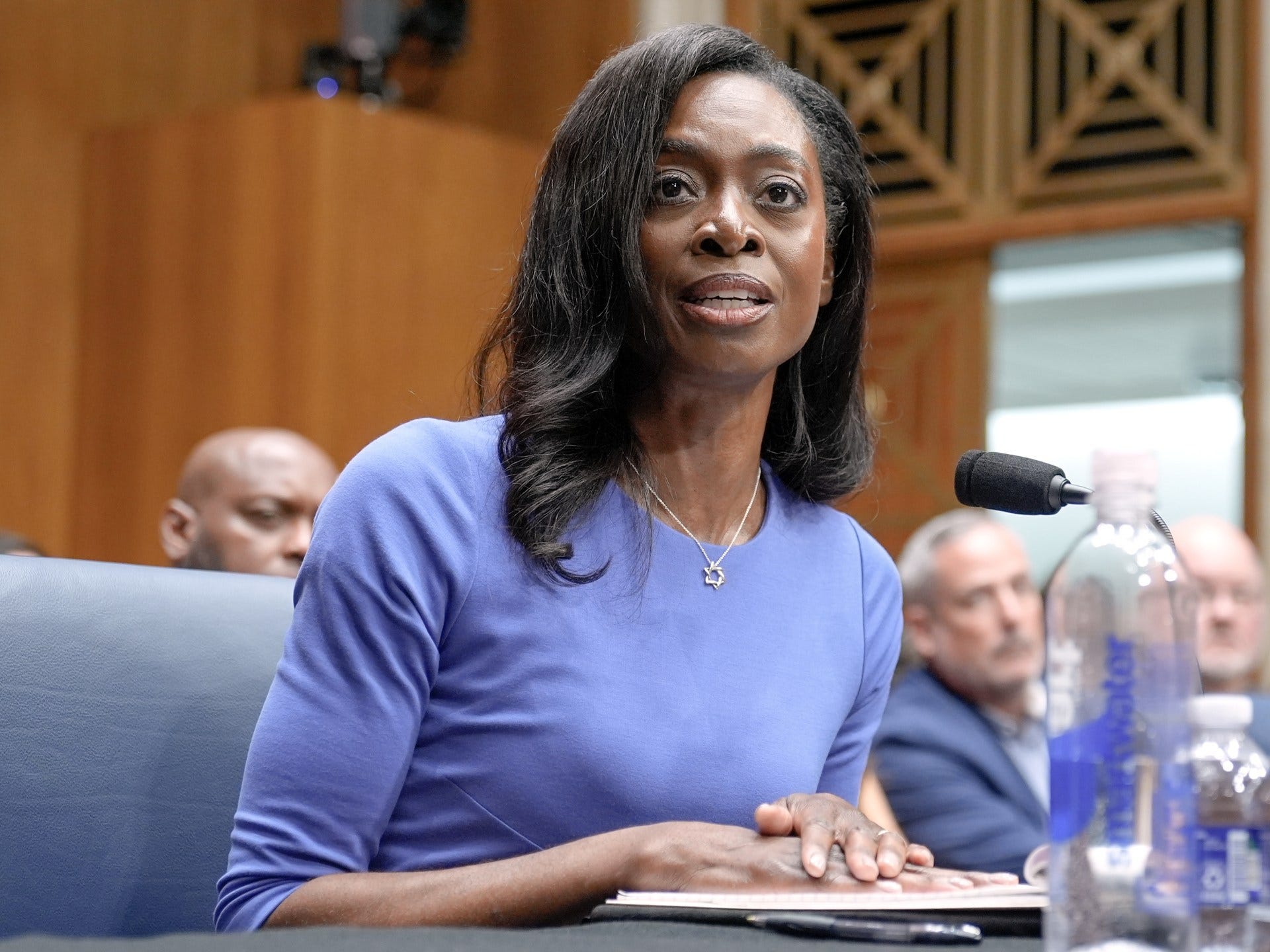
The Senate confirmed Dr. Erica Schwartz to lead the Centers for Disease Control and Prevention, giving the embattled agency its first confirmed director since last year’s leadership shakeup.
Getting confirmed was the easy vote. Rebuilding trust inside the CDC may be the hardest job in Washington.
Schwartz won Senate approval in a 51-44 vote as the CDC continues to struggle with low morale, mass resignations, and growing public health challenges. She becomes President Trump’s third nominee for the position in just 18 months after former director Susan Monarez was dismissed amid disagreements over vaccine policy.
Public health leaders say the agency desperately needs steady leadership after losing roughly 3,000 employees through layoffs and resignations. Many departing workers cited frustration with vaccine policies championed by Health and Human Services Secretary Robert F. Kennedy Jr. that departed from longstanding public health guidance.
Schwartz brings both medical and law degrees to the job and previously served as deputy surgeon general. During her confirmation process, lawmakers questioned whether she would follow scientific evidence or political pressure from the administration. Sen. Bill Cassidy initially expressed concerns but later said conversations with Schwartz gave him greater confidence in her independence.
The challenges waiting on her desk are significant. The CDC is confronting the nation’s worst measles resurgence in three decades, declining childhood vaccination rates, and an ongoing cyclospora outbreak. As Dr. Georges Benjamin of the American Public Health Association put it,
“With all the turmoil of the past two years, the CDC desperately needs stability, experienced leadership, and a steadfast commitment to science.”
Source: Al Jazeera
Editor: Public health doesn’t care about party affiliation. Viruses don’t check voter registration before they spread.
Using personal phones for government business never seems like a problem—until a judge asks to see the messages.
Judge Holds DHS in Contempt Over Missing Immigration Raid Texts
A federal judge has held the Department of Homeland Security in contempt after officials failed to produce text messages from agents’ personal cellphones tied to Los Angeles immigration operations.
Deleting trust is a lot easier than producing records when a court comes calling.
U.S. District Judge Maame Ewusi-Mensah Frimpong ruled that DHS failed to comply with court orders requiring it to search personal cellphones used by federal agents during Operation At Large, a series of immigration enforcement actions in Los Angeles last year. The judge ordered the department to pay $500 per day until it turns over the requested communications. Guess who ultimately pays the penalty? YOU and ME.
The court found DHS had been given “plenty of time” to locate messages related to 15 immigration enforcement operations. The records are being sought as part of a lawsuit brought by the American Civil Liberties Union, Public Counsel, and other advocacy groups challenging whether federal agents improperly relied on an individual’s perceived race when making immigration stops.
This will go nowhere: The Supreme Court already ruled the feds CAN rely on race to apprehend people.
The case centers on agents who allegedly used personal devices for official communications during the enforcement operation. The missing messages have become a key piece of evidence in the legal battle over how the raids were conducted and whether constitutional protections were violated.
The contempt ruling adds another legal headache for DHS as the agency faces increasing scrutiny over immigration enforcement practices and compliance with court orders.
Source: NOTUS
Editor: Government business belongs on government records. Otherwise, every missing text starts looking a lot more important than the one before it.