


The politics hardened, the markets screamed, and immigration enforcement finally hit a wall—at least in one state. Here’s what matters, and why it’s all colliding at once.
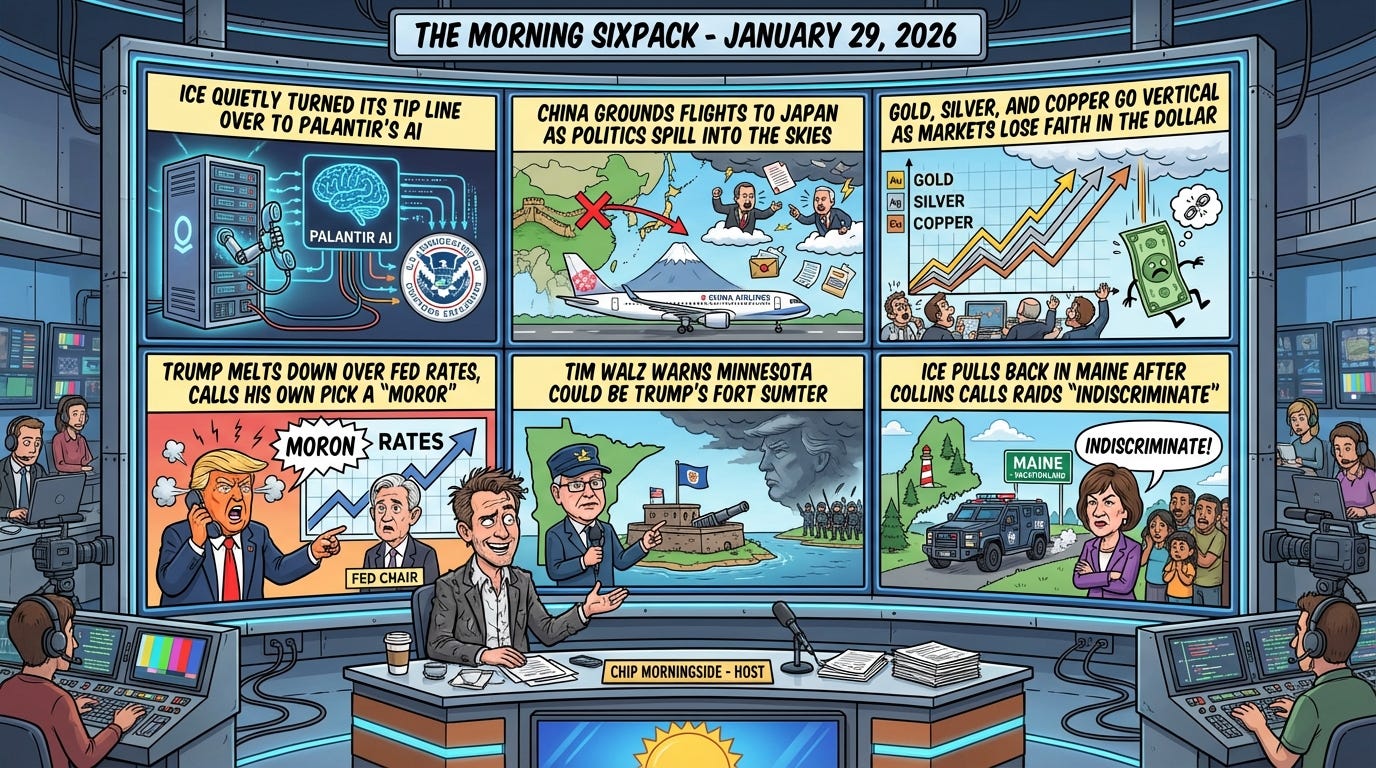
ICE quietly handed its public tip line over to Palantir-powered AI, automating how immigration leads are sorted, translated, and summarized.
Federal documents revealed that ICE is now using generative AI to process tips from the public, speeding up prioritization and reducing human review. Officials insist the models weren’t trained on government data, but the system directly interacts with live submissions—raising new concerns about scale, accountability, and how enforcement decisions get made faster and farther from public view.
China cut off air travel to Japan, grounding dozens of routes as political tensions spilled straight into tourism.
Beijing’s anger over Japan’s stance on Taiwan escalated into a blunt economic signal: Chinese airlines canceled all flights to Japan. Tourists didn’t stop traveling—they just redirected to South Korea and Vietnam—underscoring how geopolitics now reroutes people as easily as trade.
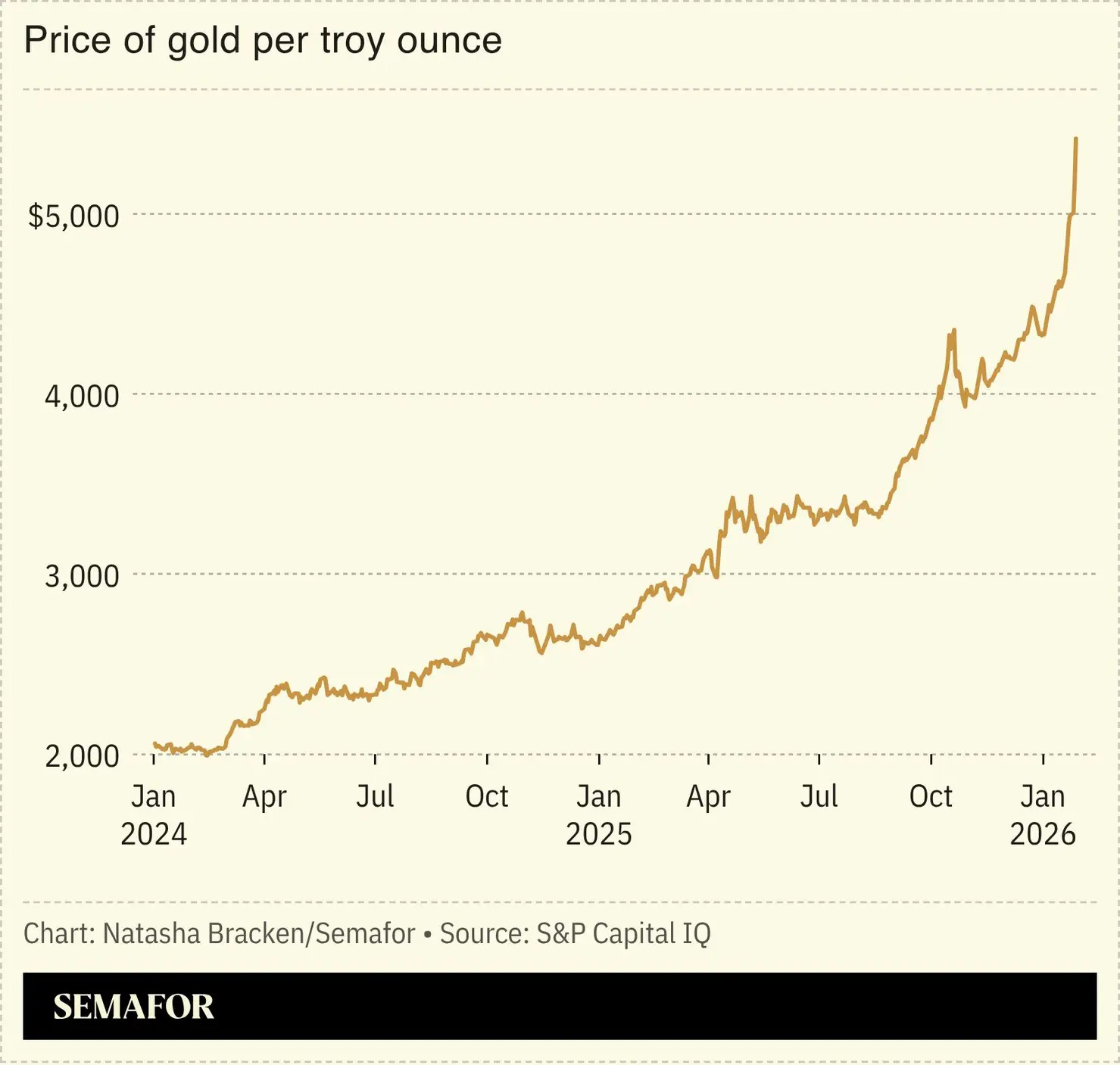
Gold, silver, and copper all ripped to record highs as investors lost faith in the dollar.
With confidence shaken by attacks on the Federal Reserve and rising geopolitical risk, money fled into hard assets. Gold blasted past even bullish forecasts, silver surged nearly 60% this year, and copper drew in speculators alongside energy-transition demand—a classic risk-off signal wrapped in a speculative frenzy.
Donald Trump publicly unloaded on Federal Reserve Chair Jerome Powell in a pre-dawn tirade.
After the Fed refused to cut rates, the president attacked Powell by name, accusing him of harming national security and costing the U.S. hundreds of billions. Powell stuck to the central bank’s line—finish the inflation fight—while Trump made clear he sees monetary policy as another lever that should answer directly to him.
Minnesota Gov. Tim Walz warned the federal crackdown in his state feels like a modern Fort Sumter moment.
After two residents were killed by federal agents and state officials were blocked from investigating, Walz openly questioned whether the country is drifting toward internal conflict. He rejected escalation, deployed the National Guard only for humanitarian support, and warned other governors that Minnesota may be a preview of what’s coming.
ICE abruptly ended its enforcement surge in Maine after pressure from Sen. Susan Collins.
Calling the operation “too sweeping and indiscriminate,” Collins forced a pullback following more than 200 arrests in a week. The retreat highlights growing bipartisan discomfort with aggressive tactics—and how quickly enforcement priorities change when reelection politics enter the chat.
Power is being tested across institutions—courts, markets, borders, and states—and the throughline is unmistakable: pressure applied long enough eventually produces resistance. The only question left is how much damage happens before the pushback sticks.


