


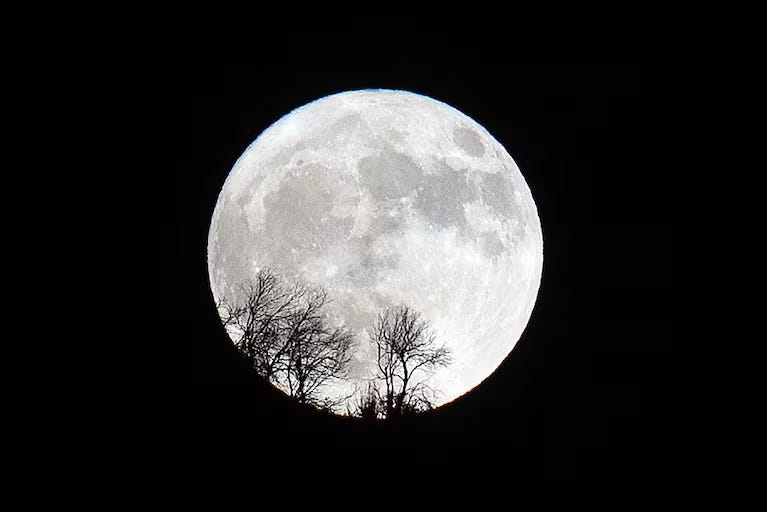
When you’re losing the space race, apparently the answer is to pack up a nuclear reactor, strap it to a rocket, and blast it to the moon.
That’s the plan coming out of the Trump administration, courtesy of acting NASA Administrator (and, apparently, part-time Transportation Secretary) Sean Duffy. His directive, sent to NASA brass in July and obtained by NPR, calls for a fully operational 100-kilowatt nuclear reactor on the lunar surface by 2030. Translation: Enough juice to power maybe 70 or 80 homes on Earth—so not exactly Vegas Strip levels of electricity, but enough to keep astronauts alive, warm, and scrolling TikTok during the two-week lunar night.
Why Nukes and Not Just Solar?
Solar panels work fine in orbit or on the moon—until the sun dips below the horizon for half the month. Batteries alone won’t cut it for a permanent lunar base. Roger Myers, an expert in space-based nuclear power, puts it bluntly: “You have to have another source of energy. The sun and batteries do not work.” That’s where nuclear steps in—reliable power, no matter the phase of the moon.
How It Works Up There
A lunar nuke runs the same basic way as one on Earth—uranium fuel, controlled fission reaction, heat to electricity—just without the cooling lakes and rivers we use here. Instead, the moon’s reactors will need massive radiators to dump excess heat straight into space, running at higher operating temperatures because there’s no atmosphere to help out. In other words, it’s nuclear power with zero margin for cooling failure.
Risks? Sure. But Different Ones.
On Earth, nuclear accidents spread fallout through wind and rain. On the moon, no such problem—no atmosphere means radioactive particles stay put. The bigger threats are moonquakes or meteorites damaging the unit, plus the big question of end-of-life disposal. Nobody wants a repeat of 1978’s Soviet Kosmos 954 fiasco, when a malfunctioning nuclear satellite broke up over Canada and scattered radioactive debris.
Kathryn Huff, a nuclear engineering professor and former DOE official, notes that launching and decommissioning the reactor are the real high-stakes parts. She says it can’t “blow up the moon” (thanks for clarifying), but reentry safety will be critical if we ever bring it home.
The Political Clock Is Ticking
This isn’t just about science—it’s about beating China and Russia to the punch. Duffy warns that if they get there first, they could create “keep-out zones” that complicate U.S. access. That’s a real geopolitical concern, but here’s the kicker: NASA’s workforce is already down 20% thanks to the administration’s “deferred resignation” program, and the proposed FY 2026 budget would cut funding by nearly a quarter.
Sure, Congress might restore funding levels, and Trump’s “One Big Beautiful Bill Act” sets aside $10 billion for NASA through 2032, but this reactor alone could burn through $3 billion in just five years. That’s a lot of moon money.
The Timeline Problem
Getting a nuclear reactor to the moon in under five years is… ambitious. Huff and others suggest a multiyear review process with NASA, DOE, and international partners before launch. That’s assuming the whole thing doesn’t become a military chest-thumping contest disguised as a science mission.
The Science vs. the Flag-Planting
Huff’s final warning: Focus on the science, not the bragging rights. That means collaboration with allies, thoughtful safeguards, and resisting the urge to just rush something nuclear into space because it sounds cool on a campaign stump speech.
Source: NPR
Moon nukes by 2030? Great. I can’t get my ISP to keep service running through a summer thunderstorm, but sure—let’s trust the government to keep a fission reactor humming 240,000 miles away.