


Benjamin Netanyahu just got his security cabinet to sign off on the biggest tactical shift of the Gaza war so far—a phased occupation of Gaza City.
It’s a move that risks more civilian deaths, more Israeli hostages in harm’s way, and a political firestorm that’s already burning hotter than the August sun. But for Netanyahu, this is about finally “taking control” and proving he can deliver the kind of hardline victory his far-right coalition has been demanding since day one.
The new plan has the Israel Defense Forces preparing to physically hold Gaza City—something they’ve never done before—while somehow still handing out humanitarian aid outside “combat zones.” That last part is as vague as it sounds, and Israel’s allies are already split. Australia and the U.K. condemned the plan outright. Germany, usually one of Israel’s most reliable backers, went a step further and said it will halt exports of military equipment that could be used in Gaza.
For Netanyahu, that’s the diplomatic equivalent of your best friend telling you they can’t lend you money anymore.
Trump hasn’t given an official thumbs-up, but he’s made it clear he’s not standing in the way. Earlier this week he said the decision was “pretty much up to Israel,” which in diplomatic speak is as good as saying, “Go for it, champ.” According to former Israeli diplomat Yaki Dayan, Netanyahu’s been coordinating this whole thing with Trump behind the scenes. So yes—the U.S. and Israel are in lockstep, at least for now.
The plan stops short of a full Gaza-wide occupation, but it cements “Israeli security control” as a condition for ending the war. That’s been a dream for Netanyahu’s far-right partners, who’ve long argued for reestablishing Israeli settlements in the enclave. The IDF has pushed back, warning that it puts hostages at greater risk and burdens the military with a costly, indefinite presence in hostile territory. But the cabinet’s vote signals that political pressure—not military caution—is calling the shots.
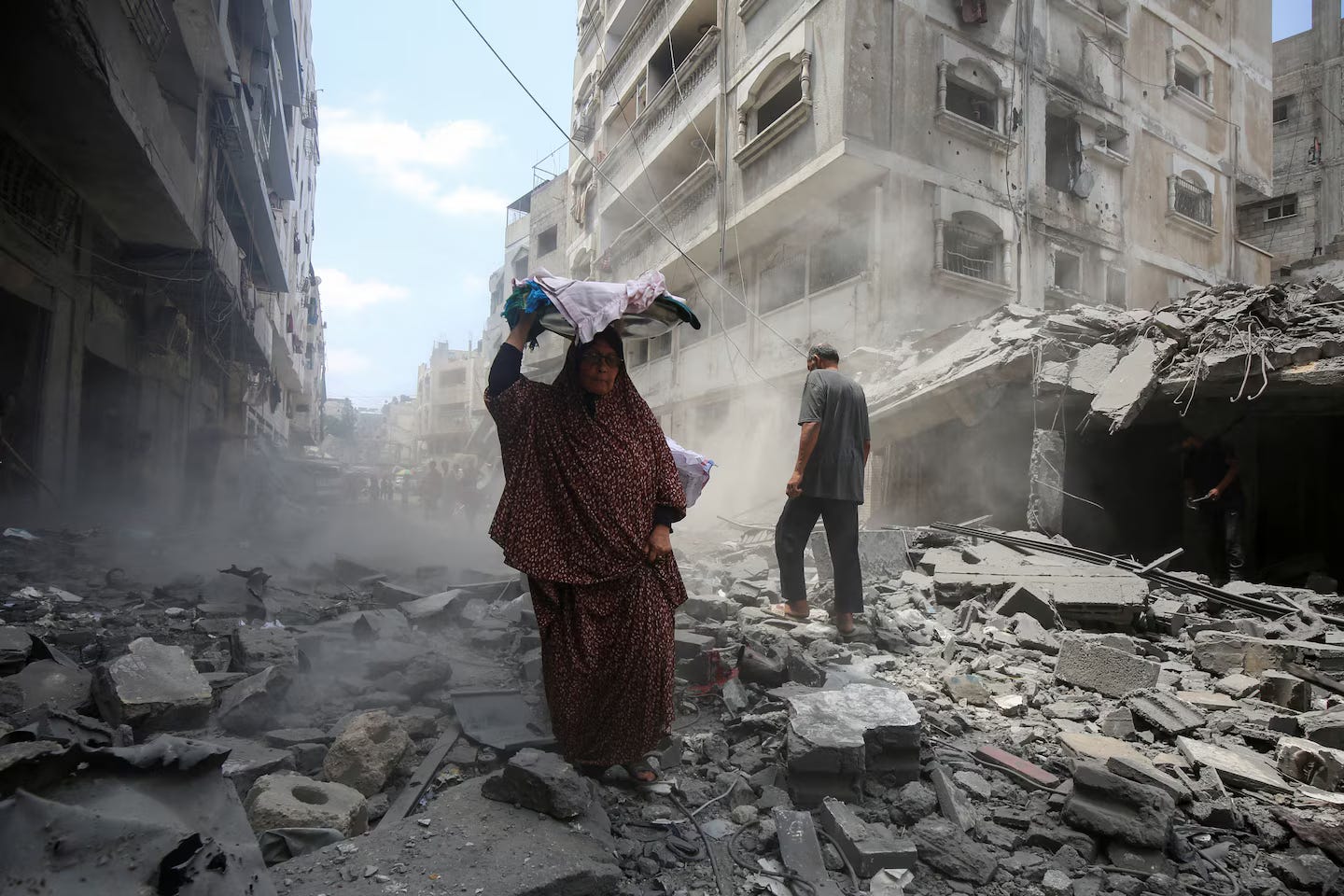
For Gaza’s residents, the news is devastating. Gaza City is home to more than 650,000 people crammed into just 18 square miles. Many have already been displaced multiple times during the war. Now they’re facing forced evacuation again, a process expected to take two months. “Where does he want to push us? Gaza is tiny,” said Adam Ahmed Salem, a father of three who had only recently returned to the city. Others, like 52-year-old cancer patient Mohamed Said Mortaja, are preparing to leave even before the official orders arrive.
Inside Israel, protests erupted overnight. Opposition leader Yair Lapid blasted the move, calling it a “pointless occupation” that would kill hostages, cost billions, and leave Israel bogged down without an exit strategy. Hostage families are equally furious, warning that military escalation will doom their loved ones.
Their message is simple: Negotiate first, fight later.
Netanyahu’s response? Double down on war aims he’s been repeating for nearly two years—disarm Hamas, free the hostages, install a new civilian administration, and keep Israeli security in charge.
On the ground, the IDF says it controls about 75% of Gaza already, with the remaining 25%—including Gaza City—holding some of the last hostages and Hamas strongholds. But Hamas says Netanyahu’s “delusions” will fail, vowing that any expansion will “cost Israel dearly.” That’s not exactly a bluff, given that Gaza City’s dense urban terrain favors defenders and turns every street into a potential trap.
This isn’t just a military gamble—it’s a political one. Netanyahu’s trying to keep his far-right partners happy without alienating the military brass or triggering more resignations. So far, he’s managed to avoid losing IDF Chief of Staff Eyal Zamir, who’s opposed to full occupation but hasn’t quit. But the balancing act is razor thin, and one bad week on the battlefield could blow it all up.
The humanitarian toll is already staggering: Gaza’s Health Ministry says more than 61,000 people have been killed since the war began, most of them women and children. Aid groups warn that famine is spreading. In that context, announcing an urban occupation feels less like a strategic plan and more like a disaster accelerator.
Source: Washington Post
Netanyahu’s “day after” plan still sounds like something he scribbled on a napkin in 2006 and forgot to revise. Unfortunately, the cost this time isn’t just political capital—it’s human lives.
https://substack.com/@globalcompass1/note/p-170565239?r=69vs7g&utm_medium=ios&utm_source=notes-share-action