


Washington is trying to turn the Strait of Hormuz into a toll road and the rest of the shipping world is looking at the receipt with raised eyebrows.
Trump’s Strait of Hormuz Toll Threat Sends Oil Higher as Shipping Industry Pushes Back
Oil prices climbed after President Trump floated a 20% charge on cargo moving through the Strait of Hormuz while ordering a renewed blockade of Iranian ports, raising fears of higher energy costs and escalating tensions in one of the world’s most important shipping lanes.
The fight is no longer just about missiles—it’s becoming a battle over who controls the price of moving the world’s energy.
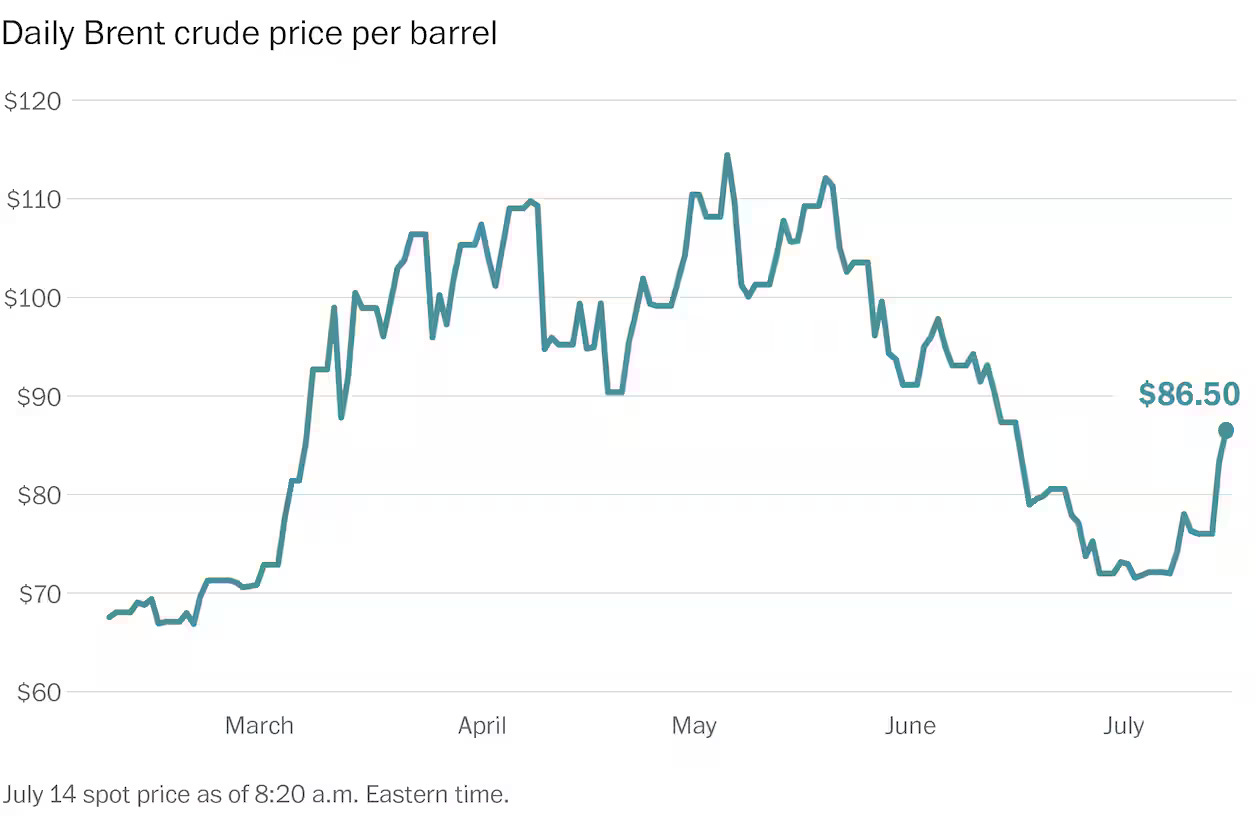
The latest round of U.S. and Iranian strikes followed the collapse of their preliminary peace agreement, with both sides trading attacks as commercial shipping in the Strait of Hormuz remains under pressure. Roughly one-fifth of the world’s oil and natural gas passes through the narrow waterway, making every new threat a global economic concern.
Trump said the United States should be “reimbursed” 20% of cargo moving through the strait for providing security, while announcing the return of a blockade on Iranian ports.
Iran’s Foreign Minister Abbas Araghchi fired back with a pointed social media response: “POTUS is absolutely right. Whoever provides secure and safe passage of commercial vessels through the Strait of Hormuz should be compensated for this service. Iran has always been the GUARDIAN of the Strait and will remain so FOREVER. 20% is of course too much. We will be fair.”
Shipping companies and maritime officials weren’t buying the idea. German carrier Hapag-Lloyd said charging tolls in international waters would be “fundamentally wrong,” while the International Maritime Organization reiterated that passage through the Strait of Hormuz should remain free under international law. If both sides keep treating one of the world’s busiest shipping lanes like a bargaining chip, don’t expect oil markets—or consumers filling up at the pump—to stay calm.
Source: Washington Post
Editor: Every time politicians decide to experiment with global trade routes, everyone else gets to test how much they enjoy paying more for just about everything.
Hunter Biden says one Laura Loomer post was all it took for President Trump to yank his Secret Service protection—talk about social media getting results.
Hunter Biden Says Laura Loomer’s Post Led to Trump Pulling Secret Service Protection
Hunter Biden says his Secret Service protection was revoked one day after conservative activist Laura Loomer posted photos of him and his family in South Africa, prompting renewed debate over presidential security decisions.
One viral post, one presidential decision—and one very public victory lap from Laura Loomer.
Speaking on the “Friends Keep Secrets” podcast, Biden said he and his wife, Melissa, traveled to South Africa in 2025 after the Palisades Fire made returning to their Malibu home impossible. He said Loomer posted a photo of the family in Cape Town, criticized taxpayers for funding his security detail, and that President Trump canceled the protection the following day. Biden added, “I think so,” when asked if he was the first person to have Secret Service protection revoked under those circumstances.
Loomer quickly embraced Biden’s account, reposting the clip with the caption, “LOOMERED.” She also wrote, “How is me getting Hunter Biden’s Secret Service protection removed a bad thing when it was paid for by taxpayers? It was a total scam of the American people and I stopped it. Honestly, I deserve a medal. But all I get is s— talk.”
The Secret Service has not publicly commented on Biden’s claim. Trump announced in March 2025 that Hunter Biden and Ashley Biden would lose their protective details, adding to a list of former officials—including Mark Esper, John Bolton, Mike Pompeo, Anthony Fauci, and Brian Hook—whose security protections he had previously revoked. Whether the timing was coincidence or cause and effect, Loomer clearly believes she deserves the assist.
Source: The Hill
Editor: Social media has become the place where people chase likes, settle scores and, apparently, influence federal security decisions. That’s quite an upgrade from posting vacation photos.
China’s export machine just found another gear and artificial intelligence is helping keep the assembly lines humming.
China’s AI Boom Supercharges Exports as Trade Surplus Swells
China’s exports surged 27% in June, fueled by soaring demand for AI-related technology, giving the country’s economy another boost despite growing concerns over global trade barriers.
AI isn’t just changing software—it’s reshaping global trade flows and pumping billions into China’s export engine.
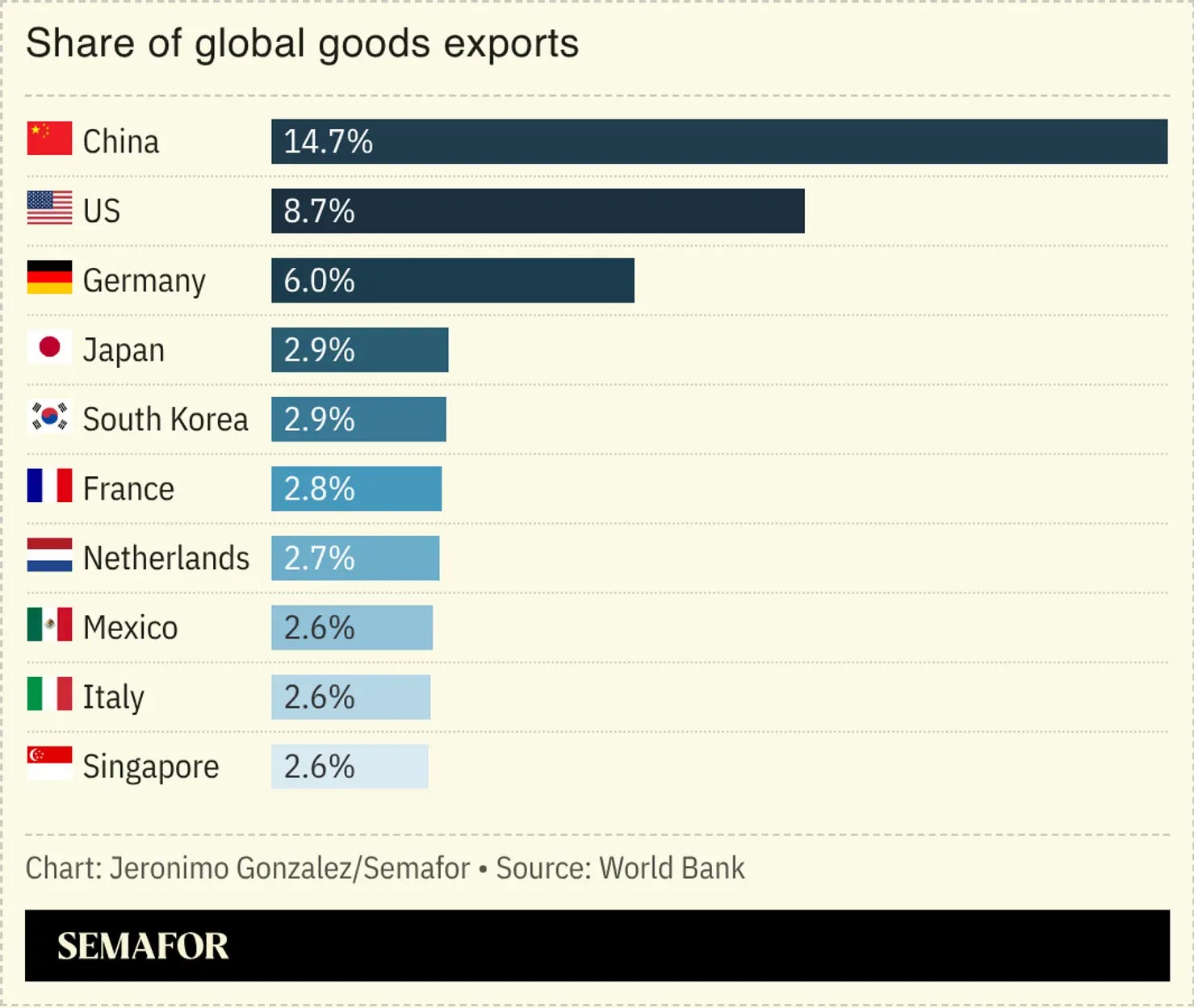
China’s customs agency said exports jumped far beyond expectations in June, while imports climbed 36%, pushing the country’s monthly trade surplus to $125.6 billion. Officials credited booming demand for semiconductors, computer components, and other AI hardware, with trade in those products soaring nearly 57% during the first half of the year.
The momentum extends well beyond chips. Chinese exports of electric vehicles, AI-powered devices, smart glasses, translation gadgets, and powered exoskeletons continue to grow as businesses around the world race to expand AI capabilities. Economists said rising semiconductor prices tied to the AI boom helped drive the latest trade surge, while strong overseas demand continues to support Chinese manufacturing.
Chinese officials acknowledged that rising tariffs and other trade barriers remain a growing risk, even as exports to Southeast Asia, Europe, Latin America, and the United States all posted healthy gains. The message is clear: China is betting that AI and advanced manufacturing can keep its economy moving, even as the rest of the world tries to slow it down.
Source: Associated Press
Editor: The world’s biggest manufacturing economy isn’t waiting around for permission. While governments debate tariffs, China is busy shipping the technology everyone suddenly can’t build fast enough.
Trump is once again slashing the size of two Utah national monuments, setting up another courtroom showdown over who gets the final say on America’s public lands.
Trump Shrinks Bears Ears and Grand Staircase Again, Setting Up New Legal Fight
President Trump has reduced the size of Utah’s Bears Ears and Grand Staircase-Escalante national monuments by roughly 90%, reviving a battle over conservation, energy development, and federal authority.
Round two has begun—and the lawsuits are already warming up.
Standing alongside Utah’s governor and the state’s congressional delegation, Trump signed proclamations shrinking Grand Staircase-Escalante by about 90% and Bears Ears by 91%. The president called the move a matter of fairness and local control, while Gov. Spencer Cox described it as “right-sizing” the monuments without eliminating existing protections for historic and cultural sites.
Conservation groups immediately blasted the decision as unlawful and pledged to challenge it in court, arguing the changes could open more land to mining, energy development and other industrial uses. The administration’s proclamation specifically points to valuable minerals—including copper and uranium—as part of its broader push to expand domestic energy production and reduce regulatory barriers.
Native American leaders also condemned the move, saying it reverses years of collaboration over managing culturally significant lands. Bears Ears alone contains more than 100,000 archaeological sites, while supporters of the monuments argue they also fuel Utah’s outdoor recreation economy. The fight now shifts from the Oval Office back to the courtroom, where this dispute landed after Trump’s first round of monument reductions in 2017.
Source: KUER
Editor: Public lands have become political ping-pong. One administration expands them, the next shrinks them, and the lawyers are the only ones who can count on steady work.
Mexico is turning up the pressure on Washington, saying diplomacy isn’t enough after the deaths of 17 Mexican nationals tied to ICE detention and enforcement actions.
Mexico Demands Criminal Investigations Into Deaths of 17 Citizens During ICE Crackdown
Mexico is calling for criminal investigations into the deaths of 17 Mexican nationals in the United States, escalating tensions with the Trump administration over immigration enforcement and human rights concerns.
After months of careful diplomacy, Mexico is making it clear that quiet conversations are no longer getting results.
President Claudia Sheinbaum said her government will file complaints with the U.S. Justice Department and state authorities following the death of Lorenzo Salgado Araujo, who was killed during an ICE operation in Houston. Mexico is seeking investigations into the deaths of 14 citizens who died in U.S. immigration detention centers and three who were killed during ICE enforcement operations since President Trump returned to office.
Sheinbaum called Salgado Araujo’s death “a case that outraged all Mexicans” and said, “As Mexicans, we must all say that there should not occur human rights violations against Mexicans abroad—not here, and not abroad.”
Mexico’s Foreign Ministry also plans to pursue civil action against private companies operating immigration detention centers, making the issue a top diplomatic priority with Washington.
The dispute marks a sharper tone from Sheinbaum, who had largely avoided public clashes with Trump during earlier tariff negotiations. Now she says diplomatic protests have produced little progress, adding, “They haven’t resulted in anything.” The tougher approach signals that immigration enforcement is becoming an even bigger source of friction between two governments already navigating a complicated relationship.
Source: Washington Post
Editor: Friendly diplomacy works—until it doesn’t. When governments start filing criminal complaints instead of making phone calls, you know the relationship has entered a different phase.
Another fatal ICE shooting—this time in Maine—is putting the agency’s tactics, and its lack of body cameras, under an even brighter spotlight.
Fatal ICE Shooting in Maine Sparks Investigation and Renews Body Camera Debate
A federal immigration officer fatally shot a man during an ICE enforcement operation in Maine, prompting a state investigation and intensifying scrutiny of the Trump administration’s immigration crackdown.
When there’s no body camera footage, every side tells a different story—and everyone else is left waiting for the investigation.
Maine Attorney General Aaron Frey has opened an investigation after an ICE officer shot and killed a 26-year-old Colombian man during an enforcement operation in Biddeford. ICE said the man attempted to flee in a vehicle and that an officer fired out of concern for public safety. Immigration advocates dispute the agency’s account, saying the man was authorized to work in the United States, had been attending immigration court hearings, and was supporting his family.
The shooting comes less than a week after another fatal ICE encounter in Houston involving a Mexican national, adding to growing political pressure over the agency’s enforcement tactics. Sen. Angus King said Homeland Security Secretary Markwayne Mullin told him none of the officers involved in the Maine incident were wearing body cameras, making witness testimony and forensic evidence critical to determining whether deadly force was justified.
Democrats and immigrant advocacy groups quickly renewed calls for mandatory body cameras on ICE agents, arguing the lack of video undermines public confidence. The Department of Homeland Security has said body cameras have been deployed to roughly half of ICE’s field offices, with the remaining offices expected to receive them within 60 days (it’s been over a year since this started). As investigations continue, the case is likely to become another flashpoint in the national debate over immigration enforcement and accountability.
Source: Washington Post
Editor: Whether the officer acted appropriately is exactly what investigators are supposed to determine. But if every major enforcement operation ends with conflicting eyewitness accounts and no video, don’t be surprised when the public fills in the blanks with its own conclusions.