

Congress finally asked the question nobody in the administration wants answered: What exactly is the endgame in Iran besides spending lives and hoping the polls improve?
Admiral Snaps at Democrat Over Iran War Questions as Hearing Goes Off the Rails
The Pentagon’s top commander in the Middle East openly accused a congressman of making an “entirely inappropriate statement” after being pressed on whether the U.S. is actually losing in Iran.
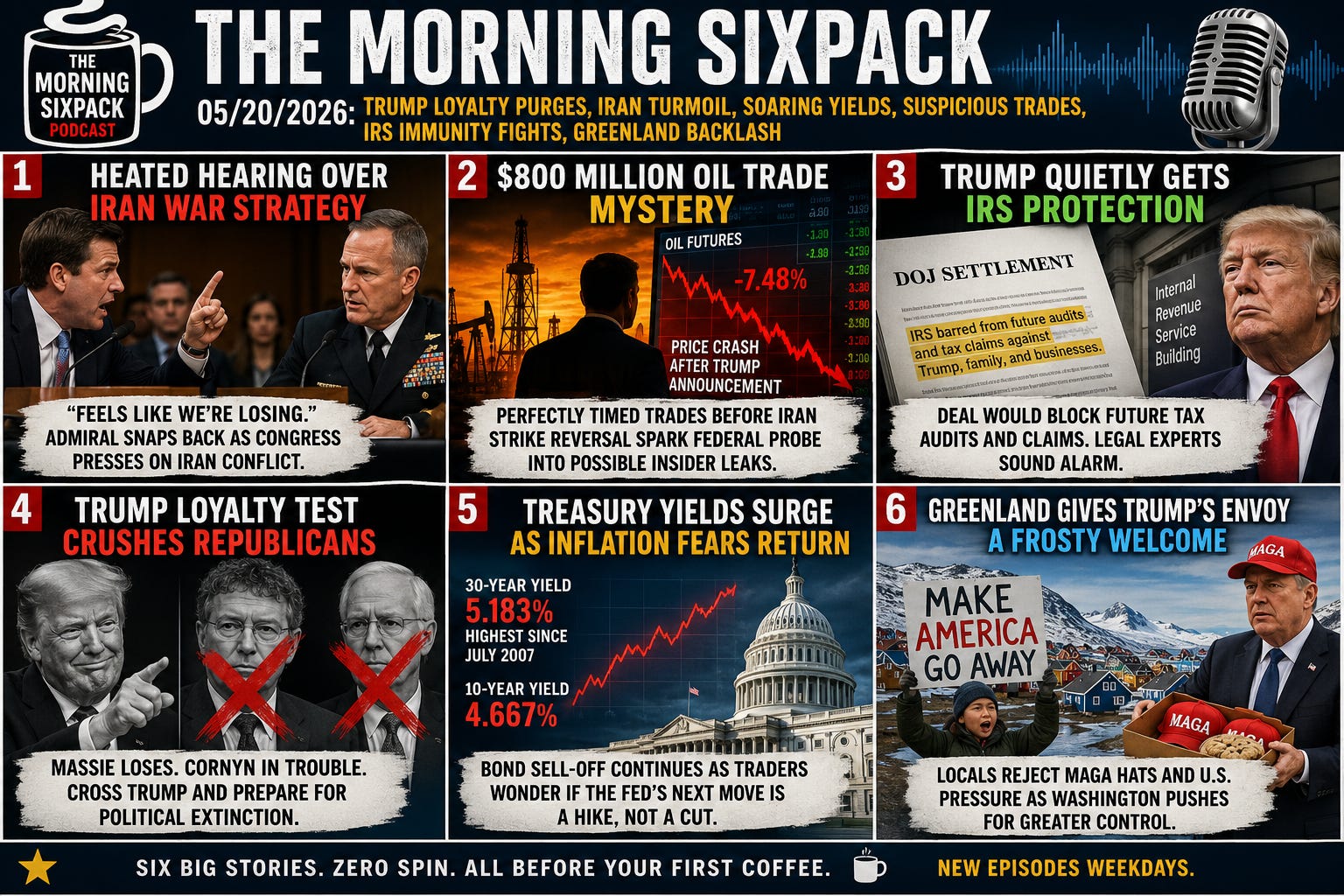
At a heated House Armed Services Committee hearing Tuesday, Adm. Brad Cooper clashed with Rep. Seth Moulton after the Massachusetts Democrat compared the current Iran conflict to the Vietnam era and asked the question hanging over Washington right now: “What’s the plan now to actually win this war? Because it feels like we’re losing.”
Cooper fired back that Moulton’s comments were “entirely inappropriate.”
The hearing exposed growing cracks in support for the administration’s Iran strategy. Democrats hammered Cooper and Pentagon officials over the Strait of Hormuz remaining disrupted, the lack of a nuclear deal, and whether Trump’s team has any realistic path to ending the conflict. Meanwhile, Cooper repeatedly dodged direct answers, insisting policy decisions belong to civilian leadership. That answer gets old fast when bombs are already flying.
The tension escalated when Rep. Jason Crow pushed Cooper to condemn “no quarter” rhetoric tied to Defense Secretary Pete Hegseth. Cooper refused to engage directly, saying only that the military would follow the law of armed conflict “to the T.” Even fellow lawmakers seemed stunned by how defensive the hearing became. One Democrat bluntly told the witnesses, “You just cannot answer a question correctly and directly.”
Trump, meanwhile, admitted this week he was “an hour away” from resuming strikes on Iran before backing off under pressure from Middle Eastern leaders pursuing a peace deal. Polling cited during the hearing showed most Americans now believe military action against Iran was a mistake. That’s probably what happens when the mission keeps changing every other news cycle.
Source: Washington Post article (gift)
Editor: Washington keeps calling this a “limited conflict” while lawmakers are asking how many more Americans might die. That’s usually a sign the sales pitch has expired.
When traders consistently beat geopolitics by a few seconds, somebody usually knows something before the rest of the market does.
$800 Million in Perfectly Timed Oil Trades Sparks Federal Probe
Federal regulators are investigating a burst of oil trades placed just before Trump abruptly backed away from striking Iran’s energy infrastructure—moves that generated massive profits within minutes.
According to the Wall Street Journal, more than $800 million worth of crude oil futures changed hands moments before Trump posted on Truth Social that he was postponing planned strikes on Tehran in March. Oil prices promptly cratered as much as 13%, and several firms walked away with multimillion-dollar gains. The Commodity Futures Trading Commission is now digging into whether anyone traded using advance knowledge of the announcement.
The firms under scrutiny include Qube Research & Technologies, Forza Fund Ltd., and Totsa, the trading arm of TotalEnergies, though none have been accused of wrongdoing. Some firms told investigators they reacted to a Semafor headline published roughly 15 minutes before Trump’s post. Regulators are reportedly trying to determine whether this was sharp algorithmic trading—or a very profitable leak.
And it apparently wasn’t an isolated incident. The CFTC is also examining other suspicious oil trades tied to Iran-related announcements in April and May, including another $700 million burst of futures trading ahead of news about possible peace talks. In markets this sensitive, timing is everything—and these traders had timing that would make Vegas suspicious.
The broader backdrop matters too. Oil markets have been whipped around by the Iran conflict and disruptions in the Strait of Hormuz, while Washington insiders and lawmakers increasingly worry that politically connected players could be profiting from wartime volatility. The White House insists there’s no evidence of wrongdoing, but even administration officials reportedly warned staff in March against leveraging nonpublic information for trades. That’s not exactly the kind of memo you send when everything looks normal.
Source: Wall Street Journal article (gift)
Editor: Somewhere out there is a trader with reflexes faster than the military chain of command and luck better than a Powerball winner. Regulators would understandably like a closer look at that résumé.
The same administration that promised accountability is now experimenting with what looks a lot like presidential warranty protection.
Trump Deal Quietly Includes Protection From IRS Audits and Tax Probes
A newly disclosed Justice Department provision would block the government from pursuing pending tax claims against Donald Trump, his family, and their businesses—potentially shielding them from massive financial liability.
According to the New York Times, the provision was quietly added Tuesday as a supplement to a broader agreement resolving Trump’s lawsuit against the IRS. The document states the government would be “FOREVER BARRED and PRECLUDED from prosecuting or pursuing” pending tax claims involving Trump, his relatives, and affiliated businesses. Legal experts immediately questioned whether such a move is even lawful.
The audit protection was tucked into a deal that also created a $1.8 billion compensation fund for people Trump claims were wronged by federal investigations. Administration officials reportedly argued the fund was acceptable because Trump and his family wouldn’t directly receive money from it. But critics noted that escaping IRS audits could easily be worth far more. One unresolved IRS dispute alone reportedly carried potential exposure exceeding $100 million.
Tax law experts warned the arrangement could represent unlawful political interference in the IRS process. Brandon DeBot of NYU’s Tax Law Center called it “a breathtaking abuse of the tax and legal system.” Even Senate Majority Leader John Thune broke ranks enough to say he was “not a big fan” of the compensation fund and didn’t see its purpose. That’s Washington-speak for “please stop making me defend this on television.”
The controversy intensified because the provision was signed by acting Attorney General Todd Blanche, one of Trump’s closest legal allies, while IRS officials remained publicly silent. During a Senate hearing Tuesday, Sen. Chris Van Hollen accused Blanche of acting more like Trump’s personal attorney than the nation’s top law enforcement official. Blanche replied that he was “the acting attorney general.” The exchange pretty much summarized the entire controversy in two sentences.
Source: New York Times article
Editor: Most Americans get nervous when they see an IRS envelope in the mailbox. Apparently the new strategy is to just negotiate eternal immunity directly with the Justice Department. Efficient, if nothing else.
The message inside today’s GOP is brutally simple: disagree with Trump at your own career’s expense.
Trump Tightens Grip on GOP as Republicans Who Defied Him Get Crushed
Donald Trump’s political loyalty test is reshaping the Republican Party in real time—and lawmakers who once questioned him are getting politically erased.
Kentucky Rep. Thomas Massie became the latest casualty Tuesday after losing his Republican primary to Trump-backed challenger Ed Gallrein in the most expensive House primary race ever. Massie had angered Trump by criticizing the Iran war, opposing parts of Trump’s tax agenda, and refusing to become another automatic yes vote. Trump celebrated the loss afterward, declaring, “He was a bad guy. He deserves to lose.”
At nearly the same time, Republicans in Washington were openly mourning what appears to be the political collapse of Texas Sen. John Cornyn after Trump endorsed Attorney General Ken Paxton in the Senate race. Cornyn’s real offense wasn’t voting against Trump—it was once suggesting Republicans “do better” and briefly doubting Trump’s electability back in 2023. In today’s GOP, apparently that’s enough to earn exile years later.
The irony is that Trump’s loyalty rules seem to apply selectively. Vice President JD Vance once criticized Trump himself. Lindsey Graham famously said “count me out” after January 6 before eventually returning to the fold. But lawmakers like Massie, Cassidy, and Cornyn who resisted Trump at the wrong moment are discovering that political forgiveness inside MAGA world depends entirely on whether Trump personally feels like granting it.
Massie, to his credit, didn’t exactly leave quietly. During his concession speech he warned against Congress becoming a body that “always votes whichever way the wind is blowing,” adding that otherwise “we have mob rule.” Meanwhile several Senate Republicans privately admitted Trump’s endorsement of Paxton could make holding Texas harder in the general election. But those concerns increasingly sound like whispers at a rally nobody wants to interrupt.
Source: Associated Press article and Semafor article
Editor: The GOP used to debate taxes, spending, and foreign policy. Now half the primaries look like performance reviews conducted by one very online boss with a long memory and a Truth Social account.
When the 30-year Treasury starts flirting with 5.2%, suddenly everybody remembers that debt actually costs money again.
Treasury Yields Surge as Inflation Fears Hammer Markets Again
Long-term U.S. Treasury yields just hit levels not seen since the Bush administration as investors dump bonds over fears inflation is roaring back.
The selloff intensified Tuesday after investors reacted to renewed inflation fears tied to soaring oil prices and instability in the Middle East. The 30-year Treasury yield briefly hit 5.197%—its highest level since 2007—while the benchmark 10-year yield climbed near 4.7%. Traders increasingly believe the Federal Reserve’s next move may not be a rate cut at all, but another hike. That’s a sentence Wall Street absolutely did not want to hear in 2026.
Jim Lacamp of Morgan Stanley Wealth Management summed up the mood bluntly on CNBC: “When we started this year, everybody expected rates to come down. Now, it looks like we’re going to see a rate hike.” Markets reacted accordingly. The Dow dropped more than 320 points while the S&P 500 logged its third straight losing session as higher borrowing costs rattled investors.
The bigger problem is what higher yields mean outside trading desks. Mortgage rates, auto loans, and credit card interest all track closely with Treasury yields. That means consumers already squeezed by inflation could soon get hit again by more expensive debt. Meanwhile, analysts warned elevated yields could puncture the sky-high valuations supporting much of the stock market rally.
Bank of America’s latest survey showed just how ugly sentiment has become. Nearly two-thirds of global fund managers now expect 30-year Treasury yields to hit 6%, levels not seen since the late 1990s. Translation: the bond market is starting to price in an economy where inflation sticks around longer, borrowing stays painful, and the Fed loses flexibility. Not exactly the “soft landing” everyone was promised.
Source: CNBC article
Editor: For years Washington treated cheap debt like an unlimited buffet. Now the bill is arriving, and suddenly everyone’s pretending to be shocked by the total.
Turns out threatening to “get” Greenland “one way or the other” is not the ideal icebreaker for winning hearts and minds.
Trump’s Greenland Envoy Gets Frosty Reception After U.S. Pressure Campaign
President Trump’s special envoy to Greenland was met with hostility from locals this week as the administration pushes for a much bigger American role on the Arctic island.
Louisiana Gov. Jeff Landry arrived in Greenland on what he called a goodwill mission, but locals weren’t exactly rolling out the welcome mat. According to the New York Times, one Greenlander flipped off his motorcade, children rejected MAGA hats being handed out, and residents openly mocked the visit. Greenland’s prime minister bluntly responded to Landry’s cookie-and-friendship diplomacy by saying, “We have our red lines.”
Behind the awkward optics is a much bigger geopolitical fight. The Trump administration is reportedly pushing for sweeping influence over Greenland’s economy and security policy, including veto power over major investment deals and permanent military guarantees if Greenland ever becomes independent from Denmark. Officials say the U.S. wants to block China and Russia from gaining influence in the Arctic, where competition for minerals, shipping routes, and military positioning is intensifying fast.
But Greenlanders increasingly see the U.S. approach less as partnership and more as pressure. The administration’s repeated threats to acquire the island have fueled distrust, and even Landry’s attempts at charm reportedly fell flat. Residents carried hats reading “Make America Go Away,” while critics accused Washington of treating Greenland like a geopolitical real estate listing instead of a country with actual people living there.
The administration is also expanding its footprint on the island, reopening old military facilities and upgrading the U.S. consulate in Nuuk. Meanwhile, Trump allies are reportedly scouting opportunities in Greenland’s mineral, energy, and data-center sectors. All of it has Greenlandic officials wondering whether the future being negotiated in Washington includes much say from Greenland itself. As one young woman asked during a business conference speech: “Trump wants to buy a country. Our country. But what about us?”
Source: New York Times article
Editor: America used to send diplomats abroad with trade deals and alliances. Now we’re apparently testing whether chocolate chip cookies and campaign merch can secure Arctic territory.