


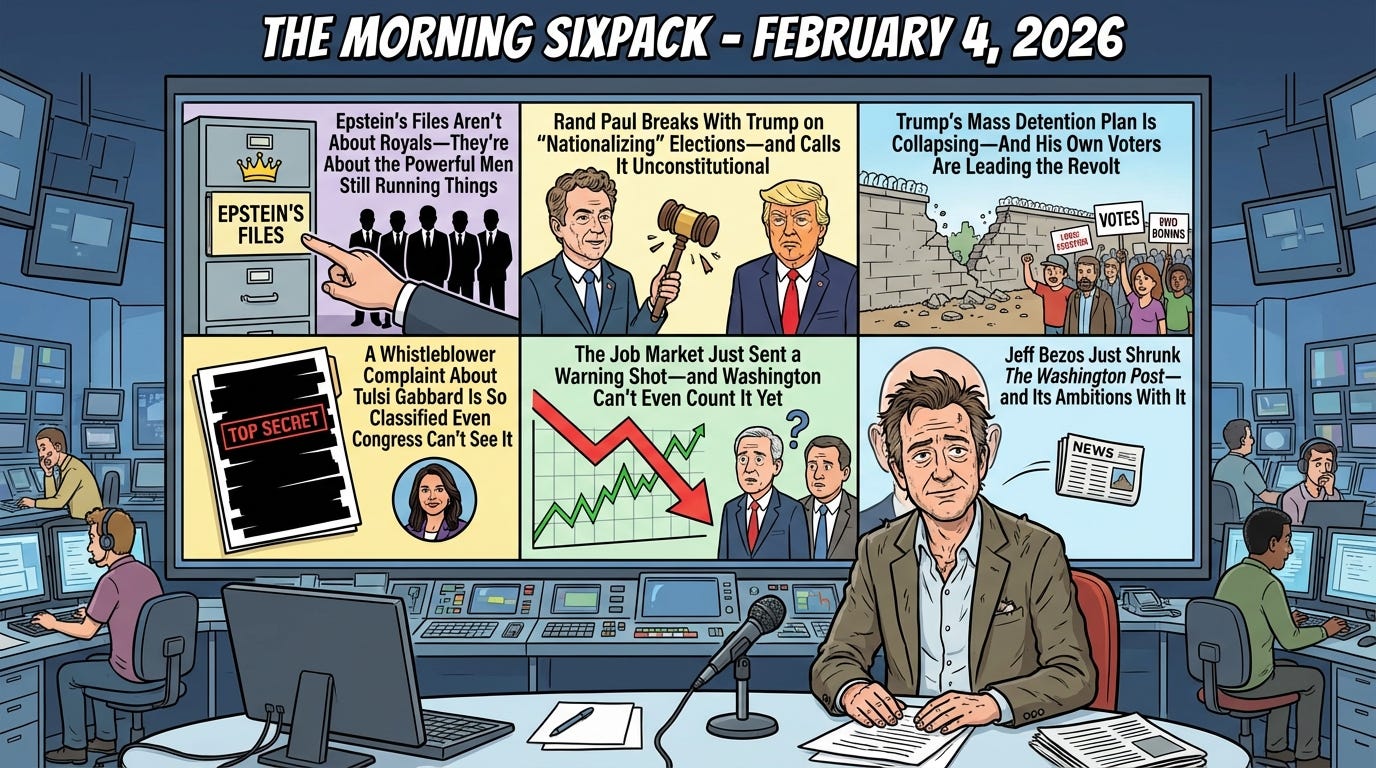
Epstein’s Files Aren’t About Royals—They’re About the Powerful Men Still Running Things
The latest Epstein document dump isn’t about fallen princes or ex-presidents—it’s about influential men who quietly kept climbing while their names sat buried in the files.
Casey Wasserman, Peter Attia, and Brett Ratner were all riding professional highs in early 2026—Olympics power broker, celebrity longevity doctor, Hollywood comeback kid—when newly released Justice Department records dragged their Epstein-era connections into the light. Flirty emails, cozy photos, and years-long correspondence show how Epstein embedded himself deep inside elite business, media, and cultural circles.
The Wasserman emails are the most jarring. In 2003, he exchanged sexually charged messages with Ghislaine Maxwell—“So what do I have to do to see you in a tight leather outfit?”—after flying on Epstein’s jet. Wasserman now says he regrets the correspondence and insists he never had a relationship with Epstein, but the paper trail tells a messier story for the man overseeing the 2028 Los Angeles Olympics.
Peter Attia’s problem isn’t one email—it’s persistence. His name appears more than 1,700 times in the files, documenting a relationship with Epstein that stretched through 2019, the year Epstein was arrested. Attia admitted the messages were “embarrassing, tasteless, and indefensible,” adding, “The man I am today…would not write them and would not associate with Epstein at all.” Growth is great. Timing is awkward.
Then there’s Brett Ratner, whose comeback documentary Melania landed just as photos surfaced showing him socializing with Epstein and accused trafficker Jean-Luc Brunel. Ratner says the images are decades old and meaningless, despite emails showing Epstein continued invoking Ratner’s name to grease introductions long after the director claimed they barely knew each other.
What these files really show is scale. Epstein wasn’t just orbiting famous figures—he was woven into the daily lives of executives, doctors, dealmakers, and cultural gatekeepers who are still very much in charge. The secrecy didn’t protect victims; it protected careers.
Source: The Wall Street Journal (free)
Editor: Funny how “I didn’t know” always ages worse than the emails themselves. Epstein didn’t need secrecy—he needed people willing to look the other way, then act shocked when the receipts finally dropped.
Rand Paul Breaks With Trump on “Nationalizing” Elections—and Calls It Unconstitutional
Rand Paul is drawing a hard constitutional line against Donald Trump’s push to federalize elections, and he’s not hedging about it.
The Kentucky senator said flatly that Trump’s call for Republicans to “take over” voting in multiple states and “nationalize” elections runs directly against the Constitution. “That’s not what the Constitution says about elections,” Paul said, stressing that while courts can impose some uniform rules, the time, place, and manner of elections are clearly left to the states.
Paul made clear this isn’t partisan convenience. He reminded viewers that he also opposed Democrats’ sweeping election bills under President Biden, including legislation backed by then–Speaker Nancy Pelosi that would have shifted major control to Washington. His position, he said, has been consistent: states run elections, not the federal government.
Trump, however, isn’t backing off. He doubled down this week, arguing the federal government should step in to combat what he calls election “corruption,” even suggesting Republicans should “take over” voting in at least 15 states. The White House tried to soften the remarks, but Trump repeated them anyway—this time with more emphasis.
Other Republicans are also pumping the brakes. Senate Majority Leader John Thune said he supports voter ID requirements but opposes federalizing elections, calling it both a constitutional problem and a security risk. “It’s harder to hack 50 election systems than it is to hack one,” he said—a line that neatly sums up why decentralization has survived this long.
The split underscores a growing tension inside the GOP: how far to go in rewriting election rules without blowing past constitutional guardrails. Paul’s answer is simple—don’t.
Source: The Hill
Editor: When Rand Paul is the one waving the Constitution and saying “slow down,” that’s usually a sign someone else is flooring it toward a legal wall. Calling it “election integrity” doesn’t magically rewrite Article I.
Trump’s Mass Detention Plan Is Collapsing—And His Own Voters Are Leading the Revolt
Donald Trump and Stephen Miller want to build massive migrant detention camps—and the backlash is already blowing holes straight through the plan.
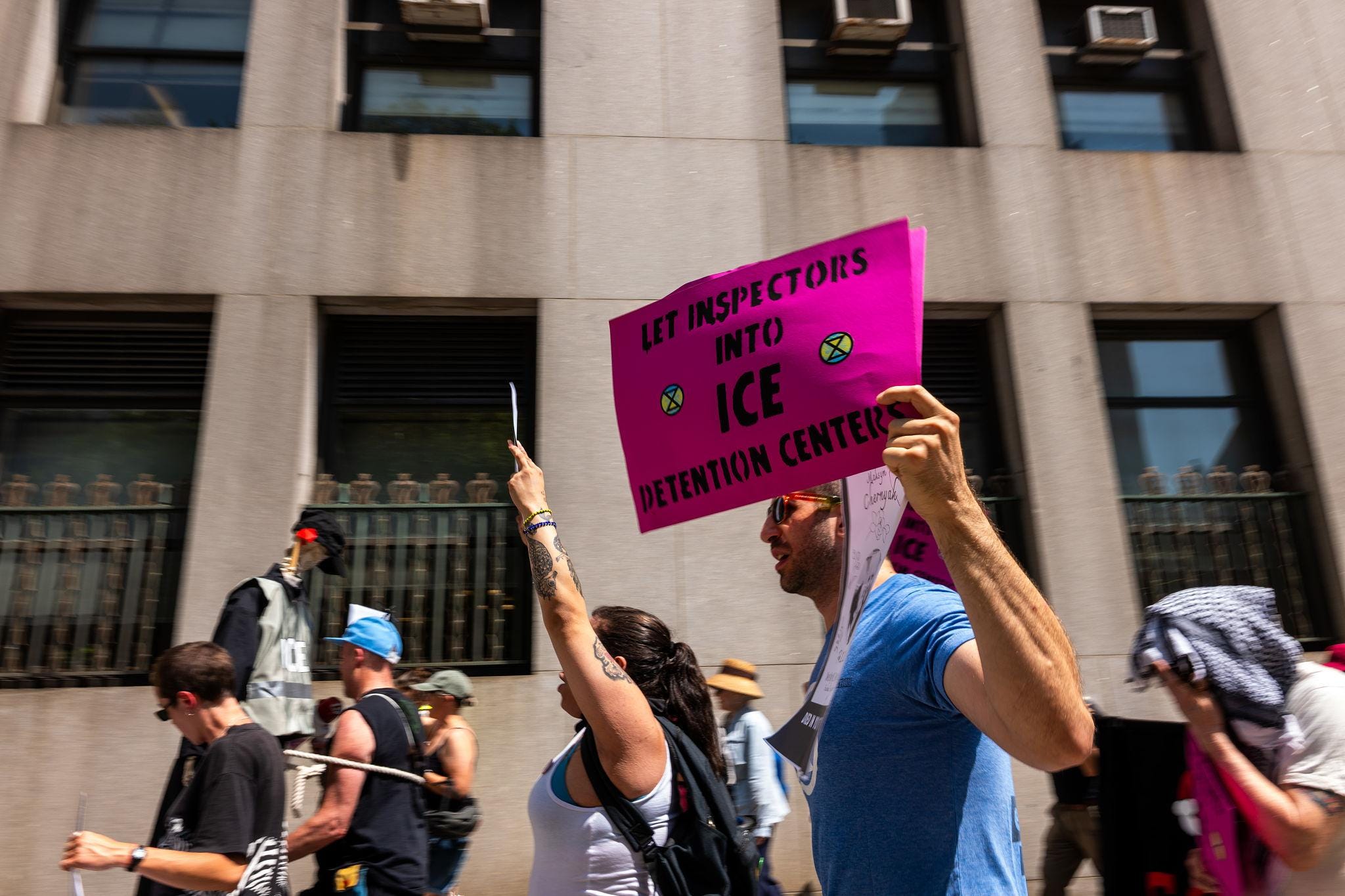
When Stephen Miller first rolled out Trump’s 2024 immigration agenda, he all but salivated over “vast holding facilities” on “open land,” promising deportations at unprecedented scale. “President Trump will do whatever it takes,” Miller vowed. The problem? The country is increasingly saying: absolutely not.
Immigration and Customs Enforcement now plans to retrofit roughly two dozen enormous facilities capable of holding an additional 80,000 detainees—some up to 10,000 people each—supercharging deportations by sheer bureaucratic force. More than 70,000 migrants are already detained, a record. This isn’t theory anymore. The detention-camp phase is underway.
And yet resistance is coming from places Trump won big. In Virginia’s deep-red Hanover County, locals packed meetings to torpedo a proposed ICE warehouse. Republican officials killed similar plans in New Jersey, Oklahoma City, Kansas City, and Salt Lake City. Warehouse owners are walking away rather than be tied to what many residents openly call prison camps.
As Rachel Maddow put it this week, “If they build them, they will fill them,” warning migrant deaths are already rising in smaller facilities. The politics explain why the pushback is spreading: a recent Pew Research Center poll shows 64% of Americans oppose mass immigrant detention while cases are pending—a crushing rejection of a core MAGA premise.
That’s the quiet collapse of the so-called “MAGA moment.” Trump’s approval on immigration is underwater, ICE is toxic, and majorities oppose deporting longtime, noncriminal residents. Whatever Trump and Miller thought they were unleashing, the country—including plenty of Republicans—wants no part of it.
Source: The New Republic
Editor: Turns out “open land” still has people on it—and they vote. Building prison camps sounds great in a speech until your own base realizes they’re the neighbors, the landlords, and the ones left holding the moral bag. #NIMBY
A Whistleblower Complaint About Tulsi Gabbard Is So Classified Even Congress Can’t See It
A whistleblower complaint accusing Director of National Intelligence Tulsi Gabbard of wrongdoing has been locked away for eight months, too classified for Congress—and apparently too inconvenient to move.
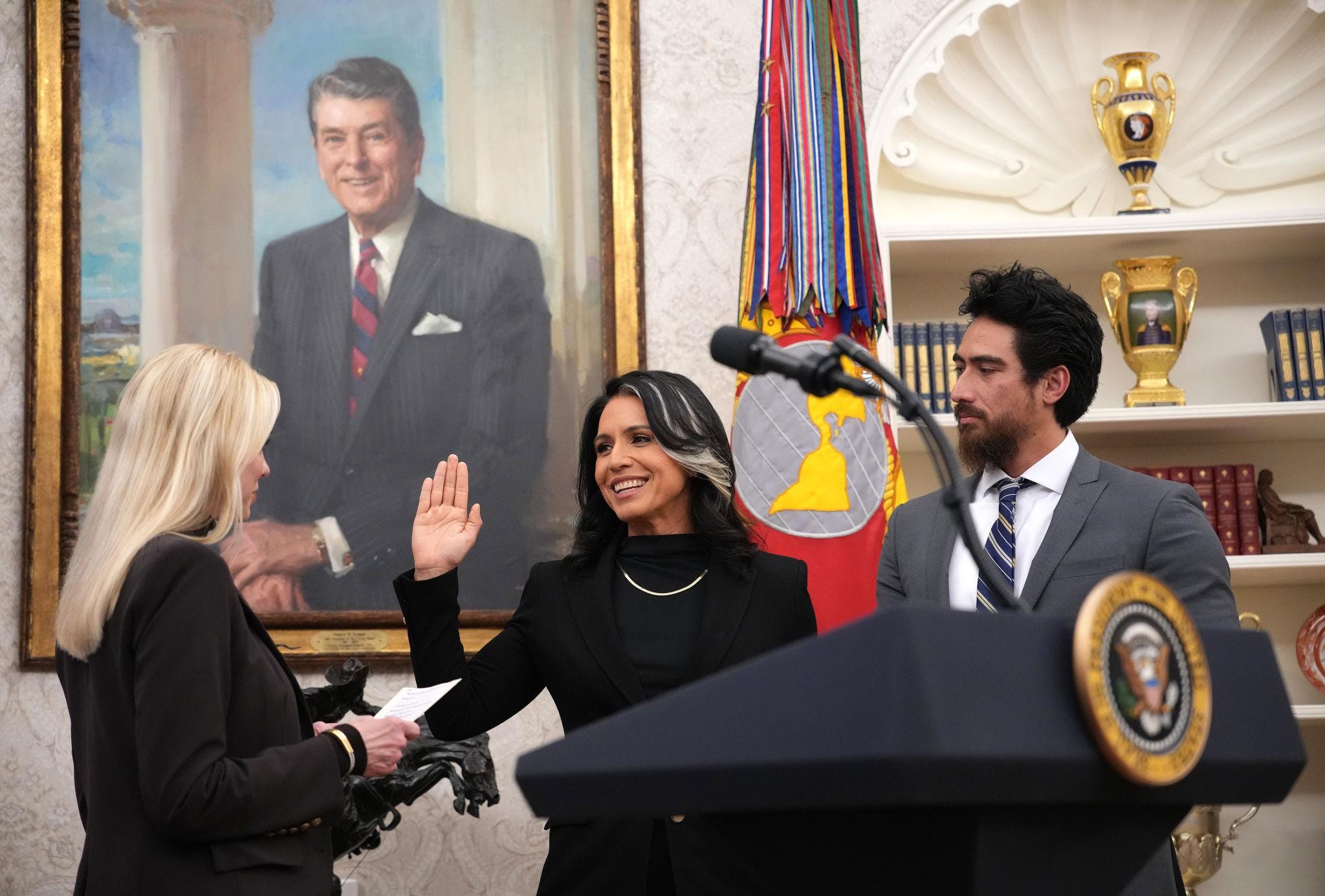
According to The Wall Street Journal, the complaint was filed last May with the intelligence community’s inspector general and is allegedly so sensitive that it’s sitting in a safe while lawyers and officials argue over how—or whether—it can be shared with lawmakers. One official warned disclosure could cause “grave damage to national security,” while Gabbard’s office insists the allegations are baseless and politically motivated.
The standoff has triggered an unusual fight behind the scenes. The whistleblower’s lawyer, Andrew Bakaj, accuses Gabbard’s office of stonewalling by failing to provide security guidance needed to transmit the complaint to Congress. Gabbard’s team says it’s navigating a unique situation involving another federal agency and potential executive privilege claims tied to the White House.
What’s clear is what hasn’t happened: Congress still hasn’t seen the complaint. Intelligence committee staffers only learned of its existence months after it was filed, and even now, neither the House nor Senate intelligence panels have access to the document itself. That kind of delay, watchdog experts say, is virtually unheard of under whistleblower law.
The intrigue is amplified by Gabbard’s unusual role in the Trump administration. As DNI, Tulsi Gabbard has been sidelined from key national security decisions while overseeing investigations tied to the 2020 election Trump lost. Her office says the inspector general found some allegations not credible, though Bakaj says he was never told that determination was made.
All of this is unfolding against a backdrop that makes Democrats deeply suspicious: Trump’s post-inauguration firing of inspectors general, Gabbard’s shakeup of oversight staff, and the confirmation of a new inspector general who previously served as her aide. Add it up, and the mystery isn’t just what’s in the complaint—it’s why no one in Congress is allowed to read it.
Source: The Wall Street Journal (free)
Editor: When a whistleblower complaint is so classified even Congress can’t see it, that’s not transparency—it’s a procedural shrug wrapped in national security tape. If everything’s fine, unlock the safe. If it’s not, eight months is already an answer.
The Job Market Just Sent a Warning Shot—and Washington Can’t Even Count It Yet
Private hiring nearly stalled in January, and the official jobs report isn’t even ready—an ugly combo for an economy already losing momentum.
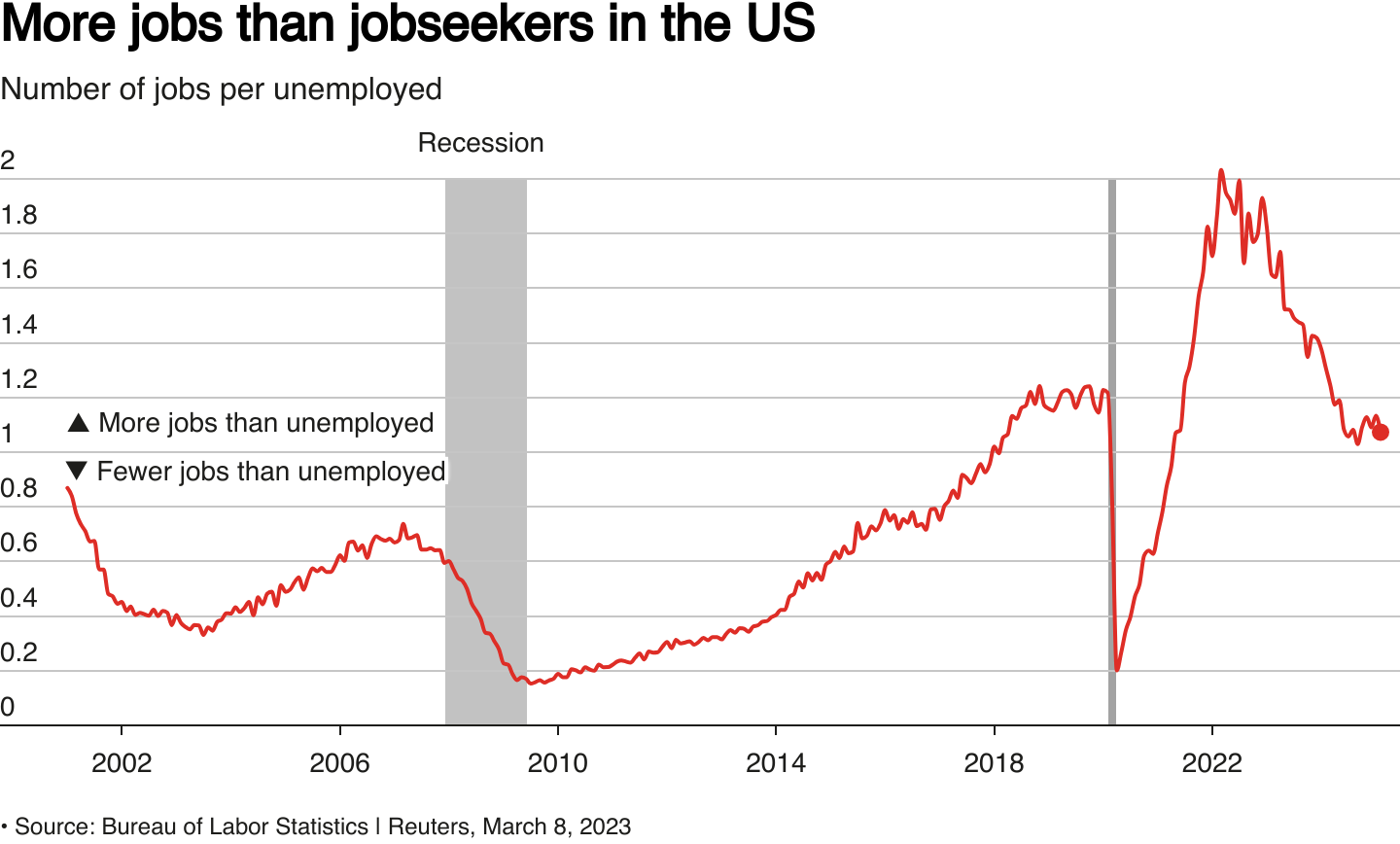
According to estimates from ADP, the private sector added just 22,000 jobs last month, far below December’s 37,000 and nowhere near the 45,000 economists expected. It’s another sign that job growth isn’t collapsing—but it is clearly cooling, fast.
Normally, investors and policymakers would turn to the government’s monthly jobs report for clarity. Not this time. A brief funding lapse delayed the Bureau of Labor Statistics release, and Bureau of Labor Statistics still hasn’t said when January’s numbers will drop, even after Donald Trump signed a bill restoring funding.
The sector breakdown isn’t reassuring. Education and healthcare added 74,000 jobs, continuing to carry the labor market, while manufacturing and professional and business services both cut workers. Translation: growth is getting narrower, not broader.
ADP says the figures are based on anonymized payroll data from its clients, and they line up with what we’ve been seeing for months—a labor market that’s slowing without fully seizing up. That may sound comforting, until you remember how quickly “slowing” can turn into “stalled” once confidence cracks.
Source: The Wall Street Journal (free)
Editor: When the economy’s flashing yellow and the referee can’t even post the scoreboard, don’t call it noise. Call it drift—and drift is how soft landings turn into something harder.
Jeff Bezos Just Shrunk the Washington Post—and Its Ambitions with It
The Washington Post just cut roughly a third of its workforce, a brutal downsizing ordered by Jeff Bezos that rewrites the future of one of America’s most important newsrooms.
The layoffs hit every corner of the paper, from national security to Metro, as Executive Editor Matt Murray framed the move as a “strategic reset” for the age of artificial intelligence. Sports is effectively gone. Books is shuttered. The signature Post Reports podcast is suspended. International coverage is being slashed. The Metro desk—once the paper’s beating heart—will reportedly be left with about a dozen people.
This is a stunning reversal for a newsroom that once saw Bezos as a white knight. After he bought the paper in 2013, staffing surged and investigative muscle flexed, especially during Donald Trump’s first term. Subscriber counts topped 3 million. Now they’re far below that, and the Post is narrowing its scope toward Washington power coverage—closer to Politico than The New York Times.
Former Executive Editor Marty Baron didn’t mince words, calling it “one of the darkest days” in the paper’s history and directly blaming Bezos for “ill-conceived decisions,” including killing the 2024 endorsement of Kamala Harris—a move that reportedly triggered hundreds of thousands of cancellations. Other former editors warned the cuts risk hollowing out the paper’s civic mission just when it’s needed most.
Bezos, worth an estimated $261 billion, has stayed silent. His publisher and CEO, Will Lewis, didn’t even appear on the all-hands call announcing the cuts. Meanwhile, the Post Guild is rallying outside headquarters, warning that journalism can’t survive being “hollowed out” without consequences.
Source: NPR
Editor: When a billionaire decides journalism needs to “reset,” it’s usually the reporters who pay the price—and the public that gets the smaller paper. The Post wasn’t failing readers; it was failing a balance sheet that forgot why the newsroom mattered in the first place.