


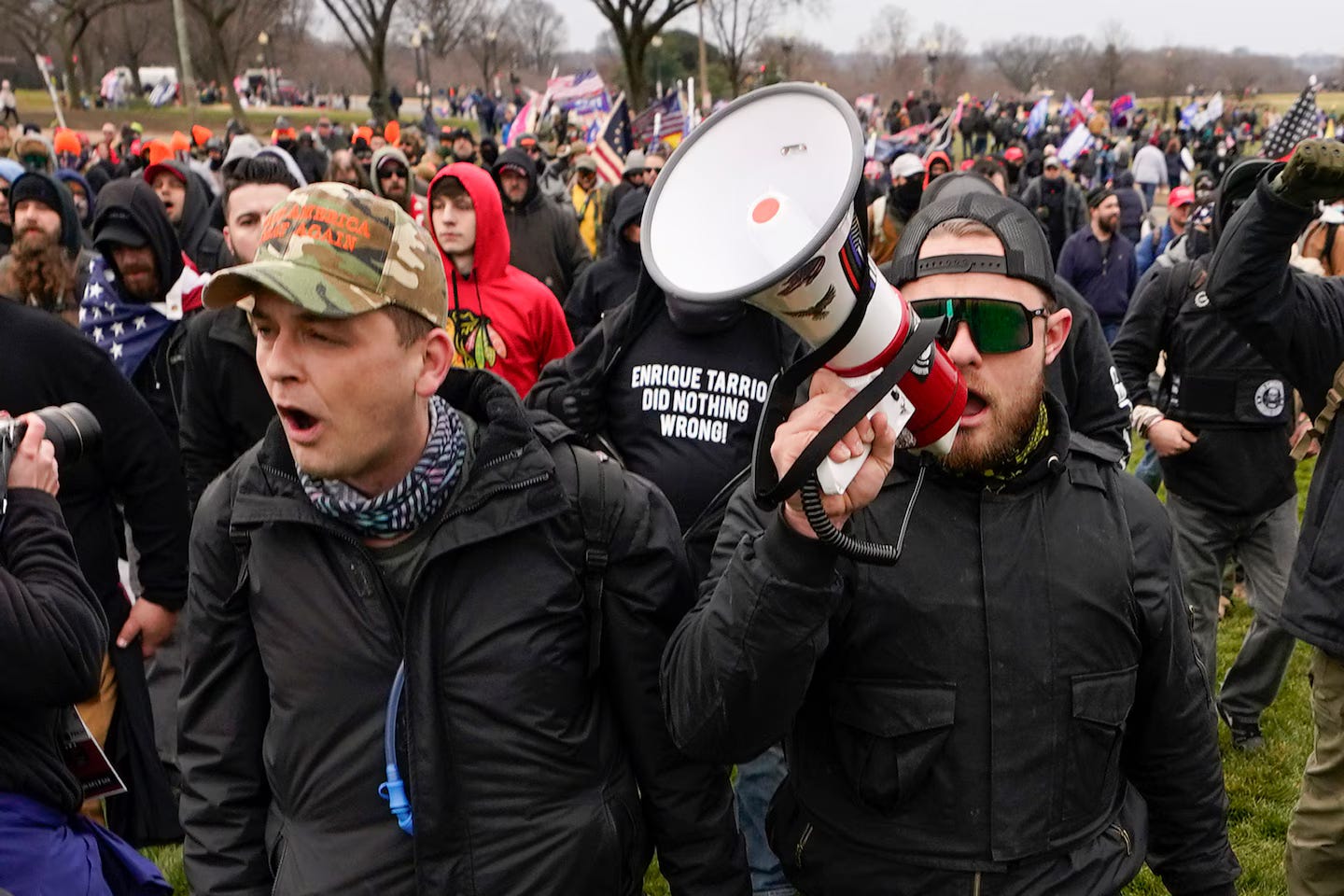
The Insurrection Act is the president’s most powerful domestic weapon—rarely used, often controversial, and born from a fear that the young republic might eat itself alive.
Passed in 1807, the Act gives a president authority to deploy active-duty military forces on U.S. soil in situations where rebellion, violent unrest, or defiance of federal law overwhelms civilian authorities. It was designed as a pressure valve for moments when local governments either couldn’t or wouldn’t enforce the law—think insurrections, civil disorder, or states openly resisting federal authority. In other words, it’s the legal bridge between policing and war, and presidents have crossed it more times than most Americans realize.
The law’s early spirit came from the nation’s nervous adolescence. After the Whiskey Rebellion and the Aaron Burr conspiracy, Congress wanted a formal process that preserved federal supremacy without casually dispatching troops against citizens. The Act allows deployment when a governor requests help—or, far more ominously—when a president decides local leaders are failing or obstructing. That second trigger has produced some of the most unsettling chapters in the law’s history.
Across more than two centuries, the Insurrection Act has been invoked 19 times by 10 different presidents. The reasons run the gamut: crushing the Ku Klux Klan, enforcing school desegregation, breaking violent labor conflicts, responding to riots after Dr. King’s assassination, and ending the chaos of the 1992 Los Angeles uprising. Jefferson, Madison, Jackson, Pierce, Lincoln, Grant, Cleveland, Wilson, FDR, Eisenhower, Kennedy, Johnson and George H.W. Bush all flipped the switch. Eisenhower and Kennedy used it to force Southern governors to obey federal desegregation orders—a reminder that “states’ rights” often meant “states refusing civil rights.”
But the Act has also been invoked in far murkier circumstances: Grover Cleveland sent troops into Chicago to bust the Pullman Strike in 1894; Woodrow Wilson deployed soldiers in the Colorado Coalfield War; George H.W. Bush used it in the U.S. Virgin Islands after Hurricane Hugo, where looting and disorder outstripped local capacity. In each case, the line between restoring order and reinforcing power got a little fuzzier.
Its modern legacy is thornier still. Presidents from Clinton to Obama to Trump have threatened it, flirted with it or prepared for its use, but no one has actually invoked it since 1992. That’s not because unrest disappeared—it’s because using active-duty troops against Americans is a political third rail. Once crossed, it leaves scorch marks on institutions and public trust. Even the Pentagon tenses whenever the words “Insurrection Act” start floating across the Potomac. They know what it means: civilian authority is wobbling, and the president wants the Army to steady the ground.
Understanding the Insurrection Act isn’t just a historical exercise—it’s a measure of how fragile the constitutional ecosystem can become. When presidents dust off this law, it’s never during peaceful times. It signals a domestic crisis, a breakdown in trust, or an executive willing to test how far federal force can reach. For a nation that prides itself on civilian governance, every invocation is both a legal act and a warning flare.
Source: Historical record of the Insurrection Act, 1807–2026
Editor: The Insurrection Act is the panic button presidents swear they’ll never touch—until they do. And once troops are marching down American streets, it’s already too late to pretend the situation is under control.
Now Trump is threatening to invoke it. He’s using the L.Y.I.N.G. framework to do it (see below). For instance, he said George HW Bush (the first President Bush) invoked the Insurrection Act 28 times. He did it once, in the US Virgin Islands, after Hurricane Hugo, when widespread looting took place and local authorities couldn’t enforce the law.
L.Y.I.N.G.: How the Big Lie Actually Works

The most dangerous lies aren’t subtle. They’re loud, repetitive, and emotionally irresistible. That’s the core insight behind L.Y.I.N.G.—a simple framework that explains how the Big Lie doesn’t just survive fact-checks, but steamrolls right over them. This isn’t about one party or one era. It’s a playbook that keeps getting reused because, inconvenientl…