


Conservative Judge Scolds Administration for Ignoring Court Orders in Abrego Garcia Deportation

A prominent Reagan-appointed appellate judge slammed the Trump administration for flouting judicial directives after Kilmar Abrego Garcia was wrongly sent to a brutal Salvadoran prison.

In a sharply worded opinion, Judge J. Harvie Wilkinson condemned the government’s claim that “because it has rid itself of custody that there is nothing that can be done,” calling it an assault on due process and American liberty.
Wilkinson’s seven‑page rebuke—issued by a 4th Circuit panel—upheld a lower court’s April 10 directive ordering the administration to “take all available steps” to return Abrego Garcia to Maryland “as soon as possible.” He highlighted that the Justice Department itself admitted the deportation was “mistaken” and then refused to correct its error.
“This should be shocking not only to judges, but to the intuitive sense of liberty that Americans far removed from courthouses still hold dear,” he wrote.
Warning of a dangerous precedent, Wilkinson asked if, unchecked, would tomorrow’s deportations target U.S. citizens or political opponents, and would the executive continue to scoff at its constitutional checks and balances?
He noted that mounting calls by administration figures to impeach judges and “disregard” court rulings risk dragging the executive and judiciary into a ruinous conflict.
Source: Politico
Sen. Chris Van Hollen Meets with Deportee in El Salvador Amid Controversy
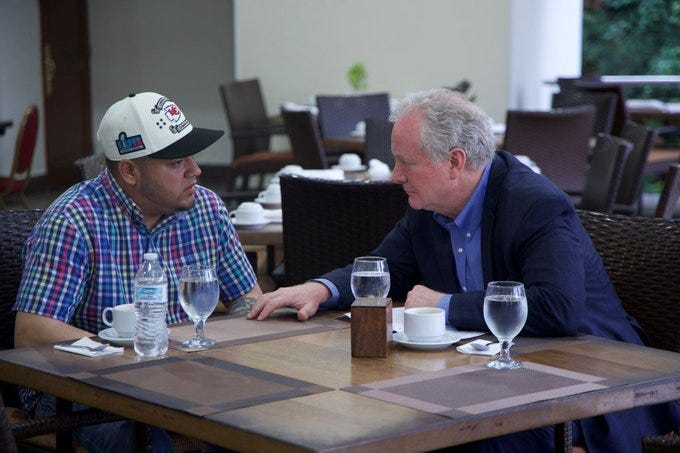
Senator Chris Van Hollen met with Kilmar Abrego Garcia in El Salvador, a man kidnapped by the Trump administration in March despite a Supreme Court ruling ordering his return.
Van Hollen, who represents Maryland—the state where Abrego Garcia lived before his abduction—has criticized the Trump administration’s refusal to comply with the court’s decision, calling it an attempt to "cover up" the wrongful deportation.
"I said my main goal of this trip was to meet with Kilmar. Tonight I had that chance," Van Hollen posted on X, while also conveying a message of love to Abrego Garcia’s wife, Jennifer.
During his visit, Van Hollen encountered resistance, including being denied access to the prison where Abrego Garcia is being held—El Salvador’s CECOT, a terrorism confinement center. Despite traveling with Abrego Garcia's lawyer, Chris Newman, and efforts to ensure the detainee’s well-being, the senator was blocked by soldiers at a checkpoint, who claimed they had orders to prevent further access.
This case has drawn attention to the Trump administration's handling of deportations, with Van Hollen vowing to continue advocating for Abrego Garcia’s return. The story remains ongoing, with Van Hollen expected to provide more details upon his return.
Source: NBC News
U.S. to Impose Hefty Port Fees on Chinese Ships in Shipbuilding Showdown
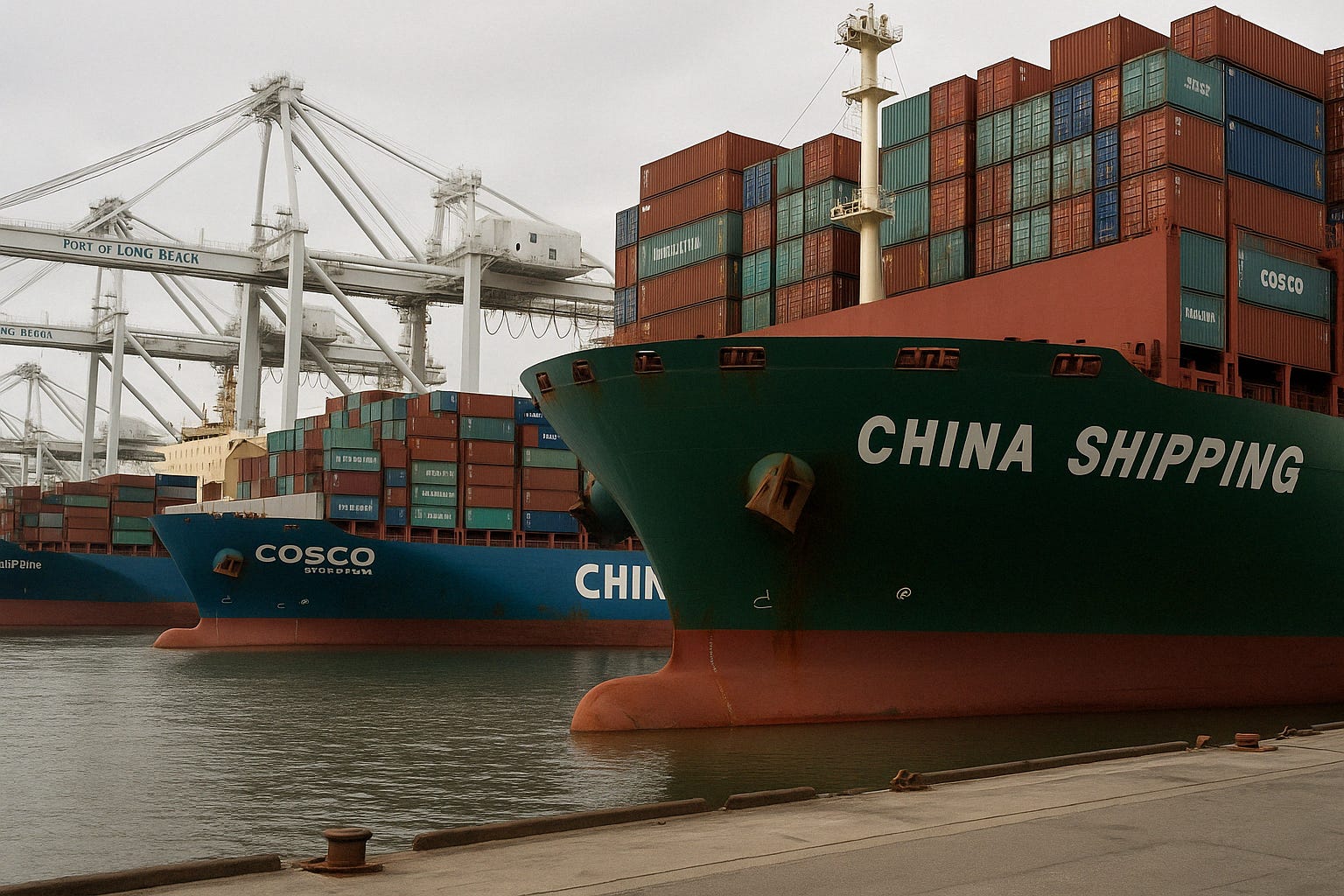
The Trump administration has unveiled a plan to charge Chinese‑built vessels substantial port fees beginning 180 days from now, aiming to revive America’s shipbuilding industry and challenge Beijing’s dominance.
While less punitive than an earlier proposal that floated fees up to $1.5 million per visit, the new structure still ramps up sharply over the next three years.
“China has largely achieved its dominance goals, severely disadvantaging US companies, workers, and the US economy,” the USTR noted, signaling a clear bid to tilt the scales back toward domestic yards.
Under the new terms, fees for Chinese‑built ships will start at $18 per ton of cargo or $120 per container and climb by $30 per ton (or the container equivalent) each year for three years. Ships built in other countries but transporting Chinese exports face $50 per ton of cargo or, for car carriers, $150 per vehicle—with the charge applied once per voyage, capped at six visits annually. Bulk carriers unloading coal or grain are assessed by weight, and empty export‑bound vessels are exempt. Notably, USTR dropped plans to levy fees based on fleet size or future ship orders.
Industry groups warn these measures could trigger wider supply‑chain snarls, as already seen when diverted cargo flooded European ports from the U.S. tariff mix, driving up costs for consumers.
A second phase, set to kick in after three years, will further favor U.S.‑built liquefied natural gas ships over imports, with restrictions tightening gradually over 22 years. As global trade routes adjust, American consumers may soon feel the pinch of this maritime maneuver.
Source: BBC
Remember, after COVID and all the pent-up demand our economy faced, and THEN there were severe challenges in getting all our supply chains back in order? Inflation shot up and Biden/Harris lost the election primarily on their economic performance… Trump is self-inflicting this nonsense, but he’s not worried: There won’t be another election in his lifetime.
Chaos Erupts at Florida State as Deadly Shooting Leaves Two Dead and Several Wounded

A tragic shooting at Florida State University sent students scrambling for safety as a 20-year-old gunman opened fire near the student union, killing two men and injuring at least six others.
The shooter, identified as Phoenix Ikner, a student and son of a sheriff’s deputy, used his mother's former service weapon in the attack. Panic spread across campus as students barricaded themselves in classrooms, leaving behind belongings in the chaos. "Everyone was crying and just panicking," said one student, recounting the moments inside the student union when the gunfire erupted.
Police arrived quickly, wounding the shooter after he refused to comply with officers’ commands. The motive for the attack remains unclear, and authorities are continuing to investigate (see immediately below—it’s pretty clear he’s a broken, evil man). Ikner's actions have shocked the campus, with memorials now set up to honor the victims and a vigil planned for the community to begin healing.
In a chilling twist, a witness described how the gunman’s shotgun jammed, allowing him to switch to a handgun, which he used to continue his rampage. President Donald Trump expressed his condolences, though he did not call for new gun legislation, instead placing the blame on the individuals involved. Florida State has canceled classes for the rest of the week as the campus reels from the aftermath.
Source: AP News
FSU Shooter Phoenix Ikner's White Supremacist Views Raised Red Flags Among Classmates

Phoenix Ikner, the Florida State University student accused of a deadly campus shooting, had openly espoused disturbing white supremacist views that alarmed those around him. According to reports, Ikner’s rhetoric included offensive statements like “Rosa Parks was in the wrong” and claims that Black people were destroying his community.
His classmates were horrified by his extreme far-right views, which led to his expulsion from a campus political club for violating its rule against hate speech.
“Basically our only rule was no Nazis... and he espoused so much white supremacist rhetoric,” said Reid Seybold, a former classmate.
Several others who knew Ikner described his promotion of racist vitriol and far-right conspiracy theories, including baseless claims that President Joe Biden’s election was fraudulent.
One classmate, Lucas Luzietti, recalled fearing for Ikner’s access to firearms, remarking, “I remember thinking this man should not have access to firearms.”
Ikner, who is believed to have used his mother’s gun in the attack, was the son of a Leon County Sheriff’s deputy, and his troubled views went largely unchecked due to Florida’s weak red flag laws.
The tragic events unfolded on April 17, 2025, when Ikner opened fire on the FSU campus, killing two and injuring six others. Despite the shock, many of Ikner’s classmates expressed that his actions, while horrifying, were not entirely surprising given his history of extreme and dangerous beliefs.
Source: New York Post
Trump Ready to 'Move On' from Ukraine Peace Talks After Frustrating Stalemate
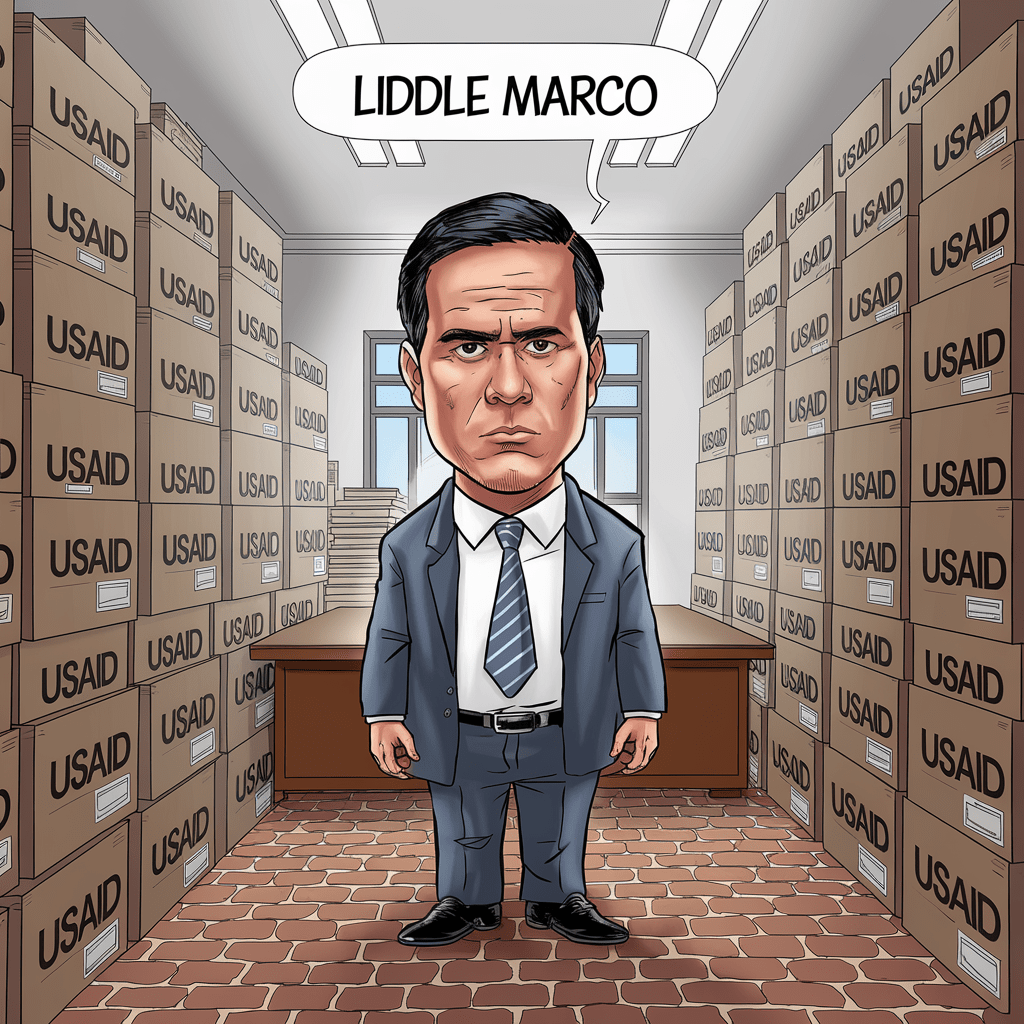
President Donald Trump is ready to end U.S.-mediated peace efforts between Ukraine and Russia if no significant progress is made within days, reflecting his growing frustration with the stalled negotiations.
Secretary of State Marco Rubio confirmed on Friday that Trump’s patience is wearing thin, especially after months of unfulfilled promises. Despite claiming during his campaign that he could end the war in Ukraine within 24 hours, Trump is now three months into his second term with only a temporary ceasefire agreement on energy infrastructure to show for his efforts.
"We are now reaching a point where we need to decide and determine whether this is even possible or not," Rubio said, signaling that the administration may soon abandon the peace process.
Rubio’s comments came after a tense 24-hour meeting in Paris with European leaders, where Trump’s willingness to continue talks was questioned. European allies, increasingly concerned with the lack of progress, have pressed for a more unified approach to ending the war.
Ukrainian President Volodymyr Zelensky raised concerns over U.S. negotiators adopting Russian narratives, further complicating efforts.
Meanwhile, Kremlin spokesperson Dmitry Peskov highlighted the fragile nature of the energy ceasefire, which had been repeatedly breached by both sides.
With the administration’s focus shifting, Trump’s earlier promises of quick resolution now seem distant. "We want to get it done," he stated, but as talks falter, it’s unclear if the U.S. will continue to engage in peace negotiations or if Russia’s battlefield gains will dictate the terms moving forward.
Trump is such a weakling. But it’s on purpose: He’s all in for Russia. Don’t hate the message—just watch his actions. And read the story below about the Ruble vs. the US Dollar. It’s telling.
Source: The Washington Post
BONUS: Russian Rouble Surges 40% in 2025, Strengthens Past 81 Against the U.S. Dollar
The Russian ruble has experienced a significant surge, strengthening past 81 against the U.S. dollar and marking a 40% increase since the start of 2025.
What happened at the start of 2025?
The currency’s rise is largely attributed to a combination of rising oil prices and the easing of tensions between Russia and the United States. On April 17, oil prices climbed by 3%, further supporting the ruble’s impressive performance. The ruble has now reached its highest level since June 2024, with some analysts attributing the currency's resilience to expectations of improving U.S.-Russia relations despite the ongoing Ukraine conflict.
In contrast to Secretary of State Marco Rubio’s recent comments suggesting that President Trump may abandon peace talks with Russia if no progress is made, the ruble’s strength has largely ignored the geopolitical uncertainty.
This growing strength of the Russian currency represents a paradox in global markets—while the U.S. faces economic instability due to Trump’s approach to the war and foreign relations (i.e., the Trump tariffs), Russia benefits from a favorable financial situation.
The situation underscores how Trump's inability to resolve the war has inadvertently led to a stronger Russian economy, raising concerns about the long-term impact on the U.S. and global markets. (Make no mistake—this is intentional. All of it.)
While the U.S. remains mired in efforts to broker peace and halt the war in Ukraine, Russia's economic position continues to improve, further complicating Trump’s rhetoric about quickly ending the conflict. As U.S. military support for Ukraine remains uncertain, Russia capitalizes on the situation with increasing economic momentum.
Source: Reuters