


The Morning Sixpack podcast is here.
🚨 Tariff Shockwave: Trump’s “Liberation Day” Gambit WILL Trigger Global Trade War
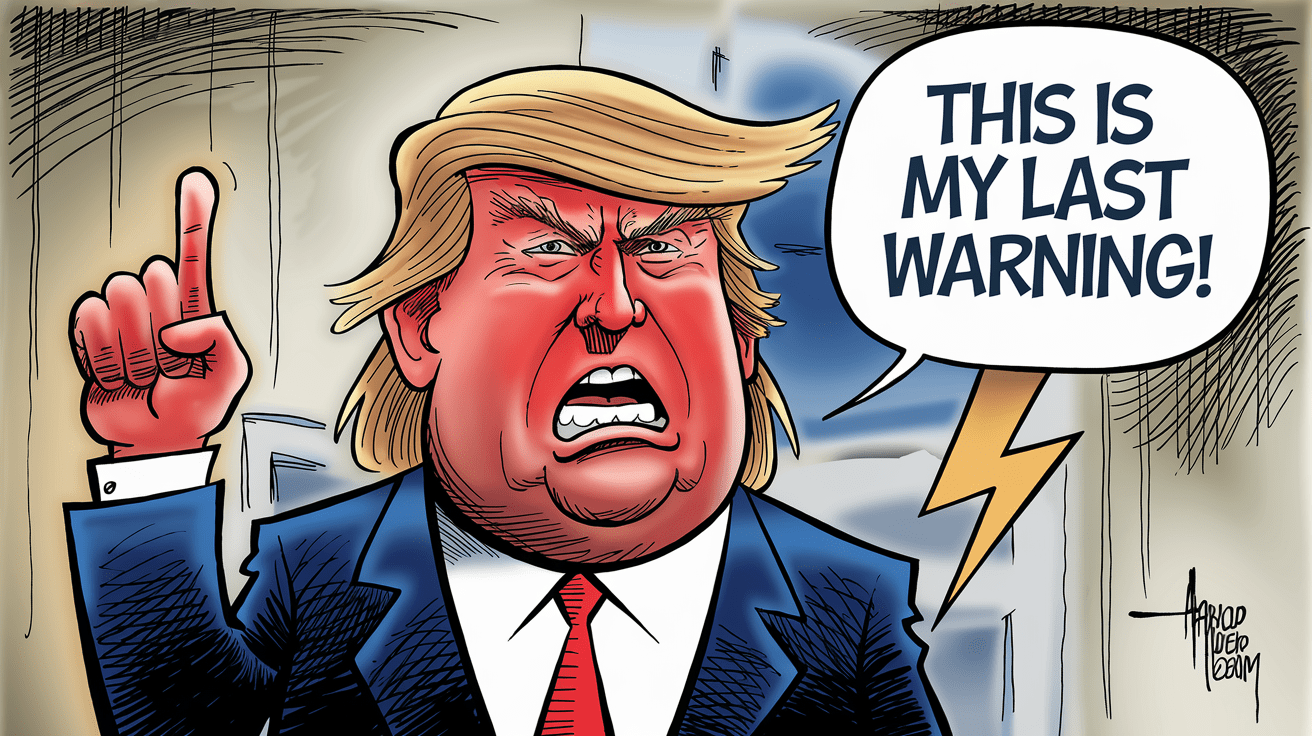
In a bold and stupid move guaranteed to shake markets and rattle allies, President Donald Trump is set to unveil sweeping “Liberation Day” tariffs, aimed at countries he accuses of taking advantage of the U.S. economy.
The announcement will be made from the Rose Garden just after Wall Street closes, a strategic move to dodge immediate market chaos. Don’t worry, Wall Street will bake in the first round of losses today and will really drop tomorrow.
While the White House insists the goal is to “stop America from being ripped off,” critics warn this will ignite a global trade war, spike consumer costs, and even trigger a U.S. recession.
"It's Liberation Day in America!" Trump teased in a one-line Truth Social post early Wednesday, leaning into his long-standing love affair with tariffs. Though he’s promised the tariffs will herald a “golden age” of U.S. manufacturing, the specifics remain in flux even hours before the reveal.
Reports suggest options on the table include a sweeping 20% blanket tariff or a more nuanced plan offering preferential treatment to select countries. Either way, retaliatory threats are already pouring in from the EU, Canada, and others.
ECB President Christine Lagarde didn’t mince words, warning the move would “unsettle the trade world as we know it.”
The economic fallout will be substantial. Yale’s Budget Lab estimates that a 20% tariff could cost the average American household $3,400 annually.
Moody’s economist Mark Zandi added: “If this trade war continues through Labor Day... the US economy will likely suffer a recession this year.”
Trump, however, remains defiant—arguing the tariffs will resurrect domestic manufacturing and daring companies to dodge the fees by relocating to U.S. soil. With 25% auto tariffs also set to hit this week, buckle up. The global economy is in for a bumpy ride.
Source: Yahoo!News
More: ‘Liberation day’ tariffs: What we know as Trump prepares to unveil his plan
What is “Liberation Day?” Find out more here.
🚨 House Meltdown: GOP Infighting Shuts Down Congress for the Week
In a dramatic display of internal rebellion, House Republicans were forced to cancel all remaining votes for the week after a group of nine GOP members sided with Democrats, derailing a critical procedural rule.
The failed vote stopped the House from advancing key Republican agenda items—including a bill requiring proof of citizenship to vote and another aimed at curbing the power of federal judges.
The chaos erupted after Rep. Anna Paulina Luna (R-Fla.) used a rarely successful discharge petition to force a vote on proxy voting for new parents—a bipartisan measure that leadership tried (and failed) to bury with procedural gamesmanship.
“It’s a very disappointing result on the floor there, a handful of Republicans joined with all Democrats to take down a rule,” Speaker Mike Johnson (R-La.) lamented, clearly frustrated.
MAGA Mike is not nearly the party leader that Nancy Pelosi was.
His team had attempted to kill the proxy voting push by slipping poison-pill language into the rules—only to see the plan blow up in spectacular fashion. With no rule adopted, the chamber is now effectively paralyzed and unable to vote on high-priority legislation, including the SAVE Act and the No Rogue Rulings Act.
“All that was just wiped off the table,” Johnson admitted. “It’s very unfortunate. We’ll regroup and come back.”
The disruption not only showcases the deep fractures within the GOP conference but also delays a vote on an issue with rare bipartisan support: granting new parents in Congress the ability to vote by proxy for 12 weeks.
“I don’t think they can” stop it now, Luna said confidently, brushing off the leadership’s attempts to squash her resolution. She added that Speaker Johnson told her, “I know your heart’s in the right place,” to which she replied, “I hope you have good things to say about this.”
Whether or not leadership tries another last-ditch maneuver, one thing’s clear—Capitol Hill just got a lot messier.
Source: Yahoo
🔥 “Loose Cannon” at the Helm? Commerce Secretary Howard Lutnick Under Fire as Tariff Showdown Looms
As President Trump prepares to unveil a sweeping new tariff package dubbed "Liberation Day," insiders are sounding the alarm over Commerce Secretary Howard Lutnick’s growing influence—and erratic behavior.
According to a scathing report, frustration is mounting within the administration and on Capitol Hill over Lutnick’s impulsive ideas and lack of policy depth. One anonymous official didn't mince words, calling him a “loose cannon with half-baked ideas.”
The timing couldn’t be worse, with the world bracing for the certain economic fallout of Trump's high-stakes tariffs.
Lutnick, a billionaire businessman turned Cabinet member, has reportedly clashed with key economic advisors and blindsided agencies with abrupt policy shifts. Critics argue he’s wielding outsized influence in shaping the administration’s trade posture without a solid grasp of the long-term implications. Several sources said Lutnick is “pushing ideas no one vetted,” leaving agencies scrambling to interpret vague directives. That’s raising eyebrows across Washington, especially as Trump’s tariffs are set to be unveiled with little transparency or input from trade experts or real economists.
The behind-the-scenes dysfunction adds fuel to growing concerns about how the U.S. is navigating complex global trade dynamics. With Lutnick seen as one of the main architects behind the tariff framework, any missteps (a certainty with this incompetent administration) will have serious consequences for markets and international relations. While the White House remains tight-lipped, the unease inside the administration is palpable—and with Trump’s big Rose Garden moment just hours away, many are bracing for chaos.
Source: New York Post
⚖️ Musk Money Can’t Buy This Court: Susan Crawford Wins Big in Wisconsin Supreme Court Race
In a high-stakes showdown that shattered spending records and doubled as a national referendum, Democrat-backed Susan Crawford defeated Trump- and Musk-endorsed Brad Schimel in Wisconsin’s Supreme Court race—securing a liberal majority on the state’s highest court through at least 2028.
Crawford, a champion of abortion rights and union protections, framed her victory as a blow to billionaire influence and election interference.
“Growing up in Chippewa Falls, I never could have imagined that I would be taking on the richest man in the world for justice in Wisconsin,” she said. “And we won.”
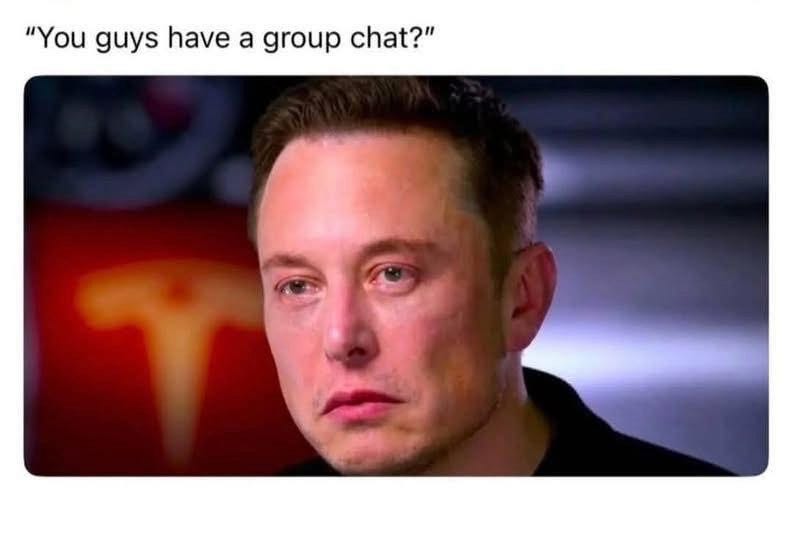
Crawford’s decisive 8-point win came despite an avalanche of spending from Elon Musk and his affiliated groups, who poured over $26 million into Schimel’s campaign. Musk even flew in two days before the election to hand $1 million checks to voters (that’s illegal, by the way).
The record-breaking $100+ million spent in this race eclipsed the previous all-time high for a judicial contest. But Wisconsin voters didn’t bite.
As Crawford put it during her victory speech: “Wisconsin stood up and said loudly that justice does not have a price, our courts are not for sale.”
Meanwhile, Schimel’s election night ended with him jamming on bass guitar—after conceding and silencing chants of “Cheater!” from angry supporters.
Beyond the headlines and the Musk melodrama, this win holds real national consequences. The Wisconsin Supreme Court plays a pivotal role in election law, redistricting, and potential 2024 presidential disputes.
With the liberal majority intact, challenges to GOP gerrymanders and restrictions on voting access are now squarely on the table.
Musk, who remained silent post-election on his X platform (reports are that he went “non-verbal” on Shitter), may have hoped to buy influence—but voters, as one local put it, rejected the idea that “a pushy billionaire” could dictate their democracy.
Source: AP News
Inbox Insecurity: Trump’s National Security Team Caught Using Gmail for Sensitive Military Matters
Despite years of railing against email misconduct, senior Trump officials—including National Security Adviser Michael Waltz—have been using personal Gmail accounts to discuss sensitive national security matters, according to documents and insider interviews.
Editor: You can bet your ass these emails are being “read into” the Large Language Models Google and other AI companies are building…implications are self-evident.
The same team that mistakenly added a journalist to a Signal group chat about airstrikes in Yemen now finds itself under deeper scrutiny for lax data security. “This incident badly damaged Waltz,” said one senior official, noting Trump’s hesitance to fire him is more about avoiding media backlash than defending competence.
Operation Facepalm: Trump’s Team “Accidentally” Texted a War Plan to a Journalist

It’s not every day a White House “accidentally” invites a journalist to a high-level military group chat. But thanks to a mind-melting lapse in operational security, The Atlantic’s Jeffrey Goldberg got a front-row seat to Trump’s national security team plotting a military strike on Yemen—via
Waltz and members of his staff used Gmail to conduct interagency business involving military strategy and weapon systems, raising alarms among cybersecurity experts and national security professionals.
While some officials attempted to justify the actions as legacy contact mishaps, headers from reviewed emails confirmed Waltz’s aide used Gmail while counterparts stuck to official government email accounts.
Even Waltz himself received his work schedule and documents via personal email, occasionally copy-pasting them into Signal chats to coordinate with colleagues. One of those chats inadvertently included Jeffrey Goldberg, editor-in-chief of The Atlantic, a critic of President Trump—prompting outrage not over the security lapse, but over the political optics.
“The one thing saving his job is that Trump doesn’t want to give Jeff Goldberg a scalp,” said one administration official.
The chat also contained operational details about a strike on Houthi militants in Yemen. “Positive ID of a senior Houthi leader walking into his girlfriend’s building,” Waltz wrote—unwittingly revealing Israeli intelligence involvement.
As Eva Galperin of the Electronic Frontier Foundation bluntly put it, “Unless you are using GPG1, email is not end-to-end encrypted, and the contents of a message can be intercepted and read at many points, including on Google’s email servers.”
Despite Waltz’s public insistence he didn’t knowingly add Goldberg to the group (nor had they ever met)—“I take full responsibility. I built the group,” he told Fox News—Goldberg fired back: “This isn’t ‘The Matrix.’ Phone numbers don’t just get sucked into other phones.”
A photo has since surfaced showing the two at the same diplomatic event.
The incident is especially awkward for Waltz, who once slammed Hillary Clinton for using a private server as Secretary of State.
“What did DOJ do about it? Not a damn thing,” he posted in 2023.
Yet now, with a breach involving unencrypted Gmail, sensitive military intel, and a liberal journalist, the administration’s silence is deafening. No investigation appears to be forthcoming.
Source: WaPo
🚨🚨🚨🚨🚨“Administrative Error” or Human Catastrophe? U.S. Wrongfully Deports Maryland Man to El Salvador’s Harshest Prison
It can—and IS—both!
The Trump administration admitted it mistakenly deported Kilmar Abrego García—a Salvadoran immigrant legally shielded from removal—to a brutal mega-prison in El Salvador, violating a judge’s 2019 court order.
Now, officials claim they can’t bring him back, citing “diplomatic constraints” and national security talking points. Meanwhile, his U.S. citizen wife and children are left in Maryland, watching video clips of him being dragged by guards in a foreign prison known for abuse and violence. “This has been a nightmare for my family,” his wife wrote. “My children need their father.”
Abrego García’s deportation on March 15 wasn’t just an “oversight,” as ICE called it—it was a direct violation of a binding federal ruling that explicitly barred sending him to El Salvador.
That ruling, issued by Judge David M. Jones, found Abrego and his family credible in their testimony about being threatened by gang members extorting their pupusa shop. The government never appealed the ruling. And yet, six years later, as he drove home with his autistic son in the back seat, ICE agents arrested him without warning.
Officials have since downplayed the risks he faces in El Salvador’s notorious Terrorism Confinement Center—despite his lack of any criminal record and the U.S. having declared the very gangs he fled from as terrorist threats. The administration offered no proof of gang affiliation and instead leaned on vague “national security” rhetoric.
“I’ve never had a case remotely like this,” said attorney Simon Sandoval-Moshenberg. “They sent him to the one out of 195 countries on Earth that they were legally prohibited from sending him to.”
Worse still, the U.S. is reportedly paying El Salvador to hold Abrego García and others—approximately $6 million, according to the White House.
“That is pennies on the dollar,” said press secretary Karoline Leavitt, deflecting criticism by citing taxpayer costs. She is such a cunt.
Yet no amount of spin can paper over the human toll. His wife recognized him from prison footage shared online—shaved head, visible tattoos, dragged by guards.
Rep. Jamie Raskin didn’t mince words: “He was not actually a gang banger. He was not a criminal. It was all a mistake.” And now, the mistake is costing a family everything.
Source: WaPo
This is a little confusing.
PGP (Pretty Good Privacy) is the original encryption program created by Phil Zimmermann in the early '90s.
GPG (Gnu Privacy Guard) is an open-source implementation of the OpenPGP standard, which is derived from the original PGP.