

Apologies! This Morning Sixpack is predominantly about Trump’s stupid tariffs. He’s fucking up the world and it’s only been a little over two months. He’s a menace. Is impeachment around the corner… AGAIN?
📉 Markets in Freefall After Trump Tariff Bombshell: Dow Futures Tank 1,200 Points, Dollar Nosedives, Panic Spreads
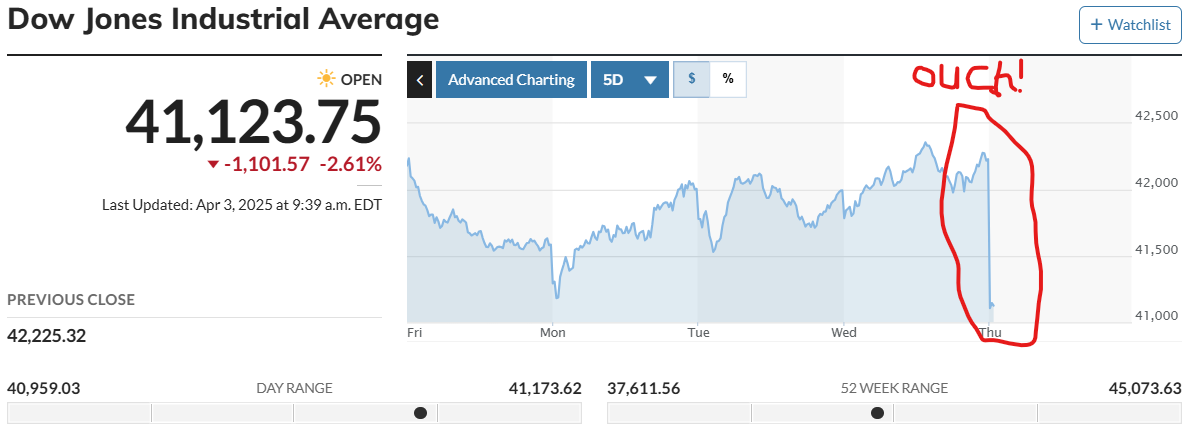
Markets are reeling Thursday morning after President Trump’s surprise “Liberation Day” tariff announcement sent shockwaves through the financial world.
What Is Trump's "Liberation Day?"
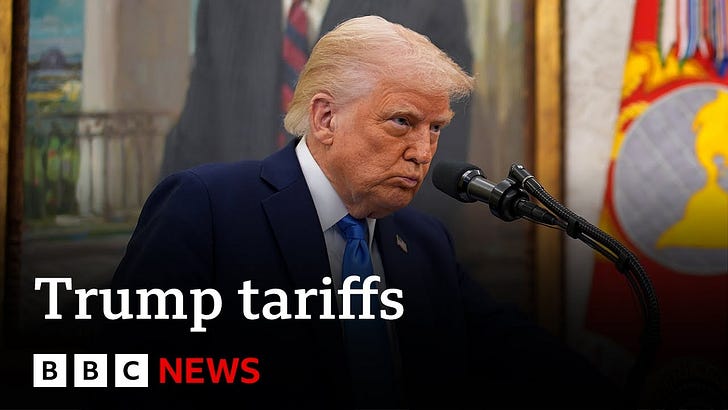
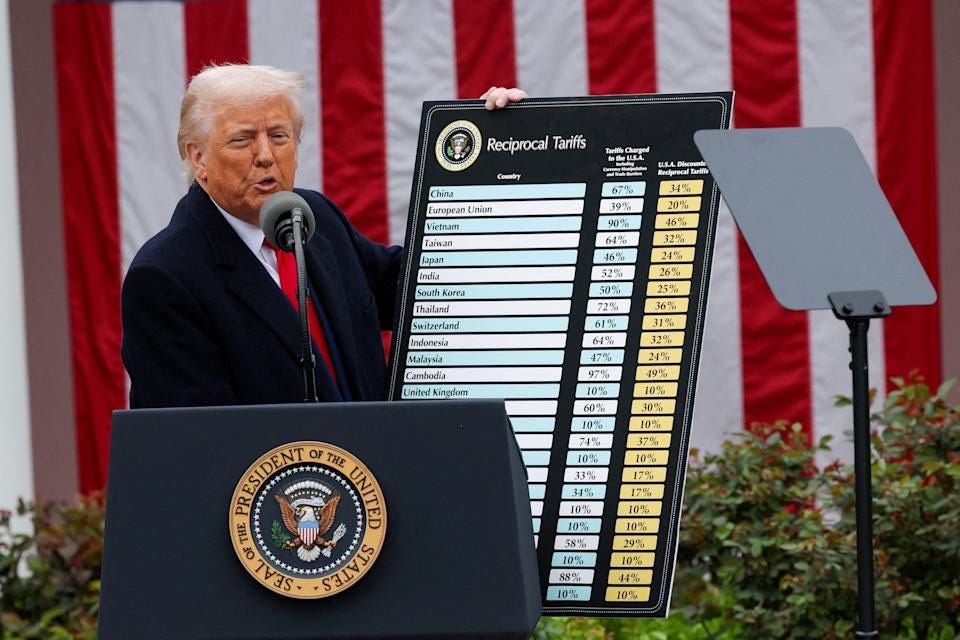
"Liberation Day" is a term coined by President Donald Trump to describe April 2, 2025, the day he plans to announce a series of "reciprocal tariffs" on imports from various countries. The aim, according to the administration, is to counteract what they perceive as unfair trade practices by imposing tariffs that mirror those levied against U.S. exports. …
Dow futures plummeted over 1,200 points, with the S&P 500 and Nasdaq following suit in a brutal pre-market selloff.
Apple, Nvidia, and Nike are all getting hammered, and the U.S. dollar is diving as inflation and recession fears ignite a global risk-off stampede.
Barclays analysts called it “worse than worst-case scenario,” warning the tariffs could spike inflation to 4.1% and drag GDP into the red. Deutsche Bank even floated the phrase “crisis of confidence.”
Adding fuel to the fire, the number of Americans collecting unemployment benefits just hit its highest level since late 2021, signaling cracks in the labor market. The CBOE Volatility Index (VIX) surged above 26, with analysts saying the market is “on the verge of bear territory.”
Meanwhile, circuit breaker levels are now in play, as investors brace for a possible halt in trading if the plunge continues. Longtime analyst Jim Paulsen warned first-quarter earnings could also disappoint, adding a one-two punch to already-panicked markets.
Despite the chaos, some strategists say this isn’t necessarily the end of the bull market. “This isn’t a bearish game changer,” said Tom Essaye of Sevens Report Research, citing potential exemptions and negotiation wiggle room, including exceptions for goods compliant with the USMCA, Taiwan semiconductors, and European pharmaceuticals. Boy, you cray cray!
But right now, the street isn’t buying the optimism—because today, Wall Street’s bull got trampled.
Source: Marketwatch
🔥 Nasdaq Nosedives as Trump Tariffs Spark Global Recession Fears
Wall Street took a gut punch Thursday morning as Nasdaq futures plummeted 4.4%, spooked by President Trump’s sweeping new tariffs on major trade partners—including China, the EU, and Canada.
Apple led a Big Tech bloodbath with a 7.6% drop, and retailers like Nike and Walmart got hammered as Asia-focused production chains braced for impact.
“This was the first bullet thrown in this trade war and it could get nasty,” warned Elias Haddad of Brown Brothers Harriman, capturing the mood of a jittery market already flirting with correction territory.
Dude, bullets aren’t thrown. Get your metaphors right before you speak in public.
The tariffs—10% on most imports and much steeper on strategic goods—jolted investors into panic mode. Safe-haven assets like gold surged, the CBOE Volatility Index (aka Wall Street’s fear gauge) jumped to a three-week high, and small-cap futures on the Russell 2000 slid over 5%.
The ripple effects were immediate: Microsoft dropped 2.7%, Nvidia slid 6%, and oil stocks got clobbered alongside crude’s 6% dive. With the S&P 500 now 10% off recent highs, talk of recession has gone from murmurs to front-page headlines.
This is, by consensus definition, a market “correction.” The real question is: How much lower will it go?
Meanwhile, traders are betting big that the Fed will swoop in with multiple rate cuts this year, possibly starting as soon as Friday if Powell’s speech and payroll data confirm economic turbulence.
Even Haddad offered a sliver of hope: “The prospect of looser monetary policy and potentially greater fiscal stimulus… should provide some support to equity markets.”
Ain’t gonna happen, bimbo!
But until that safety net materializes, buckle up—Wall Street’s riding straight into a storm.
Source: Reuters
💣 EU’s 'Big Bazooka' Aims at Trump’s Tariffs—Brace for Economic Shockwaves
As President Trump unloads a 20% tariff on all EU imports, Europe is signaling it won’t sit quietly.
Enter the Anti-Coercion Instrument (ACI)—Brussels’ not-so-secret weapon that could slap U.S. companies with retaliatory sanctions.
While EU leaders still hope for a negotiated truce, they’re making it crystal clear: If Trump wants a trade war, they’ve got the firepower to fight back. “We do not necessarily want to retaliate, but if it is necessary, we have a strong plan to retaliate and we will use it,” said European Commission President Ursula von der Leyen.
The ACI—described as “the big bazooka” by former Italian economic official Fabrizio Pagani—would let the EU curb access to its markets, targeting American tech firms, financial services, and even shutting out U.S. banks from $2.18 trillion in public contracts.
It's not just saber-rattling: Preliminary plans suggest clamping down on $327 billion in annual EU investment flowing into American companies. ING’s Carsten Brzeski didn’t mince words: “It’s more the nuclear option.”
Still, this economic brinkmanship could torch both sides of the Atlantic.
“You are just putting fuel on the stagflationary fire,” warned Panmure Liberum’s Joachim Klement. And while Trump unveiled his tariffs under the slogan “Make America Wealthy Again,” he may have just invited Europe’s biggest economic counterstrike in decades. As von der Leyen put it: “All instruments are on the table.”
Source: Fortune
💥 Trump’s New Tariffs Spark Protectionist Shift with Global Consequences
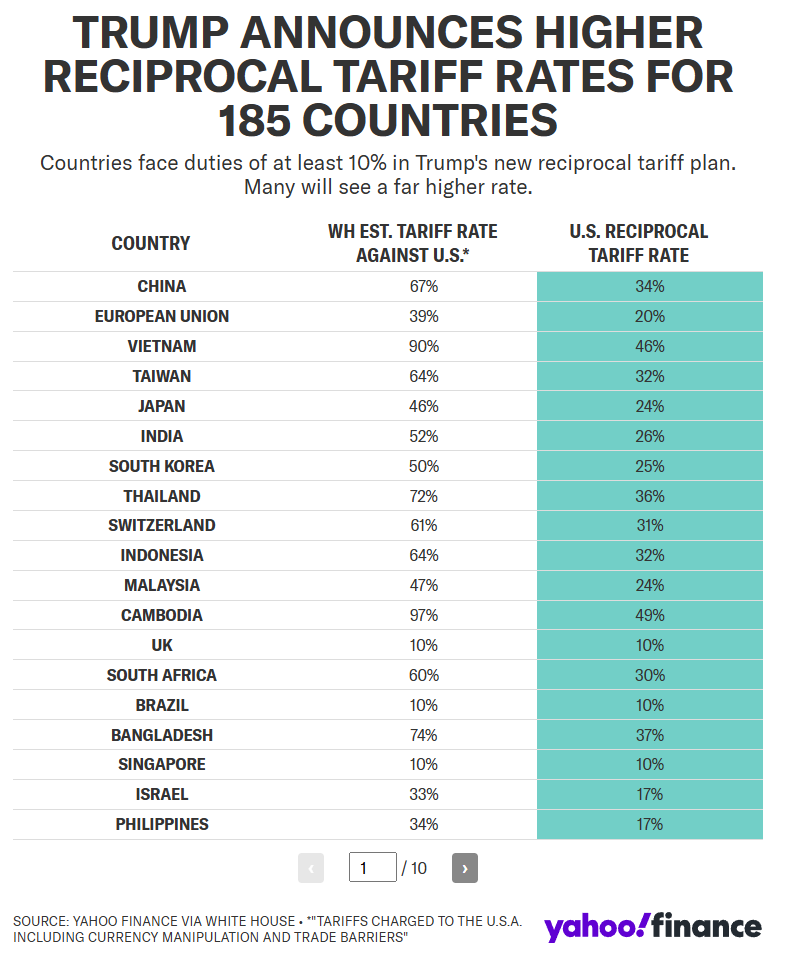
President Trump’s recent tariffs—dubbed “Liberation Day” tariffs—mark a significant turn toward protectionism, with sweeping implications for both the U.S. and global economies.
Trump’s new strategy imposes a 10% baseline tariff on every nation and adds extra penalties for countries labeled as “bad actors.” Among the hardest hit are China, with a 34% tariff, and the EU at 20%.
The goal? To reshape trade and bolster the U.S. economy, though the side effects could prove disastrous. “The result could be shrinking world trade, slower growth, recession, or worse,” warns The Wall Street Journal’s Editorial Board.
The immediate consequences are troubling: Higher costs for U.S. consumers and businesses, with car prices set to rise dramatically, as the tariffs inhibit competition.
Historically, such trade barriers have led to economic stagnation, not prosperity. Additionally, the tariffs risk triggering retaliatory measures that would harm American exports and worsen the global trade environment. While Trump claims the tariffs are a “win” for American industry, the broader impacts threaten to erode the U.S.’s global economic standing.
This shift in trade policy could also lead to increased lobbying within Washington, as businesses scramble for tariff exemptions, potentially feeding the Beltway swamp.
With the U.S. withdrawing from its role as a leader in global trade, China stands to gain, courting American allies and further undermining the U.S.’s influence on the world stage.
Source: WSJ
What nobody is mentioning is, yes, strategic tariffs could put the US economy on solid footing years into the future. It takes years to build the infrastructure, plants, and facilities to take advantage of domestic production. Decades even.
💥 Wall Street Tumbles as Trump’s Tariff Announcement Triggers Market Chaos
In a dramatic turn of events, Wall Street saw the S&P 500 plunge by 2% in just minutes—wiping trillions off the value of 401(k)s—as President Trump unveiled his aggressive tariff plans.
The drop, reminiscent of market volatility during the early days of the COVID pandemic (you know, the last time Trump was president), came after Trump announced a sweeping 25% tariff on foreign cars and levies targeting multiple countries, including China, the EU, South Korea, Japan, and Taiwan.
"Our country has been looted, pillaged, raped, plundered by other nations," Trump declared in a fiery speech, labeling his "Liberation Day" move as a declaration of economic independence.
While the tariffs are expected to generate hundreds of billions in revenue, they risk triggering sharp price hikes on goods ranging from cars to clothing, raising concerns about an economic slowdown. Trump's promise to bring factory jobs back to the U.S. offers little comfort as the immediate market response signals potential long-term instability. Just hours before the tariffs were announced, stocks had been rising, with the S&P 500 veering wildly between gains and losses throughout the day.
As the president doubles down on his protectionist policies, markets are left reeling, and the economic consequences of his tariffs are only beginning to unfold. Investors and consumers alike are bracing for a volatile future ahead.
Source: Daily Mail
🤝 NATO Allies on Edge as Rubio Arrives to Explain Possible U.S. Troop Pullback from Europe
With global tensions rising and Trump's foreign policy becoming increasingly unpredictable, U.S. Secretary of State Marco Rubio landed in Brussels on Thursday for high-stakes NATO talks.
America's European allies—and Canada—are holding their breath, waiting to hear whether the U.S. plans to significantly scale back its military footprint on the continent.
The uncertainty follows a string of White House comments cozying up to Putin and throwing shade at NATO, including verbal shots at Denmark and Canada, as well as a new wave of tariffs against both friends and foes.
The backdrop? Defense Secretary Pete Hegseth's recent warning that U.S. defense priorities now lie in Asia and at home.
That bombshell has set off a scramble among NATO members to prepare for “burden shifting” strategies, with the hope of avoiding a security vacuum.
While newly appointed U.S. ambassador to NATO Matt Whitaker tried to calm nerves—“Under President Trump’s leadership, NATO will be stronger and more effective than ever before”—he also doubled down on the administration’s stance: “NATO’s vitality rests on every ally doing their fair share.”
Still, allies are pushing for specifics. They want a clear roadmap from Rubio that lays out exactly what the U.S. plans to do, when, and how Europe should prepare. The stakes are high: not just for NATO’s future, but for Ukraine’s, and for the balance of power across the continent.
If America steps back, who steps in?
Source: MDGN