


Inflation Holds at 2.7% in July—But the Price Creep Is Coming for You
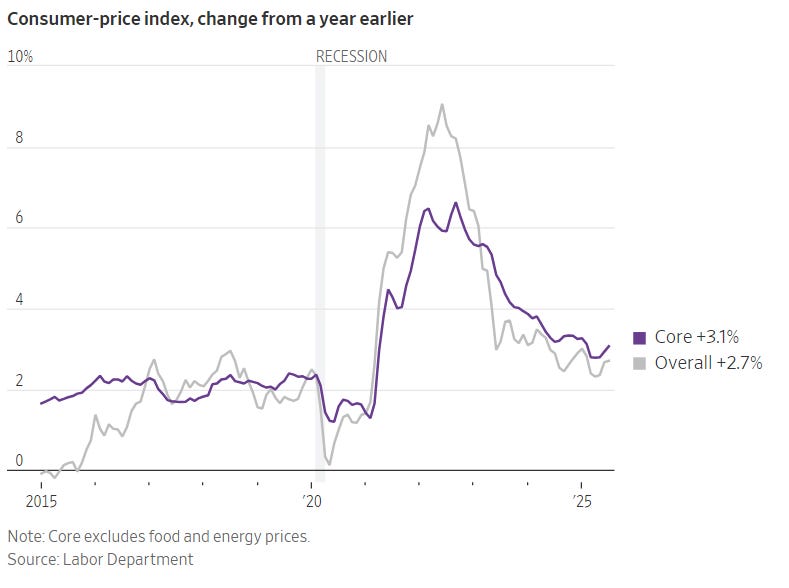
Inflation isn’t spiking, but it’s quietly moving into the stuff you actually buy.
July’s consumer price index clocked in at a steady 2.7% year-over-year, matching June’s pace and coming in just under the 2.8% economists had expected. On the surface, that’s a win. But dig deeper, and the “core” number—which strips out volatile food and energy—rose 3.1%, beating forecasts and hinting that prices are still climbing where it matters.
The Fed’s been waiting for a reason to cut interest rates, and this report keeps that door wide open. Energy costs dropped, helping keep the headline number in check. But tariffs and tighter immigration are now quietly pressing up prices in categories like furniture, tires, pet products, landscaping, and even your haircuts. As one economist put it, “We really are just now on the doorstep of seeing the pass-through effects.”
Translation: Brace yourself.
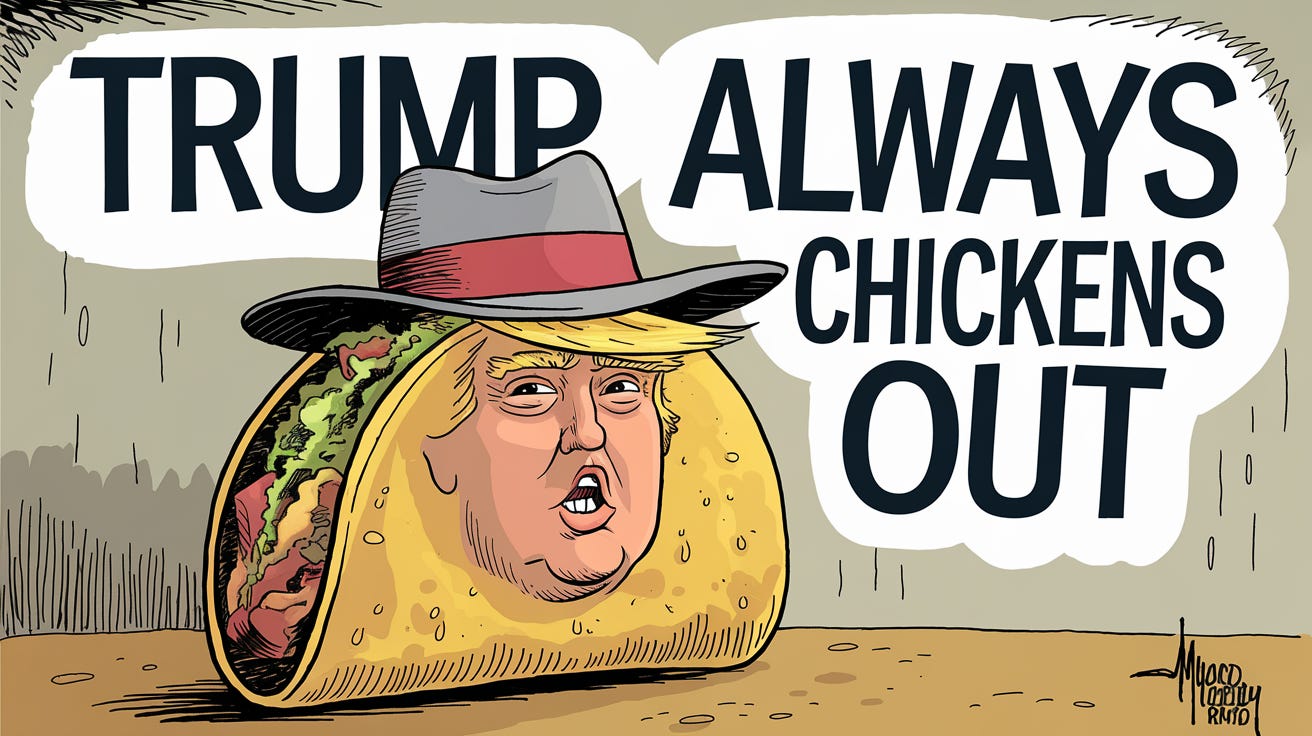
It’s been six months since some tariffs landed (Trump has TACO’d on most of them), and the ripple is finally hitting import-heavy goods—think home furnishings, apparel, and toys. Meanwhile, industries reliant on immigrant labor are seeing wage pressures trickle into prices for everyday services. This isn’t just an economic chart problem; it’s the slow burn that shows up on your next receipt. And the one after that, and after that, and after that…
Consumer sentiment is perking up a little, thanks to falling prices for cars, airline tickets, and other big-ticket items you don’t buy often. As Mastercard’s chief economist Michelle Meyer notes, “Even though furniture is going up, it’s not something you need to buy.”
Fair—but if tariffs keep feeding the fire, that may change.
The real story here is that we’re in a weird middle ground: No runaway inflation, but no real relief either. That’s a perfect setup for the Fed to make a rate cut—and for those “quiet” price hikes to keep nibbling away at your wallet while everyone’s distracted.
Source: Wall Street Journal
Speaking of the economy…!
Trump Picks Heritage Foundation Critic to Run Bureau of Labor Statistics After Firing Commissioner Over “Rigged” Jobs Data Claim
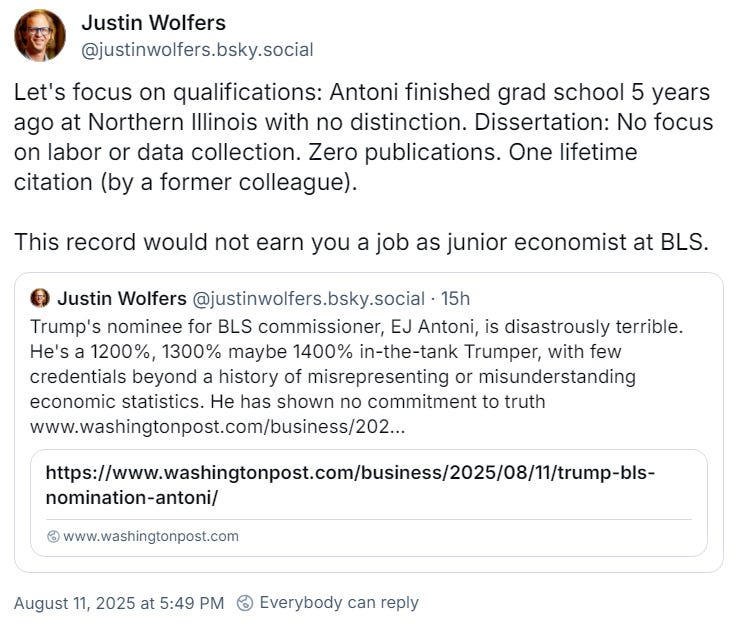
Trump just fired the nation’s top labor data watchdog—and now he’s replacing her with a loyalist who’s spent the last year trashing the agency.
President Trump announced he’ll nominate E.J. Antoni, the Heritage Foundation’s top economist and a persistent critic of the Bureau of Labor Statistics, to be its next commissioner. Antoni has accused the BLS of putting out “unreliable” data and has pushed for “honest and accurate” numbers—which just so happen to align with Trump’s narrative. This follows Trump’s abrupt firing of Erika McEntarfer, who was appointed under Biden, after a grim jobs report showed 258,000 fewer jobs than previously thought.
Antoni’s résumé includes a PhD in economics from Northern Illinois University, work on Heritage’s Project 2025, and stints at the Committee to Unleash Prosperity, a group tied to Trump allies Stephen Moore (another really shitty “economist”) and Stephen Bannon. He’s been openly hostile toward the agency’s current methods, writing last fall that the Biden administration’s jobs data “had become unreliable” after routine revisions. As he put it in a recent post, “Only consistent delivery of accurate data in a timely manner will rebuild the trust that has been lost over the last several years.”
The BLS is supposed to be an independent agency, producing nonpartisan economic data used by the Fed, Congress, and businesses. Economists across the political spectrum have blasted Trump’s firing of McEntarfer, warning it undermines confidence in the data. “There’s zero evidence of manipulation,” said Douglas Holtz-Eakin, a conservative economist who also cautioned that Antoni might find his reform plans stymied by bureaucratic reality. Or as he put it bluntly, “Confirmed positions are where opinions go to die.”
Not everyone is buying Antoni’s qualifications. Stan Veuger of the American Enterprise Institute called him “utterly unqualified and as partisan as it gets.” Even Bill Beach, who served as BLS commissioner in Trump’s first term, criticized the firing and said the next commissioner needs to be “a St. Peter” figure to restore credibility. In other words, someone beyond reproach—which, given the political theatrics, may be wishful thinking.
Bannon, unsurprisingly, is thrilled, saying Antoni “almost single-handedly took [the BLS] down by going through their numbers.” Antoni has also publicly supported Trump’s crackdowns on immigration and federal employment, claiming—without evidence—that Americans are now filling jobs typically held by undocumented immigrants. If confirmed, expect him to shake up the BLS. Whether that improves data accuracy or just turns the agency into another political echo chamber is another question entirely.
Source: Washington Post
The Bureau of Labor Statistics was supposed to be boring. Trump just turned it into the next cage match on pay-per-view.
This feels a lot like the old Soviet Union propagandist’s playbook, where up was down, left was right, and Brezhnev “caught a cold” and then died.
Trump Seizes Control of D.C. Police, Deploys National Guard in Crime Crackdown
Trump just declared a public safety emergency in Washington, D.C., taking over the police department and calling in the National Guard.
Speaking from the White House briefing room, President Trump said the nation’s capital has been “overtaken by violent gangs and bloodthirsty criminals, roving mobs of wild youth, drugged-out maniacs, and homeless people,” vowing, “We’re not going to take it.” Under the Home Rule Act, Trump can temporarily assume control of the Metropolitan Police Department if he deems an emergency exists—and he says that time is now.
Trump tapped DEA chief Terry Cole to lead the D.C. police, flanked by Attorney General Pam “Blondi”, FBI Director Ka$h Patel, and other loyalists.
National Guard troops will be deployed to support local and federal law enforcement, though they cannot make arrests. The president has 48 hours to justify his move in writing to Congress, and he can maintain control for up to 30 days without approval.
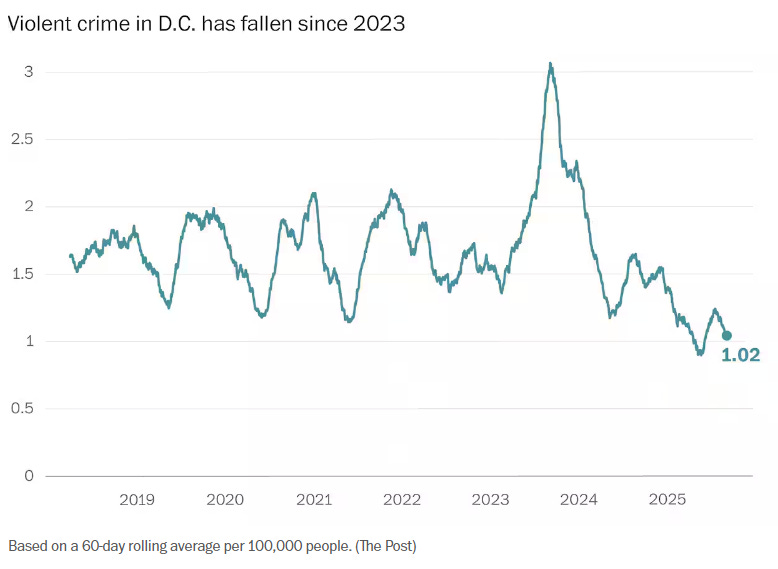
The numbers tell a different story than Trump’s rhetoric. Crime in D.C. dropped 35% in 2024, hitting a 30-year low, and violent crime is down again in 2025. But Trump dismissed those statistics, pointing to reports of a police commander accused of altering crime data and citing recent high-profile incidents, including the killing of a congressional intern and the carjacking of a former DOGE dickhead inappropriately nicknamed “Big Balls.” He’s now called “Big Swole.”
The White House has already swelled the city with federal agents from the DEA, FBI, and Secret Service, and Trump says clearing homeless encampments is next. “Washington, D.C., should be one of the safest, cleanest, and most beautiful cities anywhere in the world. And we’re going to make it that,” he declared.
Source: The Hill
We’ll see if Congress does their job (they won’t). Will Trump TACO again? Probably. But not until after he royally fucks up a lot of people’s lives. Just where do you think all those “criminals” and homeless people will wind up?
Wake up, man.
Deadly Blast Rips Through U.S. Steel’s Clairton Plant, Renewing Safety and Pollution Fears
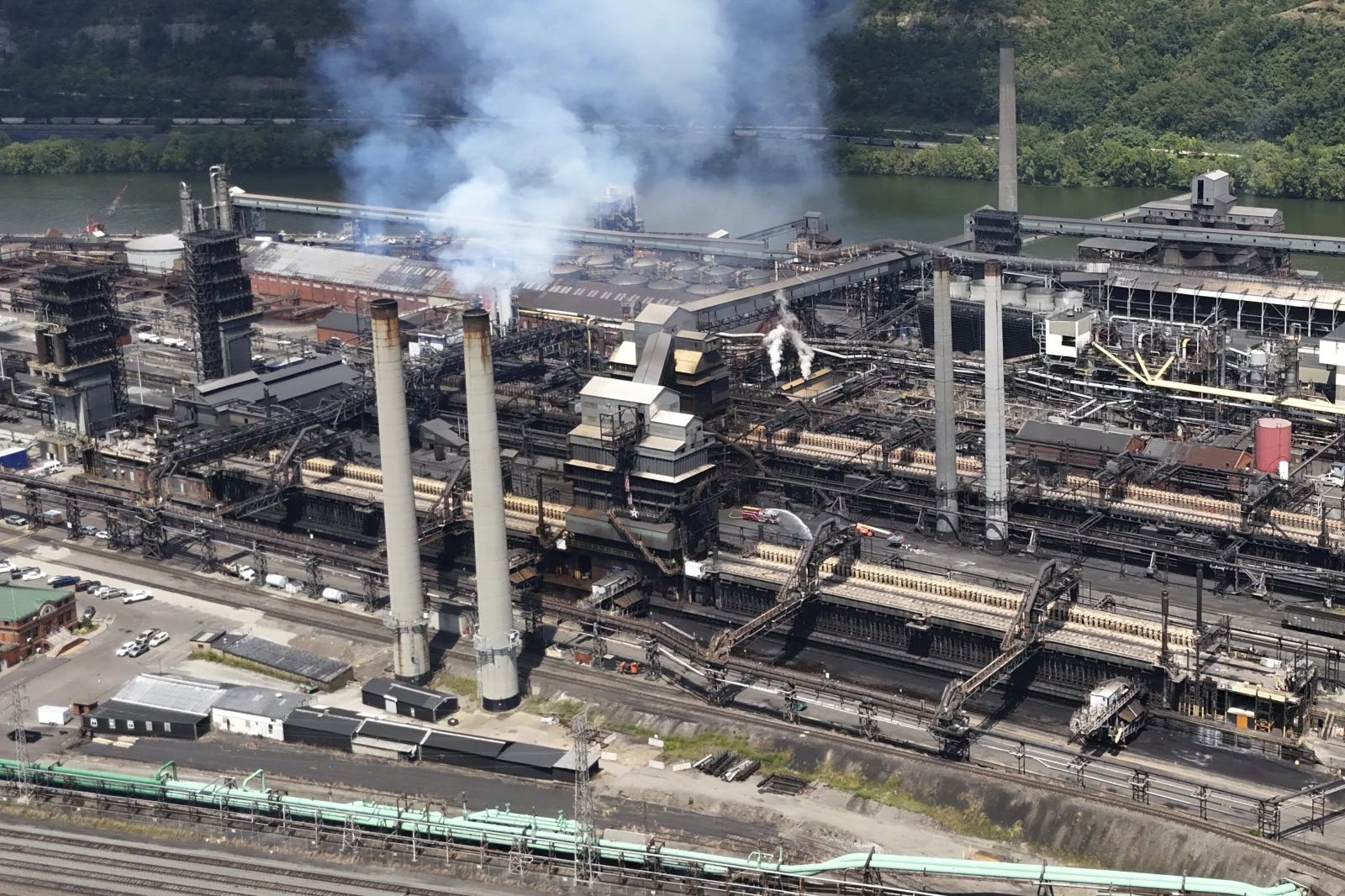
A massive explosion at the Clairton Coke Works killed two people, injured at least ten more, and left the region questioning whether this troubled steel plant should even keep running.
The blast tore through the sprawling U.S. Steel facility south of Pittsburgh late Monday morning, sending thick black smoke into the sky and rattling buildings for miles. One worker was pulled alive from the wreckage hours later. “It felt like thunder,” said construction worker Zachary Buday. “Shook the scaffold, shook my chest, and shook the building.” The cause is still under investigation, but officials say multiple smaller explosions followed the initial blast.
U.S. Steel executives praised employees for rushing in to rescue trapped workers and secure the site, while hospital officials confirmed multiple patients were treated for burns and other injuries. The Clairton plant—now part of Japan’s Nippon Steel—shut down the two coke batteries involved in the blast but continued operating the rest of the facility.
For residents like Amy Sowers, who smelled chemicals in the air and chose to leave her home, the incident was another grim entry in the plant’s long history of accidents and pollution. “Lives were lost again,” she said. “How many more lives are going to have to be lost until something happens?”
Known Explosions at Clairton Coke Works
September 2009 – A maintenance worker was killed in an explosion at the plant.
July 2010 – Another explosion injured 14 employees and 6 contractors.
2014 – A worker died after falling into a trench and being burned—reported as a fatal incident initially tied to an explosion.
August 11, 2025 – A powerful explosion rocked coke oven batteries (13 & 14), killing two people and injuring at least ten. It also triggered multiple secondary blasts and caused extreme air quality issues.
This isn’t Clairton’s first tragedy. Explosions in 2009 and 2010 killed and injured workers, leading to OSHA fines and settlements. A 2018 fire caused $40 million in damage, knocked out pollution controls, and led to weeks of foul, sulfur-laden air. The facility has faced lawsuits, multi-million-dollar settlements, and costly equipment upgrades over its environmental record.
Monday’s disaster is likely to renew scrutiny over whether the plant is being maintained to modern safety and environmental standards.
Environmental groups like PennEnvironment are already calling for “a full, independent investigation” and a reassessment of the plant’s fitness to operate. Dr. Deborah Gentile, who has tracked asthma cases near the plant, questioned whether equipment upkeep has been neglected. The Clairton Coke Works employs about 1,400 people and is the largest coking facility in North America—but for residents in the Mon Valley, the question is whether its economic role is worth the constant risk to health and safety.
Source: Associated Press
When your “world-class” facility keeps blowing up, maybe it’s time to stop calling it an accident and start calling it a business model.
Trump Buys 90 Days of Trade Peace With China—But the Big Fights Aren’t Over
Trump has hit pause on a tariff hike against China, signing a 90-day extension to the trade truce just hours before a major escalation was set to kick in.
The move temporarily steadies relations between the world’s two largest economies, but it’s more of a timeout than a peace deal. Last month’s trade talks failed to solve deeper disputes over rare earth minerals, tech export controls, and China’s relationship with Russia. While Trump has been pressing Beijing to buy more American soybeans, Washington is already mulling new tariffs tied to China’s purchases of Russian oil.
China’s exports to the U.S. have been hurting, dropping 22% in July compared to last year—the fourth straight monthly decline.
Trump’s push for more agricultural exports is meant to give U.S. farmers a boost, but the threat of new penalties over Russian oil could easily throw that goodwill out the window. Meanwhile, the Yale Budget Lab says the effective U.S. tariff rate is now the highest since 1933. Why do we insist on reliving the shittiest times in history?
This extension comes against a backdrop of growing tariff fatigue. Businesses on both sides of the Pacific want stability, but neither government is willing to budge on the tech and security issues that have been at the core of this trade war. And with the Federal Reserve likely eyeing a September rate cut, the economic stakes are as high as the political ones.
Bottom line: This “truce” is a political pressure valve, not a lasting fix. The clock is ticking, and in 90 days we may be right back where we started—only angrier, poorer, and with more tariffs hanging over the market’s head.
Source: Semafor
Gunman Kills 3 in Austin Target Parking Lot Before Wild Getaway and Arrest
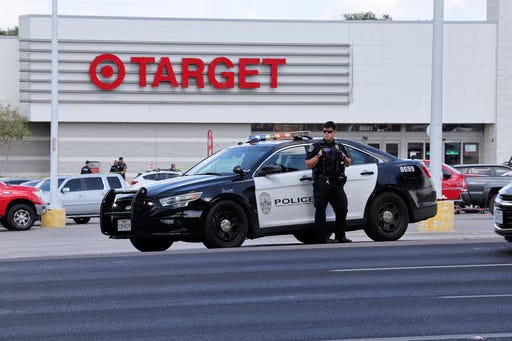
A Texas man with a history of mental health issues opened fire in a Target parking lot Monday, killing two adults and a child before stealing two cars and leading police on a chaotic citywide chase.
Austin Police Chief Lisa Davis said the suspect, a man in his 30s, fled in a stolen car immediately after the shooting, crashed it, and then stole another vehicle from a dealership before being captured 20 miles away in south Austin. Officers used a Taser to subdue him. Investigators have not yet determined a motive but believe one of the victims was the owner of the first stolen car.
The attack happened around 2:15 p.m., leaving an adult and a child dead at the scene and another adult dying later at the hospital. A fourth person was treated for a non-traumatic medical issue. “This is a very sad day for Austin,” Davis said. “My condolences go out to the families.” Witnesses described the scene as chaotic, with people sprinting from their cars and nearby businesses locking down.
Target issued a statement saying they were “devastated” and would provide grief counseling to employees. Austin Mayor Kirk Watson called it a “sickening, cowardly act of gun violence.” The incident rattled shoppers already in the midst of back-to-school season—a grim reminder that even a weekday shopping trip can turn deadly.
The shooting comes barely two weeks after a mass stabbing at a Walmart in Michigan, part of a string of violent attacks at big-box stores in recent months. Whether random or targeted, the Austin tragedy underscores how quickly everyday spaces can turn into crime scenes, leaving communities shaken and demanding answers.
Source: KSTP / Associated Press
We have a gun problem. You can’t deny that you have better chances at surviving a crazy man wielding a knife than a gun. You. Just. Can’t.