


Trump and Putin’s Alaska Showdown: Who’s Playing Who in This “Peace” Push?

Trump is flying to Alaska to stare down Vladimir Putin and “end the war in Ukraine,” but both men are bringing knives to a gunfight—and they’re not the same kind.
Trump says he’ll press Putin for a Ukraine cease-fire, dangling the possibility of pulling Ukrainian President Volodymyr Zelensky into direct talks.
The carrot? U.S. arms sales to Kyiv and some sort of long-term peace plan.
The stick? “Very severe consequences” for Moscow, including sanctions on countries like China that buy Russian oil. Putin, meanwhile, wants to keep Trump friendly while cementing Russia’s control over nearly 20% of Ukraine.
Translation: The Venn diagram of their “peace” goals barely overlaps.
Putin’s playbook is to decouple Ukraine from any broader U.S.-Russia economic deals, while Trump’s is to make those deals conditional on an end to the war. If you think this ends with a joint press conference where they announce peace in our time, remember that Trump has a long history of backing off his own threats (#TACO)—something Putin is very aware of and prepared to exploit.
As former NATO ambassador Kurt Volker warned, if Trump tries to keep Kyiv and Europe happy while cozying up to Putin, “he’ll get neither.”
The meeting—at Joint Base Elmendorf-Richardson, once a Cold War watch post—gives Putin a huge optics win just by showing up. It’s their first face-to-face since Russia’s full-scale invasion began, and it helps Putin shed his pariah status without conceding anything. Even Trump-friendly foreign policy veterans admit he’s giving Putin a massive PR gift before the talks even start. And if things go south? Trump says he’ll speak to the press alone, skipping the joint appearance entirely.
Putin will arrive with his well-rehearsed monologues about “one people” and Western meddling, while Trump will rely on gut instinct and dealmaker swagger. History says that mix often ends with Trump declaring victory regardless of the outcome. The real test is whether either man is willing to give ground, or whether this is just another geopolitical photo op that leaves Ukraine exactly where it is—under siege.
Source: Wall Street Journal (gift article)
Trump calling this a “feel-out meeting” makes sense—he’s about to find out whether Putin feels like stringing him along now or saving that for dessert.
Trump’s Ukraine “Peace Push” Looks a Lot Like a Nobel Peace Prize Campaign
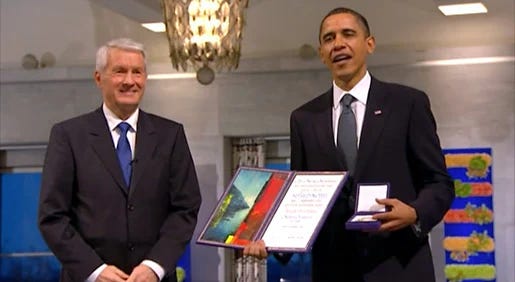
Donald Trump’s sudden zeal to broker a Ukraine ceasefire may have less to do with ending a war and more to do with polishing a gold medallion for his trophy case—the Nobel Peace Prize.
According to Norwegian newspaper Dagens Næringsliv, Trump actually cold-called Norway’s finance minister last month to talk about the award.
Several countries have already nominated him, with Trump taking credit for diffusing May’s India–Pakistan border tensions and settling a long-running Armenia–Azerbaijan dispute. Le Monde (a newspaper in France) went further, saying Trump is “obsessed” with the prize—especially since Barack Obama won one early in his presidency. Last year, Trump grumbled, “If I were named Obama, I would have had the Nobel Prize given to me in 10 seconds.”
The timing is convenient. With the Alaska summit between Trump and Vladimir Putin looming, Trump can cast himself as the indispensable dealmaker bringing peace where others failed. Of course, “peace” in this case might come with some uncomfortable concessions for Ukraine—Putin’s terms reportedly include Kyiv giving up the Donbas region, which Europe and Ukraine have already rejected.
Trump’s Nobel fixation isn’t exactly new. During his first term, he repeatedly floated his own candidacy, touting his work on Middle East agreements and North Korea talks. The difference now is the war in Ukraine offers a higher-profile, globally urgent opportunity—one that could deliver headlines, a diplomatic win, and, in his mind, vindication over Obama.
If the Alaska talks fail, the Nobel committee probably won’t be handing out participation trophies.
Source: Semafor
Nothing says “selfless statesman” like cold-calling a foreign finance minister to ask how to get your name engraved on a medal.
And to be fair, if there is a ceasefire in Ukraine OR in Gaza, Trump would get a lot of credit (earned or not) and may in fact have an argument.
Federal Judge Torpedoes Trump-Era Crackdown on DEI in Schools

A Trump-appointed federal judge just gutted the administration’s attempt to strong-arm schools into killing diversity, equity, and inclusion (DEI) programs by threatening to yank their funding.
U.S. District Judge Stephanie Gallagher ruled that the Education Department broke the law when it tried to force schools and universities to scrap DEI initiatives or face the financial guillotine. The policy—laid out in two memos—was pitched as a ban on “race-based decision-making” but in reality was a sweeping reinterpretation of civil rights law that scared the hell out of educators. Gallagher said the memos weren’t just friendly reminders; they were a “sea change” that made millions of teachers fear punishment for lawful, even beneficial, classroom speech.
The lawsuit, filed by the American Federation of Teachers and the American Sociological Association, argued the government was imposing “unclear and highly subjective” limits. Democracy Forward, representing the plaintiffs, called the ruling “an important victory” against what they described as an attack on education.
“Threatening teachers and sowing chaos in schools throughout America is part of the administration's war on education, and today the people won,” said Skye Perryman, the group’s president.
The fight began with a February memo that extended the Supreme Court’s 2023 affirmative action ruling far beyond admissions, effectively banning any race-conscious policy in academics, financial aid, hiring, or student life. A follow-up in April told states to certify they weren’t using “illegal DEI practices,” under threat of losing federal funds and facing prosecution under the False Claims Act. The result was mass confusion, legal pushback, and accusations of censorship.
Gallagher didn’t weigh in on whether the Trump policies were “good or bad,” just that they were procedurally illegal. Still, this ruling forces the Education Department to scrap its guidance—a major blow to an agenda built on dismantling DEI. The department says it’s disappointed but insists it will keep enforcing Title VI protections “at an unprecedented level.”
Source: NPR
Threatening to bankrupt schools unless they toe your political line isn’t “protecting civil rights.” It’s just bullying in a suit. But that’s what the Trump administration is—Bullies.
Speaking of kicking bullies’ ass…
UCLA Scores First Win Against Trump’s Campus Funding Crackdown
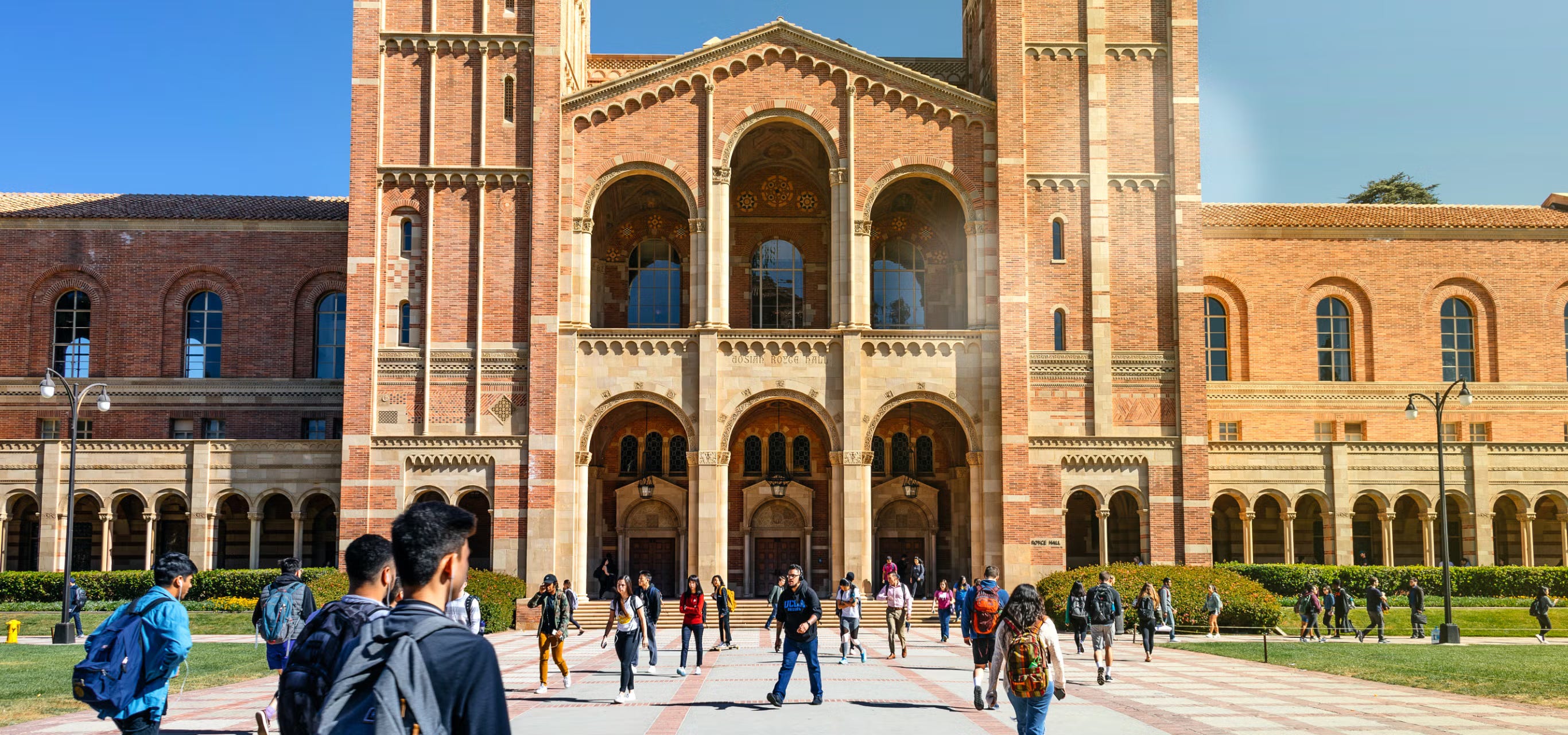
A federal judge just ordered the Trump administration to restore tens—possibly hundreds—of millions of dollars in frozen research money to UCLA, marking the first time a university has successfully fought back against the president’s targeted funding cuts.
U.S. District Judge Rita Lin granted a preliminary injunction forcing the administration to return a portion of the $550 million it yanked over allegations of antisemitism on campus. The government had argued that suspended National Science Foundation grants weren’t covered by the court’s earlier order, but Lin made it crystal clear they were. “Grant ‘termination’…encompasses circumstances where grant funding is cut off on a long-term or indefinite basis, like the suspensions carried out by NSF on July 30,” she said.
The win is unique because UCLA faculty themselves sued to protect their research, rather than leaving the fight to administrators. Plaintiffs, including Claudia Polsky of UC Berkeley’s Environmental Law Clinic, hope the decision inspires other campuses to resist. “As a practical matter, UCLA should have tens of millions of dollars of grant money restored almost immediately… As a political matter, this ruling comes just as UCLA is in the president’s crosshairs,” Polsky noted.
Trump’s team has been using withheld grants as leverage, demanding UCLA pay $1 billion, hand over admissions data, and make other concessions to restore full funding. Many universities have opted to negotiate rather than sue—Columbia and Brown have already struck deals, while Harvard, facing a $2.5 billion freeze, is still in court. Experts say the administration is betting schools won’t endure the cost and time of litigation, knowing appeals can stretch for years, if not decades.
For UCLA, this isn’t just about the money—it’s about proving the White House’s heavy-handed grant-cancellation tactics won’t go unchallenged. Whether other schools follow suit depends on whether they’re willing to endure the legal grind or settle under political pressure.
Source: The Hill
If the research money comes through quickly, maybe someone at UCLA can study the long-term effects of presidential tantrums on federal grant policy?
Trump’s ICE Expansion to Double Detention Capacity, Build Largest Family Lockups in Decades
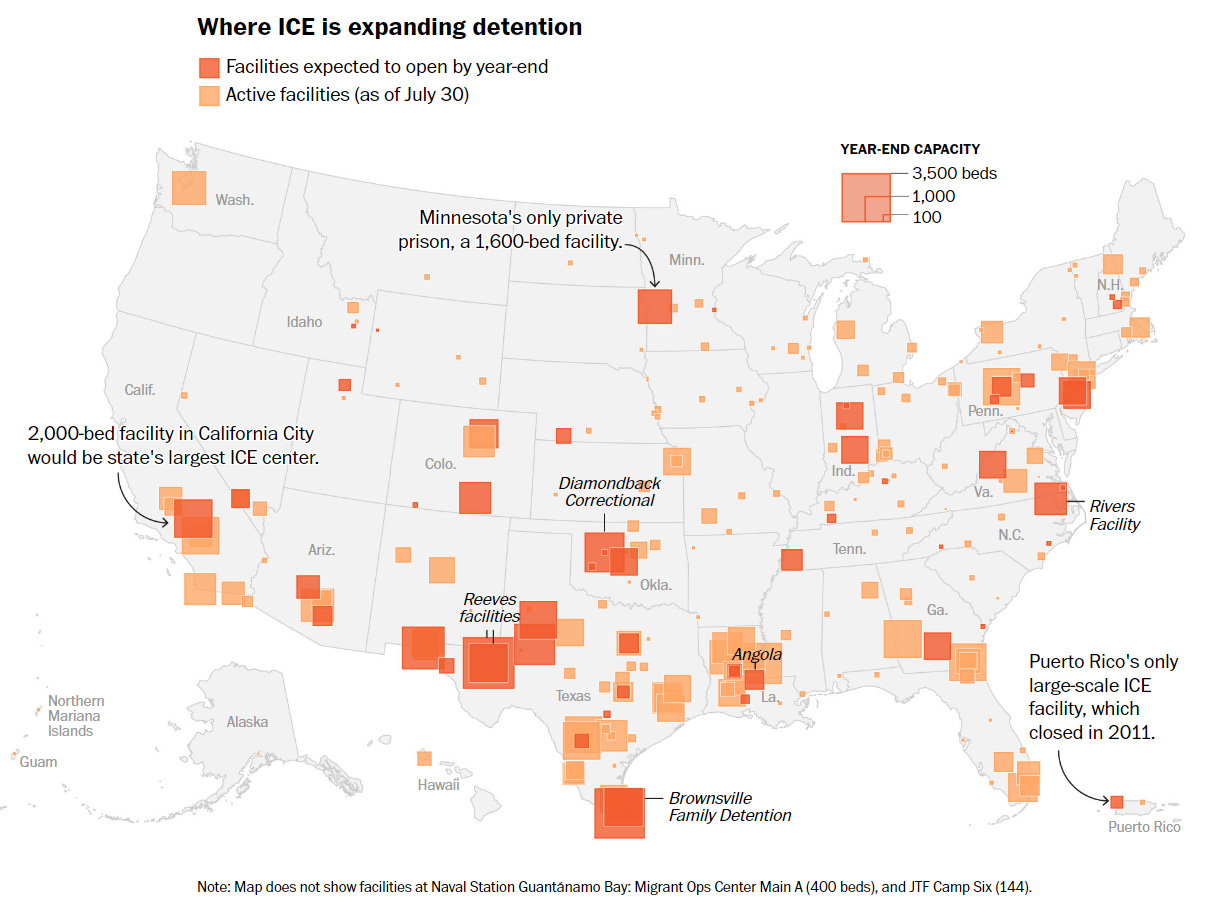
The Trump administration is racing to more than double U.S. immigrant detention space to over 107,000 beds by year’s end, fueled by a $45 billion budget and a network of new mega-facilities, tents, and family detention centers.
Internal ICE planning documents obtained by The Washington Post detail a sweeping strategy to open or expand 125 sites, including at least three large family detention centers totaling more than 5,700 beds. The largest, planned for Brownsville, Texas, would hold up to 3,500 parents and children—reviving a model the Biden administration shut down in 2021. Officials are also leaning heavily on “soft-sided” tent structures at military bases and remote locations to speed expansion.
The push is a windfall for private prison giants Geo Group and CoreCivic, each positioned to land more than $500 million annually in new ICE contracts. Texas, Louisiana, California, and Georgia will remain the detention heavyweights, but ICE is expanding into states with little prior capacity, like Indiana, Minnesota, and Tennessee. Rural communities are split—some see jobs, others see moral and humanitarian costs. Civil rights icon Dolores Huerta blasted a California City facility as a waste of resources in a region lacking basic health care.
Advocates warn that family detention inflicts lasting trauma on children and that massive facilities often struggle to meet detainee needs, especially in remote areas. “There is no humane way to detain families,” said Neha Desai of the National Center for Youth Law. Past mega-centers like Reeves County in Texas faced staffing shortages, poor medical care, and even riots. Still, ICE is betting big on scale—by year’s end, it expects to have 49 facilities holding at least 1,000 detainees each, up from 29 in July.
While DHS insists it abides by child welfare standards, the plan signals a return to deterrence-by-detention. And with billions locked in, the expansion is moving fast, contracts in flux or not. Whether these sprawling sites improve security or simply expand a for-profit incarceration system is a question the administration doesn’t seem interested in answering. It could be both, but the overall objectives seem to be two-fold: Punish people who look like they could be immigrants and grift billions to for-profit prison companies.
Source: Washington Post
If the goal is to impress the world with America’s logistical might, congratulations—we can now build tent cities faster than affordable housing. Isn’t that special?
Texas Braces for Flesh-Eating Fly Invasion That Could Gut the Cattle Industry

After half a century of peace, the flesh-eating screwworm is clawing its way back toward Texas, threatening to rip a $1.8 billion hole in the state’s economy and send already record-high beef prices even higher.
The parasite—eradicated from the U.S. in 1966—is advancing north from Central America, overwhelming sterile-fly control programs in Mexico and Panama. Ranchers are sounding alarms, stockpiling insecticides, and scrambling for labor as experts warn it’s “more likely than not” the pest will cross the border.
Kip Dove, a Texas rancher who lived through the 1970s outbreak, remembers cattle with “humongous holes…teeming with worms” and says, “I don’t know if I could handle it if it happens now.”
Screwworm flies lay eggs in any wound on warm-blooded animals. The larvae burrow through living flesh until the host dies. Wildlife, which make up a big part of Texas’ multi-billion-dollar hunting industry, are basically untreatable—they vanish into the brush to die. That makes the economic fallout even worse: Ranchers lose livestock, hunters lose game, and rural economies lose income.
The USDA says 500 million sterile flies a week are needed to push the pest back to Panama. Right now, the Panama plant cranks out only 100 million. A new facility is planned in Mexico, but it’s a year away. In the meantime, ranchers face a backbreaking daily grind: Checking every animal, in dense brush, for wounds that can turn fatal in days.
Fifty years after eradication, Texas is on the verge of repeating history—only now with fewer cowboys, more cattle, and a much bigger economic bullseye. If there’s one silver lining, it’s that unlike RFK Jr., at least these flesh-burrowing parasites have a legitimate excuse for being in someone’s head.
Source: Reuters
If the screwworms do make it across the border, they’ll find Texas beef tender, plentiful, and unfortunately, very much alive.
BONUS ARTICLE: (speaking of worms…)
South Korea’s Top Court Says U.S. Composer’s ‘Baby Shark’ Claim Doesn’t Hold Water

After six years of legal wrangling, South Korea’s Supreme Court has ruled that Pinkfong did not plagiarize an American composer’s version of “Baby Shark,” ending the case with a definitive “doo doo doo doo doo doo.”
The court upheld earlier rulings that Jonathan Wright—known professionally as Johnny Only—couldn’t claim copyright protection for his 2011 rendition because it was too close to the traditional campfire melody that’s been sung in the U.S. for decades. Pinkfong released its version in 2015, tweaking the public domain tune into a kid-friendly pop juggernaut.
In its decision, the Supreme Court stressed that Wright’s version lacked the “substantial modifications” necessary to be considered an original work, while Pinkfong’s had “clear differences” that set it apart. Pinkfong said the ruling confirmed its song was based on a “traditional singalong chant” and credited its “upbeat rhythm and catchy melody” for turning the sharks into a global cultural phenomenon.
Wright’s South Korean attorney called the decision “a little disappointing” but said the matter was now settled. Pinkfong, meanwhile, keeps swimming in profit—its “Baby Shark Dance” video has topped 16 billion YouTube views, peaked at No. 32 on Billboard’s Hot 100, and helped generate $32.6 million in revenue in the first half of 2025 alone.
The shark family empire now spans TV shows, Netflix specials, movies, apps, and touring musicals—proving that sometimes the real copyright is on printing money.
Source: ABC News
If you’re going to spend six years in court over “Baby Shark,” you’d better be ready to lose twice—once in the ruling, and once every time that song gets stuck in your head.
And you’re welcome for the earworm!
Apologies for not showing up yesterday. I had my own nearly fatal case of stomach worms. Worst 3 hours of my life. Thought I’d be better off dead. But I’m BAAACK!
No, I didn’t have “worms” but I had some sort of stomach bug that was NOT pleasant.
"If there’s one silver lining, it’s that unlike RFK Jr., at least these flesh-burrowing parasites have a legitimate excuse for being in someone’s head."
LMAO Yea RFK jr. quit starving your guests.
Sorry to hear you got the gut bug and hoping a speedy recovery fer ya.