


Trump Sends Warships to Venezuela’s Doorstep in “Narco-Terror” Crackdown
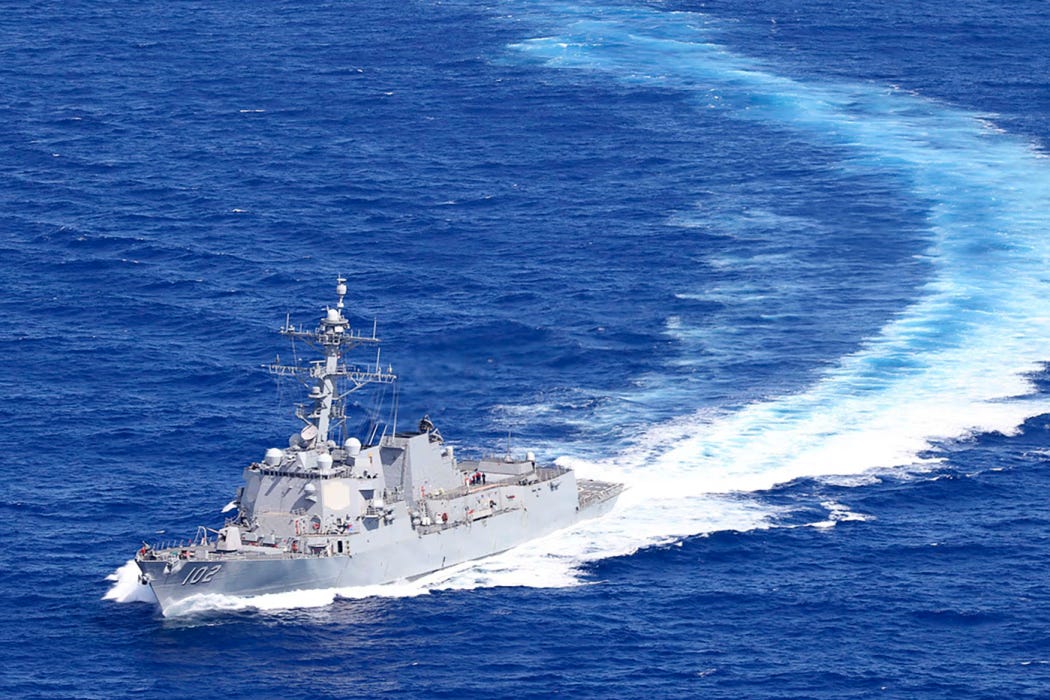
President Trump has ordered three Navy destroyers to patrol South America’s coast to take on drug cartels—putting U.S. warships nose-to-nose with Nicolás Maduro.
The guided-missile destroyers USS Jason Dunham, USS Sampson, and USS Gravely will be tasked with interdicting cartel drug shipments near Venezuela. For the Navy, this isn’t just backup for the Coast Guard anymore—this is a direct counternarcotics mission, complete with Tomahawks and a thousand sailors as a floating warning to Caracas.
Trump’s order follows his January executive designation of Latin American cartels as foreign terrorist organizations and the Justice Department’s decision to double the bounty on Maduro to $50 million. The administration bluntly accuses the Venezuelan strongman of being one of the world’s top narco-traffickers, working hand-in-glove with the same cartels the Navy is now hunting.
Venezuelan officials, of course, rejected the charges. Foreign Minister Yvan Gil fired back, saying, “Washington’s accusation that Venezuela is involved in drug trafficking reveals its lack of credibility and the failure of its policies in the region.” Meanwhile, Maduro himself promised to deploy more than 4.5 million militia members across the country, a show of force that sounds more like a militia cosplay than a functional deterrent.
Military brass admit sending billion-dollar Aegis destroyers after drug runners is “overkill,” but they also note the real message is political. Former NATO commander Adm. James Stavridis put it bluntly: The arrival of U.S. warships off Venezuela’s coast is a signal that Washington’s patience with Maduro’s “narco-terrorist assault” has run out.
Source: Wall Street Journal (gift article)
Deploying Navy destroyers to chase drug boats feels like swatting mosquitoes with a sledgehammer. Effective? Maybe. Subtle? Absolutely not.
Not gonna lie here, though: I agree with this. I don’t like the bluster, but if we’re going to end the drug war, we have to stop it on multiple levels. If you crush the supply and address demand at home (the missing link, always—getting addicted people treatment), you largely solve the problem.
Russia Pounds Western Ukraine, Hits U.S. Electronics Factory Amid Massive Air Barrage
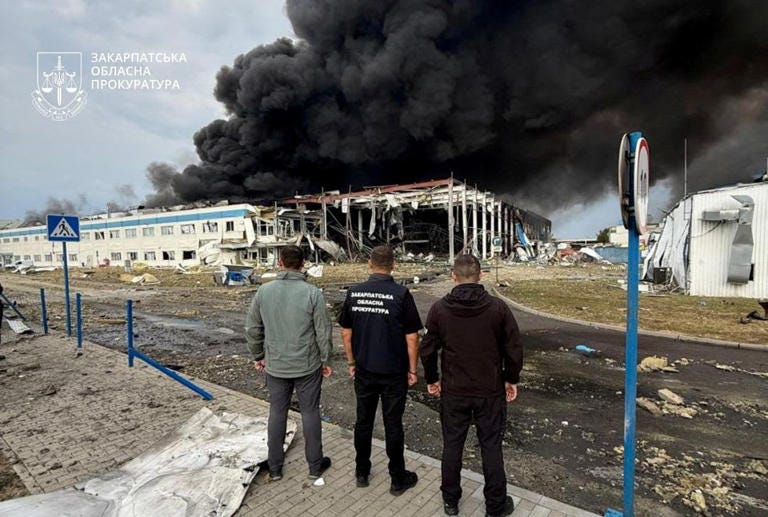
Russia launched one of its largest airstrikes of the war, firing more than 600 drones and missiles, with one cruise missile slamming into an American-owned electronics plant in western Ukraine.
The strike targeted a Flex factory in Mukachevo near the Hungarian border, leaving at least 15 people wounded and the facility badly damaged, according to Ukrainian officials. Flex, headquartered in Texas and Singapore, produces everyday consumer products like coffee machines, making this no military installation but a civilian enterprise funded by U.S. investment. Videos from the scene showed black smoke pouring from the site.
Ukrainian President Volodymyr Zelenskyy condemned the attack, writing on Telegram: “An ordinary civilian enterprise, an American investment. They produced such familiar household items as coffee machines.”
He blasted Moscow’s strike as proof Russia has no intention of scaling back, no matter what peace efforts the world pretends to pursue.
The barrage, which killed at least one civilian in Lviv, comes just days after Trump met both Zelenskyy and Putin separately in hopes of jumpstarting negotiations. Trump has floated U.S. air support as part of potential security guarantees for Kyiv, though he continues to rule out American ground troops. Ukrainian officials, however, say only NATO membership can deter Putin, who, in their view, respects nothing short of an ironclad Article 51 guarantee.
Meanwhile, Moscow doubled down. Foreign Minister Sergey Lavrov demanded Russia get a veto over any Western security commitments for Ukraine—an absurdity that would render guarantees meaningless. With positions this far apart, it’s hard to call Trump’s peace tour anything but diplomatic theater.
Source: NPR
So to recap: Russia bombs coffee machines, Trump pitches peace without teeth, and Lavrov wants a veto card. That’s not a roadmap to peace—it’s a parody of diplomacy.
Trump Fumbles at Peace Talks, Can’t Spot Finland’s President Sitting Right in Front of Him
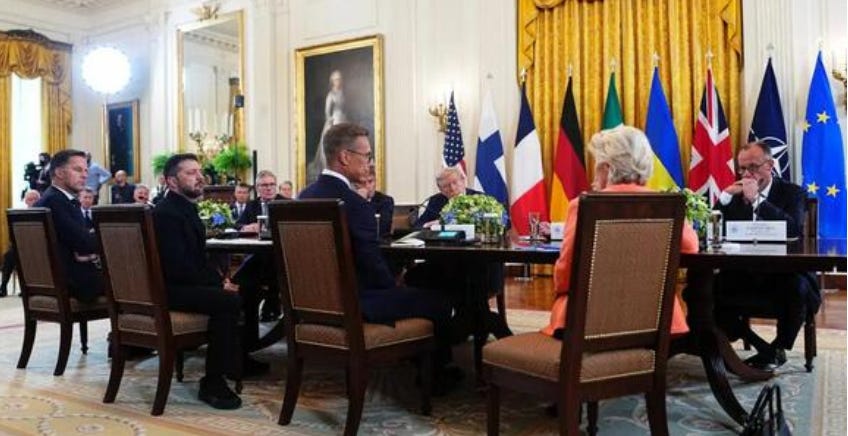
Donald Trump, 79, managed to lose track of Finland’s President Alexander Stubb at the Ukraine peace talks—even though Stubb was seated directly across the table from him.
The moment unfolded at the White House, where Trump hosted seven European leaders and Ukrainian President Volodymyr Zelenskyy for high-stakes discussions on Russia’s invasion of Ukraine.
When it came time to acknowledge Finland’s leader, Trump squinted around the room asking, “President Stubb of Finland. He’s uh, somebody that, where are we here?”
Awkward silence followed until Stubb, seated right next to Zelenskyy and squarely opposite Trump, rescued him by saying, “I’m right here.”
Trump quickly recovered, leaning forward with, “Oh! You look better than I’ve ever seen you look. But you’ve done a great job and we wanted to have you here.”
What a putz. Both of them!
This wasn’t a one-off. Trump recently flubbed Cabinet introductions at an Apple event, forgetting his own Treasury and Commerce Secretaries were standing behind him. Similar lapses occurred during a veterans’ bill signing just weeks earlier. Pattern? You betcha!
The stumble is especially rich considering Trump has repeatedly touted his golf buddy bond with Stubb, bragging about their win at a member-guest tournament at his Palm Beach club. Apparently fairway chemistry doesn’t translate to recognizing someone sitting a few feet away at a polished wood table.
Source: The Daily Beast
Trump can remember his golf handicap, but not where the President of Finland is sitting. That’s less “peace negotiator” and more “lost grandpa at brunch.”
Trump Orders Military to Prep for Strikes on Mexican Cartels
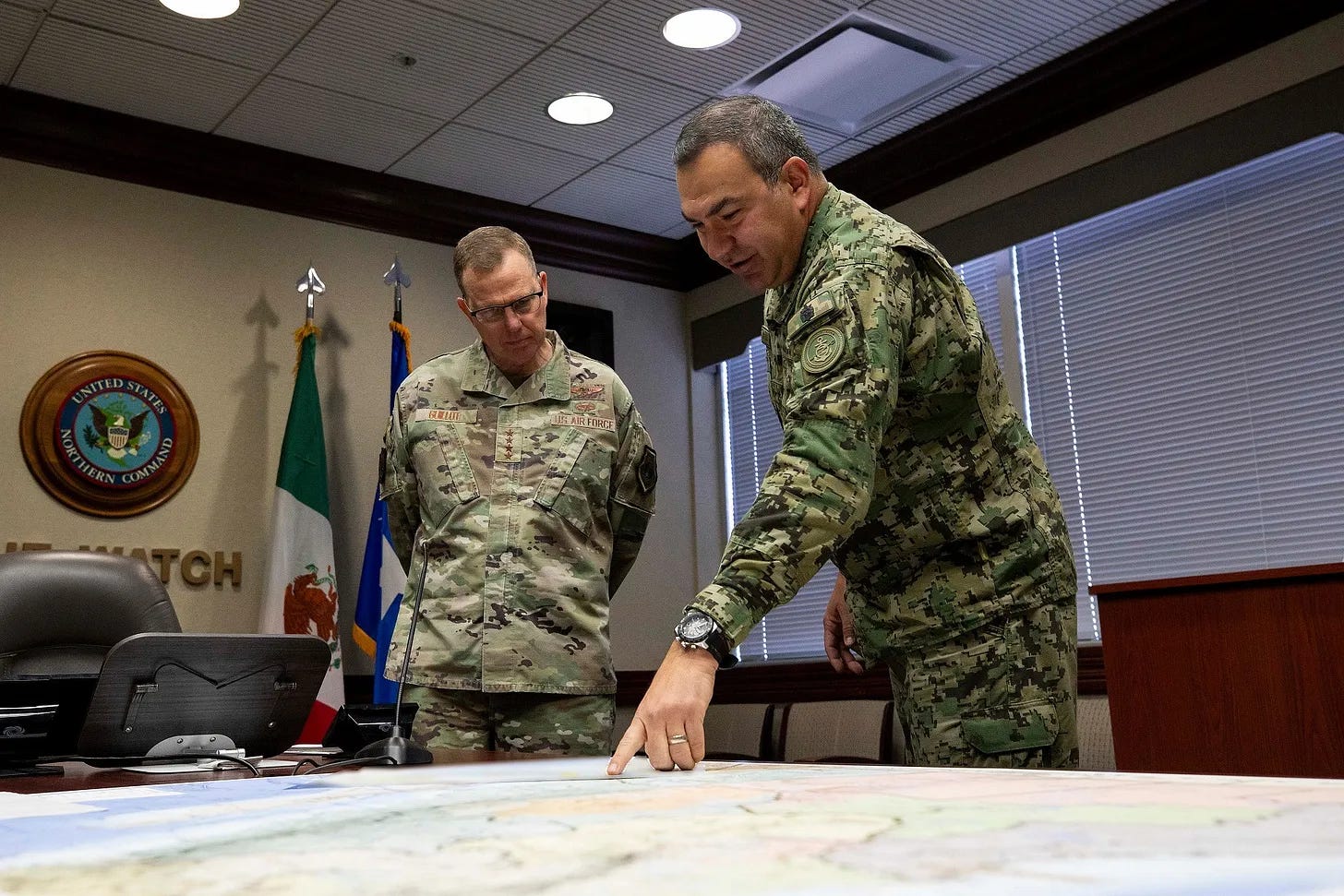
The Trump administration has quietly ordered the Pentagon to draw up plans for lethal strikes against cartel targets inside Mexico, a move that could mark one of the boldest—and most dangerous—foreign policy shifts in decades.
When you bomb a foregin country, no matter the reason, it’s called WAR.
The Top Secret planning directive, issued in late spring, tasks U.S. Northern Command (NORTHCOM) with preparing attack options against high-value cartel figures, compounds, and supply chains, particularly those linked to the Sinaloa and Jalisco New Generation cartels. The plans, according to senior intelligence officials, are being readied for potential execution by mid-September.
The political stakes couldn’t be higher. Mexico’s government has historically bristled at even small-scale U.S. military involvement, making unilateral strikes a potential diplomatic earthquake.
As one senior official put it, Trump is “willing to take unilateral action despite potentially negative political ramifications.”
Translation: Mexico’s permission doesn’t matter to Trump.
Behind closed doors, NORTHCOM has been told to prepare “target packages” and “operational preparation of the battlespace,” while its Special Operations arm (SOCNORTH) coordinates with intelligence agencies, the FBI, and DHS. This represents a major expansion of the military’s role—far beyond the at-sea interdictions and joint training exercises that defined past U.S.-Mexico cooperation.
The administration frames the move as a response to the fentanyl crisis, which has killed more than 225,000 Americans.
Secretary of State Marco Rubio summed up the White House’s new war footing:
“We have to start treating them as armed terrorist organizations, not simply drug-dealing organizations.”
Source: Ken Klippenstein
If Trump starts greenlighting drone strikes in Mexico, expect every foreign leader from Ottawa to Bogotá to clutch their pearls. Nothing screams “good neighbor” like dropping a JDAM2 across the border.
CDC Lays Off 600 Workers Despite Judge’s Partial Ruling
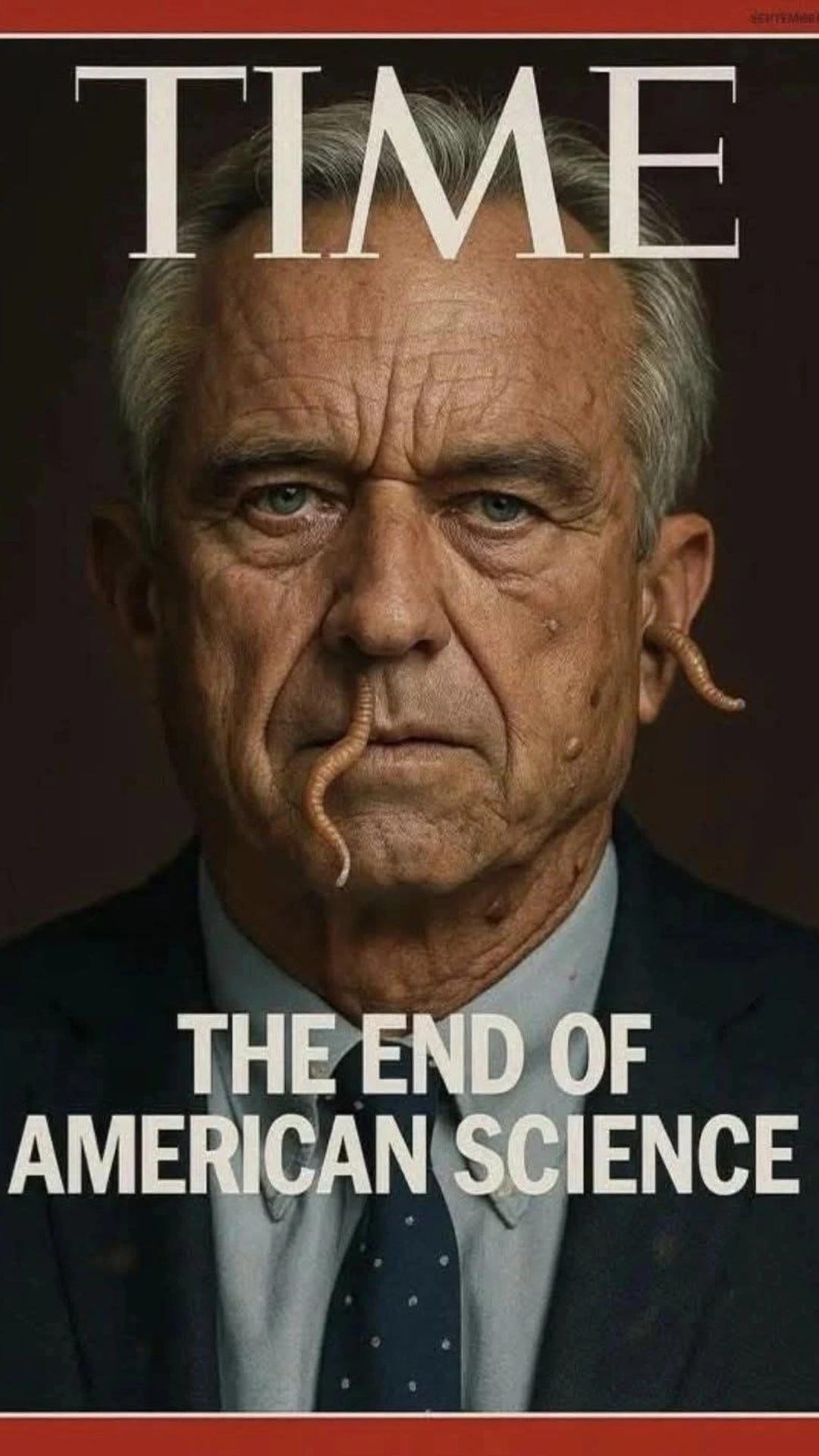
At least 600 employees of the CDC are being permanently terminated this week, the fallout of a sweeping federal restructuring that spared some divisions but gutted others.
The American Federation of Government Employees, which represents over 2,000 CDC staffers, said it is tracking at least 600 cuts but blasted what it called a “staggering lack of transparency” from HHS. Many of those laid off had been sitting on paid leave since April, when thousands of CDC workers first received layoff warnings pending lawsuits.
A Rhode Island judge ruled last week to protect certain CDC divisions—including those focused on smoking, reproductive health, and environmental safety—but employees in violence prevention, FOIA, and other programs weren’t so lucky. About 100 violence prevention staff were cut, just two weeks after a gunman sprayed 180 rounds into the CDC’s campus, killing a police officer.
One affected worker put it bluntly: “The irony is devastating: The very experts trained to understand, interrupt and prevent this kind of violence were among those whose jobs were eliminated.”
That was purposeful. MAGA loves gun violence.
The layoffs gut projects aimed at preventing rape, child abuse, and teen dating violence, as well as international programs tracking violence against children. Retired CDC leader Tom Simon warned the damage is permanent: “There are nationally and internationally recognized experts that will be impossible to replace.”
HHS insists the restructuring is about making health agencies more “responsive and efficient.” In reality, it looks a lot more like axing expertise in areas politicians would rather ignore. When you fire the very people who track and prevent violence, you’re not streamlining—you’re condoning that violence.
Source: AP News
So the CDC loses experts in violence prevention right after a mass shooting at their campus. That’s not just irony—it’s policy malpractice.
Israel Launches Gaza City Offensive as Ceasefire Talks Falter
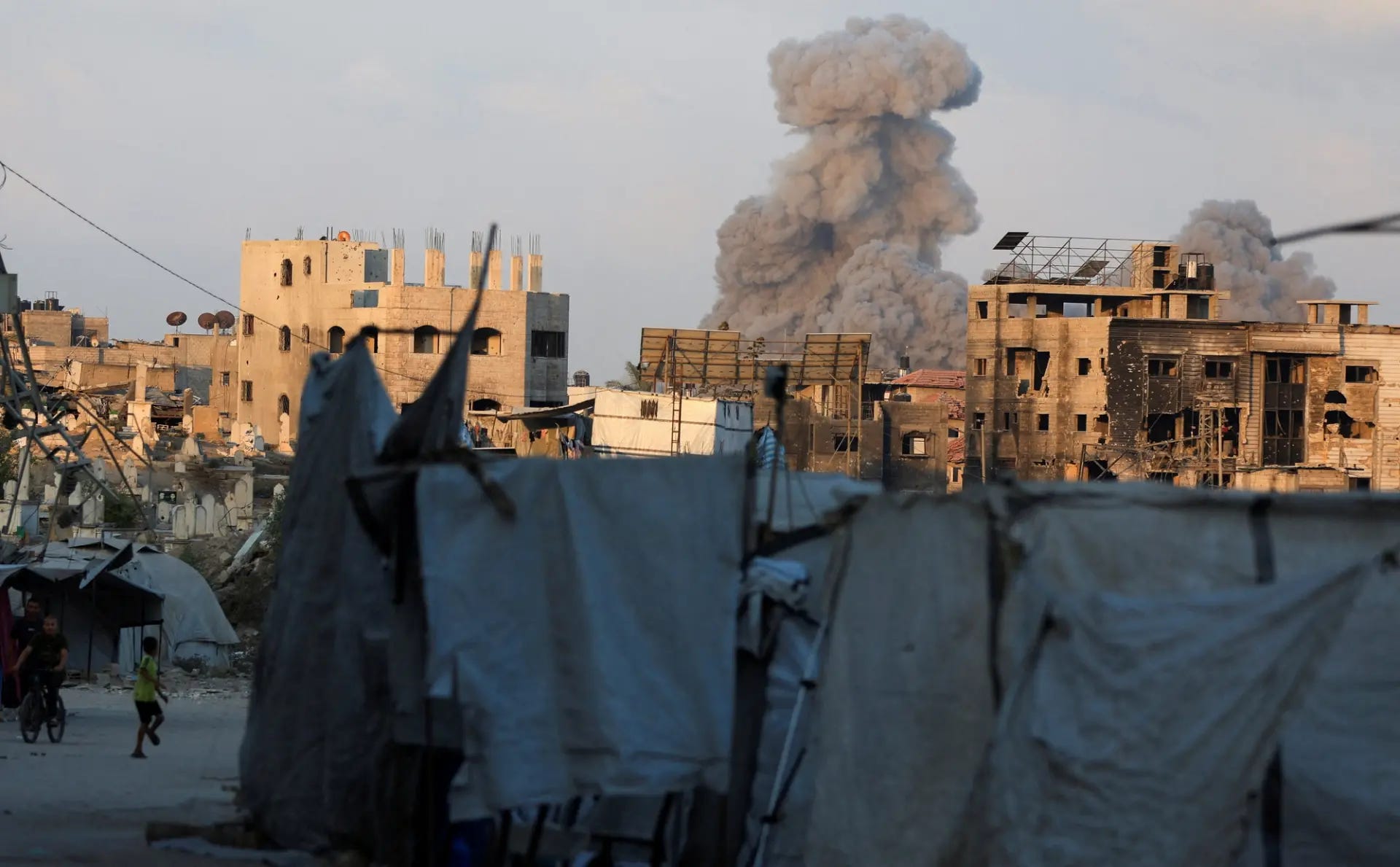
Israel has begun a full-scale offensive on Gaza City even as Egypt and Qatar push for a 60-day truce already accepted by Hamas.
The move signals Israel’s skepticism of the ceasefire deal, with officials saying they’ll respond by Friday but key far-right ministers are already opposing any compromise. Israel is demanding a full hostage release, not the partial one outlined in the proposed agreement.
Despite ongoing talks, Israeli forces expanded operations overnight, a decision the UN and aid groups warn could push Gaza further into humanitarian catastrophe. Food, water, fuel, and medical supplies remain critically short, and the UN has said aid levels are far below what’s needed to avert mass starvation.
Adding fuel to the fire, Israel also approved a new settlement project in the West Bank that would effectively split the territory in two—a move guaranteed to inflame tensions across the region. For Palestinians, this signals business as usual: more land grabs, more displacement, and more bombs.
Truce efforts have failed before in the final stages, and with Gaza under intensifying bombardment, hopes for this latest diplomatic push look slim. Instead of negotiations leading the way, it’s tanks and missiles doing the talking.
Source: Semafor
Nothing screams “we’re serious about peace” like expanding settlements and launching a major offensive while mediators beg for a truce.
Article 5 of NATO states that if a NATO Ally is the victim of an armed attack, each member of the Alliance will consider this act as an attack against all members and will take necessary actions to assist the Ally that was attacked. This principle of collective defense has only been invoked once in NATO's history, following the September 11 attacks in 2001. The foundational purpose of NATO is to ensure peace and security through such collective defense obligations.
The Joint Direct Attack Munition (JDAM) is a guidance kit that converts unguided bombs, or "dumb bombs," into all-weather precision-guided munitions (PGMs).