


Democrat Eileen Higgins Wins Miami Mayor’s Race in a Contest National Politics Refused to Ignore
Miami just elected a mayor, but the ballot might as well have been a proxy war between Trumpworld and the DNC.

Eileen Higgins, a Democrat and former county commissioner, won Tuesday’s runoff over Emilio González, the Trump-backed ex–city manager and retired Army colonel whose endorsement list read like a GOP greatest-hits album: Donald Trump, Ron DeSantis, Ted Cruz—the whole ensemble. A technically nonpartisan race? Sure, in the same way pro wrestling is “unscripted.”
Democrats saw an opening and jumped in headfirst. The DNC declared it was going “all in” for Higgins, who also picked up backing from Miami-Dade Mayor Daniella Levine Cava, Pete Buttigieg, and Congresswoman Frederica Wilson. Republicans, sensing a chance to flip a historically blue city after Miami-Dade’s 2024 red turn, treated the contest like a midterm warm-up. Former mayors say they’ve never seen this level of partisanship in a Miami municipal race—and these are people who have seen everything.
Both parties desperately wanted the win for national bragging rights. Democrats hoped a Higgins victory would signal that Trump’s influence has real limits in urban politics. Republicans wanted a symbolic reversal after Democratic gains in New Jersey, Virginia, and New York City last month. The GOP’s local chair tried to downplay the stakes, saying Democrats would “make a mountain out of a molehill” if Higgins prevailed. Well, get ready for the mountain.
Miami’s voter registration math didn’t magically shift for González: Democrats still hold a modest edge, and non-affiliated voters outnumber Republicans. Even when Miami-Dade County flipped red in 2024, the city itself stayed narrowly blue. Tuesday night simply affirmed that dynamic—just with a lot more national noise attached.
Source: Miami Herald
Editor: If this was really a “molehill,” the GOP wouldn’t have rolled out Trump, DeSantis, and Cruz like a touring act. Miami stayed blue, and the national spin machines are already warming up.
Pentagon Chief Won’t Promise Congress the Unedited Caribbean Strike Video

Defense Secretary Pete Hegseth’s refusal to commit to showing Congress the raw footage of a deadly U.S. military boat strike is already wearing thin on Capitol Hill.
Democratic lawmakers emerged from a classified briefing saying Hegseth declined to guarantee that all members of Congress would see the unedited Sept. 2 strike video—including the follow-up attack that killed two survivors. For an administration that insists everything was by the book, this sure looks like a book nobody’s allowed to read.
The legality of the operation has become a live wire, with military experts and lawmakers openly questioning whether the engagement met the standards the Pentagon claims it did. When asked directly for a commitment, Hegseth opted for something closer to bureaucratic yoga than transparency.
Senator Chuck Schumer captured the irritation neatly: “His answer: We have to study it. Well, in my view, they’ve studied it long enough.” When even the Senate minority leader is done being patient, the clock has run out.
If the Department of Defense wants credibility, hiding the tape isn’t the way to get it. Congress isn’t asking for a magic trick—just the footage. And if the administration is confident the strike was justified, releasing the video shouldn’t require divine intervention.
Source: New York Times
Editor: Amazing how fast “trust us” turns into “we’re still looking into it” the second someone asks for receipts. Show the tape, or stop pretending this is accountability.
IMF Lifts China’s Growth Outlook as Beijing Tries to Outrun Global Headwinds
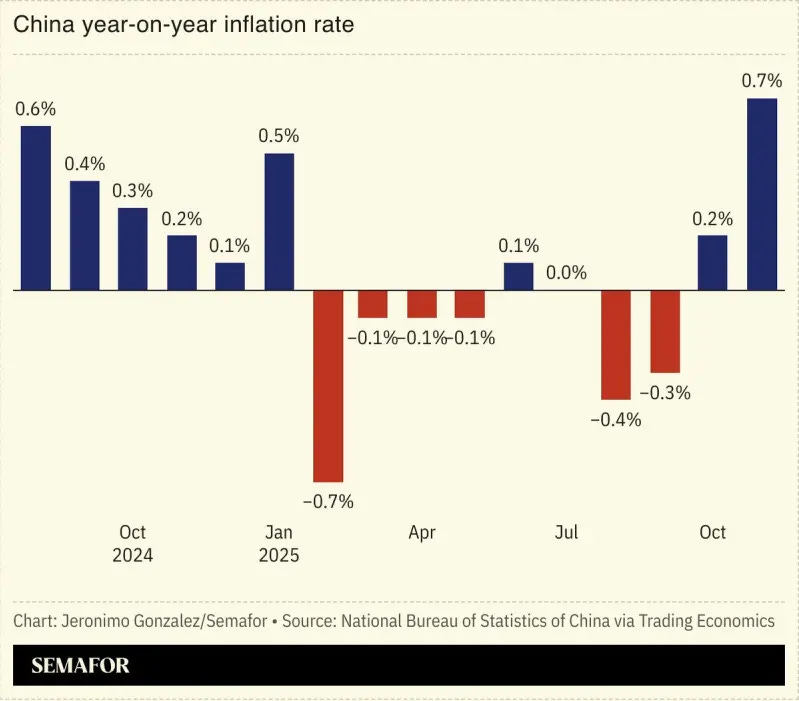
China’s economy just notched a rare win: rising inflation, rising confidence, and now a rosier growth forecast from the IMF.
New data out of Beijing shows consumer inflation jumping to its highest level in nearly two years—a sign that deflationary anxieties may finally be loosening their grip. For a government that has been pounding the table on domestic consumption, this is the first hint that the strategy might actually be doing something besides producing slogans.
The IMF followed that momentum by upgrading China’s 2025 growth forecast to 5%, which conveniently aligns with Beijing’s own target. According to the Fund, China’s ability to stay upright while the U.S. and Europe tighten trade screws is the real reason for the revision. Resilience is admirable, but let’s not confuse it with invincibility.
Still, the report added a splash of cold water: overheated competition in some sectors continues to be a structural drag, reminding everyone that growth can look great on paper while headaches pile up offstage.
Beijing will absolutely take the good news—but the question is whether this is the beginning of a genuine rebound or just a well-timed gust of economic tailwind before the turbulence returns.
Source: Semafor
Editor: China hits its growth target and suddenly everyone forgets the country is juggling property implosions, debt hangovers, and trade wars like a circus act with no net. Enjoy the 5%—just don’t expect it to solve physics.
GOP Counters Dems’ ACA Push With a Health Care Bill Built for the Base
Republicans are lining up their own health care proposal to blunt Democrats’ bid to extend enhanced Affordable Care Act tax credits—and they’re not pretending otherwise.
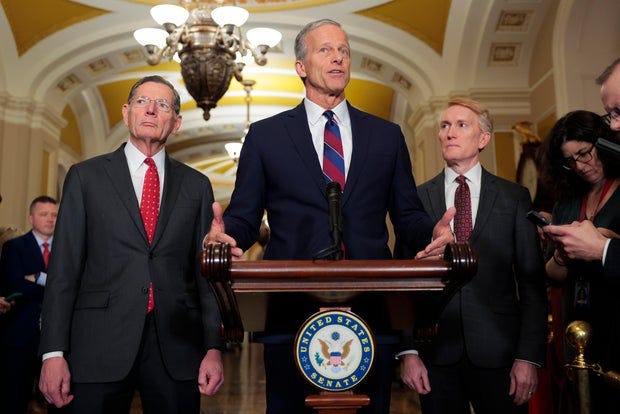
Senate Majority Leader John Thune made it official: the GOP will put its Health Care Freedom for Patients Act on the floor alongside Democrats’ extension plan. The Republican bill, crafted by Sens. Bill Cassidy and Mike Crapo, skips the tax-credit renewal entirely and instead funnels money into health savings accounts for people buying bronze-tier plans. In other words, less subsidy, more “you’re on your own, but with a tax break.”
Thune swears it “delivers the benefit directly to the patient, not to the insurance company,” while saving taxpayer dollars. Democrats—predictably—aren’t buying it. Chuck Schumer labeled the plan “junk insurance,” which is Washington-speak for “we see your messaging bill and raise you another messaging bill.”
The backdrop: Democrats are pushing a three-year extension of the enhanced ACA tax credits that helped 22 million Americans afford coverage this year. Letting them expire would spike premiums by more than $1,000, according to the Center on Budget and Policy Priorities, and KFF estimates next year’s average premium would more than double. That’s the kind of math voters notice—hence the scramble.
None of this is expected to become law. Neither side has the votes to clear the Senate’s 60-vote threshold. What they do have is political incentive: Democrats want Republicans on record opposing subsidies, and Republicans want a counter-vote they can point to as proof they’re not the villains in the health-care saga.
Thune called the Democratic bill “a show vote”—a label that fits both sides just fine. Congress isn’t legislating here; it’s staging dueling trailers for the 2026 midterms. Wake me when someone introduces a bill meant to actually pass.
Source: CBS News
Editor: Nothing says “serious legislating” like two doomed bills sailing straight into the procedural shredder while leaders squint earnestly into cameras pretending it’s all for the American people.
Job Openings Flatline as Layoffs Rise and the Economy’s Compass Spins
America’s labor market is stuck in neutral, and the dashboard lights are starting to blink.
The latest JOLTS report—delayed thanks to the 43-day government shutdown—shows job openings holding at 7.7 million in October, essentially unchanged from September. But the steadiness masks something less comforting: layoffs climbed to their highest level since early 2023, and fewer workers are quitting, a clear signal that confidence is draining out of the workforce. As economist Samuel Tombs put it, firms aiming to cut labor costs “will have to pivot to active layoffs…rather than rely on natural attrition.”
Job openings have been drifting downward for nearly three years, a slow unwind from the wild peak of 12.1 million in March 2022. High interest rates from the Fed’s inflation fight continue to cool the economy, but this year adds a new twist: President Trump’s sweeping tariffs, which have scrambled trade flows and helped keep inflation elevated as importers pass along higher costs to consumers.
That’s left the Federal Reserve in a bind heading into this week’s meeting. Inflation is still above target—normally a reason to keep rates steady—but the labor market’s wobble is pushing policymakers toward what’s expected to be a third rate cut this year. A contentious debate is almost guaranteed.
The shutdown only muddied the picture further, forcing September and October readings to be merged and delaying nearly all major economic data. We won’t get November’s jobs and unemployment figures until next week, and there will be no standalone unemployment rate for October at all. Forecasters expect fewer than 38,000 jobs added in November and an unemployment rate ticking up to 4.5%—still low historically, but the highest in nearly four years.
In short: anyone claiming to know exactly where the economy is headed is bluffing. The signals are mixed, the data is messy, and policymakers are voting with one eye closed.
Source: ABC News
Editor: Amazing how a shutdown-scrambled data dump, tariff-driven inflation, and a wobbly labor market all converge—and somehow the official line is still “steady as she goes.” Sure. If the compass spinning in circles counts as navigation.
SpaceX Eyes a 2026 IPO That Could Launch Its Valuation Past $1 Trillion
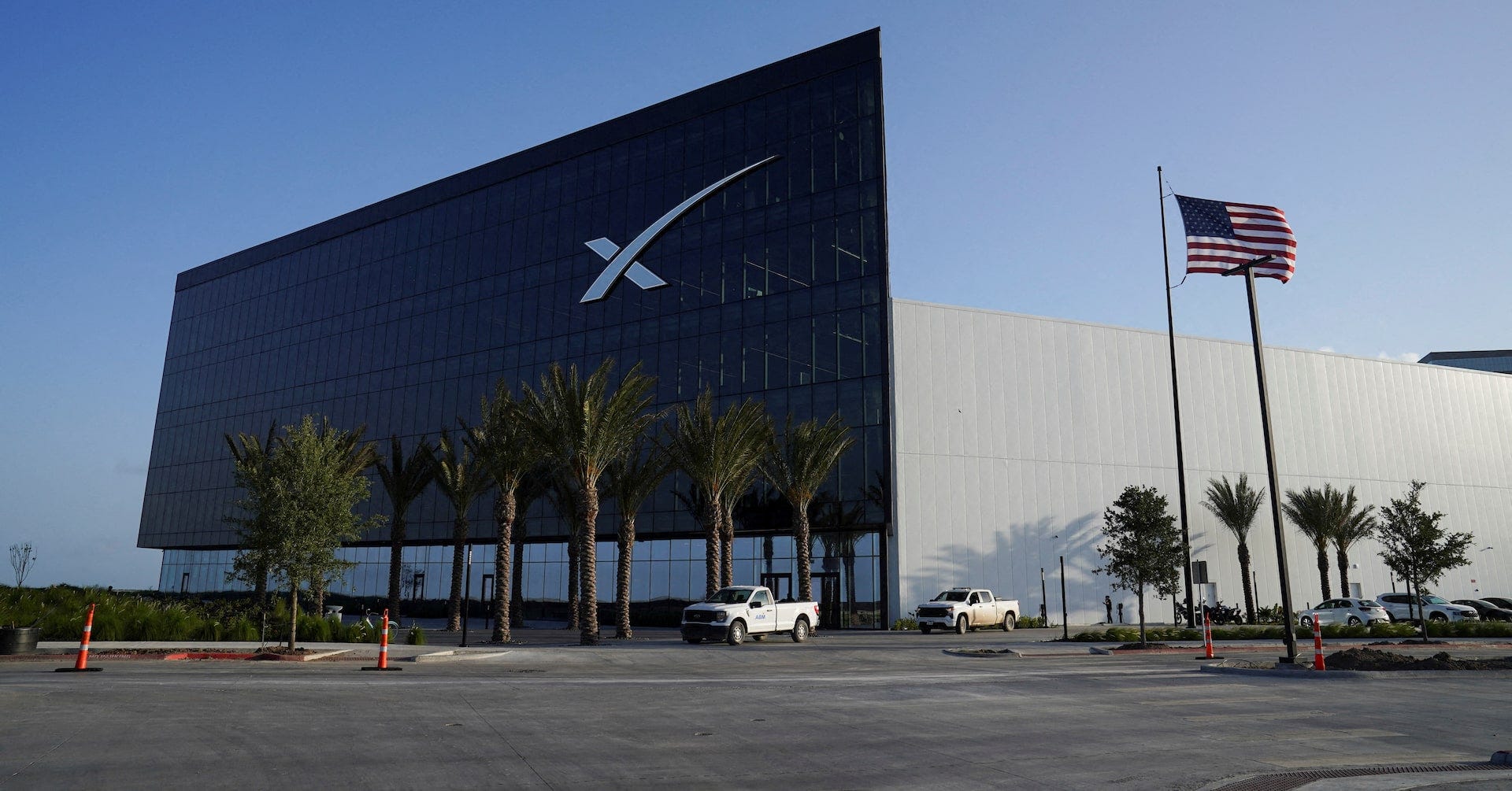
Elon Musk’s rocket empire is gearing up for a public debut that could mint the next trillion-dollar titan—and rattle every corner of the tech and defense sectors.
SpaceX is quietly preparing a 2026 initial public offering that could raise more than $25 billion and push its valuation beyond the $1 trillion mark, according to someone with knowledge of the talks. The timing—June or July—isn’t accidental: the IPO window is finally reopening after years of drought, and Wall Street is starved for something big enough to believe in again.
The engine driving this move isn’t the rockets (though Starship’s moon-and-Mars ambitions aren’t hurting). It’s Starlink, the space-based internet business that’s exploded in scale and is now expanding into direct-to-mobile service. Investors have spent years begging for a standalone Starlink IPO; instead, they may get an entire SpaceX listing—a far bigger beast.
Market watchers are already drooling. As Samuel Kerr of Mergermarket put it, “SpaceX represents one of the most exciting opportunities in the global IPO market…a genuine growth industry,” with space tech emerging as the next frontier of defense, connectivity, and even orbit-based data centers. And yes, SpaceX reportedly plans to use IPO proceeds to build those orbital data centers—plus the chips to power them.
But this is no victory lap. Musk is juggling more multi-billion-dollar companies than any other CEO on Earth, and analysts are openly questioning how he could run two trillion-dollar public firms at once. As Dan Coatsworth of AJ Bell warned, if SpaceX goes public, expect calls for Musk to pick a lane—Tesla or SpaceX—because steering both may be a fantasy even for him.
With OpenAI and Anthropic also exploring IPOs, 2026 could become a watershed year that drags long-private unicorns into the sunlight. Even so, SpaceX is the one that could redefine the market. The only IPO ever to break the trillion-dollar barrier so far is Saudi Aramco—an energy giant, not a space company. Musk is about to test whether investors are truly ready to treat orbit like the next oil field.
Source: Reuters
Editor: Wall Street begging Musk to go public is peak 2025—everyone wants a piece of the Starlink money printer but pretends to be shocked that the man running half the tech universe might be overextended. Good luck policing his calendar once he’s got another trillion-dollar badge.