


Trump’s New AI Order Puts States on Notice
President Trump just swung a hammer at state-level AI regulation, and he’s aiming to make sure only Washington gets to hold the chisel.
In a sweeping executive order, Trump moved to centralize the nation’s AI rules under federal control while warning states to back off from crafting their own. The White House is pitching this as clarity; states may hear it as a threat. The order’s spine is simple: a national framework is coming—and if states try to fill the vacuum first, they may pay for it.
A new Justice Department task force is set to challenge state AI laws, with the administration arguing that a growing patchwork of rules risks throttling innovation. That’s paired with a financial lever: the Commerce Department is instructed to withhold future broadband funding from any state that passes what the order calls “onerous” AI legislation. Federal carrot, meet federal stick.
The move underscores a broader ideological battle. Tech companies have long begged for consistent national rules, while many states—blue and red—have already stepped in with their own AI protections. This order tries to snap that experimentation shut. As one senior official put it, “We cannot afford 50 different AI regimes.” Sure—but some of those regimes are the only reason there are any protections at all.
Even supporters of a national framework might squirm at the tactic. Centralization is one thing; using broadband funding as a disciplinary tool is another. It’s a reminder that in the power struggle over AI, the fight isn’t just about algorithms—it’s about who gets to write the future.
Source: WIRED
Editor: Bold move using broadband dollars as a whip—because nothing says ‘innovation strategy’ like threatening rural internet access to win a turf war over AI rules.
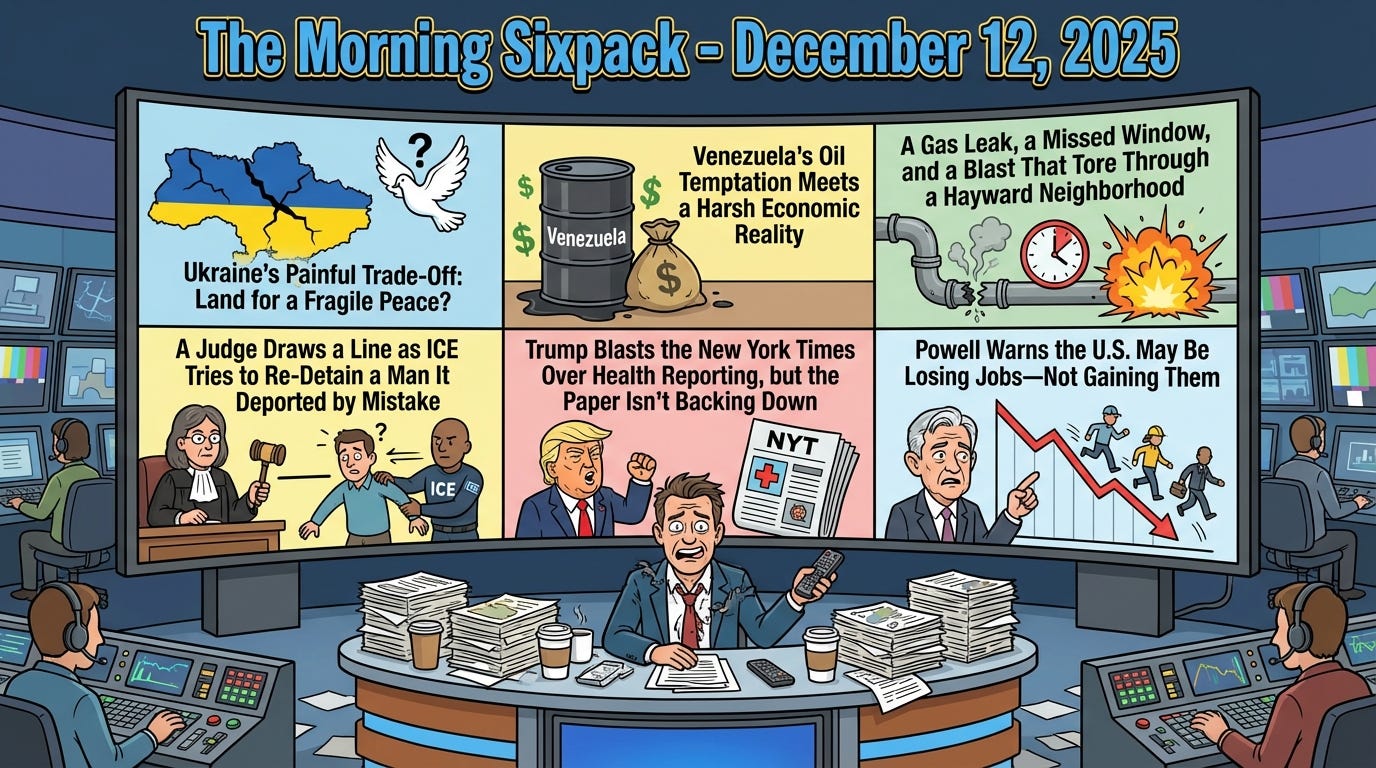
Venezuela’s Oil Temptation Meets a Harsh Economic Reality
Chevron may be the last major American player standing in Venezuela, but that doesn’t mean a stampede of US oil firms is waiting at the border.
Right now, Chevron is the only US producer still operating there, thanks to a 2022 Biden-era licence that let the company work around sanctions. The Trump administration kept that lifeline intact this year—while yanking exemptions from others like Spain’s Repsol in an effort to choke off cash flowing to Nicolás Maduro. With those advantages, Chevron now accounts for roughly one-fifth of Venezuela’s entire oil output, which tells you less about Chevron’s prowess and more about how far the country’s once-mighty energy sector has fallen.
Analysts say that if Washington eases restrictions, Chevron is poised to benefit first, not least because US Gulf Coast refiners are practically salivating for Venezuela’s heavy crude. It’s cheaper, more profitable to refine, and increasingly scarce thanks to years of sanctions and collapsing Venezuelan production. As Kpler analyst Matt Smith put it, “It has been problematic for US Gulf Coast refiners in recent years that Venezuela has been under sanctions…Even if they weren’t getting involved in the production side of things, they would be a keen buyer of it.”
Still, the fantasy that Venezuelan oil could quickly bring down US prices runs into a brick wall: the wells just aren’t producing enough. To move the needle, Venezuela would need years of massive reinvestment. Wood Mackenzie estimates that with better management and modest capital, production might reach two million barrels a day in two years. But meaningful growth—real, export-shifting growth—would require tens of billions of dollars and possibly a decade of work. Good luck finding companies eager to gamble that kind of money in a nation where OPEC rules, political risk is sky-high, and contracts can shift with the political winds.
There’s also a ticking global clock. As Capital Economics’ David Oxley notes, oil demand isn’t collapsing, but it’s no longer rising the way it used to—and it’s projected to start declining in the late 2030s. Anyone sizing up a long-term Venezuelan play has to ask whether they’ll still have buyers when the mega-projects finally come online. “Drill,baby,drill” sounds glorious on a campaign stage, but private companies only drill when the math works.
In short, even if Maduro falls and sanctions thaw, Venezuela’s oil isn’t roaring back anytime soon. The prize is tempting—but the risks, costs, and timeline make it a far harder sell than political rhetoric suggests.
Source: mydailygrind.news
Editor: Amazing how quickly “we want your oil” turns into “we want your oil, but only if someone else pays to resurrect your entire industry.” The free market loves a bargain, not a fixer-upper.
Ukraine’s Painful Trade-Off: Land for a Fragile Peace?
Kyiv is weighing territorial concessions to Russia under US pressure, a grim marker of how far the war and Western resolve have eroded.
Le Monde reports that Ukraine and key European partners have quietly accepted a US-backed proposal to carve out a demilitarized zone in the Donbas—rebranded, in classic diplomatic euphemism, as a “special economic zone.” President Volodymyr Zelenskyy confirmed Washington floated the idea, even as he signaled deep discomfort with the terms. This is the kind of “peace plan” that starts sounding less like negotiation and more like geopolitical triage.
The Trump administration appears to be leaning hard on Kyiv to take the deal, while Moscow now claims there are no remaining “misunderstandings” with Washington. When Russia starts sounding serene, it’s usually because they think they’re winning. Zelenskyy, for his part, is publicly wary: “The final mile is the hardest. Everything could fall apart for many reasons,” he warned—a line that reads like both a lament and a warning shot.
A territorial concession wouldn’t just redraw maps. It risks cementing a precedent that land can be seized through force if the aggressor simply holds out long enough. Kyiv knows this; Europe knows this. But with US support wobbling and a grinding war testing every ally’s patience, the incentives are shifting, and not in Ukraine’s favor.
The biggest unknown is political will. Even if Zelenskyy accepts a deal on paper, implementing it in a fractured, war-scarred region is a different matter entirely. And Moscow has a long history of treating agreements as temporary speed bumps rather than commitments. Peace without enforceability isn’t peace—it’s a pause.
Source: Semafor
Editor: The phrase “special economic zone” is doing an Olympic-level amount of work here. When your peace plan sounds like a brochure for a duty-free mall, something’s gone off the rails.
A Gas Leak, a Missed Window, and a Blast That Tore Through a Hayward Neighborhood
A ruptured gas line and a two-hour gap in emergency response preceded the explosion that leveled a Hayward home and sent six people to the hospital.
Fire crews first arrived at the 800 block of East Lewelling Blvd. around 7:50 a.m. Thursday after reports of a natural gas leak. According to officials, PG&E cleared them just five minutes later. But at 9:38 a.m.—after workers had resumed digging and a doorbell camera captured an excavator perched directly over the damaged line—a massive explosion ripped the home apart, injuring at least six people and shaking houses across the neighborhood. The blast was so violent that one witness said watching the footage “was like you were watching a war video.”
The force destroyed one home, heavily damaged two others, and left workers and residents stunned as flames engulfed the property. Hospital officials say three of the victims are in serious condition. Multiple agencies, including Cal/OSHA and the NTSB, are now investigating how a known leak escalated into a catastrophe, and whether proper safety steps were taken in the critical window before the blast.
That window is now under a microscope. PG&E says it learned at 7:35 a.m. that a third party had struck an underground gas line. It didn’t fully stop the gas flow until 9:25 a.m.—just 10 minutes before the explosion. “It’s a process,” a PG&E spokesperson said, citing the need to isolate multiple lines. But independent fire investigator Richard Meier was blunt: utilities should be doing more to identify accessible valves and reduce shutdown times. In his view, “understandable” doesn’t mean “reasonable.”
The other looming question: Why wasn’t the neighborhood evacuated? PG&E said evacuations typically fall to first responders; the fire department said PG&E told them the situation was under control. Meier didn’t mince words: “It is the responsibility of the gas company to evacuate people in the event of a known leak.” When two agencies point to each other after a disaster, that’s a sign the protocols weren’t aligned—and the public paid the price.
Source: ABC7 News
Editor: Every time there’s a “process,” there’s a neighborhood wondering why it’s now missing a house. Maybe start by putting emergency valves somewhere other than a scavenger hunt map. PG&E is a criminal organization; this isn’t the first time they’ve blown up a neighborhood.
A Judge Draws a Line as ICE Tries to Re-Detain a Man It Deported by Mistake
A federal judge stepped in to stop immigration authorities from immediately hauling Kilmar Abrego Garcia back into custody—just hours after she ordered his release.
Abrego Garcia arrived for a routine ICE check-in in Maryland on Friday, barely 14 hours after walking out of a Pennsylvania detention center. His lawyers warned the judge that ICE appeared poised to re-detain him on the spot. Instead, he walked out to cheers from supporters chanting “We are all Kilmar!” and urging him to keep fighting. He did—telling the crowd, “I stand before you a free man and I want you to remember me this way, with my head held up high.”
It was a rare public moment of relief in a saga defined by government blunders and what the judge bluntly described as misconduct. Earlier this year, ICE wrongly deported Abrego Garcia to a notorious Salvadoran prison despite a 2019 ruling protecting him from removal due to gang threats. The Trump administration eventually brought him back amid public outcry—but only after issuing human smuggling charges tied to a two-year-old Tennessee traffic stop that had previously resulted in nothing more than a warning.
Judge Paula Xinis made clear she wasn’t buying ICE’s attempts to keep him locked up. Not only did she block the agency from re-detaining him before a full hearing, she wrote that authorities “affirmatively misled the tribunal” and are likely to lose if they keep pushing. Put simply: the government can’t detain someone indefinitely just because it’s politically convenient.
The Department of Homeland Security responded with predictable fury, calling her ruling “naked judicial activism” and promising an appeal. But the legal reality is straightforward: ICE hasn’t presented a valid basis for holding him, and the court found no final removal order exists. Meanwhile, the administration’s effort to deport him somewhere—anywhere—else, including to African countries where he has no ties, looks less like policy and more like punishment.
Abrego Garcia still faces the Tennessee smuggling charges and has a pending asylum claim. The fight is far from over, as his attorney put it, but Friday’s ruling was a small but real victory: “a victory of law over power.”
Source: AP News
Editor: When a judge has to stop ICE from snatching someone the moment he walks into a check-in, that’s not “activism”—that’s babysitting a federal agency that keeps touching the stove.
Trump Blasts the New York Times Over Health Reporting, but the Paper Isn’t Backing Down
Donald Trump’s fury over news coverage of his stamina and alertness has escalated into claims of sedition—claims the New York Times says won’t cow a free press.
On Truth Social this week, the 79-year-old president accused the Times and other outlets of committing “seditious, perhaps even treasonous” acts for publishing reports about his physical condition. He called them “Enemies of the People” and hinted that “we should do something about it,” a line that lands differently when it comes from the sitting president and not a random keyboard warrior. The paper, to its credit, didn’t blink.
The Times has run several pieces in recent weeks examining what appear to be signs of fatigue: shorter workdays, fewer public events, and even a video of Trump “fighting sleep” in a Cabinet meeting. Columnist Frank Bruni put a point on it, writing that Trump’s approval ratings—and his vigor—have dipped, drawing an inevitable comparison to Joe Biden’s late-term slide. Trump insists none of it is true, declaring himself “history’s hardest-working president” who has “ACED” three cognitive tests, and accusing reporters of pretending he’s slowing down.
The history here isn’t subtle. The health of American presidents has always been a touchy subject, from Eisenhower’s heart attack to Wilson’s stroke to Biden’s debate stumbles. Trump spent years hammering Biden’s cognition, yet bristles at identical scrutiny. The contradiction would be comic if it didn’t involve a man threatening the free press while suing it. He already has a $15 billion defamation case pending against the Times over unrelated reporting, adding yet another front in his long war with independent journalism.
The Times isn’t retreating. Spokeswoman Nicole Taylor emphasized that their reporting is deeply sourced and rooted in interviews with people close to Trump and medical experts. “Americans deserve in-depth reporting and regular updates about the health of the leaders they elect,” she said—before adding that the outlet “won’t be deterred by false and inflammatory language that distorts the role of a free press.” Translation: the watchdog isn’t going to heel.
And with Trump still publicly denying any signs of wear while privately dialing back his schedule, this story is not drifting away. The more he tries to intimidate the press into silence, the louder the questions about his health—and his hostility toward accountability—are going to get.
Source: AP News
Editor: Imagine being so mad about articles noting you look tired that you accuse journalists of treason. At some point, the reaction becomes the real story—and the fatigue writes itself.
BONUS
Powell Warns the U.S. May Be Losing Jobs—Not Gaining Them
Fed Chair Jerome Powell says the government may be overstating job creation by as much as 60,000 positions a month—enough to flip reported gains into actual losses.
At his post-meeting press conference, Powell laid out a problem economists have whispered about for months: the possibility that America’s vaunted job growth is a statistical mirage. Federal data show the economy adding roughly 40,000 jobs a month since April. But if Fed staffers are right, and the overcount is closer to 60,000, the real labor market could be shrinking by about 20,000 positions monthly. That’s not a rounding error—that’s a recession signal hiding in plain sight.
The culprit is the Bureau of Labor Statistics’ “birth-death model,” the statistical guesswork used to estimate jobs created by new businesses and lost when old ones close. In recent years, that model has overshot reality by hundreds of thousands of jobs annually, forcing painful downward revisions. BLS says it’s fixing the problem, but the first improvements won’t show up until February. Until then, policymakers are essentially steering through fog with a cracked windshield.
Powell admitted the uncertainty helped justify the Fed’s decision to cut interest rates for a third straight meeting, even as the topline numbers—4.4% unemployment and a reported gain of 119,000 jobs in September—still look decent. But decent surface data doesn’t mean much when the plumbing beneath it is corroded. “Job creation may actually be negative,” Powell said, calling the situation “complicated, unusual, and difficult.”
The data troubles don’t end with the birth-death model. Late survey responses, years of budget cuts, staffing shortages, and even the recent government shutdown have slowed the BLS’s ability to produce reliable numbers. Into that void has poured political pressure: President Trump fired BLS Commissioner Erika McEntarfer after big revisions undercut earlier job-growth claims and accused the agency of manipulation—a convenient grievance when the numbers stop flattering the White House.
If Powell is right, the U.S. labor market isn’t just cooling—it may be contracting while the government insists it’s expanding. And that means the Fed is juggling inflation, rising unemployment, and unreliable data all at once—hardly the ideal toolkit for landing a soft landing.
Source: The Wall Street Journal
Editor: When your jobs data is so shaky the Fed has to guess whether the economy is growing or shrinking, maybe stop firing the statisticians and start funding them. But we KNOW why Trump is doing this: He’s hiding the truth.