


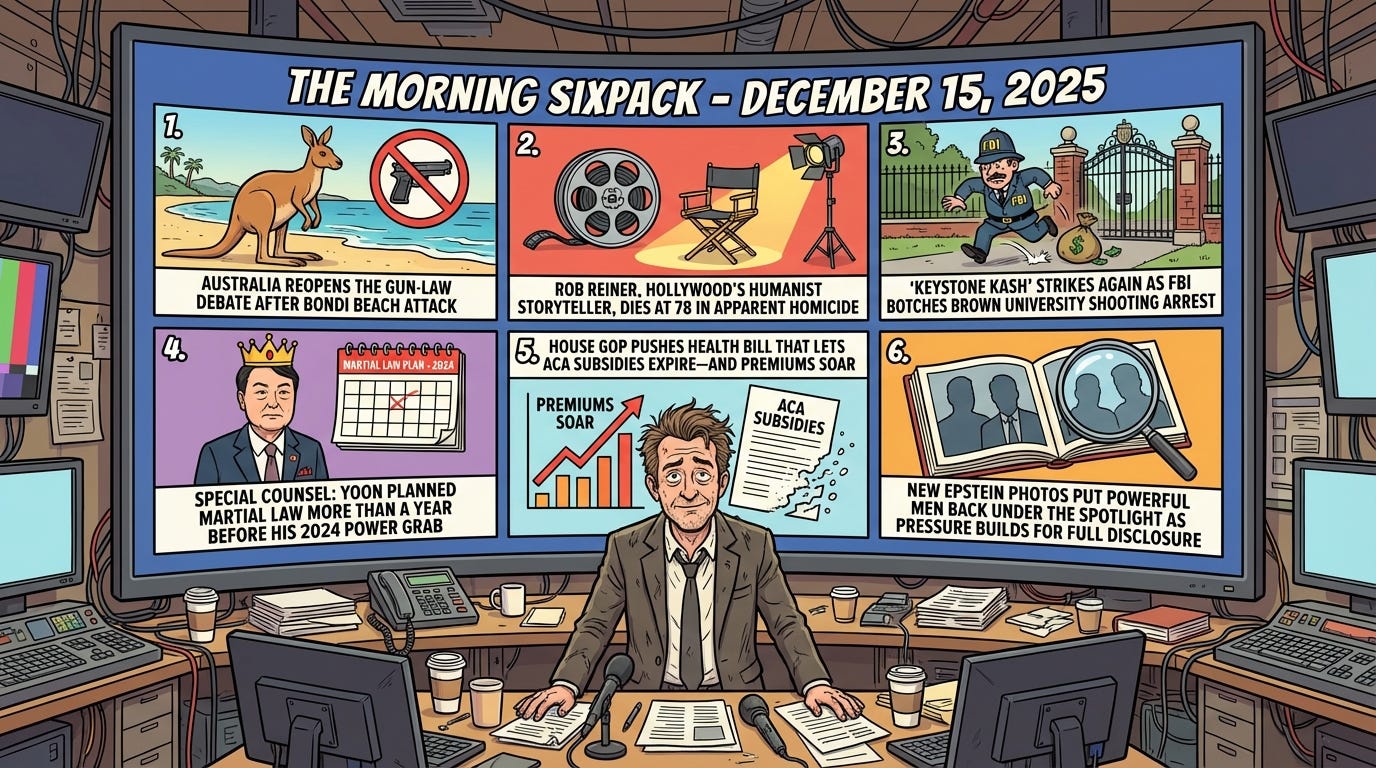
Australia Reopens the Gun-Law Debate After Bondi Beach Attack
Australia’s sense of safety cracked wide open at Bondi Beach, and the country now finds itself asking whether its famously tough gun laws are still tough enough.
The nation is reeling after a father-and-son pair, allegedly tied to ISIS, killed 15 people at a Hanukkah celebration in Sydney’s Bondi Beach—an area long considered a haven for Australia’s Jewish community. For decades, Australia has been held up as the model of gun reform; overnight, that reputation took a hit no one wanted to see tested.
Prime Minister Anthony Albanese said the government may update ownership laws once again, acknowledging that the 1996 framework—born from another mass shooting—might no longer match modern threats. He also praised Ahmed al-Ahmed, a shopkeeper who wrestled a gun away from one of the attackers and was shot in the process. In a moment defined by terror, his courage stood out.
The attack hit a community that had long viewed Australia as, in the words of one Bloomberg columnist, a “refuge from political violence.” That belief has now been violently challenged. When extremists exploit loopholes, the response can’t be hand-wringing; it has to be a sober, unsentimental update to the rules.
Gun policy debates tend to devolve into shouting, but Australia doesn’t do well with chaos—its people expect competence. This moment will test whether the country still has the political will that made its earlier reforms a global example.
Source: Semafor
Editor: Australia’s gun laws were supposed to be the gold standard; turns out even gold tarnishes if you never polish it. If extremists are adapting faster than lawmakers, that’s not a policy gap—it’s an abdication.
Rob Reiner, Hollywood’s Humanist Storyteller, Dies at 78 in Apparent Homicide

Rob Reiner spent a lifetime making movies about humanity’s best impulses, only for his own story to end in a way that defies everything he stood for.
The filmmaker behind The Princess Bride, This Is Spinal Tap, Stand By Me, and When Harry Met Sally… was found dead alongside his wife, Michele Singer, in their Los Angeles home. Authorities are investigating the deaths as an “apparent homicide,” a phrase no one expected to hear attached to one of Hollywood’s most consistently warm, humane voices.
Reiner’s path was shaped in equal parts by legacy and rebellion. Son of comedy legend Carl Reiner, he tried to escape the shadow by—ironically—wanting to be exactly like his father. “I just wanted to be like him,” he once said, recalling a moment when he even considered changing his name to Carl. Instead, he defined a generation on his own terms, first as Meathead on All in the Family, then as a director whose four-year run from This Is Spinal Tap through When Harry Met Sally… has never been matched.
More -

His range was nearly absurd: from the fictional rock band that turned amps to 11 to the gentle ache of Stand By Me to courtroom fireworks in A Few Good Men. And while his films cemented his place in American culture, his activism made him a presence far beyond the screen—raising money, fighting for marriage equality, chairing early childhood initiatives, and never hesitating to tangle publicly with politicians he believed were betraying the country’s values.
Reiner’s death leaves a hole not just in Hollywood but in the architecture of American storytelling. He made movies that were funny, generous, and emotionally honest—films that assumed people were complicated but worth rooting for. In an industry obsessed with reinvention, he kept insisting on sincerity. It’s hard to imagine who picks up that mantle next.
Source: AP News
Editor: Losing Reiner feels like losing the last adult in the room—a guy who believed movies should mean something and that politics shouldn’t be a spectator sport. Hollywood keeps rebooting everything; maybe try rebooting his sense of purpose while you’re at it.
And, OF COURSE, “President” Trump had to say something. I’ll just leave this here.
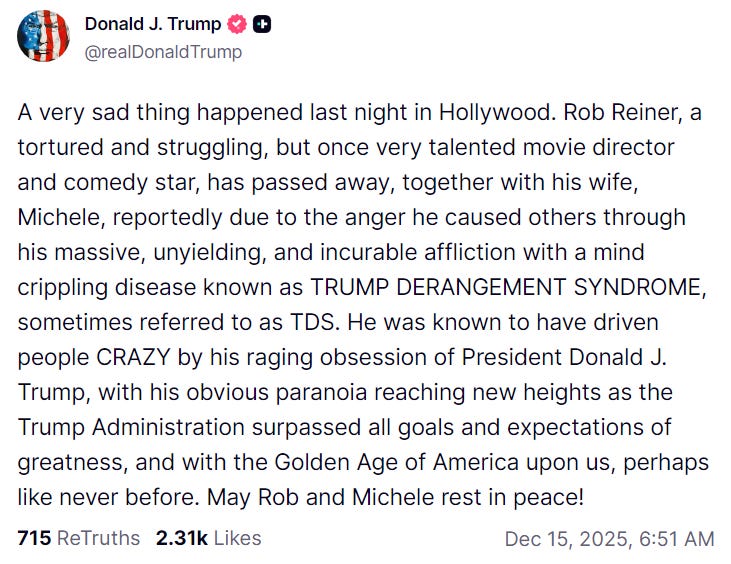
Source, in case you think this can’t possibly be real. It is. What a dick!
‘Keystone Kash’ Strikes Again as FBI Botches Brown University Shooting Arrest
Kash Patel has managed to turn yet another national tragedy into a masterclass in how not to run the FBI.
Forty-eight hours after a gunman killed two Brown University students—including 19-year-old Republican club vice president Ella Cook—and injured nine others, the FBI admitted it had the wrong guy. Rhode Island’s attorney general confirmed that a 24-year-old Army sniper, whose name and photo had already leaked thanks to over-eager cops, was wrongfully detained and is now free. Investigators must now restart from scratch, a scenario that has become depressingly familiar under Patel’s leadership.
Patel had trumpeted the arrest online, bragging about cutting-edge phone-tracking tech and treating the moment like a victory lap. It wasn’t. It was another premature announcement in a long pattern—remember the short-lived “suspect” after Charlie Kirk’s assassination? Or the Michigan terror-plot chest-thumping before suspects were even in custody? Critics haven’t dubbed him “Keystone Kash” for nothing. And once again, the FBI’s misfire forced President Trump to backtrack after prematurely celebrating the capture.
The fallout is already spreading. Former FBI agent Steve Moore summed up the mess: authorities must now toss out their conclusions and re-evaluate the evidence as if seeing it for the first time. Meanwhile, Patel’s social-media swagger has enraged lawmakers, who had already grilled him this fall over botched investigations, mass firings, and questionable jet-setting—like using the FBI’s Gulfstream to hit his girlfriend’s concert before dropping in at a Texas hunting resort.
Even rank-and-file observers are openly mocking the spectacle. One X user put it bluntly: Patel provided the tip, promoted the arrest, celebrated the win—and yet the shooter remains at large. That’s not law enforcement; that’s PR cosplay with flashing lights and taxpayer funding.
Patel insists he doesn’t care what anyone says as long as he’s “succeeding in the mission.” The problem is, the mission keeps ending with the wrong man in handcuffs and the real killers still walking free.
Source: Daily Mail
Editor: At some point, you have to stop calling these stumbles “missteps” and start calling them what they are—a leadership meltdown in slow motion. If Patel ran a fire department, we’d all be standing in ashes while he tweeted about containment.
Special Counsel: Yoon Planned Martial Law More Than a Year Before His 2024 Power Grab
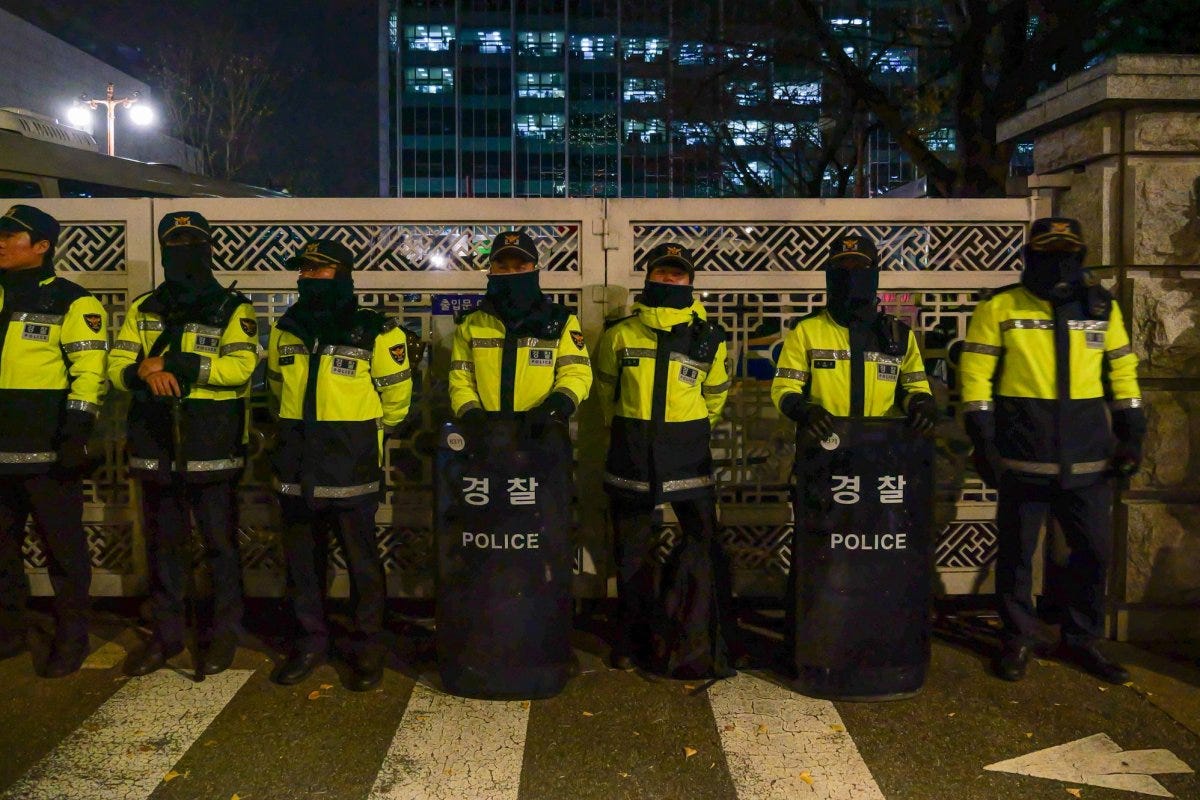
The investigation into former South Korean President Yoon Suk Yeol has landed with a thud—revealing a martial law scheme so sprawling, so premeditated, it reads less like politics and more like a slow-rolling coup attempt.
A 180-day probe led by Special Counsel Cho Eun-suk concluded that Yoon began planning his martial law declaration as early as October 2023, more than a year before he attempted to impose it in December 2024. Twenty-four people have now been indicted, including Yoon himself, along with his former prime minister, former intelligence chief, and former defense minister. The through-line is unmistakable: this wasn’t improvisation—it was architecture.
According to investigators, Yoon intended to use military force to sideline the National Assembly, seize legislative and judicial authority, and eliminate political opponents under the pretext of combating “anti-state forces.” One example says it all: “wipe them all out,” Yoon reportedly vowed in late 2022 while bragging about his “emergency powers.” By October 2023, he and his aides were gaming out the timing, aligning military reshuffles, and installing key loyalists in command.
The report even details his choice of December 3 for the martial law rollout—timed to avoid interference from Washington, which was between administrations after Donald Trump’s victory. Investigators found no evidence that a shaman picked the date, a rumor that frankly says more about Yoon’s reputation than the facts. They also uncovered a failed attempt to provoke North Korea into firing back by sending drones across the border, hoping to manufacture justification for his emergency decree.
Yoon, already ousted after his impeachment was upheld in April 2025, now faces charges ranging from obstruction of justice to aiding an enemy to perjury—on top of earlier indictments for insurrection and abuse of power. His motives, investigators say, included shielding himself and his wife from mounting legal scrutiny. A close aide described a furious confrontation between the couple after the martial law gambit collapsed: years of carefully laid plans, detonated in an instant.
South Korea has weathered authoritarian temptations before, but this episode stands out for its ambition and brazenness. When a president toys with democracy as if it were a private asset, the system only survives because the guardrails hold—and because someone digs until the truth comes out.
Source: UPI
Editor: Yoon talked like a strongman, planned like a strongman, and—fortunately for South Korea—failed like a strongman. The only thing more breathtaking than the scheme itself is that he thought no one would ever connect the dots.
House GOP Pushes Health Bill That Lets ACA Subsidies Expire—and Premiums Soar
Republicans are moving a health care bill that pointedly ignores the ticking time bomb they created: the imminent expiration of enhanced Affordable Care Act subsidies.
The House is set to vote this week on its own health package, but the core crisis—premium assistance set to vanish on December 31—goes untouched. Lawmakers might consider an amendment to extend the subsidies, but negotiations are vague enough to signal what’s really happening: the subsidies are almost certainly dead on arrival. The Senate has already declined to take up any health proposals, and efforts from both parties to extend support flamed out last week.
What does that mean for Americans? A 114% average premium increase—roughly $1,000 more a year in 2026—and two million additional people uninsured, according to the Congressional Budget Office and KFF. In other words, a preventable disaster with a price tag that hits working families first. Yet the House package focuses instead on what KFF’s Larry Levitt dryly called “a greatest hits of Republican health care ideas of the last decade.”
The bill revives association health plans—skimpier, cheaper coverage options designed to attract healthier buyers. These plans can’t discriminate against preexisting conditions, but they can slash benefits and charge older people far more, which is how you quietly fracture an insurance pool. It’s the same model Trump tried to expand before courts shut it down and Biden scrapped it. Cheaper today, less coverage when you actually need it—Republican health policy in one sentence.
The bill also restores federal funding for cost-sharing subsidies, which sounds generous until you realize the math: lower silver-plan premiums also slash the premium assistance that consumers receive, ultimately raising monthly costs even as the government pays less. And all of this is happening as enhanced subsidies vanish. Add in an abortion-coverage ban tied to those subsidies, and you can see why Democrats aren’t lining up to help.
Republicans sprinkle in PBM transparency requirements, though experts say they’ll barely dent drug prices. And they codify a Trump-era rule allowing employers to give workers tax-free funds to buy ACA plans—a move critics warn will push sicker workers into the exchanges and raise premiums for everyone. It’s almost impressive how many structural imbalances you can fit into one bill if you stop pretending the goal is affordability.
This is what governing by wish list looks like: ideological comfort food while real people brace for four-digit premium spikes.
Source: CNN
Editor: Republicans keep promising “choice” and “flexibility,” but what they’re really offering is a more expensive version of insurance Russian roulette. If your big policy breakthrough makes health care cost more while covering fewer people, maybe stop calling it reform.
New Epstein Photos Put Powerful Men Back Under the Spotlight as Pressure Builds for Full Disclosure
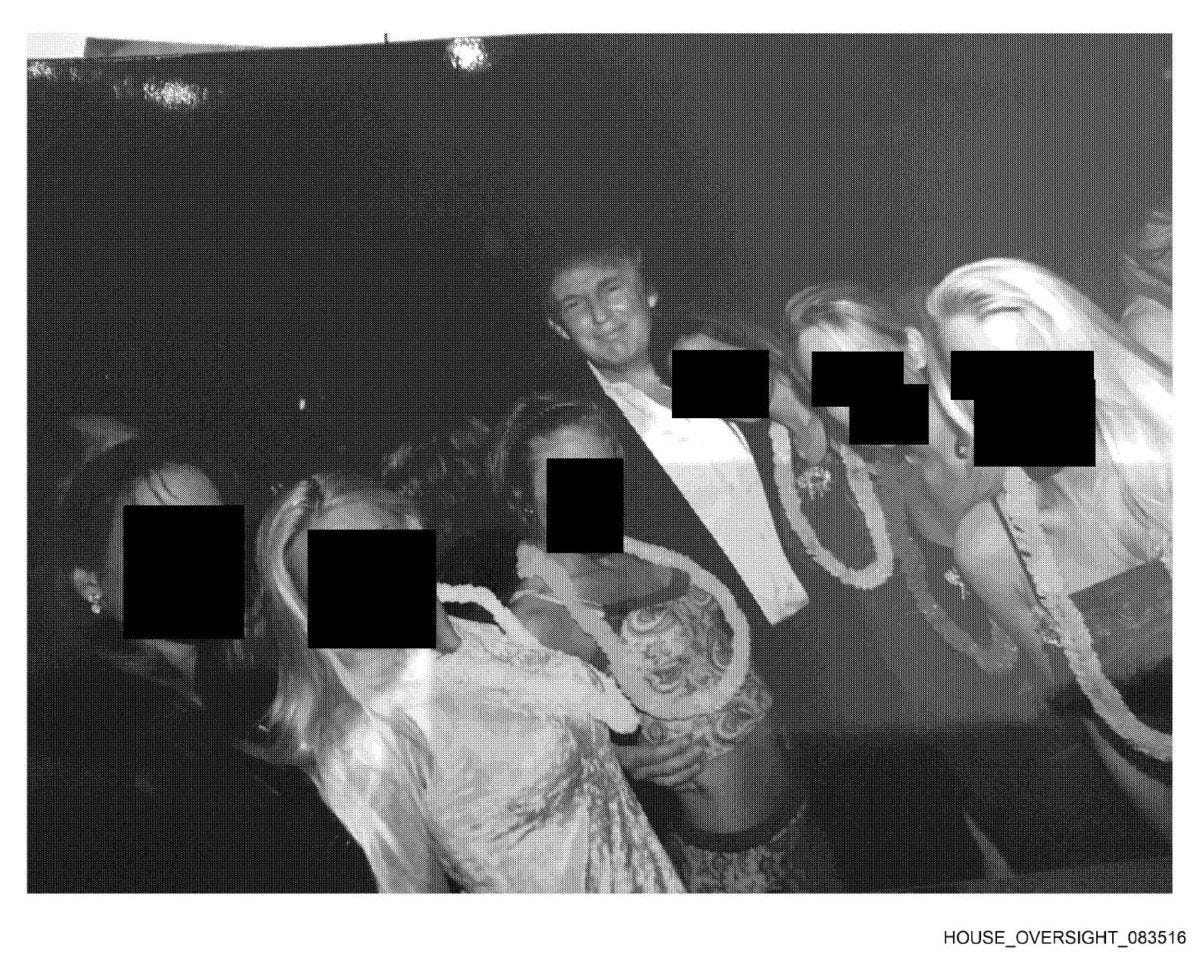
A fresh batch of photos from Jeffrey Epstein’s personal files has reignited scrutiny of the elite circle that orbited him—and renewed demands for the Justice Department to stop slow-walking the truth.
Democrats on the House Oversight Committee released 19 images pulled from Epstein’s email and computer, a microscopic slice of the more than 95,000 photos the committee now possesses. The faces of potential victims were redacted, but the famous faces weren’t: Donald Trump, Bill Clinton, Richard Branson, Bill Gates, Prince Andrew, Steve Bannon, Alan Dershowitz, and Woody Allen all appear in various settings—parties, private gatherings, even apparent film sets. None of the images prove wrongdoing, but they underline what has always been clear: Epstein didn’t merely mingle with power; he curated it.
The photos include Trump at parties with Epstein, leis around necks and smiles in full supply; Clinton posing with Epstein and Ghislaine Maxwell; and Gates appearing both with Prince Andrew and near Epstein’s private aircraft. One of the more bizarre images features novelty “Trump Condoms” displayed on a table—proof Epstein mixed sleaze with spectacle like it was a personal art form.
House Democrats cast the release as part of a broader campaign for accountability. “It is time to end this White House cover-up and bring justice to the survivors of Jeffrey Epstein and his powerful friends,” Rep. Robert Garcia said, noting that victims’ names were carefully redacted. His argument is simple: sunlight is not optional when a convicted sex offender leveraged relationships with presidents, billionaires, and global influencers.
The White House fired back hard. Spokeswoman Abigail Jackson accused Democrats of “cherry-picked photos” designed to smear Trump, while pointing out that some Democratic figures also interacted with Epstein after his 2008 conviction. Trump has not been accused of any Epstein-related crimes, but Congress recently passed—and Trump signed—a bill requiring the Justice Department to release its Epstein files by December 19. Those documents remain unreleased.
The bigger issue isn’t who appears in which photo—it’s why federal agencies continue to dribble out information as though they’re bargaining with history itself. Epstein abused women and underage girls, operated with shocking impunity, and moved freely among the rich and powerful for decades. This isn’t merely a matter of curiosity; it’s a matter of trust in a justice system that still feels allergic to fully confronting how he got away with it.
Source: PBS NewsHour
Editor: Every time new Epstein files surface, the same crowd insists it’s old news. Funny how the truth always feels “old” when you’re hoping no one actually gets to the bottom of it. Release everything—no redactions, no foot-dragging, no favorites. Let the chips fall where they’re overdue to fall.