


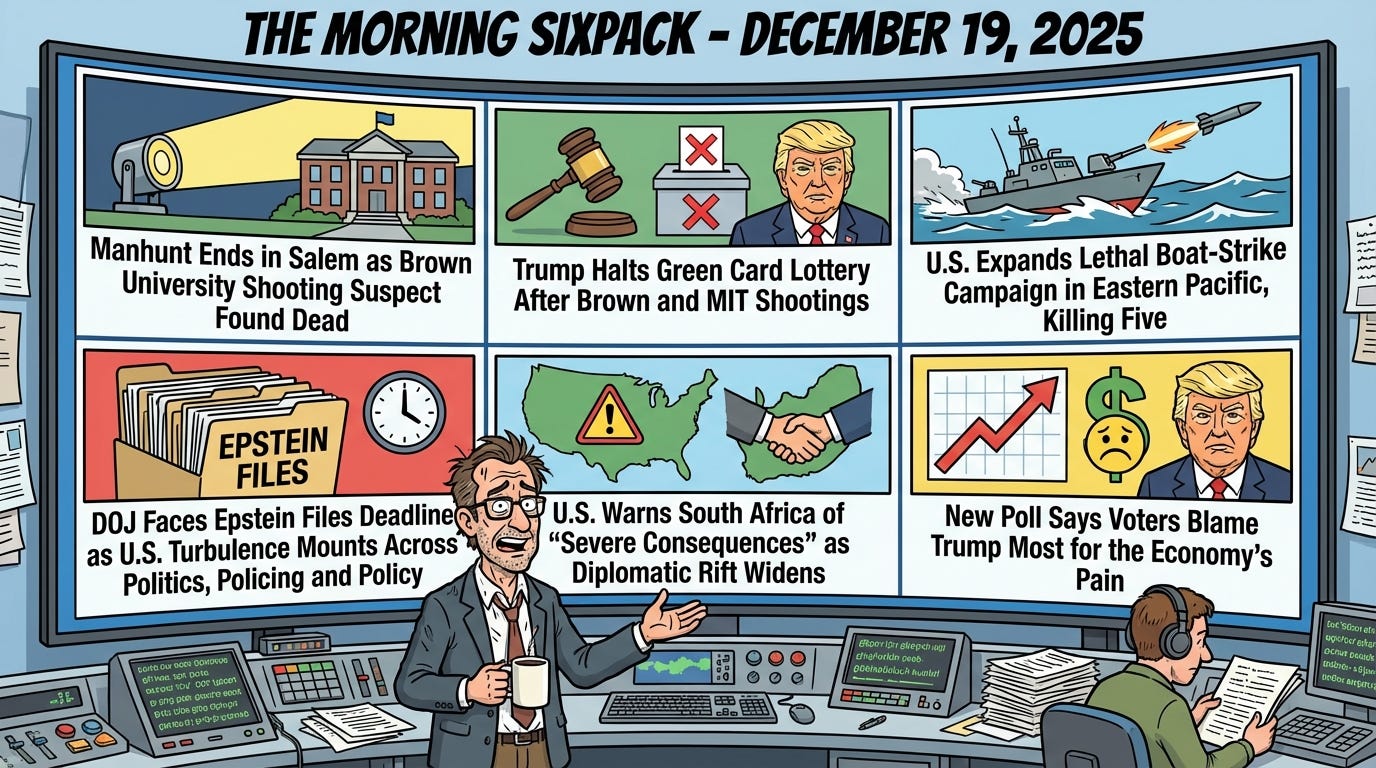
Manhunt Ends in Salem as Brown University Shooting Suspect Found Dead
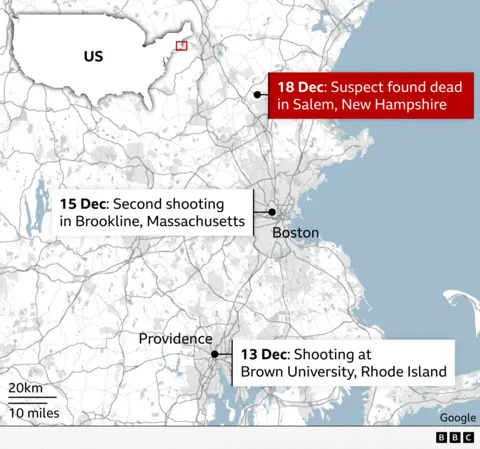
The six-day chase for the Brown University gunman ended not with an arrest, but with a body in a New Hampshire storage unit.
Police say 48-year-old Claudio Neves Valente—once a physics PhD student at Brown—died of a self-inflicted gunshot wound, taking with him the answers investigators and two grieving academic communities desperately wanted. What began as a horrifying attack during a study session spiraled into a multi-state search linking Rhode Island, Massachusetts and New Hampshire.
Video evidence and public tips led authorities to a car-rental desk where they matched Valente’s name to their suspect. Officials now believe he also murdered MIT professor Nuno F. Gomes Loureiro two days after the Brown shooting, a chilling connection given both men studied at the same Portuguese university in the late 1990s. “Even though the suspect was found dead tonight our work is not done. There are many questions that need to be answered,” said FBI Special Agent-in-Charge Ted Docks.
Brown President Christina Paxson confirmed Valente’s past enrollment but emphasized he had “no current active affiliation” with the university. Meanwhile, Homeland Security Secretary Kristi Noem moved to suspend the U.S. diversity visa lottery—through which Valente entered the country in 2017—calling it a failure of screening and saying he “should never have been allowed in our country.” The political fallout is clearly just beginning.
Back in Providence, the human toll remains the center of gravity. Two students—Ella Cook, 19, and Mukhammad Aziz Umurzokov, 18—were killed, with nine others injured. Campus frustration had grown as days passed without a suspect, but the discovery in Salem may only deepen the sense of unresolved trauma. The FBI had deployed roughly 500 agents, and despite the grim ending, the investigation continues to map Valente’s movements, motives and methods.
Source: BBC News
Editor: Trying to pin national immigration policy on one deranged physicist-turned-killer feels like political looting at the scene. Maybe solve the systemic failures before swinging the sledgehammer.
Trump Halts Green Card Lottery After Brown and MIT Shootings
President Trump wasted no time turning a national tragedy into an immigration policy battlefield.
Homeland Security Secretary Kristi Noem announced that, at Trump’s direction, the U.S. green card lottery program is now paused—because the suspect in the Brown University and MIT shootings once entered the country through it. Noem framed the decision bluntly on X: “This heinous individual should never have been allowed in our country.” There’s a certain political convenience in pretending a lottery program, not a deeply broken public safety system, is the culprit.
Claudio Neves Valente, the 48-year-old Portuguese national suspected of killing two Brown students, injuring nine others, and murdering an MIT professor, was found dead Thursday from a self-inflicted gunshot wound. According to an affidavit, he first came to the U.S. on a student visa in 2000, took a leave of absence a year later, and then reappeared in the system in 2017 when he obtained a diversity visa and later a green card. What happened in the sixteen-year gap remains a mystery.
The diversity visa program—created by Congress—issues up to 50,000 green cards annually to applicants from underrepresented countries. Nearly 20 million people applied for the 2025 lottery; Portugal received just 38 slots. Winners then undergo the same vetting, interviews and security checks as any other green-card applicant. In other words, this isn’t the immigration free-for-all critics love to pretend it is.
Yet Trump has long opposed the program, and this suspension fits neatly into a pattern: seize a tragedy, point to an immigrant, and push restrictive policies that otherwise wouldn’t fly. After an Afghan man killed National Guard members in November, the administration slapped sweeping rules on immigration from Afghanistan and beyond. Now, the diversity visa lottery—an actual statute passed by Congress—is the latest target, almost certainly headed for legal challenges.
Behind the scenes, Trump’s broader project is unmistakable: limit or dismantle legal immigration pathways, even those written into law or, in the case of birthright citizenship, the Constitution itself. The Supreme Court’s decision to review his challenge to birthright citizenship signals just how far this fight is going to go.
Source: NPR
Editor: Funny how every policy “emergency” seems to land on whatever immigration target was already taped to the dartboard. Governance by opportunism isn’t exactly the stability investors—or citizens—are craving.
IF Trump REALLY wanted to solve the obvious GUN problem we have in the US, he’d install harsher requirements for firearms ownership. But no, it’s just GOT TO BE the foreigners! Even though the actual data around gun murders is almost solely attributable to DOMESTIC WHITES.
U.S. Expands Lethal Boat-Strike Campaign in Eastern Pacific, Killing Five
The Pentagon keeps blowing up boats in the eastern Pacific, and the body count keeps climbing.
The U.S. military confirmed two more strikes on vessels it claims were smuggling drugs along known narco-trafficking routes, killing five people. U.S. Southern Command posted videos of the boats speeding across open water before each was engulfed in an explosion—though it notably offered no evidence beyond its own intelligence assessment. Three people were killed on one vessel, two on the other.
These latest incidents push the Trump administration’s tally to 28 boat strikes and at least 104 deaths. President Trump continues to frame the campaign as an “armed conflict” with drug cartels, a designation that conveniently lowers the threshold for lethal action far from any traditional battlefield. It’s a bold legal theory—one that Congress didn’t exactly sign off on, but here we are.
Lawmakers are increasingly uneasy with the rapidly expanding authority behind these strikes. The very first attack back in September included a grisly follow-up strike that killed two survivors clinging to the debris of their already-destroyed boat. That detail hasn’t aged well as the administration insists every hit is both justified and necessary.
Southern Command says its intelligence is sound; accountability, however, remains murkier than Pacific waters at midnight. When the only proof released is footage of boats moving fast before being blown up, the public isn’t exactly being invited to trust but verify.
Source: Associated Press via NBC News
Editor: At some point, calling this “drug interdiction” feels like calling a sledgehammer a flyswatter. If we’re going to wage a shadow war at sea, maybe Congress should actually be in the loop instead of learning body counts from social media clips.
DOJ Faces Epstein Files Deadline as U.S. Turbulence Mounts Across Politics, Policing and Policy

The clock is ticking on the Justice Department, and the Epstein files might finally see daylight—unless someone finds one more procedural rabbit to pull from the hat.
A 30-day deadline—forced by Republicans and signed by Trump himself—expires Friday, requiring the DOJ to release long-sealed files on Jeffrey Epstein. These records could offer the clearest view yet into two decades of federal investigations, the 2008 collapse of a prosecution that should have happened, and the powerful people who orbited Epstein while insisting they knew nothing. The public wants receipts, and Epstein’s accusers want the truth that was denied to them.
Meanwhile, Washington is dealing with a collage of crises. Immigration arrests in D.C. surged during Trump’s law-and-order mission, with more than 7,500 total arrests—one-third immigration-related—according to documents reviewed by the AP. Activists say the tactics are unlawful; a federal judge recently agreed, blocking warrantless arrests. The administration, undeterred, calls the crackdown a success. A success for what isn’t always clear.
Health care has roared back as a top national concern. A new AP-NORC poll shows around four in ten Americans naming health care as their biggest issue—up sharply from last year. Rising costs, Medicaid cuts, and the end of ACA pandemic subsidies are about to collide with an election year. The White House claims “more incredible deals” are coming to lower drug prices, though so far the administration’s savings seem to depend heavily on corporate generosity and political timing.
Elsewhere on the right, the movement Trump built is eating its own live on stage. At Turning Point USA’s youth conference, Ben Shapiro blasted Tucker Carlson and others as grifters peddling conspiracy theories—especially Carlson’s decision to platform Nick Fuentes, calling it “an act of moral imbecility.” Carlson, never one to leave a punch unanswered, mocked Shapiro for trying to “deplatform and denounce” ideological rivals. Hard to build a revolution when the generals are throwing folding chairs at each other.
On foreign policy, Secretary of State Marco Rubio is set to field questions on Gaza, Russia-Ukraine, and the administration’s escalating pressure on Venezuela. He’s become the administration’s national security spine—championing visa restrictions, mass deportations, foreign aid overhauls and a bureaucratic shakeup designed to bring the State Department further in line with Trump’s America First instincts.
And in a move that could reshape an entire industry, Trump has directed regulators to reclassify marijuana from Schedule I to Schedule III. No, it doesn’t legalize cannabis federally—but it could dramatically reduce tax burdens for state-licensed businesses and unlock long-stalled medical research. Prosecutors, however, will still have the full arsenal of federal penalties at their disposal.
As the DOJ prepares to release whatever Epstein documents haven’t already been redacted into modern art, the country is bracing for fallout. Whether the files clarify anything—or simply ignite a whole new wave of conspiracy, litigation, and political mudslinging—is anyone’s guess. But the one thing every corner of this news cycle has in common is pressure, and Washington is showing the strain.
Source: AP News
Editor: The government can release the Epstein files or explain—again—why the public isn’t allowed to know what the government knew. One option builds trust; the other keeps the country’s suspicious-minds economy booming.
This is going to be VERY underwhelming if it even ever comes out.
U.S. Warns South Africa of “Severe Consequences” as Diplomatic Rift Widens
The Trump administration is escalating a feud with Pretoria, and the fallout could reshape U.S. policy in South Africa.
Washington is now threatening “severe consequences” after South Africa expelled several Kenyan nationals reportedly sent to help relocate vulnerable Afrikaners—part of the White House’s controversial claim that a “genocide” is underway against the country’s white minority. Experts have rejected the allegation outright, but that hasn’t stopped tariff punishments or the administration’s increasingly combative posture.
Pretoria has tried to mend fences, even offering concessions to smooth relations, but those overtures have largely been swatted away. One South African expert told the Financial Times, “How do you take this forward is a real conundrum”—a diplomatic way of saying Washington isn’t exactly negotiating in good faith.
The rift is rooted not in new facts on the ground, but in Trump’s narrative framing of South Africa as a failing state persecuting its white citizens. The administration’s attempt to insert its own personnel—Kenyan nationals, no less—into the country to assist Afrikaners was always going to look like meddling. Pretoria’s response may have been sharp, but the provocation was obvious.
What comes next is unclear, but the U.S. hasn’t ruled out further economic pressure. In a world where Washington struggles to maintain alliances, picking a fight with one of Africa’s most influential democracies seems like a strange hobby for a superpower. But here we are.
Source: Semafor
Editor: If this is “strategic diplomacy,” it’s the kind that starts bar fights, not peace talks. Someone in Washington needs to remember that foreign policy isn’t supposed to run on vibes.
New Poll Says Voters Blame Trump Most for the Economy’s Pain
A majority of Americans now say President Trump owns the economy—good, bad, and inflationary.
A new Quinnipiac University poll finds 57% of voters believe Trump is more responsible for the current economic conditions than President Biden, while just 34% point the finger at Biden. That doesn’t mean voters think Biden-era inflation magically vanished when Trump took office—it means affordability has become the country’s pressure point, and voters are assigning accountability to the person currently in charge.
The data lands at an awkward moment for Trump, who spent his 2024 campaign promising to bring down costs and treat inflation like a personal insult. Inflation may have cooled from its 2022 peak, but it hit 3% again in September—still a full point above the Fed’s target. Food costs rose 3.1%, energy 2.8%. None of that feels like “mission accomplished” when people are staring at grocery receipts like they’re written in ancient runes.
Trump has tried to laugh off Democratic messaging on affordability, dismissing it as just another “hoax.” Yet voters don’t seem to be amused. More than six in ten respondents say the cost of living is a very serious problem, and majorities report difficulties affording basic necessities like gas, electricity, and groceries. That’s political kryptonite for any incumbent, especially one billing himself as an economic savior.
The timing isn’t great either: after a 43-day government shutdown delayed October’s inflation report, the November numbers are just now set for release. Trump is also preparing a prime-time address boasting that “THE BEST IS YET TO COME!”—but the Quinnipiac results suggest voters are still waiting for the part where their wallets catch up to the optimism.
This poll, conducted among 1,035 registered voters with a 3.9-point margin of error, is another reminder that slogans don’t lower prices. Policy does—and voters know exactly whom to hold accountable when the bills come due.
Source: The Hill
Editor: When your brand is “I alone can fix it,” voters will happily hand you the receipts when the fixing doesn’t show up.
I want to know who these 47 percent people are who think Trump IS NOT the cause of our current shitty economic situation. Trump inherited a smoothly-running economy that was the envy of the world.