


Listen to The Morning Sixpack podcast:
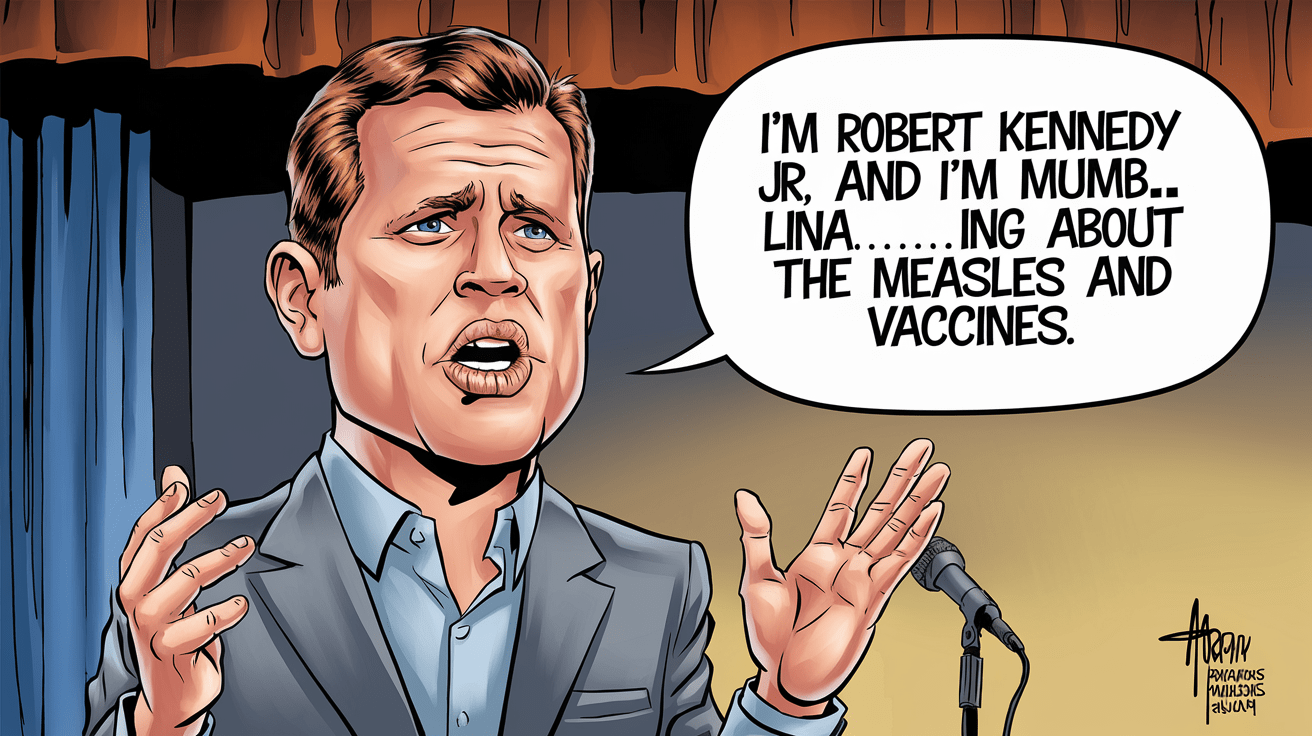
RFK Jr. Faces First Public Health Test as Measles Outbreak Grows
The measles outbreak spreading across Texas and New Mexico is putting newly appointed Health and Human Services (HHS) Secretary Robert F. Kennedy Jr. in the spotlight. With nearly 100 confirmed cases, the outbreak is the largest of the year and threatens to escalate further. Kennedy, a longtime skeptic of vaccine mandates, has already halted vaccine advisory meetings, raising concerns about how his leadership will impact the federal response. While local and state officials are leading containment efforts, the question remains: Will Kennedy uphold public health protocols or disrupt them with his controversial stance?
Thus far, Kennedy has remained silent on the outbreak, despite his past statements during his confirmation hearing that he "would not stop anyone from getting polio and measles vaccines." Texas health officials have mobilized vaccine clinics and outreach efforts to contain the spread, with New Mexico following suit as cases cross state lines. Typically, federal agencies like the CDC provide logistical support during such outbreaks, but under Kennedy’s leadership, experts are watching closely to see if federal involvement will be delayed or obstructed.
The bigger issue looms beyond this single outbreak: America's measles vaccination rates are slipping below the critical 95% threshold needed for herd immunity. Some areas—such as the affected Texas school district—have vaccination rates under 50%, creating ideal conditions for the virus to spread. With Kennedy now in charge of the nation’s health response, his handling of this crisis may serve as a crucial indicator of whether the U.S. will reverse course on declining vaccination rates or face more frequent, larger outbreaks.
Source: Vox
Bonus: “Leon” Musk admitted to turning off Ebola prevention. What a fucking sociopathic dumbass!
America’s Food Safety Is Now a Trophy for Don Jr.’s Hunting Buddy
If you thought food safety was a job for scientists and seasoned regulators, think again—because it’s now in the hands of Donald Trump Jr.'s hunting buddy.
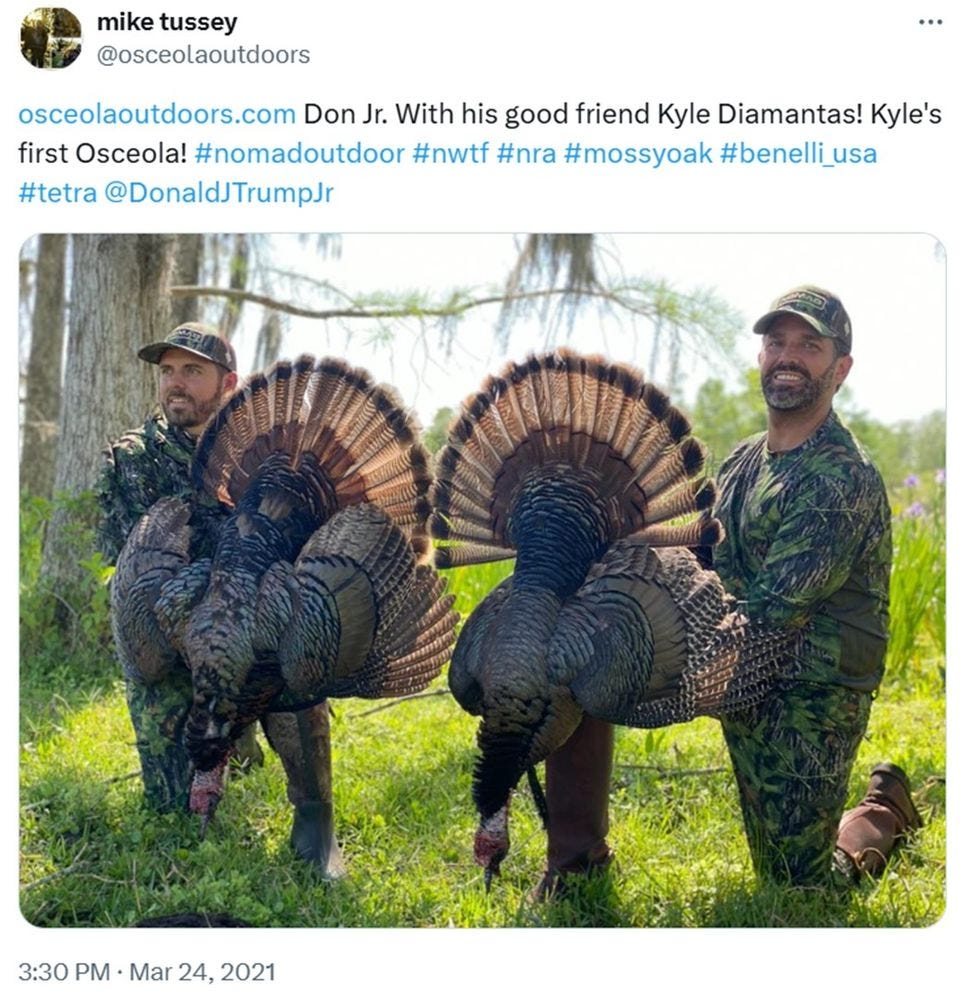
In yet another episode of Only the Best People, Kyle Diamantas, a 37-year-old Florida attorney with a résumé thinner than a gas station turkey sandwich, has been named acting deputy commissioner for human foods at the FDA.
His qualifications? A law degree, a LinkedIn profile so sparse it could fit on a cocktail napkin, and some quality time bagging Osceola turkeys with Trump Jr.
Now, he’s overseeing 80% of the nation’s food supply, including infant formula.
What could go wrong?
Diamantas’ past experience consists mainly of advising food and beverage companies on regulatory matters—aka helping them navigate (or sidestep) the very rules he’s now supposed to enforce.
Meanwhile, his appointment comes amid mass firings at federal health agencies, including the gutting of the FDA’s Human Foods Program.
Its former head, James Jones, resigned in protest, calling the terminations “one more roadblock to achieving the Secretary’s stated objectives of making America healthy again.”
But don’t worry, folks—Diamantas will surely bring the same rigorous attention to food safety that he’s applied to duck hunting.
The timing of this shake-up couldn’t be worse.
Just days ago, the FDA announced a recall of listeria-tainted nutritional shakes linked to 11 deaths and 37 hospitalizations.
With experts warning that cuts to the infant formula team could create “the biggest infant-formula crisis you could ever imagine,” the appointment of a political crony with no real experience overseeing food safety is about as reassuring as gas station sushi.
If the Trump-Vance administration wanted to send a message about its priorities, message received: regulations are out, and hunting trophies are in.
Source: Vanity Fair
Elon’s Firing Squad: DOGE Is Automating Government Layoffs
If you thought mass government firings were bad, wait until they’re automated. Elon Musk’s so-called Department of Government Efficiency (DOGE) is working on software that could supercharge the firing of federal workers, sources tell WIRED.
The program, ominously named AutoRIF—short for Automated Reduction in Force—was originally developed by the Department of Defense but is now being tinkered with by Musk-hired engineers. Screenshots from internal databases reveal that DOGE operatives have been modifying the system, with former Tesla and Boring Company engineer Riccardo Biasini appearing to lead the charge.
The goal? Making it even easier to purge the ranks of government employees.
So far, federal layoffs have been conducted manually, with HR officials combing through registries to identify probationary employees—those who lack the civil service protections that make them harder to fire. Thousands have already been let go across multiple agencies.
But AutoRIF’s capabilities mean firings could soon be driven by algorithms instead of bureaucrats.
“AutoRIF does that automatically,” a former government HR official told WIRED, explaining that the system ranks employees based on a set of pre-determined criteria.
While federal guidelines require manual verification, it’s unclear if DOGE intends to follow those rules—or simply let the software slice through the workforce unchecked.
Adding to the Orwellian atmosphere, government workers received an email on Saturday night demanding they list their top five work accomplishments for the past week. NBC News later reported that this data would be fed into an unspecified large language model to determine whether an employee was still “necessary.”
Some agencies, including the FBI, have urged their staff to ignore the directive, and on Monday, OPM told HR officials they could disregard the request. Still, for employees already on edge, the combination of AI assessments and mass firings is fueling widespread paranoia.
The Centers for Disease Control (CDC) appears to have learned this the hard way. Ahead of the first major round of firings, CDC managers were asked to flag “mission critical” probationary employees to help preserve essential roles. But when the final termination list came down, it ignored all those recommendations.
“None of that was taken into account,” a CDC source told WIRED. “They just sent us a list and said, ‘Terminate these employees effective immediately.’”
The exact scope of DOGE’s plans remains unclear, but the signs aren’t promising. With engineers actively modifying AutoRIF, and AI-powered performance reviews creeping into the picture, government workers could soon find their careers cut short by nothing more than an algorithmic pink slip.
Whether this is a technological leap forward or an efficiency dystopia depends on who you ask—but for thousands of federal employees, the future is looking a lot more uncertain.
Source: Wired
Bonus: Trump memo instructs federal agencies on how to conduct mass layoffs. How nice!
Forest Service Chief Resigns as Mass Layoffs Gut Wildfire Response
The U.S. Forest Service just lost its leader as mass layoffs rip through the agency, slashing 3,400 jobs—roughly 10% of its workforce—amid aggressive federal downsizing by President Trump and Elon Musk’s Department of Government Efficiency (DOGE) (not a real department).
Forest Service Chief Randy Moore announced his retirement in an emotional letter to staff, expressing frustration and sorrow over the sweeping cuts that experts warn will cripple wildfire response and land management efforts across millions of acres.
“The past several weeks have been incredibly difficult,” Moore wrote. “If you are feeling uncertainty, frustration, or loss, you are not alone. These are real and valid emotions that I am feeling, too.”
Moore, the first Black chief of the Forest Service, has served in conservation roles since 1978 and led the agency since 2021. His farewell message acknowledged that even he was blindsided by the layoffs, learning about them at the same time as many of his employees.
While trying to boost morale, he also delivered a grim reality check: “Our focus now is on how we respond and adapt to new priorities and continue delivering on our mission with the workforce we have.”
With wildfire seasons growing longer and more destructive, critics argue that these cuts endanger both public safety and the environment.
Despite the bleak outlook, Moore reminded staff of the vital role they play in protecting communities, supporting small businesses, and maintaining America’s natural resources.
“Thank you for your dedication to our mission and for the work you carry out every day,” he wrote. “You and the work you do are meaningful, and do not let anyone make you believe otherwise.”
As the layoffs continue, the question remains: who will be left to protect America’s forests when the next disaster strikes?
Source: MDGN
Trump Cuts Venezuela’s Oil Lifeline—And the Global Market Just Took a Hit
In a move that will tighten global oil supplies and put upward pressure on prices, President Trump has revoked Chevron’s license to export Venezuelan oil to the U.S., abruptly ending a financial lifeline for Nicolás Maduro’s government.
The decision, announced on Truth Social, was framed as a response to Venezuela’s failure to meet democratic conditions in its last election and its sluggish deportation cooperation. How rich is that? Trump shouting down a sovereign nation’s undemocratic conditions when he has sought (Jan6) and continues to seek bringing down our own democracy!
But beyond the political posturing, the immediate effect is clear: removing a quarter of Venezuela’s oil production from legal U.S. trade will send ripples through the global energy market, forcing refiners to scramble for replacements and tightening supply.
Venezuela holds the world’s largest proven oil reserves, but corruption, mismanagement, and U.S. sanctions have kept its production at a fraction of its potential. The now-canceled permit allowed Chevron to keep Venezuelan oil flowing while bypassing direct payments to Maduro’s government, ensuring at least some stability in the sector.
“We are aware of today’s announcement and are considering its implications,” said Chevron spokesman Bill Turenne, as industry insiders braced for disruptions.
With Venezuelan crude suddenly locked out of the U.S., refiners will have to turn to other suppliers—like Saudi Arabia or Russia—potentially driving up costs at a time when oil markets are already volatile.
And don’t think this is just a domestic issue.
With Venezuela’s U.S. sales cut off, expect its oil to flow elsewhere—likely to China and India—reducing availability in the open market and pushing global prices higher.
For American consumers, this means possible hikes at the pump, while for oil-importing nations, it adds yet another layer of uncertainty in an already turbulent energy landscape.
The biggest winner here? Maduro, who will now sell his crude elsewhere, likely at a premium, while the rest of the world foots the bill.
Source: NPR
Elon Musk: The “Self-Made” Billionaire Who Cashed $38 Billion in Government Checks
For a guy who loves railing against “big government,” Elon Musk sure knows how to cash its checks.
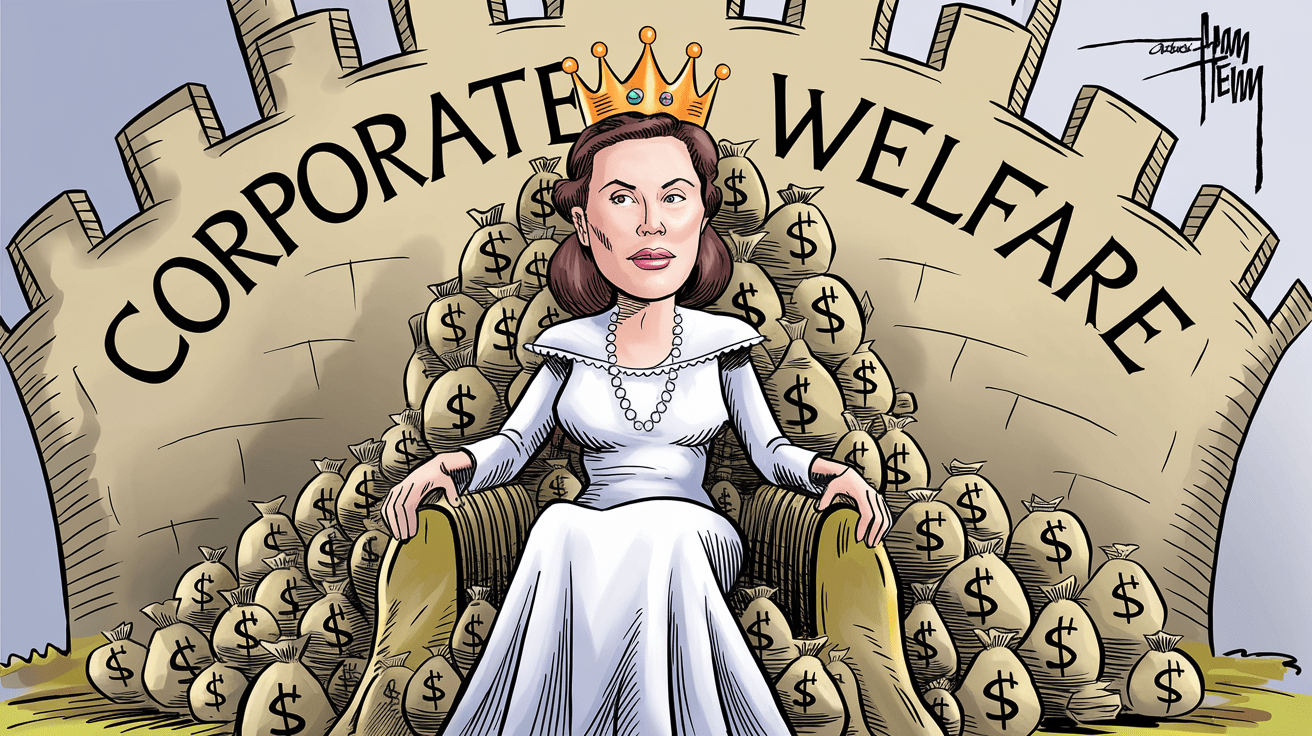
A Washington Post investigation reveals that Musk’s business empire—Tesla, SpaceX, and other ventures—has received at least $38 billion in government contracts, loans, subsidies, and tax credits over the past two decades.
That’s right: While Musk’s Department of Government Efficiency (DOGE) (not a real department) is slashing budgets and cutting jobs, his own companies have been thriving on taxpayer money.
“Tesla would not have survived without the loan,” admitted a former high-level Tesla employee, referring to a $465 million Energy Department lifeline in 2010.
And it’s not just chump change. Nearly two-thirds of this funding has been funneled to Musk’s companies in the past five years, with $6.3 billion in 2024 alone.
Tesla has benefited from $11.4 billion in regulatory credits, while NASA and the Pentagon have dumped billions into SpaceX for satellite launches and moon missions.
Meanwhile, DOGE is busy gutting federal agencies—including those responsible for overseeing the very contracts Musk keeps winning.
Hypocrisy? Paradox? Call it what you want, but one thing’s for sure: Musk’s companies are doing just fine under the system he publicly scorns.
And while Musk loves to downplay his reliance on Uncle Sam, the numbers don’t lie.
“Not every entrepreneur at this scale has been this dependent on federal money—certainly not Nvidia, not Microsoft, nor Amazon, nor Meta,” said Yale professor Jeffrey Sonnenfeld.
Musk’s secret weapon? Massive government backing disguised as “free-market” innovation. Whether it's Tesla riding the EV subsidy wave or SpaceX building a rocket empire with federal dollars, one thing is clear: Musk’s businesses may be cutting-edge, but his playbook is as old as corporate welfare itself.
Source: WaPo