

When Presidents Weaponize Power: Trump’s Threat to Cut Off SpaceX Contracts Raises Alarms

Donald Trump reportedly tried to use the full force of the federal government to punish Elon Musk—by threatening to terminate critical SpaceX contracts. This isn’t just political posturing; it’s a dangerous flirtation with lawlessness that should concern everyone, regardless of your take on Musk.
According to the Wall Street Journal, Trump’s aides ultimately decided SpaceX contracts were too vital to NASA and the Defense Department to cut—showing just how deeply the government relies on Musk’s technologies. But the fact that this review even happened reveals a willingness to leverage government power for personal vendettas.
As Jeremy Schulman aptly put it, “In a democracy, politicians simply cannot be allowed to punish dissent by threatening to destroy the businesses of people who cross them—whether those businesses are media companies, law firms, or a defense contractor run by the world’s richest man.”
This fits the pattern of Trump weaponizing federal power against anyone he sees as an enemy—from law firms to cultural institutions and even the Federal Reserve.
Though SpaceX may have dodged the bullet for now, the ongoing review signals this battle is far from over. Musk’s recent digs, including hints that Trump could be named in the Epstein files and claims of presidential “coverups,” only fuel the fire.
No matter your opinion on Elon Musk, the idea of the government targeting private businesses over personal grudges should make everyone uneasy.
Source: Mother Jones
A High-Stakes Prisoner Swap Unfolds Between El Salvador and Venezuela — And It’s About More Than Just Politics

El Salvador is sending 238 detained Venezuelans home in exchange for the release of 10 Americans held in Venezuela. This isn’t your average diplomatic handshake; it’s a gritty prisoner exchange that reveals deep tensions and human costs behind immigration and international politics.
According to two U.S. officials, the Venezuelans are being freed from El Salvador’s notorious CECOT maximum security prison—where many were locked up under Trump’s controversial use of the 1798 Alien Enemies Act—while Venezuela releases five U.S. citizens and five permanent residents. Family members of those imprisoned told Reuters they’re already hearing from Venezuelan authorities to come pick up their loved ones.
Venezuela’s Interior Minister Diosdado Cabello and First Lady Cilia Flores celebrated the return of seven migrant children separated from their families and held in U.S. care, calling it a “rescue.” But critics on both sides argue this exchange masks serious human rights concerns. While Venezuela condemns the CECOT detentions as illegal, the country itself faces accusations of holding activists and opposition figures in similarly harsh conditions.
Richard Grenell, Trump’s envoy focused on securing the release of Americans held abroad, calls this a priority mission. This swap—while politically charged—is a reminder that behind geopolitical chess games are real people caught in systems far bigger than themselves.
Source: Reuters
Trump’s Third-Country Deportation Plan Lands Five Immigrants in Eswatini’s Solitary Confinement
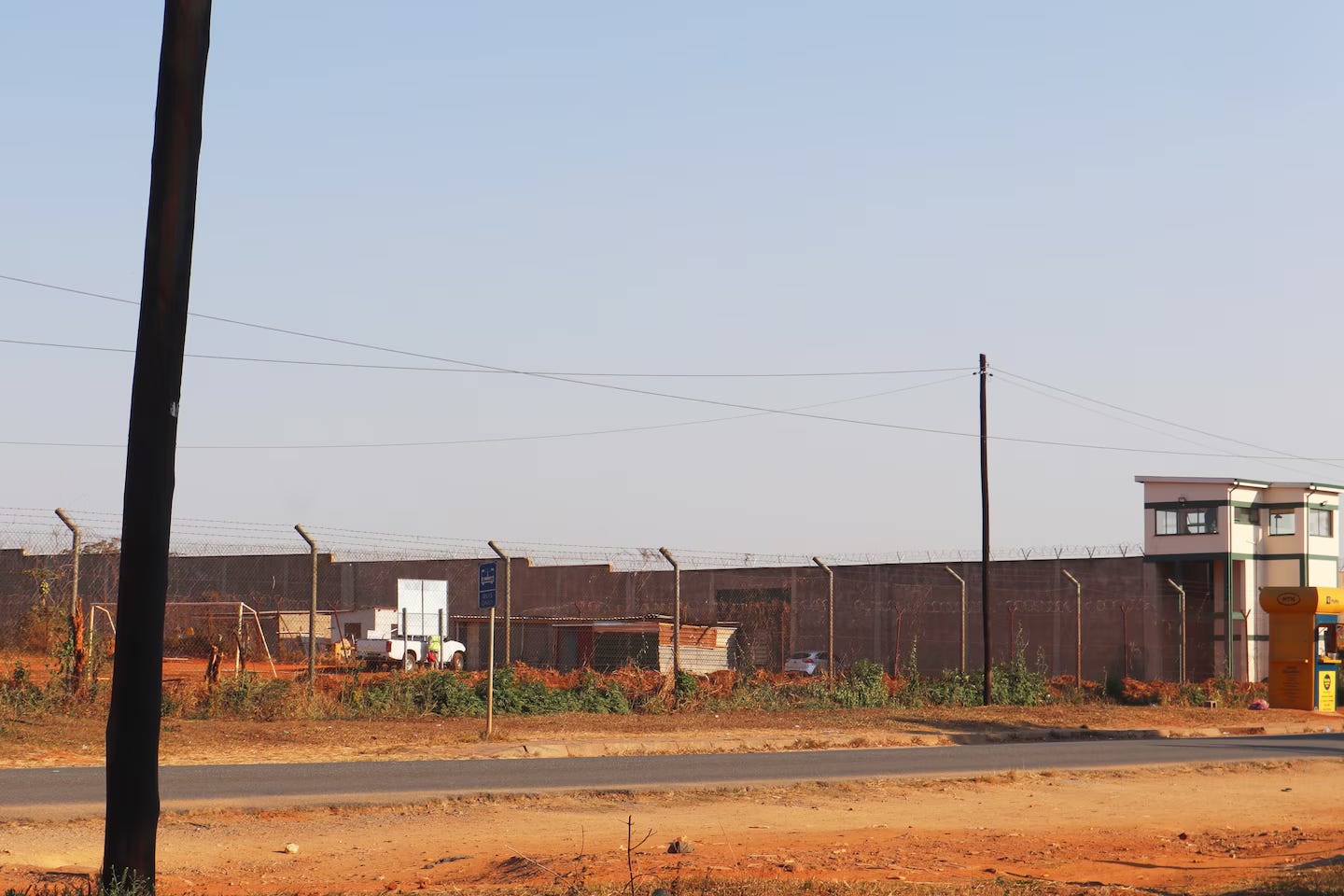
Five immigrants deported from the U.S. to Eswatini under Trump’s controversial third-country program are now locked in solitary confinement with no clear timeline for release. This isn’t just a bureaucratic shuffle—it’s a harsh reality exposing how far the administration is willing to push human rights boundaries to solve deportation (self-imposed) headaches.
Eswatini’s government confirmed the five men—convicted of serious crimes like murder and child rape—are held in isolation, separated from other prisoners, and are considered “in transit” as authorities plan to send them eventually to their home countries. But no one knows when that will happen, and the terms of the secret agreement with the U.S. remain classified.
The detainees, from Vietnam, Jamaica, Cuba, Yemen, and Laos, were previously imprisoned in the U.S., deported despite legal challenges, and now stuck in Eswatini’s maximum-security facilities. Meanwhile, the International Organization for Migration says it hasn’t been asked to assist, even though it’s supposed to handle such humanitarian repatriations.
This strategy reflects a disturbing trend: dumping difficult deportees in countries with questionable human rights records—like Eswatini, Africa’s last absolute monarchy, where political dissent is brutally crushed, and prisons are notoriously harsh. Rights groups warn this is less about justice and more about outsourcing America’s toughest problems.
The Trump administration claims these moves clear dangerous individuals off American soil, but it comes at a real cost to basic human decency—and the men caught in the middle have virtually no legal recourse or clear path forward.
Source: Washington Post
Harvard Battles Trump Administration Over $2 Billion Funding Freeze Threatening Life-Saving Research
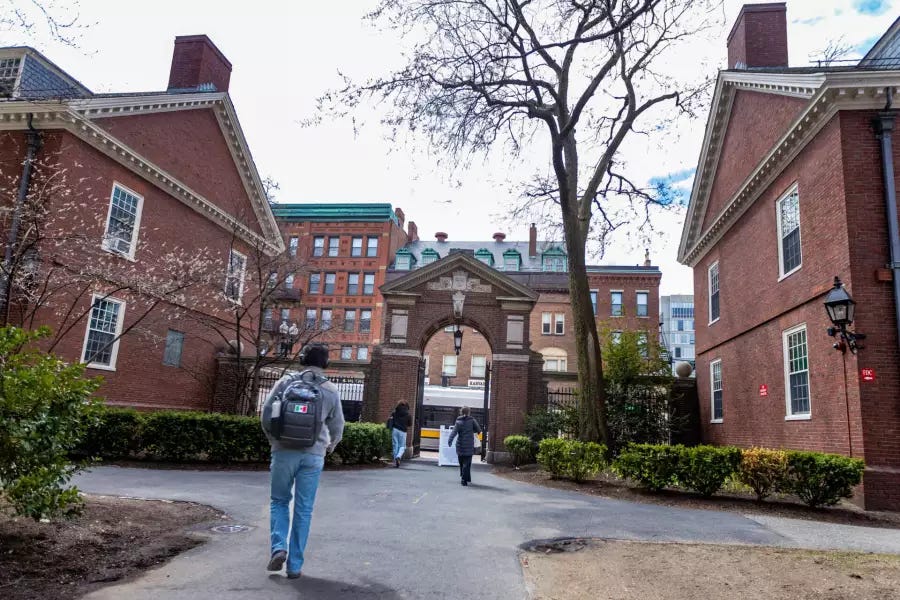
Harvard is taking the Trump administration to court to stop a freeze on more than $2 billion in federal grants that could cripple critical medical and scientific research.
This isn’t just about money—it’s a fight over academic freedom and how far the government can go in controlling universities.
Harvard argues that the administration’s funding freeze, imposed over alleged failures to address antisemitism on campus, violates established legal procedures and infringes on the university’s First Amendment rights. Their lawsuit claims there’s no logical link between antisemitism concerns and halting vital research on diseases like Alzheimer’s and cancer.
“The Government has not—and cannot—identify any rational connection,” Harvard’s filing says.
The Trump administration counters that Harvard failed to protect Jewish students and violated federal law, justifying the funding cuts. As a White House spokesperson put it bluntly, “The gravy train of federal assistance to institutions like Harvard… is coming to an end.” Yet legal experts warn the key issue isn’t if the government has power to act, but whether it followed the right legal process.
The stakes couldn’t be higher: Harvard’s grants support over 900 projects, including a $12 million allergy study paused mid-trial, putting families and ongoing medical advances at risk. Professor Kari Nadeau warns that “taking therapy away… is a safety issue,” highlighting the human cost behind this political battle.
Even if Harvard scores a win in court, don’t expect this saga to end anytime soon. Experts predict appeals and possibly a Supreme Court showdown, with the entire higher education sector watching closely. This fight is about more than Harvard—it’s about the future of academic independence in America.
Source: NPR
China Kicks Off Construction of the World’s Largest Hydropower Plant, Aiming to Cement Renewable Energy Dominance
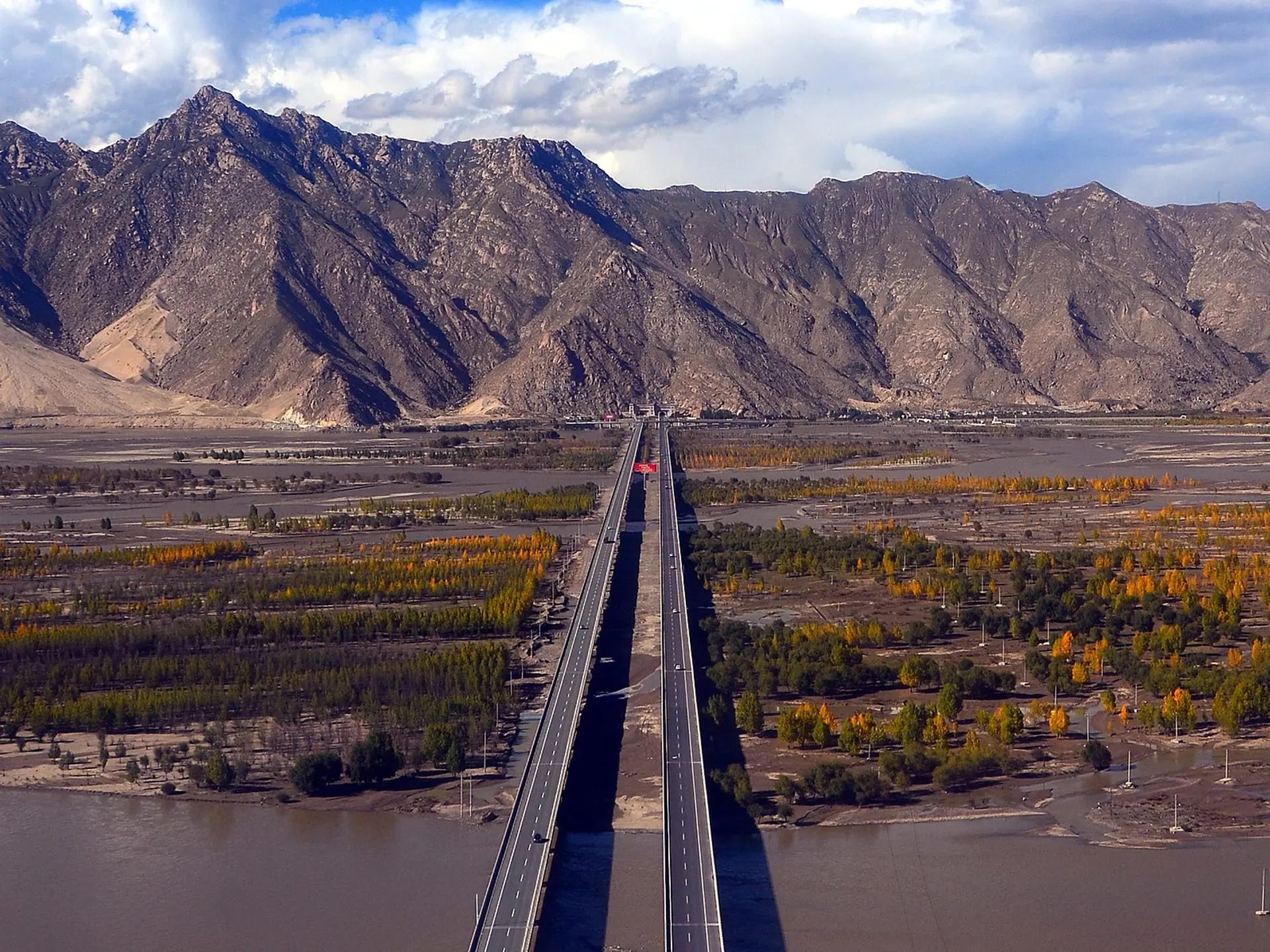
China has started building a colossal $170 billion hydropower project expected to produce as much electricity annually as the entire UK consumes.
This is more than just a massive infrastructure feat—it’s Beijing’s clear statement of intent to lead global green energy innovation well into the 2030s.
Located on the Yarlung Zangbo River, the plant is slated to generate 300 billion kilowatt-hours per year, an output that dwarfs most other renewable projects. According to the International Energy Agency, China is on track to install nearly 60% of the world’s renewable energy capacity by 2030, reflecting an unprecedented push to decarbonize its economy and influence global markets.
While this effort secures China’s energy future and climate goals, it also sets the stage for geopolitical energy dynamics. Competitors like the US and EU will have to ramp up their own clean energy plans or risk falling behind in the fast-evolving global race.
This megaproject underscores how renewables are no longer just environmental gestures—they are strategic assets in international power plays. Whether you see it as innovation or a geopolitical power move, China’s hydropower push is rewriting the rules of energy dominance.
Source: Semafor
New $250 “Visa Integrity Fee” Could Make Visiting the U.S. Way More Expensive—And It’s Non-Negotiable
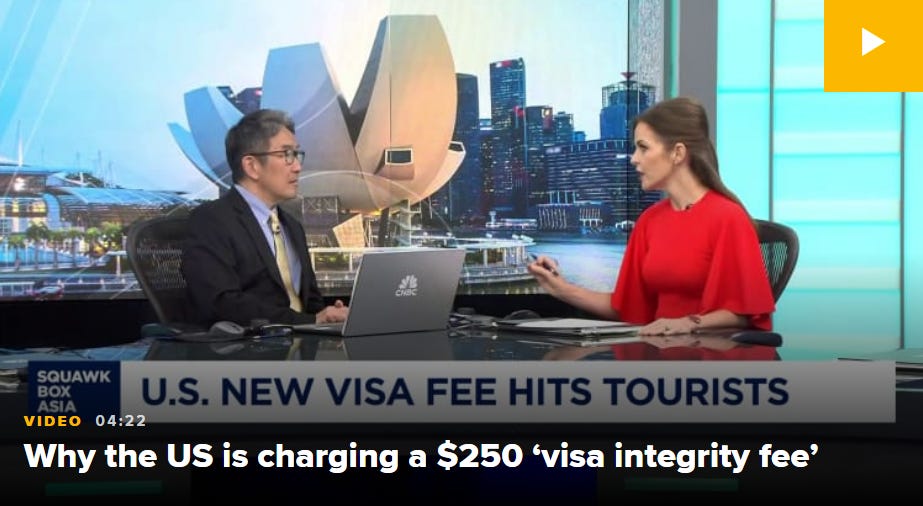
If you need a nonimmigrant visa to visit the U.S., get ready to cough up at least $250 more thanks to the Trump administration’s new “visa integrity fee.”
This fee stacks on top of existing visa and entry charges, and there’s no way around it—though, theoretically, you might get some of it back if you follow the rules.
The fee applies to tourists, business travelers, and international students—basically anyone not covered by visa waivers—and is set to start in fiscal year 2025. The Homeland Security Secretary can even raise it above $250, adjusting it for inflation after that. But the exact timing and payment logistics remain murky, leaving travelers and travel industry groups scratching their heads.
On top of this, the I-94 arrival/departure record fee just jumped from $6 to $24, hiking costs for most visitors further. Visa holders can only hope for reimbursement after their visa expires, and only if they don’t overstay or work illegally—conditions that make the refund more like a long shot “bonus” than a sure thing.
Critics argue these new fees come at a bad time: The U.S. is gearing up to host massive 2026 events like the America 250 celebration and FIFA World Cup. Plus, funding for Brand USA, the agency that markets U.S. tourism globally, was slashed from $100 million to $20 million, further dampening the country’s appeal to foreign visitors.
As immigration lawyer Steven A. Brown puts it: “If you get it back, great. But it is usually difficult to get money back from the government.”
Bottom line—travelers should brace for sticker shock, and the U.S. risks making itself less welcoming just as the world eyes major global events.
The United States is now "Discount Disney," as it charges an admission fee ($250) to get in. It's replete with thrill raids by ICE and rollercoaster jet airplane rides to Sudan in a metal box if you're not subservient enough to Dear Leader. #HappiestPlaceOnEarth
Source: CNBC