


Deadly Midtown Shooting Targets NFL Headquarters; Shooter Leaves Troubling Note Blaming Brain Trauma
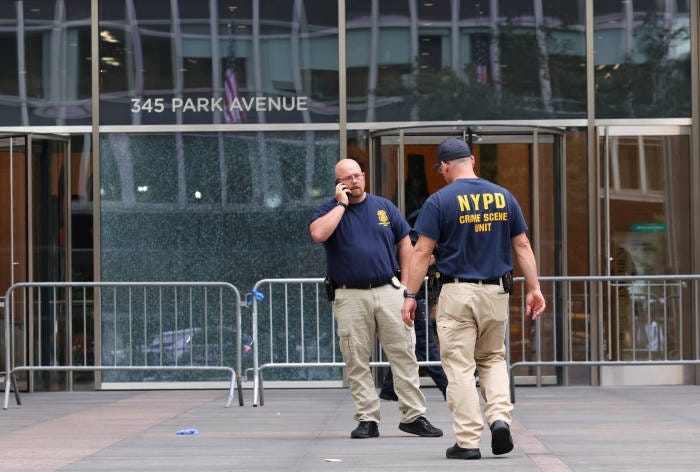
Four people were killed Monday evening in a Midtown Manhattan office tower, including a police officer and a Blackstone executive, in a shooting spree that appeared to target the NFL.
The gunman, Shane Tamura, 27, from Las Vegas, carried out the attack at 345 Park Avenue, home to the NFL headquarters and major financial firms. According to New York City Mayor Eric Adams, Tamura left a suicide note indicating he believed he suffered from chronic traumatic encephalopathy (CTE), a degenerative brain disease linked to repeated head injuries, and blamed the NFL for his condition.
Mayor Adams stated, “It appears as though he was going after the employees at the NFL,” confirming the attack had a targeted motive. The rampage left four dead, including NYPD Officer Didarul Islam and Wesley LePatner, a senior director at Blackstone. Another NFL employee was critically injured but is now stable.
Tamura’s path through the building was chaotic—after shooting victims in the lobby, he mistakenly took the wrong elevator and ended up on the 33rd floor, where he shot himself. Police found weapons and ammunition in his vehicle, as well as prescription medication.
This tragedy strikes at the heart of New York’s business district, raising urgent questions about mental health, workplace security, and the lasting impact of brain injuries. It’s a grim reminder that the fallout from sports-related trauma can extend far beyond the field.
Weirdly, I am fascinated by the question of who this guy was in the NFL. Never heard of him. He did blame “Terry Long football,” so I looked that up and boy… don’t do that.
Source: WSJ (gift article)
Harvard May Pay Up to $500 Million to Settle Dispute with Trump Administration

Harvard is reportedly ready to discuss a massive payout—potentially as high as half a billion dollars—to resolve its legal battle with the federal government.
Sources close to the negotiations say Harvard is hesitant to write a direct check to the government but is actively exploring financial terms to end the fight. This comes after the White House accused the university of civil rights violations, a claim Harvard is pushing back against.
The figure being floated—up to $500 million—is more than double the $200 million Columbia University recently agreed to pay in a separate but related settlement over antisemitism allegations. Neither Harvard nor the government has disclosed the specific allegations tied to this staggering sum or the full scope of the deal.
If Harvard goes through with this, it will mark one of the most expensive university settlements ever and set a serious precedent for how elite institutions handle government scrutiny. Frankly, it raises questions about how far political pressures can push academic institutions—and who really wins when these battles play out in courtrooms rather than classrooms.
Additionally, how do these educational bastions not know how authoritarians work? Next time Harvard pisses off Trump, he’ll just throw more charges at them, and they’ll have to pay again. It’s classic mobster authoritarianism.
Source: NYT
Gaza Is On The Brink Of Famine—The Worst Hunger Crisis We’ve Seen In Decades
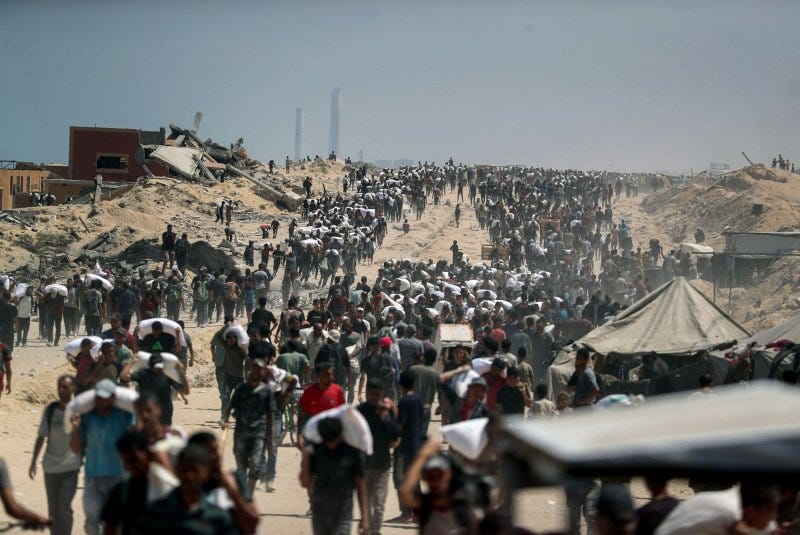
The humanitarian nightmare in Gaza is rapidly spiraling into a famine-level disaster, with starvation, malnutrition, and disease pushing the death toll higher by the day.
According to the Integrated Food Security Phase Classification (IPC), famine thresholds have been reached across most of Gaza, with acute malnutrition hitting Gaza City hard. The crisis has intensified dramatically due to relentless bombing, ground operations, and displacement of over 325,000 people, cutting off access to food, clean water, and medical supplies.
“This is the worst-case scenario of famine,” the IPC bluntly states, warning that the collapse of health and nutrition services, combined with restricted humanitarian aid, is driving a deadly surge in hunger-related illnesses, especially among children. Over 20,000 kids have been hospitalized for acute malnutrition since April, with 3,000 in severe condition.
Despite Israel’s recent "tactical pauses" to allow aid, Prime Minister Netanyahu still denies there’s a hunger crisis, calling claims of starvation “bold-faced lies.”
Even so, President Trump has voiced skepticism, saying the images of starving civilians "looked like real starvation" and "couldn't be faked."
This isn’t just a tragedy unfolding; it’s a direct consequence of policies and warfare strategies that are ignoring the human cost. If the international community doesn’t push hard for a cease-fire and unrestricted aid now, famine in Gaza won’t just be imminent—it will be inevitable.
Source: UPI
Trump Administration Takes Aim at Federal Judge Over Controversial Remarks and Deportation Case
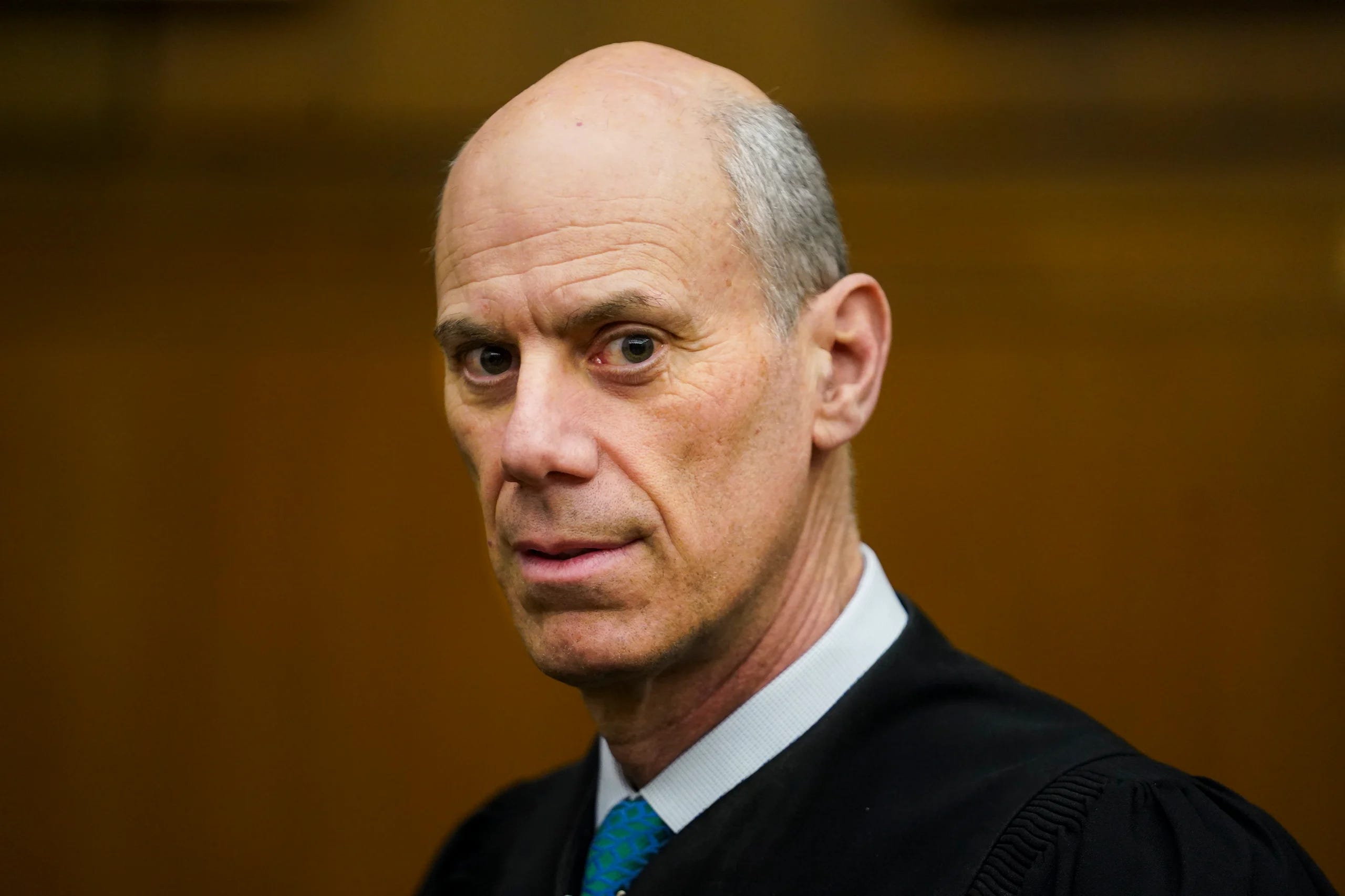
The Justice Department is doubling down on its battle with the judiciary by filing a formal complaint against Judge James Boasberg, seeking his removal and public reprimand.
Boasberg, who made pointed remarks at a judges’ conference, now faces accusations that his comments have undermined public confidence in the judiciary. The complaint, filed by attorney John Mizelle, claims Boasberg crossed the line by publicly commenting on matters that may be pending or imminent—a big no-no for federal judges.
The complaint also revisits the heated deportation case where the Justice Department asked to have Boasberg removed after his rulings stalled the administration’s efforts. Despite no action taken by the appeals court, Trump’s call for Boasberg’s impeachment has fueled tensions. Mizelle’s complaint even raises the possibility of fellow judges demanding impeachment over the judge’s remarks.
This latest move is part of a broader, even more aggressive approach by the Trump administration against the federal judiciary. The Justice Department recently sued Maryland’s entire federal bench over deportation hold policies and criticized judges in New Jersey for appointing a U.S. attorney who wasn’t their preferred choice, trying to sideline Trump’s former lawyer, Alina Habba.
At the end of the day, this is less about judicial procedure and more about political power plays playing out in courtrooms. The administration’s relentless pressure on judges is a stark reminder of how politicized the judicial branch has become—and how much is at stake for the rule of law.
Source: Politico
SpaceX’s Rocket Deal with the Bahamas Hits Turbulence Amid Debris and Diplomatic Drama

SpaceX’s plan to land Falcon 9 boosters in Bahamian waters was supposed to be a smooth launch—but it’s become a rocky diplomatic and environmental headache.
Last year, SpaceX sweetened the deal with complimentary Starlink internet terminals for the Bahamas’ defense vessels to secure approval for Falcon 9 rocket landings. The agreement, signed by Deputy Prime Minister Chester Cooper without full government consultation, unlocked a faster route to space but quickly sparked tension among officials.
After the March explosion of SpaceX’s Starship rocket showered debris across Bahamian islands, concerns about environmental impact and national sovereignty grew louder.
“Many Bahamians have voiced concerns about their safety from Starship debris and pollution,” said Arana Pyfrom of the country’s environmental agency, describing SpaceX’s presence as “polarizing.”
Local activists are furious about the lack of transparency and rushed deal-making. One resident called it a “deal done totally in secret,” especially troubling given the Bahamas’ dependence on pristine waters for tourism.
While SpaceX awaits regulatory tweaks and environmental reviews before resuming booster landings, the saga underscores how Musk’s space ambitions clash with geopolitics and local realities.
This story offers a clear lesson: No matter how bold the space tech, you can’t blast off without winning trust on the ground first. And Musk has certainly earned distrust from just about everybody.
Source: Reuters
Finally, No More Shoe Removals at Airport Security—Say Goodbye to This Longtime Travel Hassle

The TSA just ended one of the most annoying airport rituals: taking off your shoes at security checkpoints is officially over—for domestic flights at least.
Homeland Security Secretary Kristi Noem announced that passengers flying within the U.S. can now keep their shoes on during TSA screenings, a change aimed at speeding up lines and making travel less of a headache. This policy shift is a long-overdue update after two decades of shoe removals sparked by the 2001 “shoe bomber” Richard Reid.
“No more shoe removals is the latest effort to modernize and enhance traveler experience,” Noem said, emphasizing how this will drastically cut wait times and improve efficiency. If you’ve ever flown internationally, you know this change ends the confusing back-and-forth of some countries making you remove shoes and others not.
This update finally aligns the U.S. with many Western countries that scrapped the shoes-off rule years ago—so get ready for smoother, faster security lines and fewer awkward moments. We all know this was a bullshit attempt by the GWB administration to make us “feel safer,” even though we weren’t because not much has changed since 9/11.
Source: Good News Network