


Israel’s Deadly Strikes on Iran Push Middle East to the Brink of War
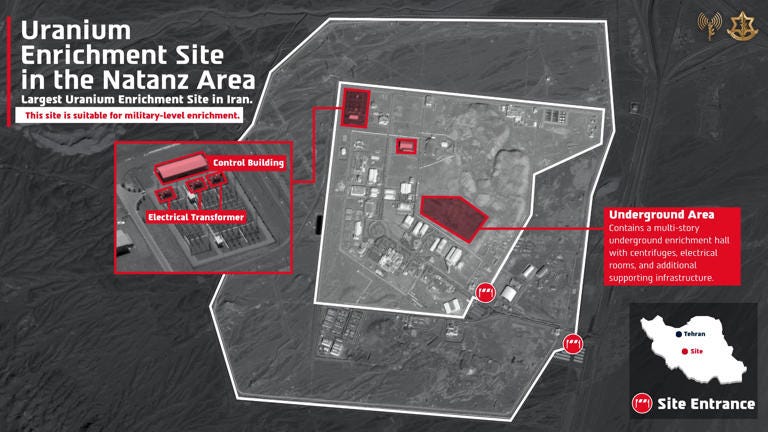
The head of Iran’s Islamic Revolutionary Guard was killed in a massive Israeli attack that could spiral the region into a new, dangerous conflict.
Is this the beginning of World War III? That’s a bigly MAYBE!
Israel unleashed a fierce assault targeting Iran’s nuclear program and military leaders, killing IRGC commander Hossein Salami along with two other top generals. This operation is no small skirmish—it signals a serious escalation that’s rattling global markets and stirring fears of prolonged warfare.
President Trump weighed in with a blunt warning: Iran better cut a deal “before there is nothing left,” highlighting that Israel is armed with U.S. military tech—and they’re not shy about using it.
Israeli Prime Minister Netanyahu made it clear this offensive isn’t going anywhere fast, pledging the campaign will last “as many days as it takes.”
Meanwhile, Iran’s Supreme Leader vowed “severe punishment” in retaliation, with Iranian drones already being shot down by Israeli defenses. Remember Iran’s counter attack several months ago, where maybe a single drone got through the Israeili defenses? Yeah, that didn’t go too well for Iran.
Behind the scenes, Israeli intelligence had smuggled explosive drones and guided weapons into Iran well before the strikes began, showing this was a carefully planned operation, not a spur-of-the-moment reaction.
Markets are reacting: Oil prices jumped and U.S. stock futures dipped, reflecting the volatility this conflict brings not just to the Middle East but the global economy. It’s a high-stakes chess game with no clear end in sight—where the first moves have already left Tehran’s military leadership reeling.
If you ask me (and you kind of did, since you are reading this), this is exactly the kind of pressure that could force Iran to the negotiating table, or it could light a fuse that nobody wants to see blow. Either way, the next two weeks will tell us a lot about how far this showdown will go.
Source: WSJ
U.S. Diplomacy Was the Perfect Smoke Screen for Israel’s Surprise Attack on Iran
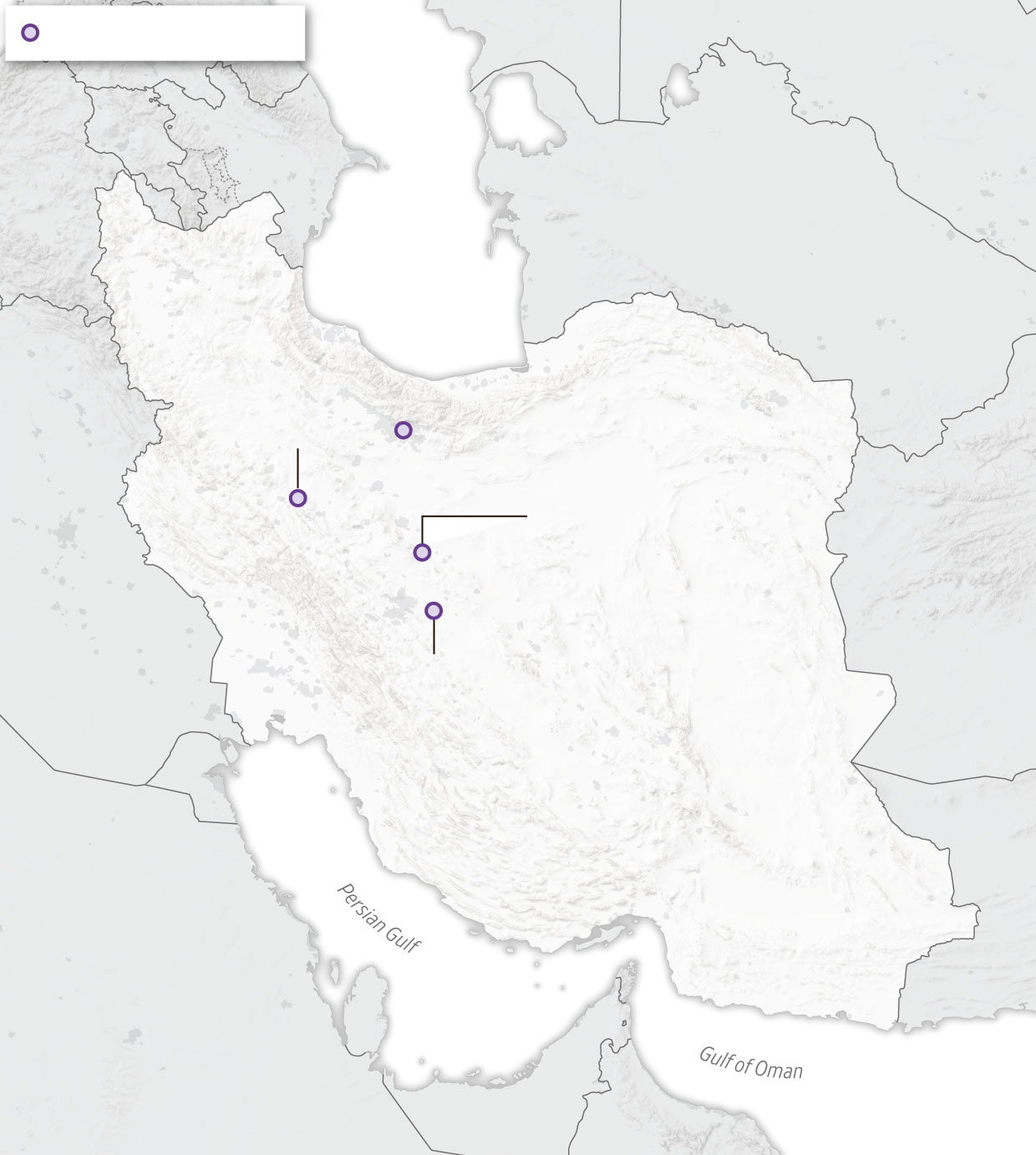
While everyone was focused on nuclear talks, Israel was quietly gearing up to deliver a massive military blow to Iran’s top generals and nuclear sites.
Don’t think for a second that the US wasn’t fully in on the con.
What looked like serious diplomatic efforts to curb Iran’s nuclear program ended up serving as cover for Israel’s sudden and devastating strike. Just days before a planned sixth round of talks in Oman, Israeli jets hit multiple targets across Iran, killing three senior generals and key nuclear scientists in one fell swoop.
President Trump made it clear: “I gave Iran a chance to make a deal” but “they just couldn’t get it done,” urging Tehran to “reach a deal before there is nothing left.”
This is pure mafia warfare: Pay me protection money or—somehow—your business is going to blow up.
Despite months of back-and-forth negotiations led by Trump envoy Steve Witkoff, the talks were a facade masking a ticking time bomb. Israel needed surprise to decapitate Iran’s military leadership and cripple its nuclear ambitions. Senior officials even moved diplomats and military families out of the Middle East ahead of the operation, which blindsided Tehran at a critical moment.
This isn’t just another strike—it’s a high-stakes gamble. The U.S. denies direct involvement in the attack but hasn’t ruled out backing Israel’s defense against retaliatory Iranian drones, raising the risk of deeper U.S. military entanglement. Experts note the diplomatic channel ironically made the surprise possible because Iran wouldn’t expect an attack while talks were underway.
Bottom line? Trump’s push for diplomacy wasn’t a cover for peace—it was the curtain for a calculated military move. Now the question is whether this gamble forces Iran to the negotiating table or lights a regional powder keg with consequences far beyond nuclear politics.
Source: WSJ (gift article)
Senator Alex Padilla Was Handcuffed and Forced to the Ground During DHS Press Conference in LA
California’s Senator Padilla was forcibly removed and restrained by federal agents after interrupting Homeland Security Secretary Kristi Noem’s immigration enforcement briefing in Los Angeles.
The scene unfolded at a federal building amid tense protests sparked by recent ICE raids across LA. Padilla, clearly frustrated with unanswered questions about immigration operations, tried to ask Noem a question during her speech. Instead, Secret Service agents quickly stepped in, pushing him through doors, forcing him to the floor, handcuffing him, and holding him facedown in a hallway. Despite the harsh treatment, Padilla was released after a brief hold.
Noem insisted Padilla was “lunging” toward her and that he didn’t identify himself or display his Senate pin, which led agents to believe he was an attacker. “If he had requested a meeting, I would have loved to sit down and have a conversation,” she said later, claiming the disruption was political theater. Padilla’s office clarified he was at the building for a briefing with a U.S. Air Force general and was simply exercising his Congressional oversight duties.
This incident comes amid heightened tensions over President Trump’s mass deportation plan, with hundreds arrested during protests and military troops deployed in LA without local officials’ approval. Padilla, the first Latino Senator from California and a native Angeleno, has been vocal against the federal crackdown and the National Guard presence.
This aggressive handling of a sitting Senator—trying to exercise his legitimate oversight—underscores just how charged and chaotic immigration enforcement has become in the Trump era. And it highlights the disconnect between federal authorities and local communities caught in the middle.
Source: NBC Los Angeles
Federal Appeals Court Pauses Order to Return California National Guard Control to Newsom Amid LA Protests
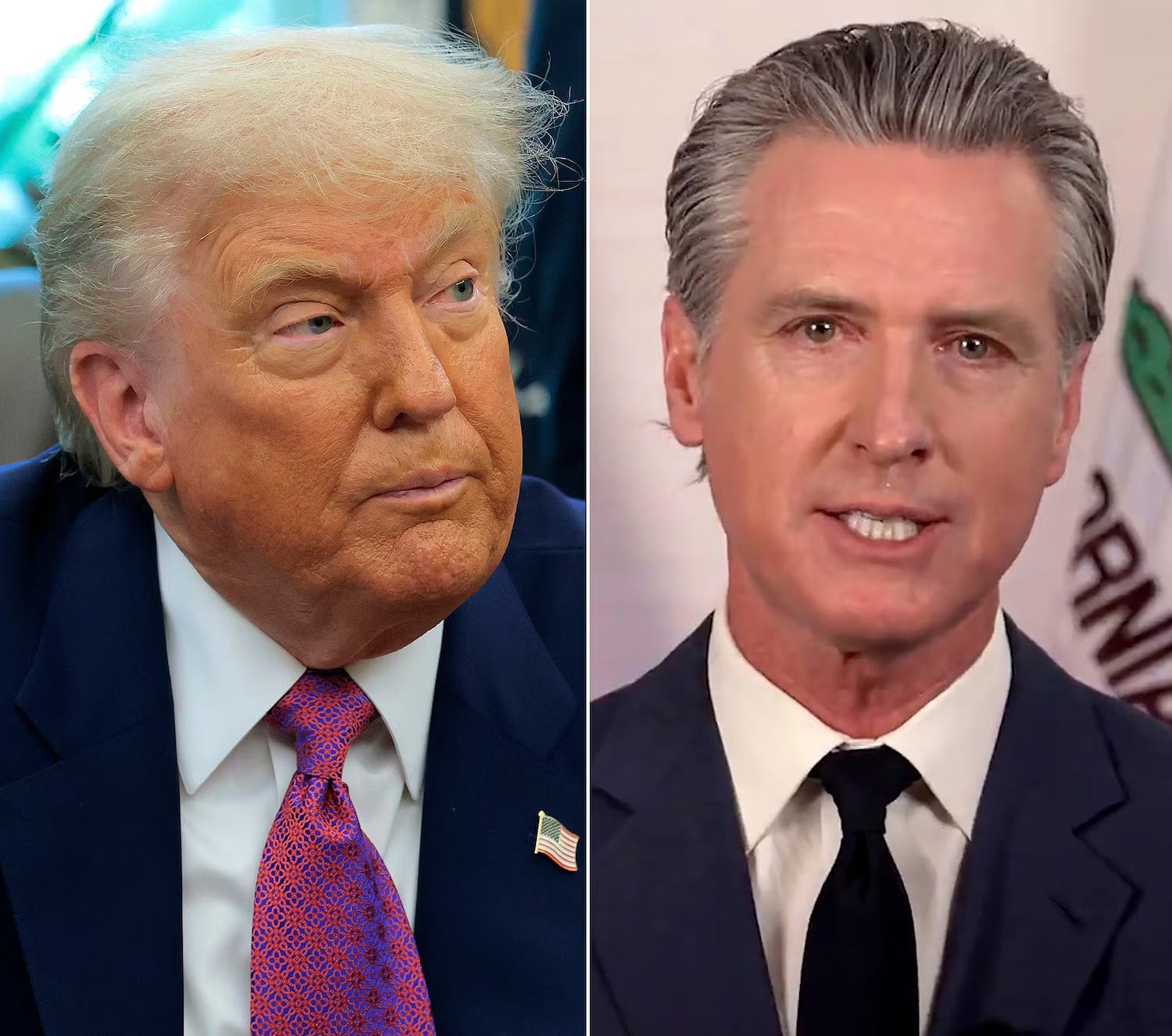
A federal appeals court has hit the brakes on a judge’s order to wrest control of the California National Guard from the Trump administration, giving the feds a temporary win in the heated LA protest standoff.
Just hours after a California judge declared Trump’s deployment of the National Guard “illegal” and demanded the Guard be returned to Governor Gavin Newsom, the Ninth Circuit Court of Appeals stepped in with a stay, pushing the hearing to June 17. This delay buys the Trump administration some breathing room to keep their military presence in Los Angeles, where protests over immigration raids have been tense and chaotic.
Judge Charles Breyer was crystal clear in his ruling: Trump overstepped his authority by federalizing the Guard without following proper procedures and violating the Tenth Amendment. He emphasized that the protests don’t meet the legal definition of a “rebellion” that would justify such a federal military takeover, calling the deployment an “unlawful militarization” that inflames tensions rather than eases them. Newsom was quick to say the Guard should get back to their usual work—fighting fires, enforcing drug laws, and protecting the border—instead of acting like stormtroopers on LA streets.
Trump, unsurprisingly, doubled down on Truth Social, insisting, “If I didn’t send the Military into Los Angeles, that city would be burning to the ground right now.” His legal team argued the judge’s order is an unprecedented assault on presidential powers, warning that courts shouldn’t second-guess the Commander in Chief’s military decisions.
This showdown isn’t just about LA—it’s about the balance of power between federal authority and state sovereignty and how far an administration can go under the guise of “law and order.” My take? The administration’s heavy-handed tactics have only escalated chaos, and this legal tug-of-war is a crucial test of constitutional limits on using the military in civilian matters.
Source: ABC News
If we aren’t in a full-blown Constitutional crisis, I don’t know what we’re in. Besides a big heaping vat of shit.
Massive Nationwide Protests Set to Challenge Trump’s Military Parade and Immigration Crackdown
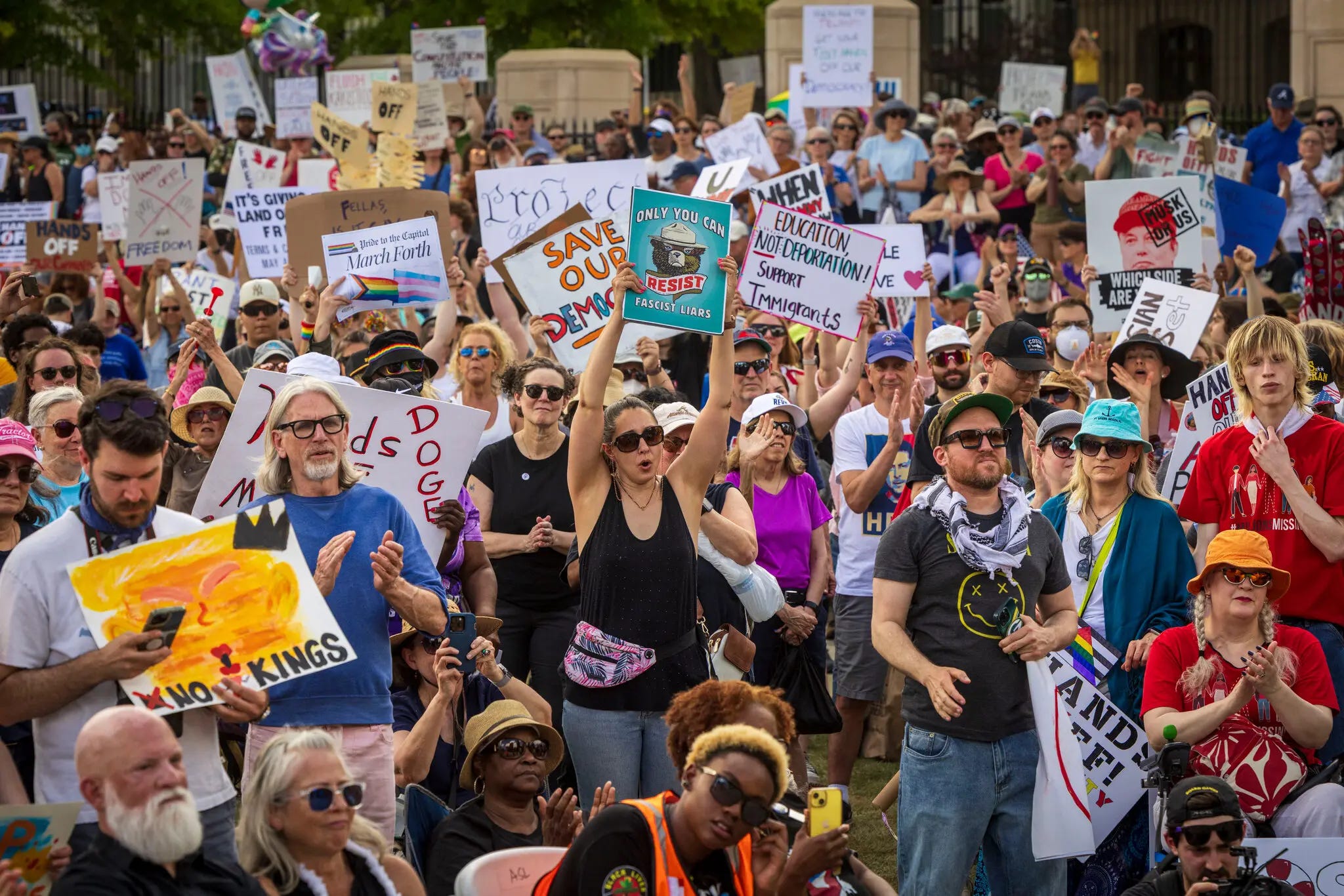
Saturday will see roughly 2,000 protests across all 50 states, marking one of the biggest coordinated demonstrations against President Trump’s second term yet.
Organized under the banner “No Kings,” these protests range from small rural gatherings to massive rallies in cities like New York, Chicago, Philadelphia, and Atlanta. The timing isn’t accidental: the protests coincide with Trump’s military parade in Washington, a spectacle some activists call a “display of dominance” more fitting for dictatorships than a democracy. Across the country and even internationally—in places like Britain and Mexico—people are pushing back against what they see as authoritarian overreach by the Trump administration.
The coalition behind the protests includes heavyweight groups like Indivisible, the ACLU, and 50501, all of whom have mobilized previously on issues from abortion rights to gun violence. Philly, rich in revolutionary symbolism, will host the event’s national livestream, with speakers emphasizing peaceful, patriotic opposition. Notably, Washington itself is skipped on purpose—organizers don’t want to fuel Trump’s threats of “very big force” against protesters there.
Leah Greenberg of Indivisible framed the day as a “day of defiance” meant to highlight the growing tensions over immigration raids, military deployments in cities, and attacks on healthcare and social services. Trump’s dismissive response to the protests was classic: “I don’t feel like a king... We’re not a king at all, thank you very much.” But whether he likes it or not, the country is about to see a powerful display of people demanding their voices be heard—and a reminder that this isn’t a monarchy.
When the government starts wielding military parades and troops against its own people, expect the people to show up en masse—and make sure their message cuts through the noise.
Source: NYT
Find the No Kings demonstration nearest you here.
The Night OJ Simpson Murdered Two People, Including His Ex-Wife

June 13, 1994, wasn’t just the day Nicole Brown Simpson and Ronald Goldman were found brutally murdered—it marked the dawn of a media era that changed everything. It was the birth of “reality TV” and the 24-hour incessant news cycle.
This tragic event catapulted O.J. Simpson, a football legend turned actor, into a relentless media frenzy that effectively birthed the reality TV spectacle and the nonstop 24-hour news cycle we now take for granted. What began as a criminal investigation soon morphed into a televised soap opera, with every twist, turn, and courtroom drama broadcast live to a captivated global audience. Networks scrambled to fill airtime, fueling a public obsession that blurred the lines between news and entertainment.
Simpson, though questioned, was not immediately a suspect—but the media had already made him the centerpiece of a cultural phenomenon. The intense coverage set a precedent for how real-life tragedy could be packaged as entertainment, transforming serious legal proceedings into must-watch television. It turned the public into voyeurs and sparked debates about media ethics that still echo today.
The case also ushered in a new era of news coverage—where sensationalism often trumps substance, and stories are stretched to fit endless airtime. Reality TV found its template in this tragic saga, and the news cycle grew hungrier, demanding constant updates, dramatic soundbites, and “exclusive” revelations. It’s fair to say this one crime reshaped the way we consume media forever.
Source: UPI