


Listen to the podcast:
Markets Slide as Recession Fears Loom Amid Tariff Uncertainty
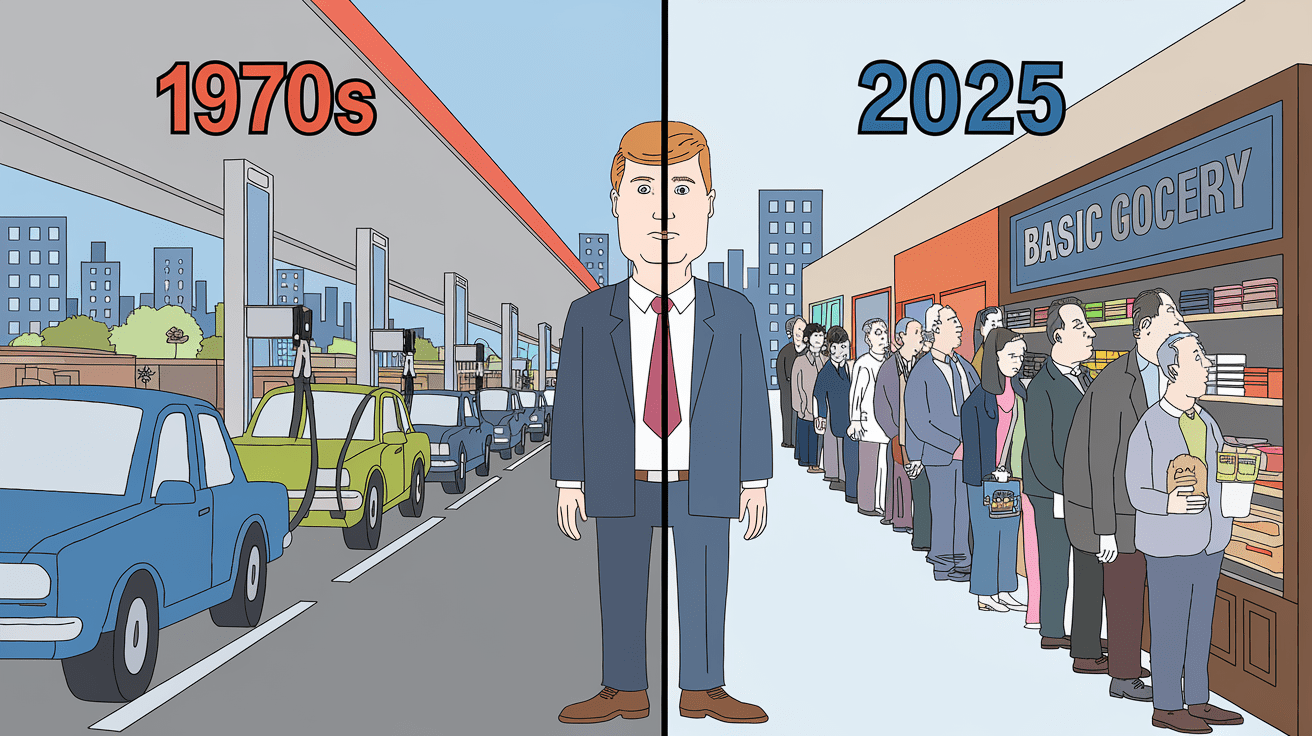
Wall Street saw a sharp sell-off Monday as recession fears rattled investors, sending major indexes to multi-month lows. The Dow Jones Industrial Average tumbled 325 points (8%), while the S&P 500 fell 1.9% and the Nasdaq Composite dropped 3.5%, marking their weakest levels since September 2024. Market uncertainty intensified after President Donald Trump refused to rule out a recession when questioned about the impact of newly implemented U.S. tariffs. Investors are now bracing for economic fallout, with concerns that tariff-driven inflation could make it harder for the Federal Reserve to cut interest rates.
The decline was led by big-name tech stocks, with Tesla plunging 8%, Alphabet falling 4%, and Nvidia shedding 5%.
CFRA Research’s Sam Stovall pointed to a "manufactured correction" triggered by the administration’s aggressive tariff strategy, warning that recession talk is only amplifying investor anxiety.
"Right now we’re going through a typical pullback and probably will experience a mild correction before all is completed, which actually would be good for the resetting of the dials of this ongoing bull market," Stovall explained.
Only a speculator would look at a pullback as a good thing.
Meanwhile, Wall Street is bracing for key inflation data, with the Consumer Price Index (CPI) and Producer Price Index (PPI) reports due later this week—numbers that could heavily influence market direction.
Amid the sell-off, some defensive sectors outperformed, with consumer staples like Procter & Gamble and Unilever gaining ground, signaling a shift to safer assets. However, bank stocks, including JPMorgan Chase, Citigroup, and Goldman Sachs, all slid more than 1%, reflecting broader economic fears. With markets teetering on technical support levels, traders are watching whether the S&P 500 can hold above its critical 200-day moving average—a break below could signal further downside ahead.
As Trump’s tariff policies reshape global trade, strategists at Alpine Macro warn that "the bull market in stocks is entering a volatile, risky, and potentially dangerous phase."
Source: CNBC
Stagflation, here we come!
Tesla Takedown: Nationwide Protests Against Elon Musk Escalate
It’s open season on Tesla showrooms, and the protests aren’t slowing down.
Over the weekend, hundreds of demonstrators stormed Tesla locations across the country as part of the so-called "Tesla Takedown" movement. The backlash against Elon Musk’s deepening ties to the Trump administration has resulted in vandalized Superchargers, dealership occupations, and even a Molotov cocktail left near a Tesla vehicle.
In New York City, protesters chanted, “Nobody voted for Elon Musk! Oligarchs out, democracy in!” as six were arrested in Manhattan for disrupting a showroom.
The outrage isn’t limited to just big-city activists—Tesla showrooms and charging stations from St. Louis to Portland have been targeted, with signs urging Musk to take his next SpaceX rocket straight to Mars.
Even some Tesla owners are jumping ship, ditching their cars in embarrassment.
“I’m sort of embarrassed to be seen in that car now,” one former owner admitted before trading it in.
While many protests remain peaceful, reports have surfaced of gunfire at a Tesla dealership, arson at charging stations, and swastika-laced graffiti targeting Musk. Police in Massachusetts are investigating fires at seven charging stations, while authorities in Portland say multiple gunshots shattered Tesla showroom windows last week.
Musk, never one to let criticism slide, has taken to his social media site X to blame ActBlue-funded groups like “Troublemakers” and “Disruption Project” for the protests, even dragging George Soros and Reid Hoffman into the mix—despite a lack of evidence.
Meanwhile, the White House isn’t backing down either, with a spokesperson declaring, “Protests will not deter President Trump and Elon Musk from delivering on the promise to establish DOGE and make our federal government more efficient.”
Efficient, apparently, means gutting federal agencies and firing employees who don’t answer emails fast enough—all while Musk enjoys his newfound political influence.
Source: Vanity Fair
Trump’s War Chest: The Billion-Dollar Machine That Keeps the GOP in Line
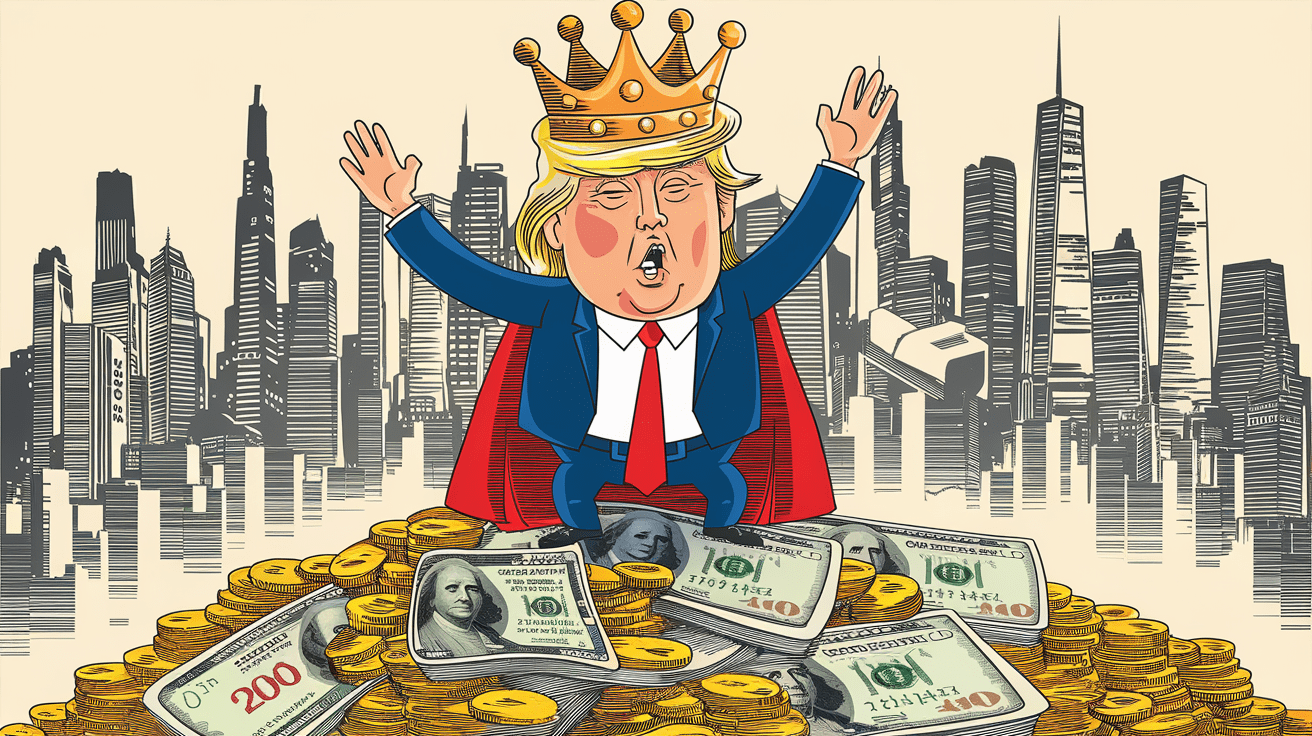
Donald Trump isn’t just running the Republican Party—he owns it outright, thanks to a massive, cash-flush political operation that has raked in nearly half a billion dollars since Election Day.
This unprecedented war chest is more than just a financial flex; it's a high-powered enforcement machine designed to reward loyalists and crush dissenters.
As GOP strategist Corry Bliss bluntly put it, "When you combine a 92% approval rating among Republican voters with unlimited money, that equals: 'Yes, sir.'"
Unlike after his 2016 win, Trump has built an infrastructure that ensures no Republican steps out of line without consequences.
At the heart of this operation are two Trump-aligned super PACs, MAGA Inc. and Securing American Greatness, which are gearing up for a 2026 GOP purge—helping friendly Republicans expand their congressional majorities while punishing those who dare to challenge Trump.
And if that weren’t enough, Elon Musk is now in the mix, bankrolling his own super PAC, America PAC, to target any Republican who strays too far from Trump’s orbit.
With Musk’s deep pockets, his control of X (formerly Twitter), and Trump’s hold over Truth Social, any dissenters in the party could face a political firing squad of relentless attack ads and primary challengers.
This fundraising machine isn’t just about flexing muscle—it’s about total domination. Trump wasted no time after winning in 2024, calling top donors the day after Election Day to start reloading for his next power play.
His Mar-a-Lago donor dinner two weeks ago? A cool $1 million minimum buy-in. Meanwhile, America PAC is already running TV ads praising Trump for “saving the American dream,” and GOP mega-donors are lining up for access.
As former NRSC director Jason Thielman put it, "Trump’s outside political operation is a juggernaut that will be one of the most dominant forces in modern elections."
Translation: Cross Trump, and prepare for political exile.
Source: Axios
And let’s not forget the power of shitcoin and other cryptocurrencies to move massive amounts of foreign assets into Trump world with virtually zero trackability. More next…
Trump’s Crypto Gambit: A ‘Digital Fort Knox’ or an Economic Gamble?

Donald Trump’s latest move in the financial chess game of his presidency is a bold one: creating a national “Strategic Bitcoin Reserve” without spending a dime of taxpayer money.
Instead, the fund will be stocked with bitcoin seized through law enforcement actions, making it the first government-backed crypto hoard of its kind.
A separate “National Digital Asset Stockpile” will also be established, filled with various other cryptocurrencies (i.e., “shitcoins”).
While the plan has electrified crypto enthusiasts, it has baffled economists and raised serious concerns about conflicts of interest within the Trump administration.
As David Sacks, Trump’s newly appointed AI and crypto czar, put it, “This Executive Order underscores President Trump’s commitment to making the U.S. the ‘crypto capital of the world.’”
Sacks is a founding member of the PayPal mafia, along with Musk, Thiel, and the aforementioned Reid Hoffman (now a Musk enemy).
The plan comes with its fair share of controversy. Trump’s executive order mandates a full audit of the government’s crypto holdings, which are estimated to include around 200,000 bitcoin worth $17 billion. However, roughly 95,000 of those coins stem from the 2016 Bitfinex hack, and many argue that they rightfully belong to the exchange. The move also hinges on the assumption that bitcoin’s price will continue to rise—a risky bet, according to skeptics.
George Selgin, director emeritus at the Cato Institute, dismissed the idea outright, saying, “There is simply no good rationale.”
Others argue that hoarding bitcoin instead of selling it for U.S. dollars deprives the government of more liquid, income-generating assets.
Meanwhile, the plan has set off alarm bells in Congress, with Senator Elizabeth Warren raising concerns about potential conflicts of interest given Sacks' and other Trump officials’ past investments in crypto.
There’s also a growing expectation that U.S. states and foreign governments will follow suit, treating Trump’s crypto reserve as a financial trendsetter. Lawmakers in Texas, Ohio, and New Hampshire have already introduced legislation to allow their state treasuries to buy bitcoin, and global counterparts in Brazil, Czechia, and Hong Kong are considering similar moves.
With Trump pushing to enshrine the reserves into law, the long-term impact is clear: once this digital war chest is locked in place, it may never be dismantled.
Source: Wired
Move Fast and Break Democracy: How Silicon Valley’s Titans Took Over Politics
Silicon Valley’s billionaires have always wanted to rule the digital world, but in 2024, they set their sights on something bigger: controlling the government itself.
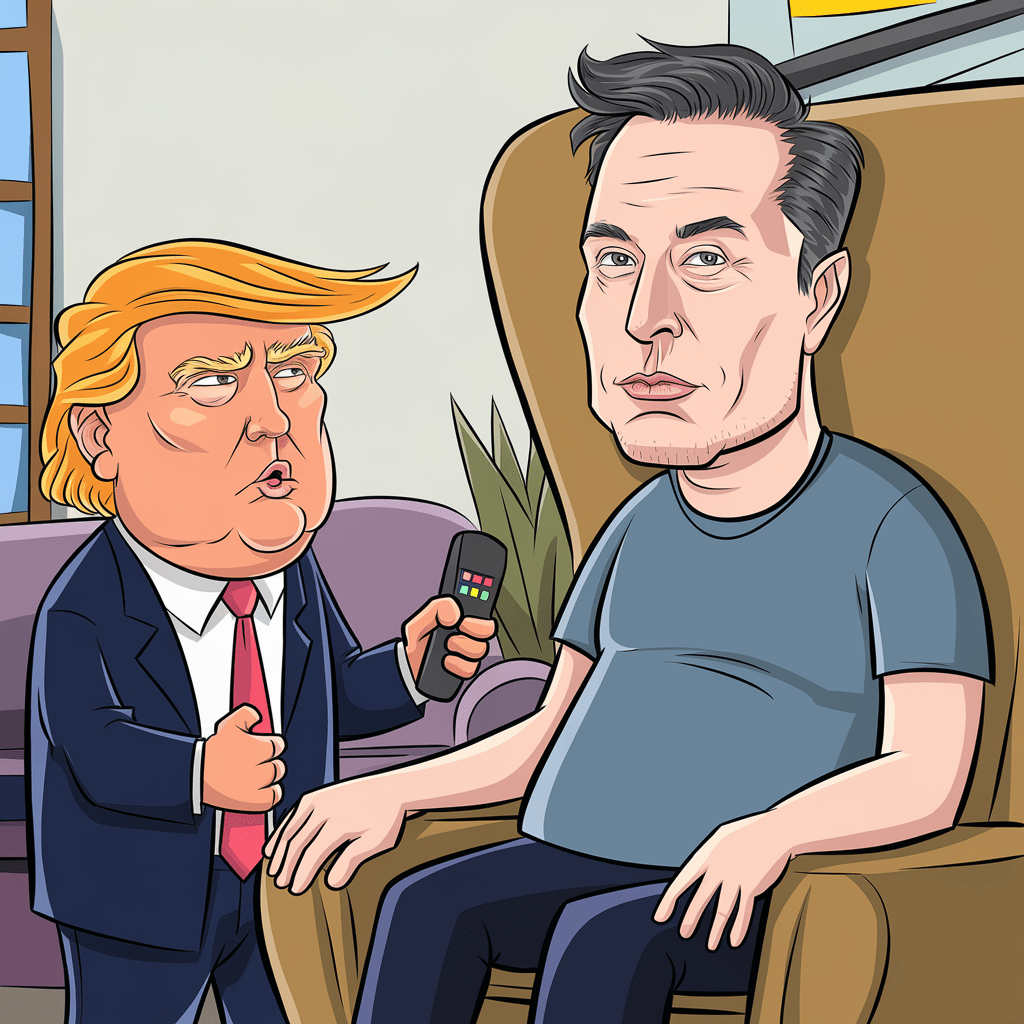
In a stunning power play, Elon Musk positioned himself as the shadow ruler of the U.S. by helping push Donald Trump back into the White House.
Now, armed with social media influence, AI dominance, and a direct line to the Oval Office, Musk and his fellow tech titans aren’t just lobbying for policies—they’re writing them.
As tech journalist Kara Swisher puts it, “the digital world they rule has become not enough.”
This isn't just about Musk.
A wave of tech moguls cozied up to Trump, either before or immediately after the election, recognizing that aligning with him meant securing their own empires in the next era of AI-driven dominance.
Their role in shaping the narrative—through social media platforms they control and algorithmic manipulations that shape public discourse—has created what Swisher calls “the wholesale capture of our current information systems.”
With Musk owning X (formerly Twitter), investing heavily in AI, and wielding influence over federal agencies, the line between corporate power and government rule has all but disappeared.
The big picture? This isn’t just about winning elections—it’s about total control of the future. The billionaire class, once content with just amassing wealth, now wants direct influence over immigration policy, regulatory rollbacks, and AI supremacy.
Meanwhile, Americans are left dealing with the consequences—whether it’s unchecked disinformation, a gutted regulatory system, or a political landscape shaped by a handful of unelected tech overlords.
As Swisher puts it, the “filthy-thumb-on-scale malevolence” of these moguls has turned the U.S. into their latest startup acquisition.
The only question left: Who’s really in charge?
Source: The Atlantic
South Carolina Executes Death Row Inmate by Firing Squad for First Time

For the first time in nearly 15 years, a U.S. state has carried out an execution by firing squad—a method many thought belonged to the history books. Brad Keith Sigmon, convicted of a brutal 2001 double murder, was executed Friday evening at the Broad River Correctional Institution in Columbia, South Carolina. Sigmon, 67, chose to be shot rather than face the state's lethal injection process, citing concerns over the quality and secrecy surrounding the drug supply.
In his final statement, read by his attorney, he called for an end to the death penalty, quoting scripture and urging fellow Christians to embrace grace over retribution.
Sigmon’s execution underscores the ongoing chaos surrounding lethal injection in the U.S., where states have struggled to obtain the necessary drugs. South Carolina, unable to perform lethal injections for over a decade, revived the firing squad option in 2021, along with the electric chair. Advocates say the state's secrecy laws, which conceal details about its execution drugs, left Sigmon no real choice but to select the firing squad.
"Tells you all you need to know about lethal injection," said Matt Wells of Reprieve, a human rights organization, emphasizing that prisoners now see being shot as a less cruel alternative.
The execution has drawn widespread condemnation, with critics calling it barbaric and inhumane. Even Sigmon’s ex-girlfriend, Rebecca Armstrong, whose parents he murdered, refused to witness it.
"I don’t think somebody being put to death is gonna bring me closure," she told USA Today, adding that Sigmon’s decision to be executed by firing squad only deepened her discomfort.
Meanwhile, death penalty opponents argue that Sigmon’s case proves how broken the system is, with states resorting to increasingly extreme methods as lethal injection protocols crumble. Whether this marks a turning point in the death penalty debate or simply a grim footnote in its history remains to be seen.
Source: WaPo (gift article)
Once upon a time, when I was a teenager, I thought capital punishment was a fine idea. The ONLY way to prevent those sicko bastards from committing more crimes is to finish them (they could escape). And why not the firing squad? At about a buck a bullet at the time, it should be cheap.
But then I grew up and came to realize that the State should not be killing people. Put them behind bars and call it a day.
I wake-up every morning (that’s always a plus) with the shock of the country we are living in now and think how the fuck did we get here? And my next thought is how the fuck do we get rid of these three stooges (sorry Moe, Curly and Larry)) How do we overthrow these sociopathic narcissists? The democratic leadership is limp and ineffective. Always shooting themselves in the foot (I.e. 10 democrats censuring Al Green for doing what ALL our elected officials should have done and should be doing).