


Listen to the podcast:
Trump’s Tariff Tantrum: The Trade War Begins—Because “Why Not?”
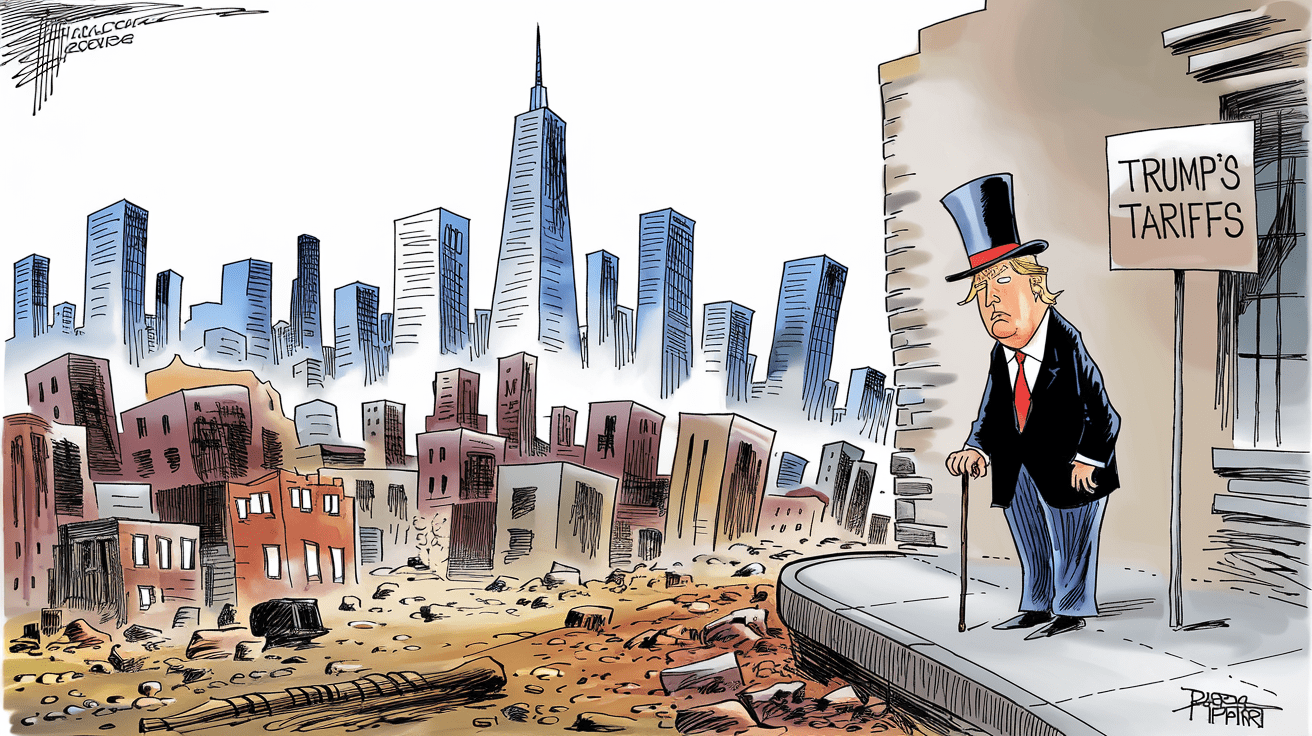
After years of threats and bluster, Donald Trump’s long-promised trade war is now officially underway.
As of midnight Tuesday, the U.S. slapped hefty tariffs on imports from Canada and Mexico—25% across the board, with a special 10% tax on Canadian energy.
Not stopping there, Trump also doubled tariffs on Chinese goods from 10% to 20%, because apparently, nothing says “economic strategy” like setting your own house on fire.
Predictably, Canada hit back hard, with Prime Minister Justin Trudeau announcing immediate counter-tariffs on $100 billion worth of American goods. Mexico will retaliate and China is ready for war.
Trump, ever the economic oracle, dismissed concerns about inflation and recession, claiming tariffs are the key to prosperity.
“It’s a very powerful weapon that politicians haven’t used because they were either dishonest, stupid, or paid off in some other form,” he declared, ever so humbly, from the White House.
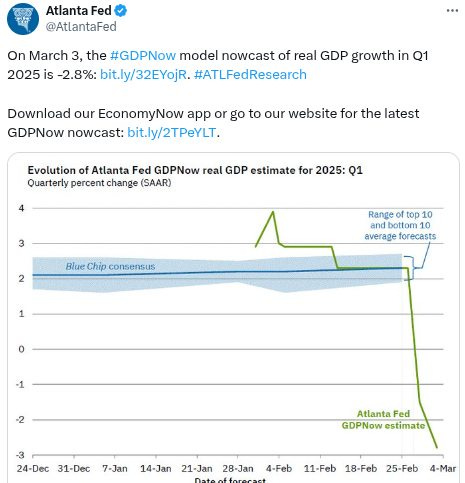
Meanwhile, experts warn that this “weapon” will boomerang spectacularly, leading to rising costs, economic instability, job losses, and a very probable recession—none of which seem to bother the administration.
Even Republican senators like Susan Collins are sounding alarms, warning that states with close economic ties to Canada (hello, Maine) could take a serious hit. But Trump remains undeterred, insisting that his real targets are drug trafficking and illegal immigration—though he’s also made it clear he won’t lift the tariffs until America’s trade balance is “fixed.”
Trump is an imbecile. He doesn’t understand foreign trade. If I buy a sucker from Canada for a dollar, and they buy a car from us for $20,000, we have a $19,999 trade “surplus.” Is that good? Is it bad for Canada? Neither. It’s neutral. We both mutually benefited equally.
No word on how that fits into a political calendar, by the way.
With trade tensions spiraling, economists are bracing for impact. Canada, the EU, and China are all prepping their own countermeasures, setting up a tit-for-tat economic showdown that could make past trade spats look like playground scuffles.
Meanwhile, American industries—from agriculture to tech—are left wondering how much collateral damage they’ll suffer before this high-stakes game of economic chicken comes to an end.
As trade lawyer Michael House put it, “It’s unpredictable. We don’t know, in fact, what the president will do.” That makes three hundred fifty million of us.
Source: AP News
Trump Declares America’s “Golden Age” – Because What’s Humility?
Donald Trump’s latest speech to Congress was a 90-minute exercise in self-congratulation, grievance, and executive orders flying off his desk like confetti.
Declaring that his administration has “accomplished more in 43 days than most in four years or eight years,” Trump claimed America is in the midst of an unstoppable comeback—because, obviously, no one remembers the past administration or basic economic realities.
“America is back,” he announced, before launching into a laundry list of unilateral policy moves, including withdrawing from the Paris climate accord, slashing federal regulations, and—because why not—renaming the Gulf of Mexico to the “Gulf of America.”
The speech featured a mix of dubious claims, score-settling, and the kind of ad-libbed historical revisionism that would make even George Washington (Trump’s self-declared No. 2 in presidential greatness) do a double take.
"It has been stated by many that the first month of our presidency is the most successful in the history of our nation. By many," Trump declared, conveniently skipping over the part where those “many” might actually be, well, just himself.
Meanwhile, Democrats sat stone-faced as Trump lamented their refusal to clap for what he described as record-breaking successes.
“I could find a cure to the most devastating disease … and these people will not clap,” he mused, failing to consider that perhaps Congress wasn’t there to serve as his personal hype squad.
Trump's address touched on everything from border security (where he praised himself for “repelling the invasion” at the southern border) to an aggressive rollback of environmental policies to, of course, hammering Biden for "the worst inflation in history."
And in the grand finale, he promised a second-term economy that would boom beyond anything the world has seen, as long as tariffs, tax cuts, and his new Department of Government Efficiency (yes, really) get their way.
Whether this “golden age” is real or just another reality-TV-style illusion remains to be seen—but if nothing else, it was one heck of a monologue.
Source: NYT
Rep. Al Green Ejected from Trump’s Speech—Because Decorum is for the Weak
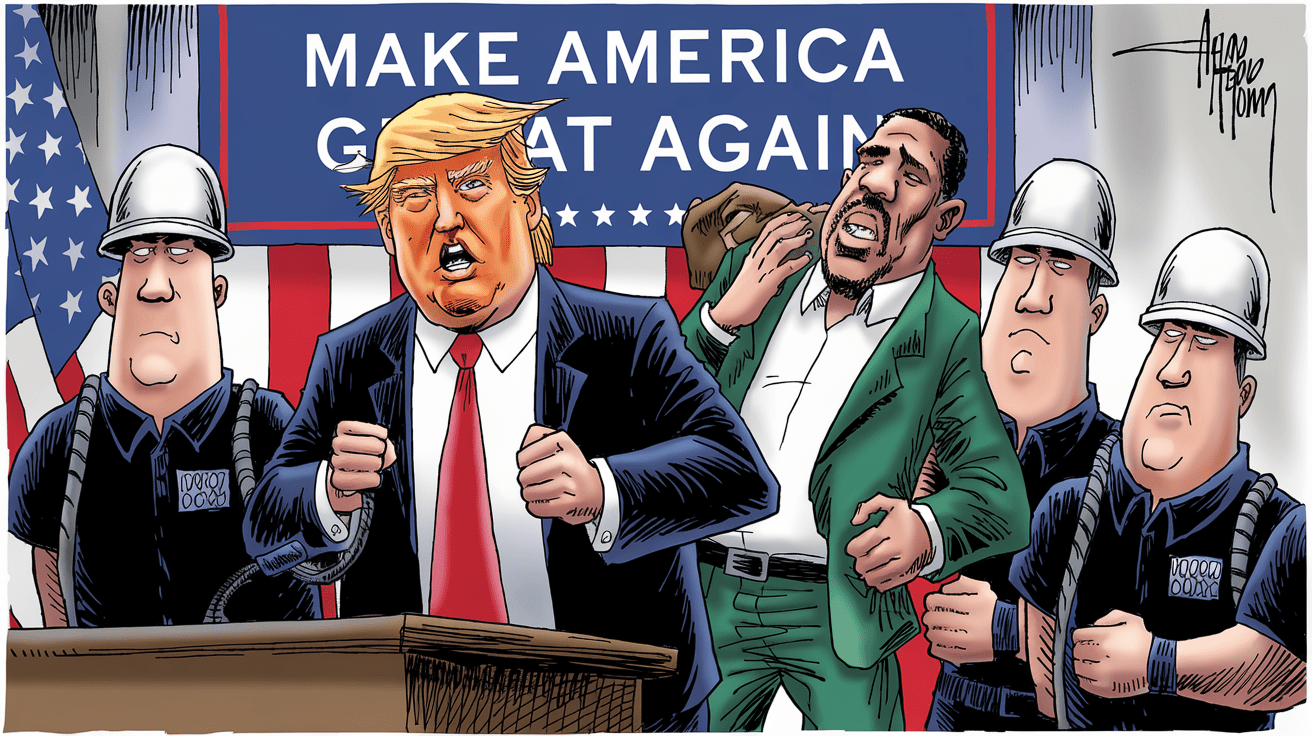
During Donald Trump’s address to Congress, Rep. Al Green, D-Texas, decided he had heard enough and made his objections known—loudly. Unfortunately for him, Speaker Mike Johnson wasn’t feeling the free speech vibes and ordered the House Sergeant at Arms to escort Green out of the chamber.
And just like that, Green made an unplanned exit, proving once again that disrupting a Trump speech is a surefire way to get fast-tracked to the door.
While Green’s exact comments weren’t captured in the moment, his removal became one of the more talked-about moments of the night—because let’s be honest, in an evening filled with grandstanding, executive order bragging, and the renaming of geographical landmarks, a good old-fashioned ejection is the kind of unscripted drama Congress rarely delivers.
Speaker Johnson, maintaining his best school-principal energy, reminded everyone that “members are directed to uphold and maintain decorum,” before giving the boot to Green, who took his exit without much protest.
That is rich. The two Booble (sic) Queens, Marjorie Taylor Green and Lauren Boebert, in one of Biden’s actual State of the Union speeches, would shut their pieholes and they weren’t kicked out. Where was their “decorum”?
Whether Green’s ejection was an act of defiance or just a strategic way to avoid sitting through another hour of Trump’s victory lap is up for debate. Either way, it’s clear that the former president’s second term (and the Congress that comes with it) is going to be just as theatrical as the first. Stay tuned for next week’s episode of This Is Why We Can’t Have Nice Things in Politics.
Source: AP News
Supreme Court to Trump: Pay Up—No Executive Order Escape Hatch This Time
Donald Trump’s attempt to stiff USAID contractors out of $2 billion in payments just hit a legal brick wall.
On Wednesday, the Supreme Court rejected an emergency bid from his administration to avoid shelling out the money, backing a lower court ruling that ordered the payments.
While the court didn’t force an immediate payout (because of course they didn’t), it made it clear that Judge Amir Ali has the authority to demand the government follow through on its obligations—something Trump’s executive order had conveniently put on ice.
As a cherry on top, Chief Justice John Roberts issued an administrative stay, ensuring that this legal battle is far from over.
The ruling comes after the Trump administration froze USAID funds as part of its grand plan to “downsize” government—aka slashing foreign aid while contractors and workers scramble to keep projects afloat.
Among the frozen programs? Waterworks in Lagos, medical supplies for Vietnam and Nepal, and malaria prevention efforts across Africa.
But hey, who needs clean water and disease prevention when there’s bureaucracy to dismantle? The administration’s move to cut thousands of programs worth up to $60 billion is already stirring more lawsuits, but for now, the focus remains on the billions owed to contractors who have already completed their work.
Justice Samuel Alito, never one to shy away from a dissent, wasn’t thrilled with the ruling, arguing that Ali didn’t have the power to “compel the government to pay out … 2 billion taxpayer dollars.”
Federal judges most definitely do have the power to enforce contracts. Imagine Alito getting pissed for not getting a paycheck.
Meanwhile, Trump and his billionaire buddy Elon Musk—who’s been playing co-pilot in the government-slashing adventure—are pressing ahead with their USAID gutting plans. Contractors are laying off staff, overseas workers are fearing for their safety, and legal battles are piling up.
Nobody ever talks about all the federal tax monies being spent by Trump and his executive branch on lawsuits. I wonder why? Where is Leon Muskrat and his band of incel Dunning-Kruger boytoys when government efficiency is on the line? Nowhere. Probably fucking a couch somewhere.
Whether this turns into another drawn-out courtroom saga or a begrudging check-cutting session remains to be seen, but one thing is clear: Stiffing contractors just got a whole lot harder.
Source: NBC News
Hiring Freeze? U.S. Private Payrolls Stall as Tariff Jitters Take Hold
February’s job numbers just limped across the finish line, with U.S. private payrolls posting their weakest gain in seven months.
Only 77,000 new jobs were added, falling far short of economists’ expectations and painting a picture of an economy tapping the brakes.
The culprit? A one-two punch of slowing consumer spending and rising policy uncertainty—specifically, businesses sweating over Trump’s latest round of tariffs.
“Policy uncertainty and a slowdown in consumer spending might have led to layoffs or a slowdown in hiring last month,” said ADP chief economist Nela Richardson, confirming what most employers already feared: Economic unpredictability is bad for business.
The ADP report highlighted job losses across multiple industries, including trade, healthcare, and education, while small business employment also took a hit. Bright spots were scarce, with construction adding 26,000 jobs and manufacturing scraping together 18,000 new positions.
Meanwhile, wages for job-switchers continued their steady decline, rising just 6.7% in February compared to 6.8% in January. For workers staying put, wage growth was even flatter, stuck at 4.7%. In other words, job-hopping might not be the inflation-beating strategy it once was.
Adding to the gloom, a Conference Board survey showed fewer Americans think jobs are “plentiful,” the lowest confidence reading in five months.
While the ADP report doesn’t always align with the official Bureau of Labor Statistics (BLS) numbers coming Friday, it’s enough to make Wall Street—and workers—nervous.
Economists expect the official nonfarm payrolls report to show a more robust 142,000 new jobs, but hiring freezes and layoffs, particularly in government contracting, could drag those numbers down.
As Trump’s tariff war heats up, businesses are holding their breath—and their hiring budgets. Buckle up, because economic uncertainty is officially back on the menu.
Source: Reuters
China Throws Down: "Any Type of War" With U.S.? Bring It
In the latest escalation of U.S.-China tensions, Beijing has issued its most aggressive warning yet, declaring it is ready for "any type of war" with America.
This fiery rhetoric comes after Donald Trump cranked up tariffs on all Chinese goods, prompting Beijing to slap retaliatory tariffs of 10-15% on U.S. farm products.
The Chinese embassy in Washington didn’t hold back, posting on X: “If war is what the U.S. wants, be it a tariff war, a trade war or any other type of war, we're ready to fight till the end.”
So, subtlety is out, and economic saber-rattling is very much in.
The timing of this declaration isn’t accidental. As China’s top brass gathered for the National People’s Congress, Premier Li Qiang announced yet another 7.2% increase in defense spending while painting a picture of an America bent on conflict.
Meanwhile, China is trying to position itself as the calm, stable player in contrast to the U.S., which Beijing accuses of being mired in endless wars.
But let’s be real: While China is talking tough, it knows full well that a full-blown economic war could make its already struggling economy even shakier.
Xi Jinping is already juggling low consumer spending, a real estate crisis, and unemployment—Trump's tariffs just add another headache.
Yet, while Beijing wants to appear unshaken, it’s also hedging its bets. China may be flexing its muscles, but it's not eager to scare off potential trade partners—especially since Trump’s tariffs are also hammering U.S. allies like Canada and Mexico. Despite the bluster, there’s still a chance the two economic superpowers will find a way to de-escalate before things spiral further. Or, given the way things are going, we could be looking at the next chapter in a full-scale U.S.-China economic brawl. Stay tuned.
Source: BBC