

Supreme Court Weighs Historic Case on Birthright Citizenship
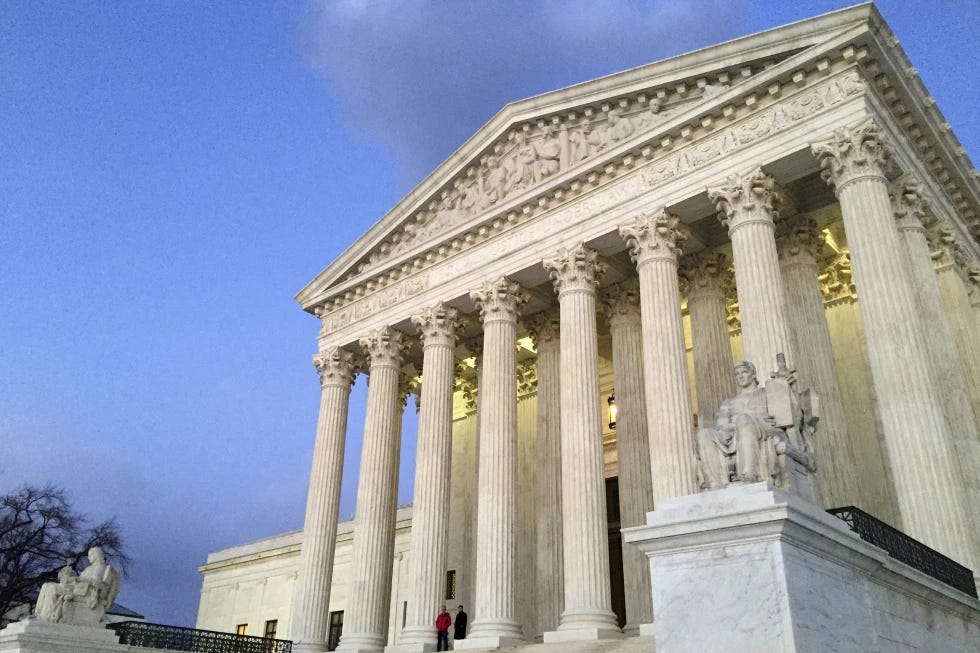
The U.S. Supreme Court is hearing crucial arguments over President Trump's attempt to redefine birthright citizenship, a longstanding pillar of American law.
This case could dramatically alter the rights of children born in the U.S. to undocumented parents.
At stake is whether the Trump administration can deny citizenship to children born on U.S. soil if neither parent is a legal resident or citizen. The administration argues that the courts have overreached by issuing nationwide injunctions that block its executive order, which seeks to challenge the 14th Amendment’s Citizenship Clause—a clause that has guaranteed birthright citizenship for over 125 years.
The case centers on the authority of courts to issue injunctions that affect people beyond the immediate parties involved. Trump's executive order, signed on his first day of office, has faced widespread opposition from immigrants, rights groups, and states, all of whom argue that the change would undermine constitutional guarantees.
Though the Supreme Court is not set to make a final ruling on birthright citizenship, its decision could signal how far it’s willing to allow presidential authority to alter fundamental rights. The court is also considering the broader implications of the executive order, with potential consequences for millions of children born to undocumented immigrants.
This is a critical moment in the ongoing legal battles over the Trump administration’s immigration policies, with far-reaching effects on citizenship and judicial power.
Source: AP News
A little civics and reading comprehension lesson:
Amendment XIV
Section 1.
All persons born or naturalized in the United States, and subject to the jurisdiction thereof, are citizens of the United States and of the state wherein they reside.
14th Amendment | U.S. Constitution | US Law | LII / Legal Information Institute
Federal Reserve Faces Inflation Challenges as Powell Warns of Volatility Ahead
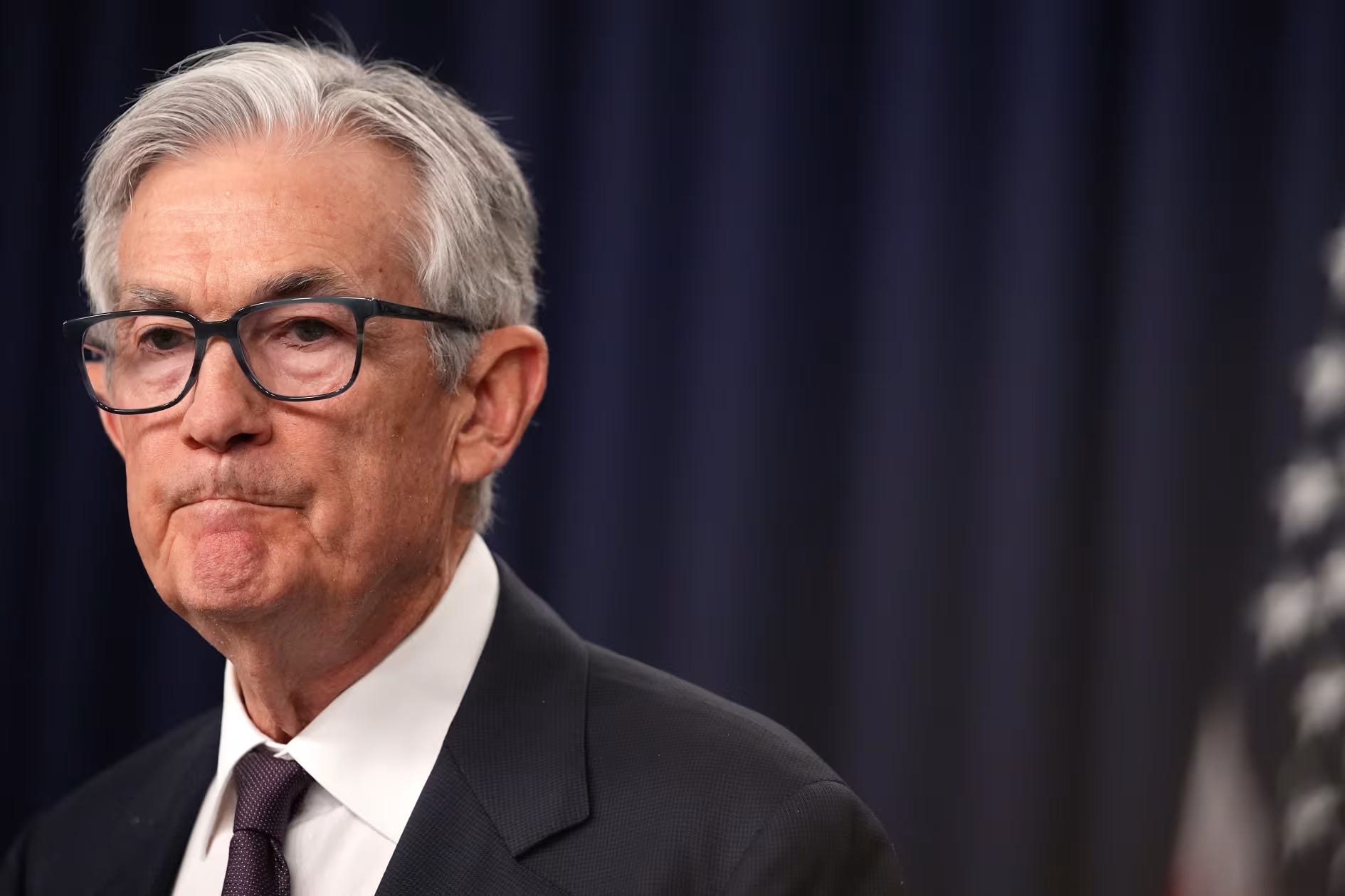
Federal Reserve Chair Jerome Powell’s recent remarks highlight a tough economic landscape, with inflation becoming more volatile in the future.
Powell noted that the U.S. may have to deal with sudden supply shocks in goods and commodities, a difficult task for both the economy and the central bank. He also highlighted that long-term interest rates have risen significantly since the global financial crisis of 2007-09, which could point to a more unpredictable inflation environment.
The Fed’s benchmark rate stands between 4.25% and 4.5%, signaling a clear shift in monetary policy as it prepares for future economic turbulence. While the policy rate is relatively high, Powell emphasized that the Fed traditionally reduces rates by about 500 basis points during recessions, indicating potential future rate cuts.
This shift in strategy follows the Fed's 2019 review, which faced criticism for not addressing inflation risks sufficiently. Powell revealed that the upcoming review will take the 2021 inflation surge into account, ensuring that the new framework can handle a wider range of economic situations.
The review also includes an update to how the Fed communicates its policies, aiming for greater clarity during periods of economic uncertainty. Powell emphasized the importance of providing a broader understanding of the unpredictable nature of the economy.
Source: MarketWatch (gift article)
RFK Jr. Defends Health Cuts and Vaccine Stance Amid Congressional Firestorm
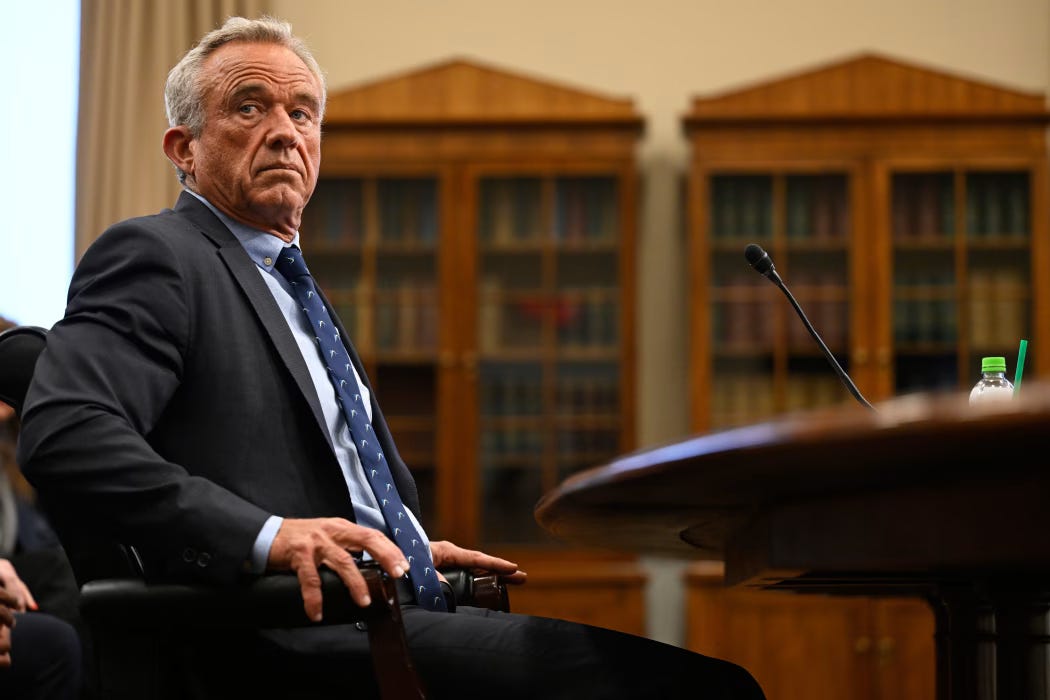
Robert F. Kennedy Jr. faced intense grilling from lawmakers on Capitol Hill regarding his controversial cuts to the Department of Health and Human Services (HHS) and his stance on vaccines.
This is the guy who swims in sewer water.
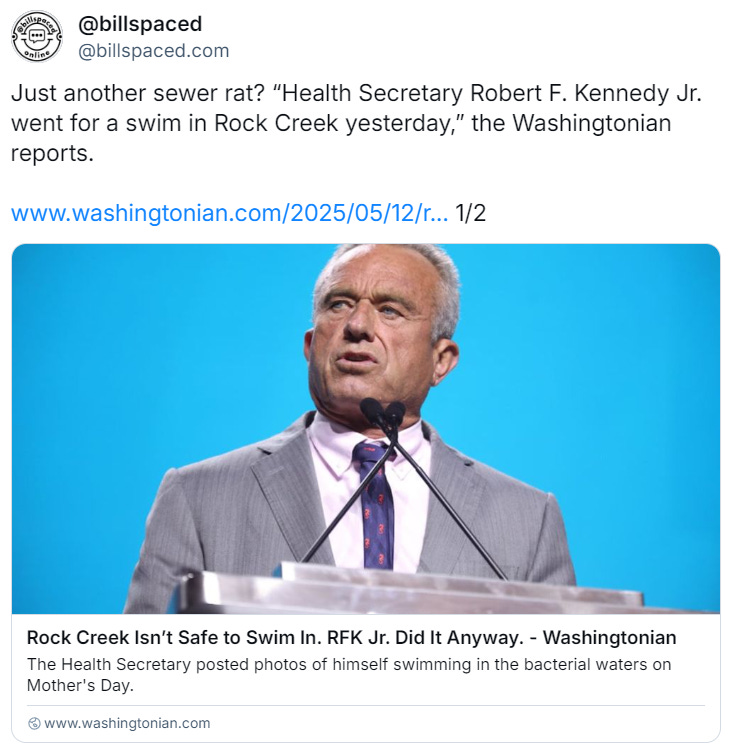
During a two-part hearing, Kennedy defended reducing 20,000 jobs at the agency, arguing that reallocating funds from bureaucracy would better serve public health. His comments sparked strong reactions, including protests, with Ben & Jerry’s co-founder Ben Cohen calling out the government’s spending priorities.
Kennedy’s justification for cutting National Institutes of Health (NIH) funding, citing alleged "corruption" within the institution, was met with skepticism from both Democrats and Republicans. He claimed that NIH’s inability to cure Alzheimer’s was a result of industry capture, not a lack of resources. Despite backlash, Kennedy insisted that essential services, such as coal miner support and Medicaid, would remain intact, though potentially restructured. (“Restructured” is code for “gutted”.)
On the topic of vaccines, Kennedy hesitated when asked whether he would vaccinate his own child with the MMR vaccine, stating, "My opinions on vaccines are irrelevant" and adding that he didn’t consider himself a medical advisor.
This raised questions about his department's approach to vaccine safety, which he acknowledged had issues but also claimed that research into the causes of autism was ongoing.
Kennedy also faced scrutiny for his comments on abortion pill restrictions, highlighting an FDA report about adverse events linked to the drug. His stance echoed concerns from conservatives about the pill's safety, although he emphasized that any policy changes would require President Trump’s approval. (Meaning: Kick this one up to the president because RFK Jr is a coward.)
Despite the controversy, Kennedy found some common ground with lawmakers on health-related issues, particularly food policy. He expressed support for dietary guidelines that encourage healthier eating, aligning with Sen. Bernie Sanders' push to lower drug prices and tackle direct-to-consumer pharmaceutical advertising.
Source: Wall Street Journal (gift article)
Kennedy is not only a coward but a quack. He’s a joke and shouldn’t be in charge of the local car wash.
How Qatar’s Billions are Shaping U.S. Policy and Power
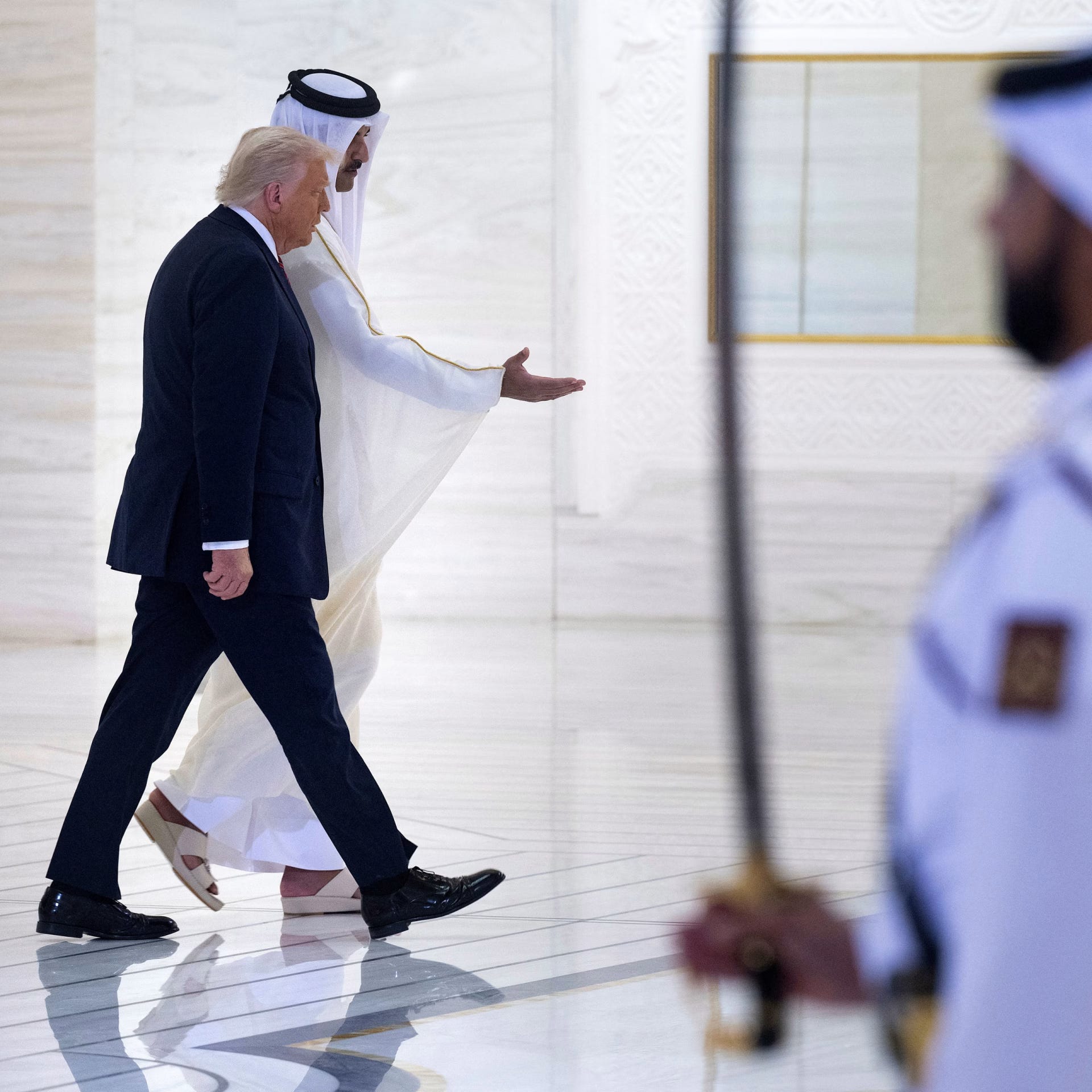
Qatar’s massive financial influence in the U.S. is making it a geopolitical heavyweight, using its vast natural-gas wealth to gain political leverage.
From offering a $400 million jumbo jet to the U.S. for Air Force One to investing billions in American military and universities, the tiny Gulf state has found a way to exert outsized influence on Washington's decision-making.
Qatar’s strategy isn’t just about military or diplomatic gifts; it also involves a sophisticated lobbying effort, spending millions to sway U.S. policy in its favor. Critics, including both Republicans and Democrats, have raised concerns over the implications of such gifts, especially the potential national security risks tied to the luxury jet offer.
Despite these concerns, President Trump defended the proposal, arguing that accepting the gift would save taxpayers hundreds of millions of dollars. (It’s going to cost at least a billion to rip it to the studs and install all the high-tech stuff necessary to protect the orange menace.)
The country’s ties with the U.S. are built on more than just gifts; Qatar’s air base, Al Udeid, has been essential to U.S. military operations in the Middle East, housing thousands of American troops. Its influence extends further, as Qatar has made itself a useful diplomatic channel, helping mediate between the U.S. and adversaries like Iran and the Taliban, further solidifying its role as an important partner. (And, to be fair, it is and has been.)
In addition to military and diplomatic channels, Qatar has become the largest foreign donor to U.S. universities, investing over $6 billion in schools like Cornell and Georgetown. This has sparked criticism, especially from conservative lawmakers, who allege that Qatar’s funding could skew academic perspectives on issues such as Israel and the Middle East.
Qatar’s influence isn’t just about buying access—it’s a calculated mix of economic might, strategic investments, and savvy diplomacy. As the country continues to expand its footprint in Washington, its role in U.S. policy decisions grows ever more significant.
Source: Wall Street Journal
I don’t blame Qatar for any of this. But Trump is a very useful idiot and he’s easily played.
Texas Bill Could Criminalize Women Seeking Abortions Out of State
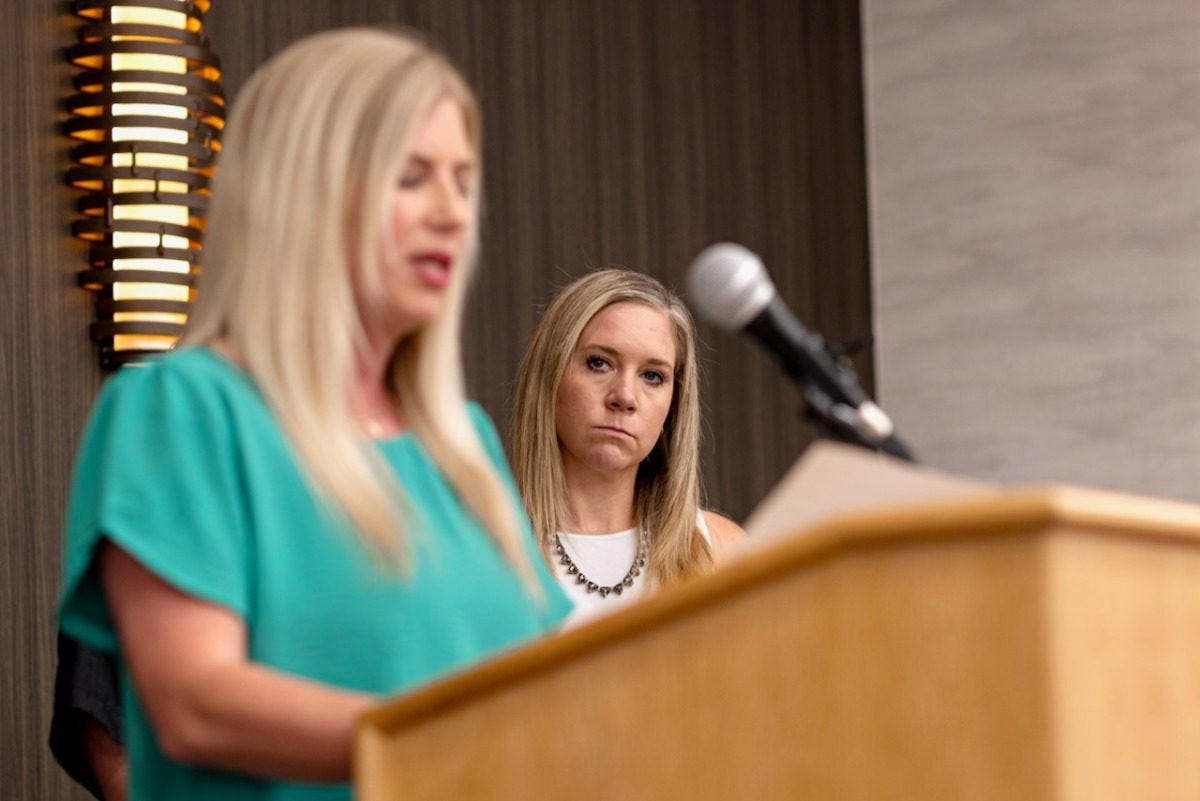
A new Texas bill threatens to prosecute women for seeking abortions, even in other states, as lawmakers push forward with Senate Bill 2880 (SB 2880), which revives a 1925 abortion ban and opens the door for criminal charges against women who leave the state for the procedure.
The bill, which is now under consideration in the Texas House, would allow private citizens to sue anyone suspected of assisting women in obtaining out-of-state abortions, adding a new layer of surveillance and potential legal penalties. (Snitching on your neighbors is going to get VERY lucrative.)
Senate Bill 2880, authored by Sen. Bryan Hughes, explicitly references the 1925 law, a pre-Roe statute that could make it a crime for Texas women to seek abortions in states where the procedure remains legal. If passed, the law would empower citizens to file lawsuits against those who help women obtain abortions, whether through travel assistance or providing abortion pills. Penalties under the 1925 ban include prison sentences ranging from two to five years.
Critics argue that SB 2880 is an overreach, with concerns that it could result in women being criminalized for simply seeking necessary medical care.
"This bill will open the door to the criminalization of women seeking out-of-state abortions," said Sen. Carol Alvarado, a Democrat from Houston. With 35,000 Texas women traveling for abortions in 2023 alone, the impact of such a law could be profound.
The bill also has significant implications for those who assist pregnant women, including family members, doctors, and legal advisors. Critics claim the bill would punish individuals and organizations who help women exercise their reproductive rights, potentially driving the process underground and putting those seeking help in even more danger.
Supporters of the bill, including its author, argue that the law is needed to protect unborn children and prevent Texans from obtaining "poisonous" abortion pills. However, many Democrats and abortion rights advocates have expressed concern that it would lead to further isolation and harm for women in the state.
"I don’t feel protected, I feel attacked," said Sen. Sarah Eckhardt, a Democrat from Austin.
Source: Courier Texas
Trump’s Assault on the Rule of Law Threatens America’s Democracy
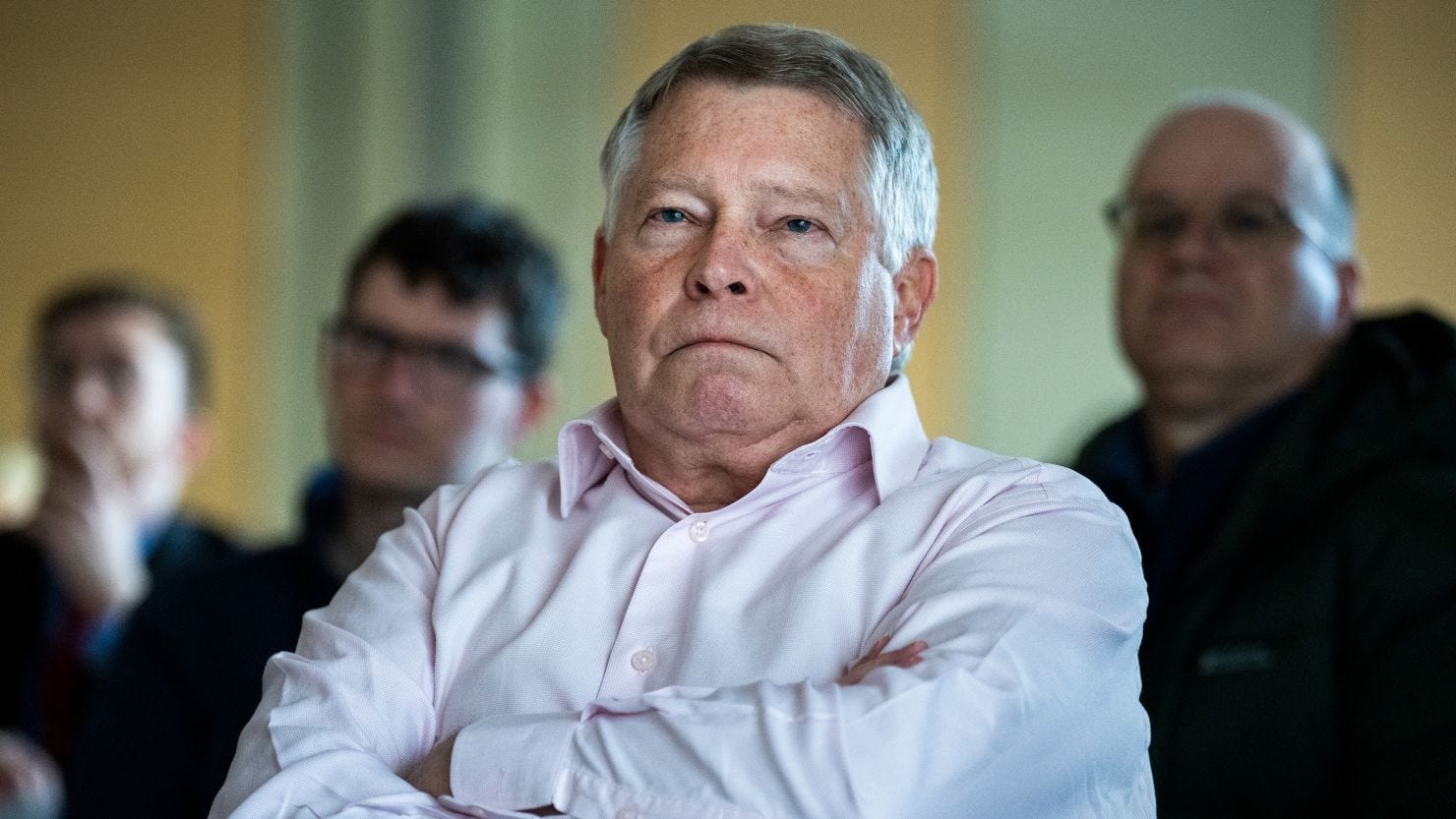
Below is a summary of an article you should read in full, written by retired federal judge, Michael Luttig.
Donald Trump’s presidency is quickly becoming a war against the Constitution, with his actions since re-entering office demonstrating a blatant disregard for the rule of law and the checks and balances that have defined America’s government for over 200 years.
From defying Supreme Court orders to undermining the judiciary, Trump is showing a dangerous desire to wield absolute power, ignoring the laws he swore to uphold.
Trump’s disregard for the law has been on full display in his treatment of the federal judiciary and his efforts to control and manipulate institutions meant to serve as safeguards against executive overreach. His actions, including firing prosecutors who challenge him and pardoning January 6 rioters, reveal a troubling willingness to dismantle democratic institutions for his own benefit.
More troubling is Trump’s push to impose unlawful tariffs under the ruse of a national emergency, which experts argue lacks legal basis. By invoking emergency powers that the Constitution does not authorize, Trump has plunged the country into an economic crisis with far-reaching global consequences.
As the courts continue to challenge his actions, Trump remains defiant, showing little regard for the constitutional limits on presidential power.
The president’s ongoing battle with the judiciary extends to his illegal deportation orders, where he has consistently violated due process rights and ignored Supreme Court rulings. His recent attempts to seize control of the federal courts and restrict their independence pose a direct threat to the rule of law, which serves as the bedrock of American democracy.
Trump’s unchecked aggression against constitutional norms is a wake-up call for the American people, who must rise up to protect their democracy and the rule of law. As long as he remains in power, the very fabric of America’s legal system remains at risk.
Source: The Atlantic
He’s not wrong.