


Biden Diagnosed with Aggressive Prostate Cancer Amid Political Challenges
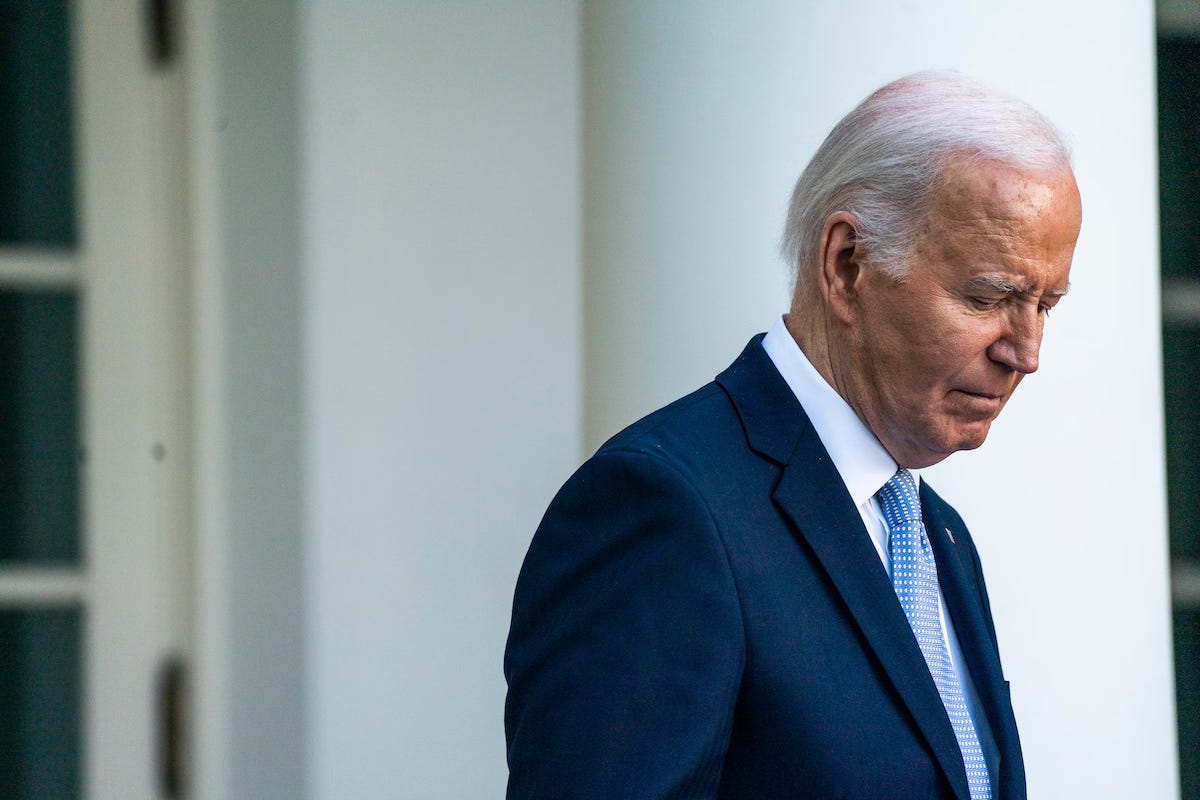
Former president Joe Biden has been diagnosed with an aggressive form of prostate cancer that has spread to his bones, his office confirmed on Sunday.
According to Biden's office, the cancer is responsive to hormone therapy, which allows for its effective management. However, Biden and his family are currently evaluating treatment options with his medical team. Despite the aggressive nature of the cancer, doctors suggest that it is not immediately life-threatening, with the potential for many years of effective treatment.
Biden’s health has been a point of scrutiny for years, with many questioning his age and stamina, especially in the face of his now-aborted 2024 presidential campaign.
Cancer has long been a personal concern for Biden, having lost his son Beau to brain cancer in 2015, which shaped much of his political persona and his push for cancer research. The announcement of his prostate cancer comes just days before the tenth anniversary of Beau's death, adding an emotional layer to the already challenging period for the Biden family.
Let’s hope for the best for Joe Biden.
Source: Washington Post (gift article)
Republican Budget: A Cruel Attack on the Poor Disguised as Fiscal Responsibility
Republicans in Congress, under the influence of Donald Trump, are set to push through a regressive budget that will benefit the wealthy while cruelly slashing programs for the nation’s poorest.
The recent legislation, which failed to pass out of committee last week (but did pass in the dead of night last night—see below) due to right-wing Republicans deeming it insufficiently harsh, is an unprecedented level of cruelty.
This new reconciliation bill, designed to avoid a filibuster and likely pass without any Democratic votes, proposes devastating cuts to Medicaid, a vital program that covers 69 million Americans, including millions of children. By contrast, tax cuts for the wealthiest Americans remain untouched, continuing the pattern of favoring the rich at the expense of the most vulnerable.
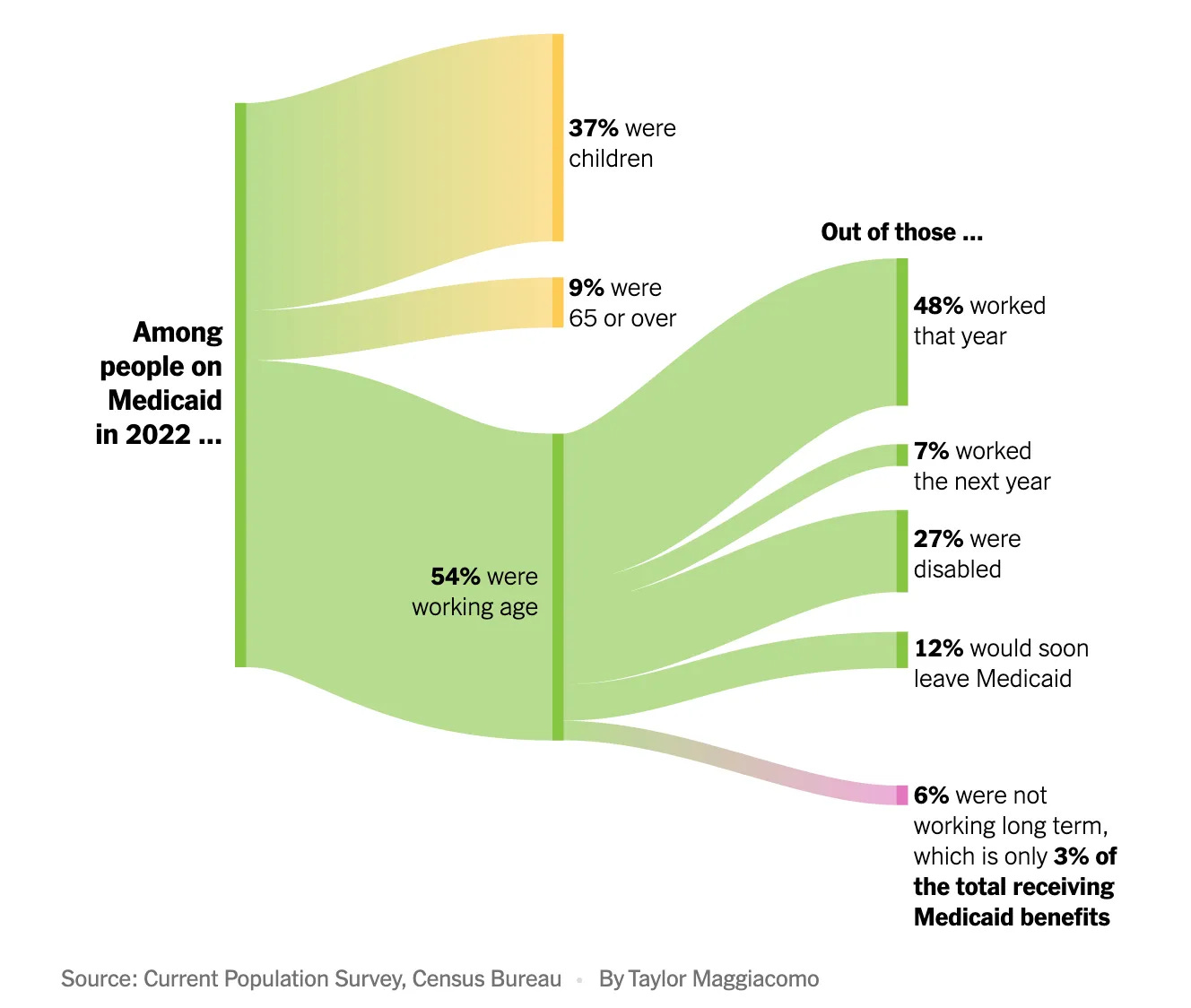
One particularly damaging aspect of the legislation is the introduction of work requirements for Medicaid recipients, a zombie idea that has been disproven repeatedly. The proposal assumes that many on Medicaid are able-bodied adults avoiding work, despite data showing that only 3% of recipients are non-disabled, working-age adults who persistently do not work.
The primary goal of this bill, critics argue, is not to reduce the deficit but to impose cruelty for its own sake. By making the poor even poorer, the budget would save money that could otherwise be used to offset the enormous tax giveaways to the wealthiest Americans. In effect, inflicting harm on those who cannot fight back seems to be the true aim of this legislation.
Republicans’ relentless push for these policies reflects their broader agenda of punishing the less fortunate while enriching the already wealthy, offering little hope for fairness or compassion in future legislation.
Source: Paul Krugman Substack
As almost always, Krugman is right: Cruelty is the point.
Trump's Tax and Immigration Bill Passes Key Hurdle as GOP Struggles to Unite

President Donald Trump’s controversial tax and immigration bill just cleared a critical vote in the House Budget Committee, but deep divisions within the GOP threaten its future.
The late-night vote on May 18 saw a narrow win, with four conservative Republicans shifting to "present" to allow the bill to advance, despite objections from hard-right factions who fear it will balloon the national deficit.
This is some weak-ass shit, you pussy Republicans. You get all over Democrats when they vote “present,” but you do it with impunity. Hypocrites!
The bill, a centerpiece of Trump’s second-term agenda, combines tax cuts for the wealthy with aggressive immigration enforcement spending. But its hefty price tag has raised concerns among fiscal conservatives, including members of the House Freedom Caucus, who temporarily blocked it last week over spending concerns. Speaker Mike Johnson (R-Louisiana) celebrated the win but acknowledged that further work is needed to bring the bill to the House floor.
With the bill expected to face intense opposition on the House floor, GOP leaders can afford to lose only two votes if all lawmakers are present and actually fucking vote. Hard-liners are pushing for deeper cuts, especially to Medicaid, which could alienate moderate Republicans in swing districts. These negotiations put House leadership in a precarious position as they seek to appease both sides.
The bill's passage would extend Trump’s 2017 tax cuts and introduce new policies, including tax breaks on tips (a true misnomer, when you consider that hedge fund managers earn “tips”), overtime wages, and auto-loan interest, while directing billions toward immigration enforcement. However, the cost of these measures is estimated to add $2.5 trillion to the nation’s debt over the next decade, heightening the tension within the GOP. Mark my words—if the projection is $2.5 trillion, the actual number will be $10 trillion—or more!
As the clock ticks down, the GOP leadership faces an uphill battle to unite their party and pass the bill before Memorial Day, with further amendments and compromises likely to test the party's unity.
Source: Washington Post
GOP Tax-and-Spending Bill Passes Key Vote, But Raises Alarming Fiscal Concerns
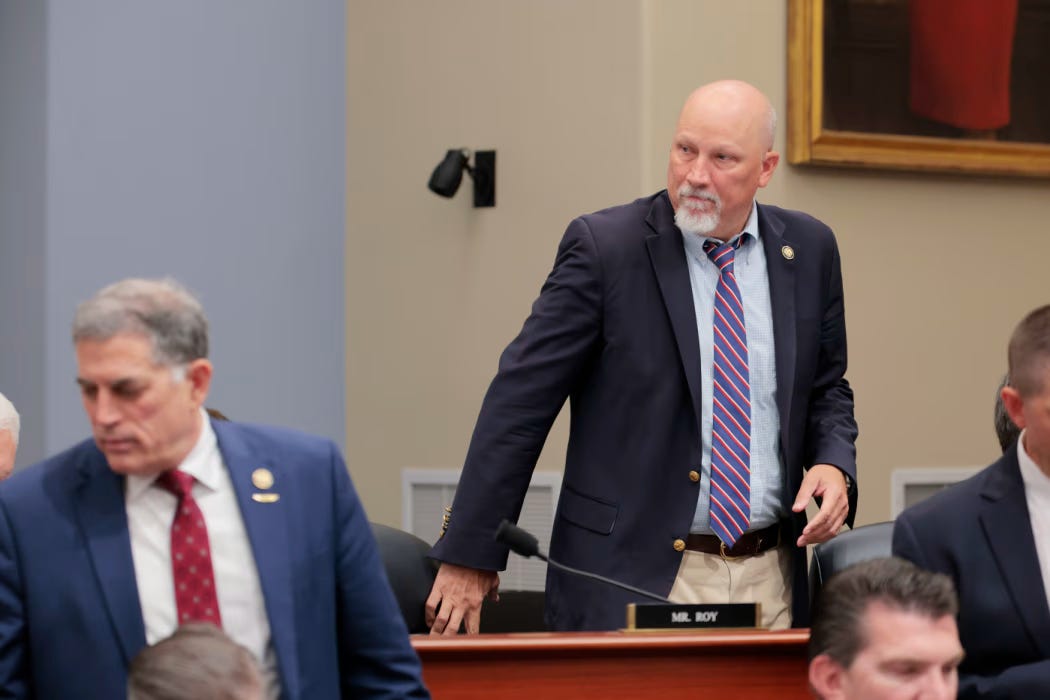
House Republicans pushed through a major tax-and-spending bill late Sunday night, but analysts warn it will deepen the U.S. budget deficit by nearly $3 trillion, not reduce it as promised.
The bill, which includes tax cuts for the wealthy and increased spending on border security and defense, clashes with Republicans' stated goal of reducing the federal deficit. Is this where I type ROFLMAO?
While the bill extends tax cuts and includes $1.6 trillion in spending reductions, it relies heavily on cuts to social programs like Medicaid and nutrition assistance. However, the fiscal impact of the bill is concerning, as it is projected to increase deficits over the next decade, exacerbating the nation’s already ballooning debt.
Wow, you don’t say!
The bill barely passed the House Budget Committee after facing opposition from fiscal conservatives within the GOP, who want quicker and deeper spending cuts. Despite internal divisions, Speaker Mike Johnson (R-La.) is optimistic about bringing the bill to the House floor this week, with a goal of passing it before Memorial Day.
Critics, including budget analysts and Democrats, argue that the bill's combination of tax cuts and increased military spending will only add to the country’s fiscal woes.
“People will lose healthcare, kids and veterans will go hungry, and rural hospitals face closures,” said Rep. Becca Balint (D-Vt.), emphasizing the bill’s harmful impact on vulnerable Americans.
As negotiations continue, the bill faces an uphill battle with both hard-line conservatives and moderates in the GOP pushing for different priorities, raising questions about whether the bill will hold together as it moves forward.
Source: Wall Street Journal (gift article)
U.S. Loses Top Credit Rating: What It Means for Investors and the Markets

The U.S. has lost its last remaining triple-A credit rating, as Moody’s downgrades the nation's fiscal standing, sparking concerns in the financial markets. This move follows similar downgrades from S&P and Fitch, leaving investors wondering how it will impact interest rates and economic stability moving forward.
tl;dr Rates will rise and economic stability will worsen. Duh.
Moody's downgrade, which reduces the U.S. rating from Aaa to Aa1, reflects the rising national debt and increasing government interest payments, pushing yields higher on Treasury bonds. Despite warnings from analysts, the immediate market reaction has been more psychological than financial, with investors largely dismissing the downgrade as anticipated.
All securities markets are psychological. That manifests itself in actual financial outcomes.
The timing of this downgrade is crucial, occurring just as key tax and spending bills, particularly President Trump's proposed legislation, are being debated in Congress. With the government’s fiscal health already under strain, the downgrade adds pressure to an already delicate political situation.
Economists are divided on the long-term implications, with some believing the downgrade will only escalate concerns about the country’s growing debt, while others argue it won't significantly affect bond yields in the short term. However, this downgrade is likely to fuel debates about fiscal responsibility as the government approaches critical budget negotiations.
Despite these concerns, many investors remain cautiously optimistic, with some viewing the downgrade as just another chapter in a longer story of U.S. fiscal policy, but one that highlights the challenges the country faces as its debt continues to climb.
Source: MarketWatch (gift article)
"Beyond Imagination": Desperate Gaza Faces Dire Humanitarian Crisis After Ceasefire Ends

The situation in Gaza has spiraled into a horrific crisis as aid has been completely cut off for two months, leaving hundreds of thousands starving and without medicine.
After a brief ceasefire that allowed some relief, Israel suspended all aid in early March, and with no supplies entering Gaza since, the humanitarian toll has been catastrophic.
And yet, there’s very little mention of this by the media. It’s like Palestinians—yet again—have been forgotten.
Louise Wateridge, a senior officer at the United Nations Relief and Works Agency (UNRWA), shared a grim update on the conditions in Gaza, describing how food and essential supplies have dried up, leaving families struggling to survive on one meal a day. The collapse of the ceasefire and the cessation of aid have intensified the dire situation for two million residents, many of whom are facing extreme malnutrition and illness.
During the ceasefire, aid shipments surged, and access to critical resources improved, but this progress has now been reversed.
“People are being starved, basically,” Wateridge said, stressing that humanitarian efforts are now hindered by the complete lack of cooperation from Israeli authorities, as well as the growing desperation of the people on the ground.
The impact of the blockade is especially severe in Gaza’s healthcare system. Hospitals are operating on fumes, with vital machines turned off and only a fraction of the necessary fuel for generators. Aid workers and locals are doing everything they can to maintain some semblance of life, but as Wateridge notes, “It’s utterly grim.”
With no end in sight and a complete breakdown of societal structures, Gaza is plunging deeper into despair. “We’re just going to stay here, and we’re just going to die together,” some residents have said, revealing the hopelessness that now defines daily life in Gaza.
Source: The New Yorker
I don’t know what to do or say about this. It’s a gut punch, for sure.