

U.S. Jobs Growth Slows Amid Tariff Chaos—Will Hiring Take a Bigger Hit?
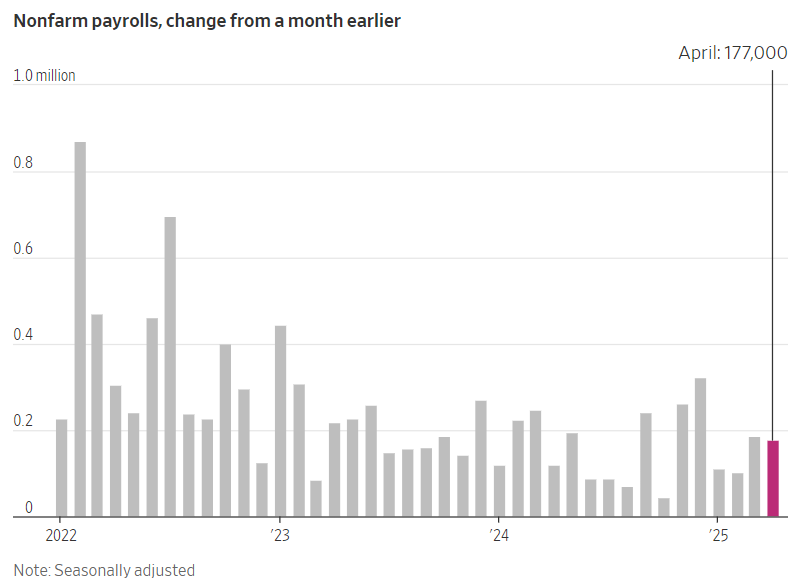
The U.S. economy added 177,000 jobs in April, beating expectations but showing signs of slower growth compared to March.
Despite the slight drop in hiring pace, the unemployment rate held steady at 4.2%, but economic uncertainty, fueled by President Trump’s tariff policies and immigration restrictions, looms large over future job prospects.
In a month marred by economic turbulence, April’s job gains exceeded economists' forecasts but still represented a slowdown from March’s 185,000. Federal government layoffs played a role in the underperformance, with the sector shedding 9,000 jobs. However, hiring was relatively stable in healthcare, transportation, and warehousing sectors.
Trump's trade policies have disrupted the corporate sector, with uncertainty around tariffs on China and other industries. Though many tariffs have been paused, economists warn that businesses are bracing for tougher conditions, which could lead to deeper job cuts later in the year.
The impact of Trump’s immigration policies is also becoming more evident. With fewer foreign-born workers entering the country, sectors like construction, healthcare, and agriculture may face a labor shortage, potentially driving unemployment rates down despite fewer job openings.
Source: WSJ
This is the very beginning of a very bad next few months. Trump’s only possible saving grace is pulling back on the tariffs and making nice with our allies. Not likely.
Judge Blocks Deportations of Venezuelans Under 18th-Century Law, Slamming Trump's Use of Wartime Power
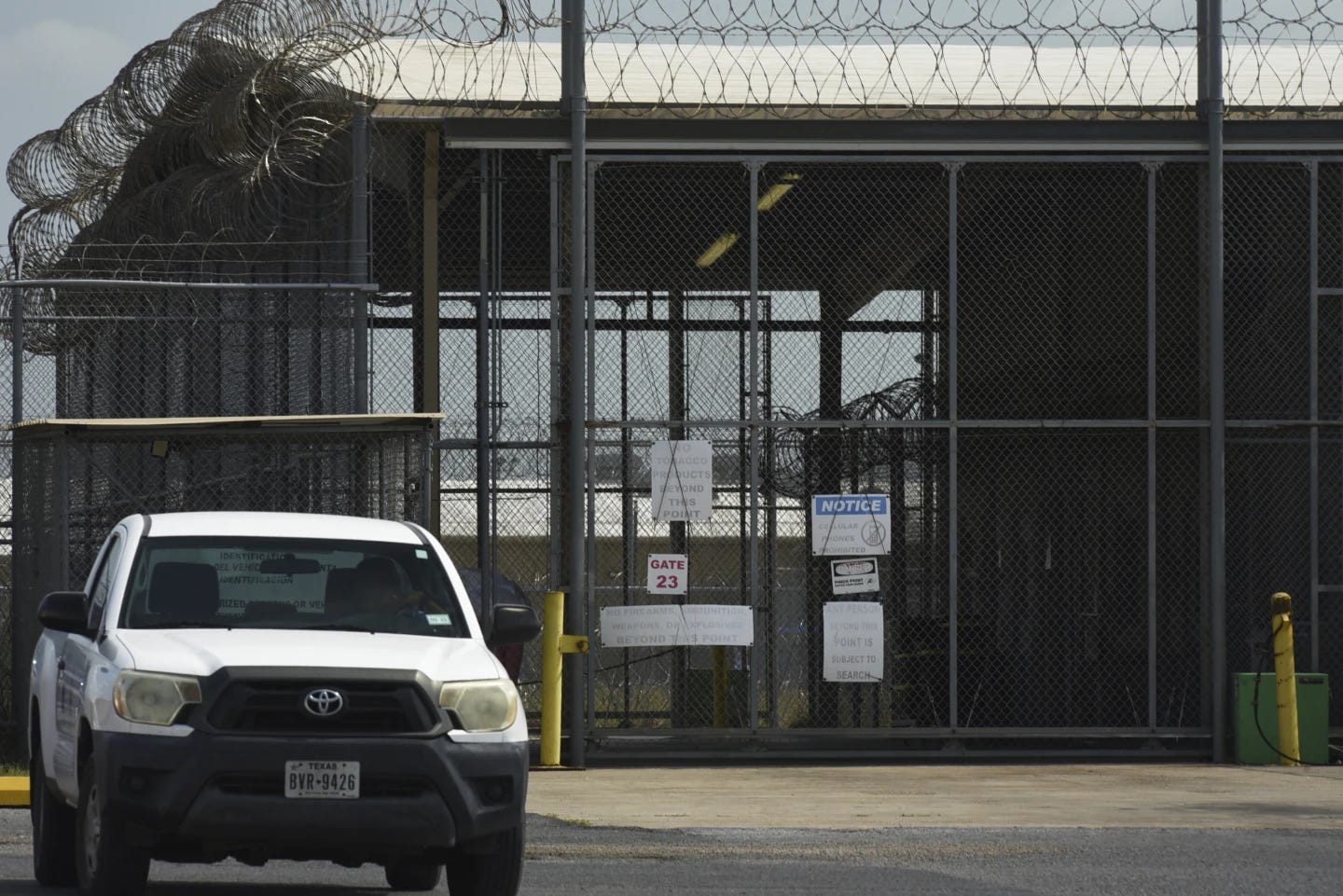
A federal judge in Texas has ruled that the Trump administration cannot deport Venezuelans using a controversial 18th-century wartime law.
This decision puts a halt to an aggressive tactic by the administration, which had been attempting to label certain Venezuelan migrants as gang members and deport them without typical judicial proceedings.
U.S. District Court Judge Fernando Rodriguez Jr. made history with this ruling, declaring that the Alien Enemies Act (AEA) cannot be used against individuals deemed to be gang members, specifically the alleged Venezuelan gang, Tren de Aragua.
The law, which was invoked by President Trump, has only been applied three times before, most notably during World War II for the internment of Japanese-Americans.
While the judge acknowledged the government’s power to detain and remove criminals, he stated that the president’s use of the AEA was beyond the law’s intended scope. Rodriguez emphasized that this interpretation was not in line with the "plain, ordinary meaning" of the statute.
The Trump administration’s proclamation in March set off a wave of legal challenges, as it aimed to deport migrants linked to the alleged gang activities without the usual court procedures, targeting those deemed dangerous. Now, with this ruling, the plan to deport Venezuelans to a notorious prison in El Salvador has been officially blocked.
This marks the first formal permanent injunction against the administration's interpretation of the AEA, highlighting a significant legal setback for the Trump White House’s aggressive immigration enforcement tactics.
Source: AP News
Of course, this will go all the way up to the Supreme Court and I fear they will rule in Trump’s favor.
Trump Shakes Up National Security: Mike Waltz to Become UN Ambassador, Marco Rubio Takes on Dual Roles
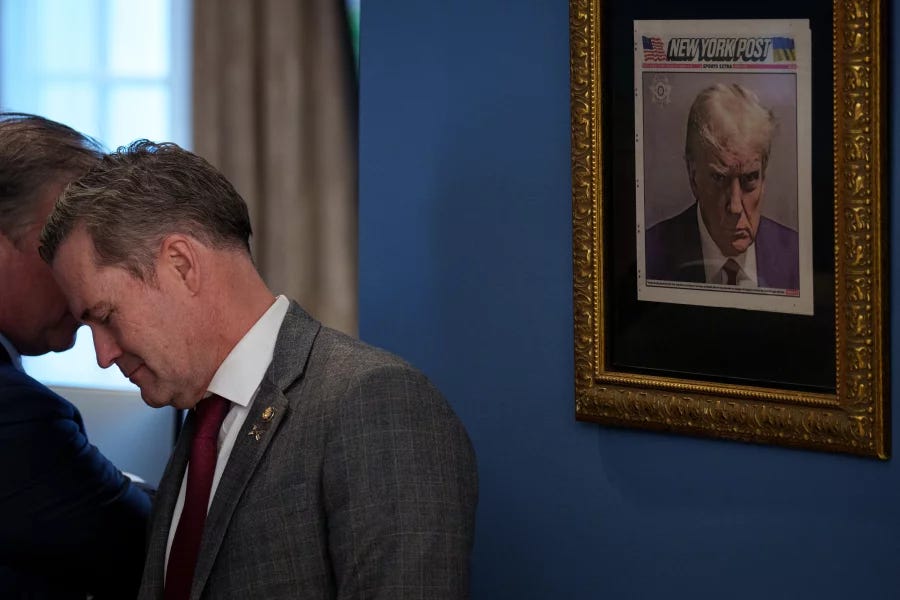
In a major reshuffle of his inner circle, President Trump has announced that Mike Waltz, his national security adviser, will be nominated as the new ambassador to the United Nations.
This move marks the first significant staff change since Trump began his second term and comes with a twist—Marco Rubio will temporarily take on the role of national security adviser while still serving as Secretary of State.

Waltz, a former Green Beret and three-term congressman, will now face Senate confirmation for the UN position, which has been vacant since Rep. Elise Stefanik was asked to stay in Congress. Trump praised Waltz's service and stated that the position at the UN is a better fit for him.
"I'm deeply honored to continue my service to President Trump and our great nation," Waltz shared on social media.
Although some Republicans have voiced concerns about Waltz's recent involvement in a controversial group chat regarding military plans in Yemen, Vice President Vance defended the change, emphasizing that it had nothing to do with the incident. Vance reassured the media, claiming the shift was simply a better alignment for Waltz’s skill set at the UN.

This announcement also comes with a historical twist—Rubio will be the first Secretary of State in recent memory to also serve as national security advisor, a highly unusual arrangement last seen during Henry Kissinger's tenure in the Nixon administration. While it's a rare move, Trump has frequently consolidated roles for trusted allies, a strategy seen during his first term.
As Trump leans more on a broader team for national security issues, this reshuffle is expected to shake up the administration's strategy moving forward, especially with ongoing challenges like the Ukraine conflict and Middle East negotiations.
Source: NPR
Rubio is uniquely unqualified to be either. Plus, don’t forget, he’s also heading up USAid and is the acting head of the National Archives.
U.S. Expands Military Zones on Southern Border, Empowering Troops to Enforce Immigration Laws
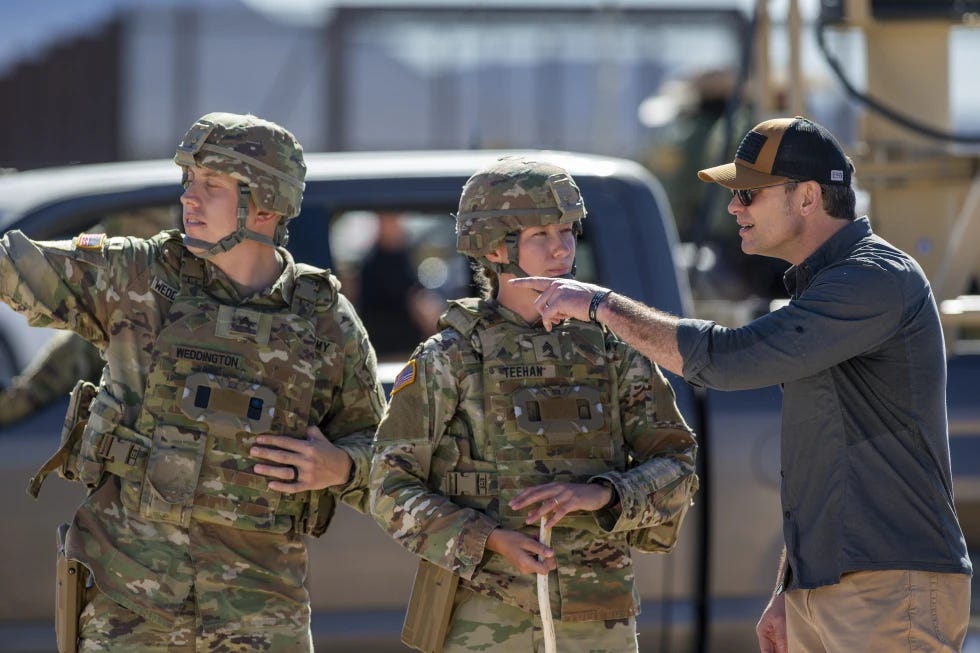
In a dramatic move to tighten border security, the U.S. Department of Defense has designated a second military zone on the border with Mexico, now extending into Texas.
This latest action, which builds on a similar designation in New Mexico, allows military personnel to apprehend migrants crossing illegally until they can be handed over to Homeland Security authorities.
The new military zone, located near the Fort Bliss Army base in El Paso, is part of President Trump’s ongoing efforts to enhance border enforcement. General Gregory Guillot, commander of U.S. Northern Command, stated that the expansion of military zones “increases our operational reach and effectiveness in denying illegal activity along the southern border.”
While the Texas zone's exact size was not disclosed, its designation mirrors the actions taken in New Mexico, where a 170-mile stretch of land has been designated as a National Defense Area.
Migrants caught in these areas face potential prosecution for two federal crimes—illegal entry and trespassing on military property.
The creation of these zones also circumvents the 1878 law that typically prohibits military involvement in civilian law enforcement (Posse Comitatus Act), granting the federal government a broader authority to act along the southern border. Defense Secretary Pete Hegseth emphasized, “You will be interdicted by U.S. troops and Border Patrol.”
This development marks a significant escalation in the militarization of U.S. border enforcement, as troops have been deployed and arrests reach their lowest levels since the mid-1960s.
Source: AP News
I will admit all this is working to keep border crossings to a minimum.
Hell, I wouldn’t want to come here either now.
Trump’s Radical Budget Proposal: $163 Billion in Cuts to Federal Programs, Targeting Climate and Education
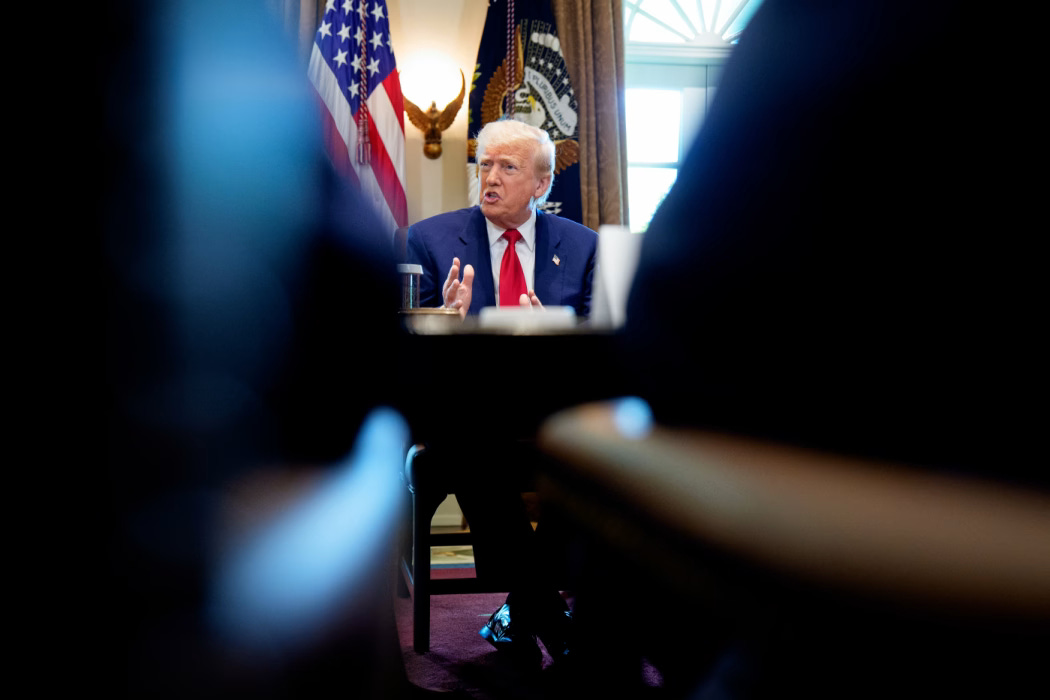
President Trump is set to propose a budget that slashes $163 billion from federal programs, targeting environmental, energy, and education funding.
This controversial budget plan, aimed at reducing nondefense discretionary spending, reflects the administration’s focus on eliminating what it considers wasteful programs and shifting control to states.
The proposed fiscal 2026 budget would trim nondefense discretionary spending by 22.6%, cutting programs like clean-energy initiatives, EPA environmental justice projects, and NIH funding. Trump's budget blueprint, expected to be released on Friday, is considered a symbolic wish list for Congress to debate, as the administration seeks to refocus government spending.
Key proposals in the plan include eliminating USAID, scaling back foreign aid, and defunding “woke” initiatives such as diversity, equity, and inclusion (DEI) programs. The budget also targets grants that support housing discrimination victims, the National Endowment for Democracy, and various nonprofit efforts.
Trump’s proposal continues the trend of downsizing federal agencies, with a special focus on cutting support for climate change programs and renewable energy projects. These cuts would affect the Energy Department, Interior Department, and NOAA, and eliminate key funding for green technology advancements under the Biden administration’s infrastructure law.
This "skinny budget" serves as a starting point for negotiations, but its sweeping cuts are likely to spark intense debates in Congress, where both parties will weigh the political and practical implications of Trump’s budgetary vision.
Source: WSJ
Remember, all of this was laid out in “Project 2025,” a strategic framework that outlined so-called “Conservatives’” vision for a streamlined federal government. Remember, too, that Trump said “I don’t have anything to do with Project 2025.”
Trump Vows to Strip Harvard’s Tax-Exempt Status in Latest Attack on Elite Universities
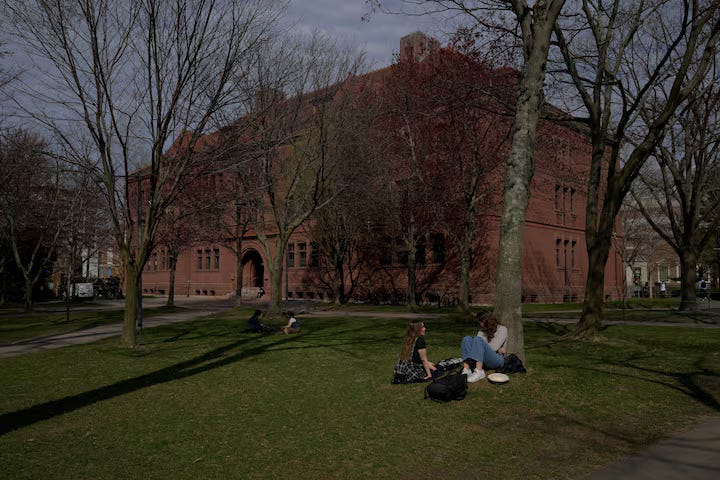
President Donald Trump has announced plans to revoke Harvard University's tax-exempt status, intensifying his ongoing battle against top U.S. universities.
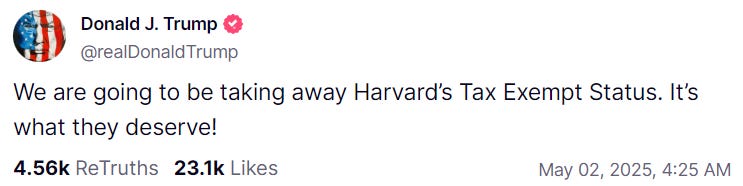
Trump's social media post declared, “We are going to be taking away Harvard’s Tax Exempt Status. It’s what they deserve!” although he did not specify a timeline for action.
This latest salvo is part of a broader crackdown by the Trump administration on higher education institutions, which the president has repeatedly accused of fostering “antisemitic, anti-American, Marxist, and radical left” ideologies. Since taking office in January, Trump has sought to freeze federal funding for universities, launch investigations, and revoke student visas.
Harvard, a frequent target, has fought back against these measures, suing the administration over halted U.S. research funding and joining over 200 other university leaders in protesting Trump's policies. They have also hired a slew of conservative lawyers to fight the Trump administration. Read below:

The president's remarks come amid escalating tensions between his administration and major universities across the nation, with many schools openly challenging his stance on free speech and academic freedom.
Representatives from Harvard have yet to respond to Trump's latest statement.
Source: Reuters