


Senate Finally Ends Historic Shutdown—House Now Holds the Cards
After 41 days of gridlock, the Senate finally passed a deal to end the longest government shutdown in U.S. history. The bipartisan bill—approved 60-40 Monday night—keeps the government funded through January, restores pay for furloughed workers, and guarantees full funding for programs like SNAP that millions depend on. Now the spotlight shifts to the House, where the measure faces a potentially bumpy landing.
President Trump signaled earlier Monday that he supports the deal, which came together after weeks of behind-the-scenes negotiations between Republicans and a small coalition of moderate Senate Democrats. House Speaker Mike Johnson, meanwhile, told GOP members to get back to D.C. for a possible vote as early as Wednesday. But Johnson is already hedging on one critical Democratic demand: a December vote to extend Affordable Care Act subsidies. “I’m not committing to it or not committing to it,” he told CNN—translation: brace for another fight.
Those ACA subsidies, set to expire in December, help more than 20 million Americans afford health insurance. Democrats had refused to reopen the government without a guarantee those subsidies would continue. When the Senate finally blinked Sunday night, Minority Leader Chuck Schumer blasted the deal for failing to lock in protections beyond 2025, warning that millions could see their premiums soar.
Still, the bill throws a lifeline to federal workers and contractors hammered by the shutdown. It reverses all layoffs and ensures back pay at standard rates “at the earliest date possible,” per the 2019 law. It also includes a bipartisan commitment to a real budget process, aiming to reduce the White House’s reliance on stopgap funding measures that punt tough fiscal decisions down the road.
In short, the Senate has done its part—barely. Whether the House follows suit or drags the country into another cliffhanger depends entirely on Speaker Johnson’s appetite for political pain and President Trump’s ability to resist stirring it up again. Don’t hold your breath.
Source: CNBC
Editor: So the Senate pats itself on the back for ending a crisis it created—after a month of performative suffering. Meanwhile, the House is about to turn this into yet another hostage negotiation over health care. Washington calls it “governance.” The rest of us call it chaos with better lighting.
USS Gerald R. Ford Sent South—U.S. Flexes Muscle Near Venezuela Amid Drug War Escalation
The Pentagon just redirected its most powerful aircraft carrier to Latin America, signaling a serious military flex in the Western Hemisphere. The USS Gerald R. Ford and its strike group arrived Tuesday in the U.S. Southern Command region as the Trump administration ramps up operations against alleged drug traffickers—and turns up the heat on Venezuela’s Nicolás Maduro.
Carrying over 4,000 sailors and dozens of tactical aircraft, the Ford left the Mediterranean in late October under direct orders from the Department of Defense. The official line? Disrupting transnational criminal networks and smuggling routes. Pentagon spokesperson Sean Parnell said the expanded U.S. presence “will bolster U.S. capacity to detect, monitor, and disrupt illicit actors and activities that compromise the safety and prosperity of the United States homeland.”
The Ford joins an already massive show of force, including eight warships, F-35 fighter jets, and at least one nuclear-powered submarine stationed in the Caribbean. Its escorts—the USS Bainbridge, USS Mahan, and USS Winston Churchill—further strengthen the U.S. footprint near Venezuela, where tensions have been rising fast. Trump administration officials continue to label Maduro an “illegitimate leader” with deep ties to narcotics trafficking, claims he flatly denies.
Trump hinted at regime change ambitions in a recent 60 Minutes interview, saying Maduro’s “days are numbered.” Meanwhile, the U.S. military has reportedly carried out 17 strikes on alleged drug-smuggling boats across the Caribbean and Eastern Pacific, killing at least 76 people described by the administration as “narco-terrorists.” Southcom Commander Adm. Alvin Holsey, who’s set to retire this year, framed it bluntly: “The USS Gerald R. Ford Carrier Strike Group’s deployment represents a critical step in reinforcing our resolve to protect the security of the Western Hemisphere and the safety of the American homeland.”
So, while the White House insists this is all about “regional stability,” it sure looks like a power move—part deterrent, part message—to anyone challenging U.S. dominance below the equator.
Source: The Hill
Editor: Nothing says “diplomacy” like parking the world’s biggest warship off your fake enemy’s coast. This isn’t subtle foreign policy—it’s a floating middle finger wrapped in red, white, and blue steel.
Trump Floats $2,000 “Tariff Dividend” Plan—Economists Call It Fantasy Economics
Donald Trump says tariffs are raking in so much cash that every American could soon get a $2,000 payout—except, of course, math disagrees. The former president unveiled his latest populist pitch Sunday on Truth Social, promising what he called a “tariff dividend” for working families. The announcement came just days after his party’s bruising election losses in Virginia and New Jersey, largely fueled by voter frustration with rising prices.
Trump declared that the U.S. is earning so much from his tariffs that “a dividend of at least $2000 a person (not including high income people!) will be paid to everyone.” Budget experts immediately threw a flag on that play. Erica York of the nonpartisan Tax Foundation said bluntly, “The numbers just don’t check out.” Even Treasury Secretary Scott Bessent seemed caught off guard, telling ABC’s This Week he hadn’t discussed the plan with Trump and suggesting it might really mean tax cuts—not checks in the mail.
Tariffs have indeed ballooned federal revenue, pulling in $195 billion last year—a 153% increase over 2024. But that’s still under 4% of total federal revenue and nowhere near enough to bankroll a national dividend. John Ricco of Yale’s Budget Lab estimated the annual tariff take at $200 to $300 billion, far short of the $600 billion a $2,000-per-person payout would cost. “It’s clear that the revenue coming in would not be adequate,” Ricco said, adding that Congress—not Trump—would have to authorize such payments.
Meanwhile, Trump’s tariff authority itself hangs by a thread at the Supreme Court. Justices last week grilled his administration’s use of emergency powers to justify sweeping global import taxes—taxes that may ultimately be ruled unconstitutional. If that happens, the White House could end up refunding importers, not showering voters with tariff-funded checks.
In the end, economists argue, tariffs are paid by American businesses and consumers, not foreign governments. “If the goal is relief for Americans,” York said, “just get rid of the tariffs.” But that’s not nearly as headline-friendly as promising free money from imaginary surpluses.
Source: AP News
Editor: Only Trump could sell higher prices as a payday. The man could slap a “dividend” label on a pothole and half the country would start looking for checks in the mail.
House Democrats Release Epstein Emails Claiming Trump “Knew About the Girls”
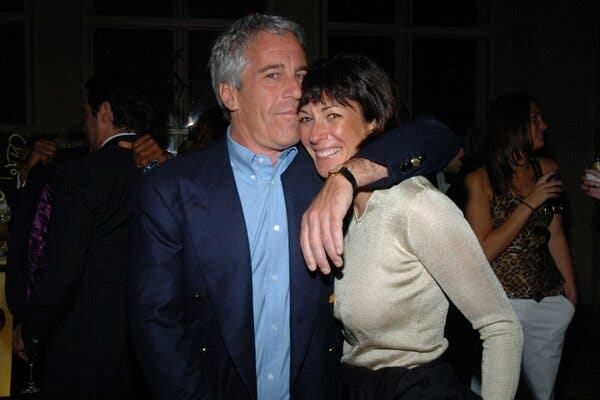
Newly released emails from Jeffrey Epstein claim Donald Trump “spent hours” with one of Epstein’s victims and “knew about the girls,” reigniting scrutiny over the two men’s past relationship. House Democrats unveiled the messages Wednesday, saying they raise fresh questions about what Trump knew—and when—regarding Epstein’s trafficking network.
The emails, obtained by the House Oversight Committee, were selected from thousands of documents tied to Epstein’s estate. In one 2011 message to Ghislaine Maxwell, Epstein wrote, “I want you to realize that that dog that hasn’t barked is Trump,” adding that a victim “spent hours at my house with him… he has never once been mentioned.” Maxwell replied, “I have been thinking about that.” Another email from 2019 to author Michael Wolff was even more direct: “Of course he knew about the girls as he asked Ghislaine to stop.” Trump has repeatedly denied knowing anything about Epstein’s crimes or being involved in his operations.
Democrats say the correspondence suggests Trump was more aware of Epstein’s activities than he’s ever admitted. Representative Robert Garcia, the committee’s ranking Democrat, said, “These latest emails and correspondence raise glaring questions about what else the White House is hiding and the nature of the relationship between Epstein and the president.” The White House did not respond to requests for comment.
The timing of the release adds to growing friction on Capitol Hill, as lawmakers prepare to end the government shutdown and pivot back to the Epstein investigation. The emails came from the years after Epstein’s 2008 Florida plea deal—well after Trump claimed to have severed ties with him. Notably, Epstein’s 2019 message referencing Trump came months before his arrest and suicide in federal custody.
In one particularly telling exchange, Epstein asked Wolff for advice after hearing that CNN planned to ask Trump about their relationship during a 2015 GOP debate. Wolff advised Epstein to “let him hang himself,” noting that if Trump denied ever visiting Epstein’s home, “that gives you valuable P.R. and political currency.” Trump was never asked the question on stage.
Source: The New York Times
Editor: Every time Epstein’s name resurfaces, Trump’s story magically changes. First, they were “friends.” Then he “barely knew the guy.” Now Epstein’s ghost is dropping receipts. You can’t keep calling it a hoax when the paper trail keeps getting longer.
Florida Sues Planned Parenthood for “Racketeering” in New Anti-Abortion Power Play
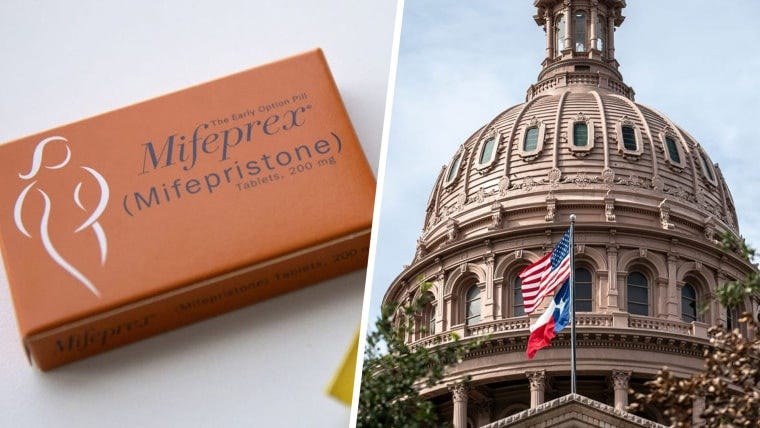
Florida’s attorney general just accused Planned Parenthood of racketeering—yes, the mafia kind—in a lawsuit that could upend abortion access nationwide. James Uthmeier, a Republican and Trump ally, claims the organization “misrepresented the safety” of abortion pills and wants to fine it $350 million, ban it from providing mifepristone, and possibly shut it down altogether.
The lawsuit is the latest front in a post-Roe strategy: bypassing Congress and the White House to kill abortion rights through state courts. Uthmeier’s complaint leans on Florida’s deceptive trade practices law, arguing that Planned Parenthood misled patients by saying mifepristone is “safer than Tylenol.” His “evidence” includes a non–peer-reviewed report from a Christian think tank. Never mind that decades of real studies—and the FDA—say the drug is both safe and effective.
To make the racketeering charge stick, Uthmeier claims each alleged case of “misleading advertising” counts as a predicate offense. It’s a stretch even by Florida’s legal standards, but that’s not really the point. The broader goal is to cripple Planned Parenthood financially and legally, using judges rather than legislators. “These penalties would devastate the organization’s operations nationwide,” the article notes, pointing out that this method avoids the political backlash Republicans fear from direct bans.
Missouri’s attorney general is pursuing a nearly identical case, while the Trump administration publicly “studies” mifepristone’s safety but privately stalls. GOP leaders know a national ban would be political suicide—polls show most Americans oppose new restrictions—but state-level crusaders like Uthmeier see no downside. Florida’s Supreme Court, stacked with anti-abortion justices appointed by Ron DeSantis, could easily bless the effort.
Legal experts say this gambit may collapse under First Amendment scrutiny. Even conservative courts have ruled that regulating speech about medical information can’t disguise attempts to suppress lawful ideas. Still, this case signals the next phase of the anti-abortion movement: if voters won’t ban abortion pills, lawyers and judges will try to do it for them.
Source: My Daily Grind
Editor: Only in 2025 America could an abortion pill become the new “organized crime.” If Tylenol ads ever start getting RICO charges, we’ll know Florida’s gone full theocracy with a side of legal theater.
U.S. Airstrikes in South America Ignite Diplomatic Meltdown with Key Allies

America’s Caribbean bombing campaign just blew up more than drug boats—it’s tearing apart long-standing global alliances. Colombia, the UK, and France have all distanced themselves from Washington after U.S. forces launched a wave of deadly airstrikes against alleged drug traffickers in South America that have killed dozens and sparked accusations of human rights violations.
Colombia, the primary producer of U.S.-bound cocaine, announced it would suspend all intelligence sharing with Washington, calling the strikes “an assault on the Caribbean people.” President Gustavo Petro accused the U.S. of “escalating a war that does not exist under international law.” The decision effectively ends decades of joint counter-narcotics operations that have underpinned U.S.-Colombian security cooperation since the days of Plan Colombia.
The backlash spread fast. The UK’s Ministry of Defence said it was pausing some intelligence exchanges with Washington after civilian deaths were reported in the region. France’s foreign ministry warned that the U.S. campaign “risks violating international law and destabilizing the Western Hemisphere.” Even members of Trump’s own party joined the critics—Senator Rand Paul blasted the administration’s actions as “an undeclared war against sovereign nations.”
Despite the growing rupture among allies, the Pentagon doubled down. The U.S. Southern Command (SOUTHCOM) insists the strikes are part of an ongoing “armed conflict” against transnational criminal organizations, not sovereign states. The White House defended its deployment of the USS Gerald R. Ford carrier group to the Caribbean as necessary to “protect American security interests.”
But the optics are brutal. The United States now finds itself isolated in a conflict few allies want and no one else recognizes as legal. A war supposedly about drugs may have just turned into a diplomatic overdose.
Source: Semafor, Reuters, France24, The Guardian, The Guardian
Editor: Nothing says “winning the war on drugs” like losing your allies in the process. When even the UK and France are pulling the plug on intel sharing, you’ve officially gone from global leader to that guy no one wants to share a table with.
BONUS
Democrats Sound Alarm as Blue States Accidentally Feed Driver Data to ICE
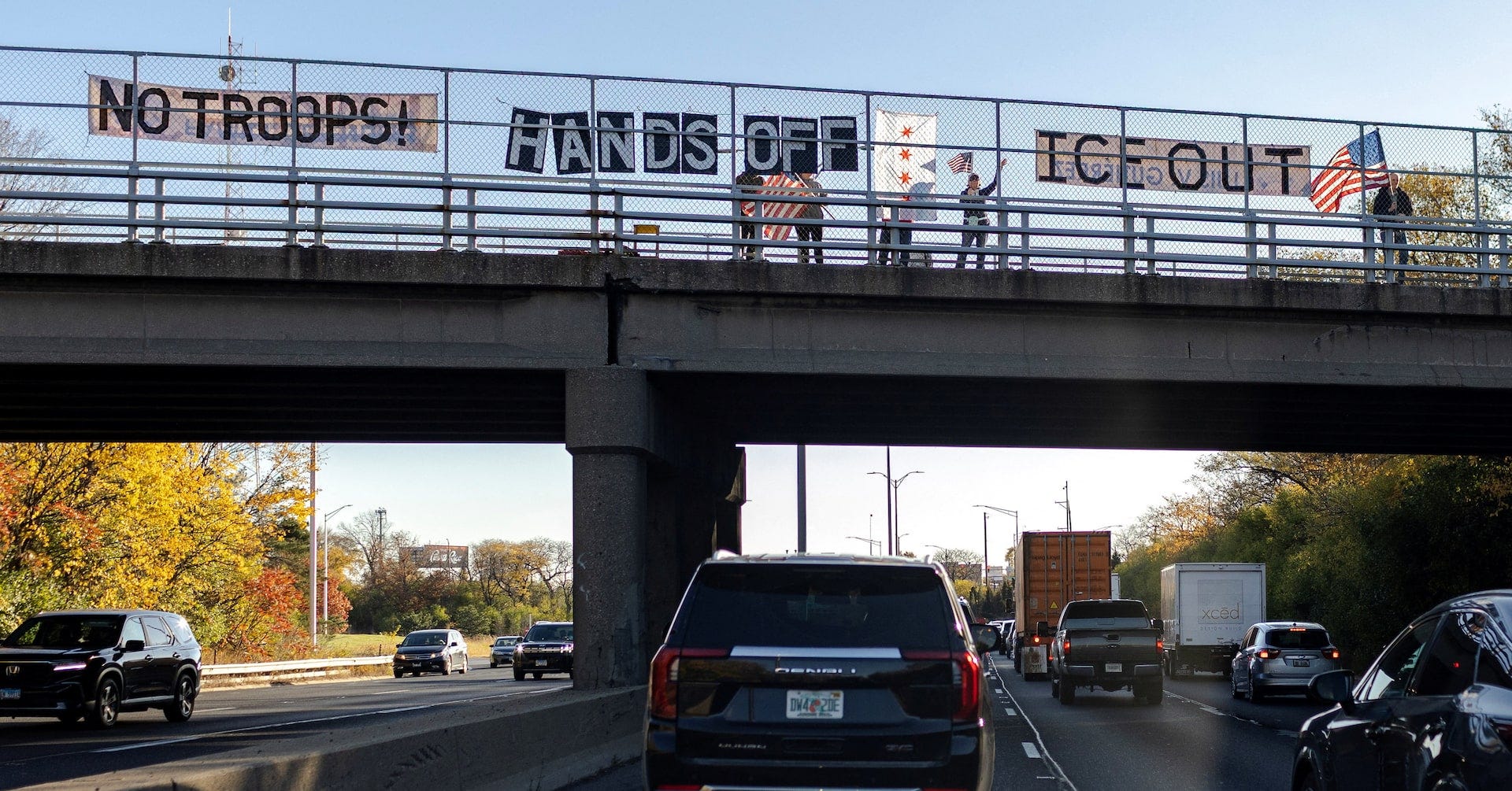
Democratic-led states are unknowingly giving U.S. immigration authorities access to their residents’ personal data through a hidden digital backdoor. A group of 40 Democratic lawmakers, led by Senator Ron Wyden, warned Wednesday that the information-sharing system connecting state DMVs to law enforcement networks is quietly letting Immigration and Customs Enforcement (ICE) pull driver records—fueling President Trump’s deportation machine.
The data leak stems from Nlets, a little-known nonprofit that manages a vast data network linking state, local, and federal police systems. According to the lawmakers, ICE and its sister agency Homeland Security Investigations made nearly 900,000 queries to that database in the past year alone. “We urge you to block ICE’s access,” the senators wrote, calling on Democratic governors to protect residents’ data from “unjustified, politicized actions.”
Many states believed they had walled off cooperation with ICE. But the letter revealed that only a few—New York, Illinois, Massachusetts, Minnesota, Washington, and soon Oregon—have actually blocked ICE from mining data shared via Nlets. The rest, often unaware of how deeply the system integrates with federal agencies, continue to feed information into a pipeline that ICE exploits.
“Because of the technical complexity of Nlets’ system, few state government officials understand how their state is sharing residents’ data with federal and out-of-state agencies,” the letter admitted. Ryan Shapiro of Property of the People put it bluntly: “State agencies are often far better at collecting information than they are at safeguarding it.”
For an administration obsessed with deportations, this is the digital jackpot—access to millions of records without a single new law or public debate. Blue states may think they’re resisting Trump’s immigration agenda, but their own data networks are still working overtime for him.
Source: Reuters
Editor: So much for “sanctuary states.” Turns out the firewall isn’t a wall at all—it’s a screen door with an ICE badge on the other side.