


My Daily Grind News got a facelift. Give it a look.
After 43 Days, the Government Finally Reopens. Now Comes the Mess.
Forty-three days of chaos, payless work, and political theater ended with one late-night signature—but the damage doesn’t vanish just because the lights flick back on.
For the first time in weeks, federal agencies can breathe, but workers are walking straight into a giant administrative hangover. President Trump signed the funding bill Wednesday night, officially reopening the government through Jan. 30, 2026—a temporary patch that leaves a trail of problems no swipe of a pen can instantly fix.
Federal employees—at least 670,000 of them—are being told to show up immediately, many with only a memo and a cup of coffee to guide them back into their normal routines. At Health and Human Services, workers got the blunt version: report Thursday or be marked AWOL. OPM says agencies should “consider the disruption” in workers’ lives, but good luck balancing empathy with the flood of deadlines waiting in their inboxes.
Back pay is coming, but that too is a patch job covering deeper damage. Some staff were branded for layoffs during the shutdown thanks to Reduction in Force orders, and the bill now reverses those firings. The Government Employee Fair Treatment Act guarantees that all furloughed and unpaid “essential” workers get paid retroactively—but for folks already pushed to the financial brink, promises and reimbursements are two very different things.
SNAP recipients, meanwhile, are stuck waiting on quiet bureaucratic timelines even though the benefits are fully funded through September 2026. The administration had appealed the court order that forced payments to continue during the shutdown but dropped the case Thursday, declaring the whole fight “moot.” Great—now start moving the money.
Tourists finally catch a break: the Smithsonian’s flagship museums reopen Nov. 14, with the rest—including the National Zoo—back by Nov. 17. And air travel? Controllers will get 70% of their back pay within two days, but it’ll take up to a week for nationwide operations to stabilize. Airlines insist Thanksgiving travel won’t get hammered. Fine—let’s hope confidence isn’t doing the heavy lifting there.
The one thing Democrats didn’t get? The extended Obamacare subsidies they held the line for. Those enhanced tax credits expire Dec. 31, and if Congress keeps playing chicken, premiums are going up for more than 20 million Americans. Senate Republicans promised a vote next month, but House Speaker Mike Johnson is already doing his best imitation of a locked door. Hakeem Jeffries filed a discharge petition, but that only works if a few Republicans decide they’d rather help Americans than burn political calories. We’ll see.
Source: ABC News
Editor: This whole saga is like watching someone stop a house fire by turning off the stove—while the living room smolders. Sure, the shutdown is over, but Washington keeps sprinting from crisis to crisis like that’s a governing philosophy.
The Epstein Shutdown Wasn’t a Theory After All. Now the GOP Is Fracturing Over the Files.
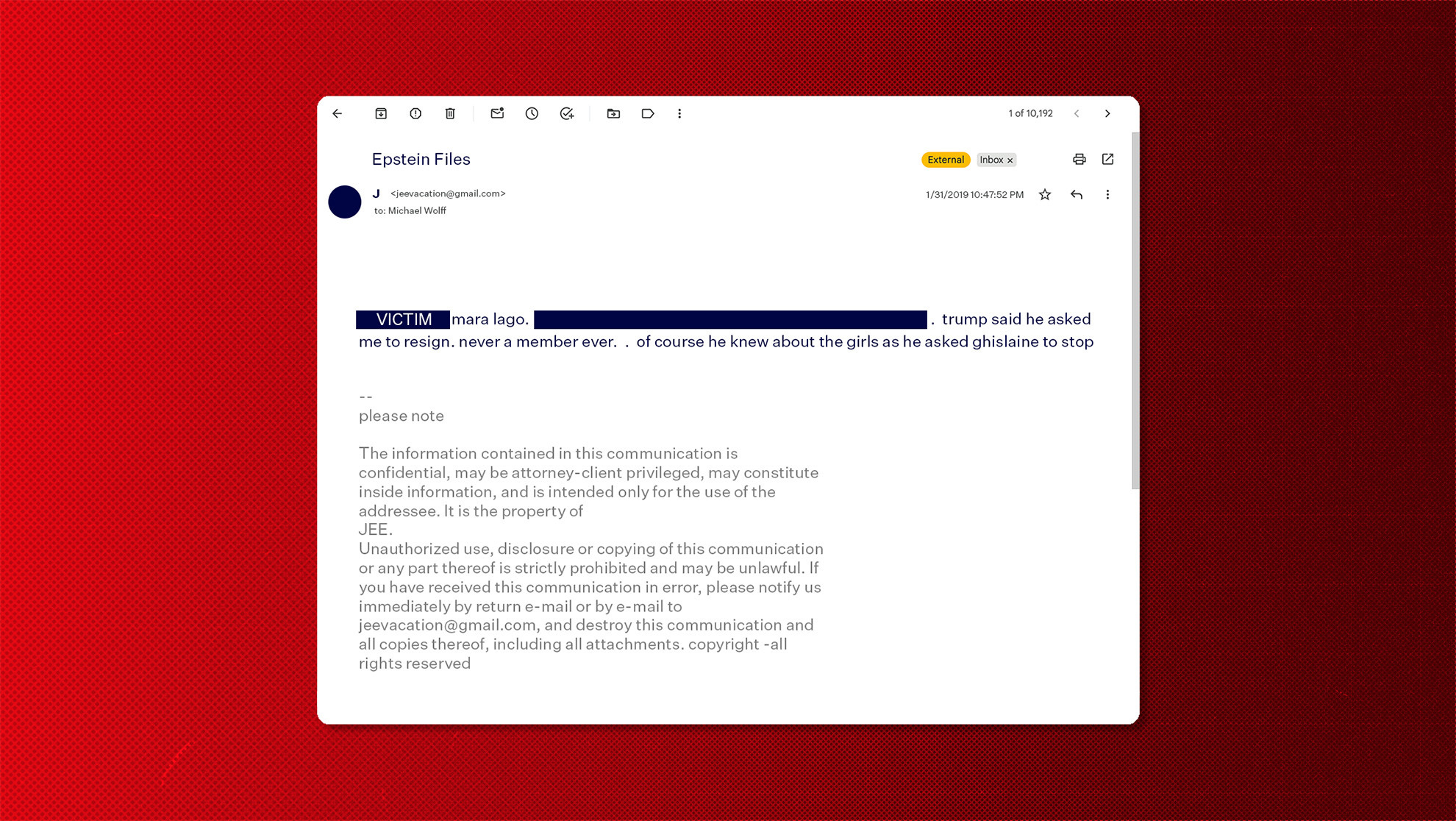
The most chaotic shutdown in modern history didn’t collapse because Washington found clarity—it collapsed because the Epstein Files came back to bite the very people trying to bury them.
For weeks, the Republican strategy behind the 43-day shutdown looked like political improv—no goals, no demands, no coherent endgame. Senate Republicans wandered the Capitol like extras in a zombie flick, and House Republicans basically stopped showing up for work. But according to Democrats who were watching the maneuvering up close, the real motive was hiding in plain sight: keep the House closed so Speaker Mike Johnson wouldn’t be forced into a vote on releasing the Epstein Files.
What blew this theory wide open were newly surfaced emails indicating Donald Trump “knew about the girls.” Suddenly, the shutdown wasn’t about spending, or even the Affordable Care Act—it was about shielding a president from the one scandal that could detonate his base. As Rep. Eric Swalwell put it bluntly: “We have shut down the government to protect Donald Trump and how close he is to the Epstein Files.” And really, that tracks. Trump has spent his entire public life dodging accountability for sexual misconduct, from the Access Hollywood tape to civil assault liability. Pretending Epstein is somehow off-limits is political malpractice.
The final piece clicked into place the moment Rep. Adelita Grijalva was sworn in. Her arrival gave Democrats the 218th and final signature required to force the release vote—something Johnson could only delay if the House wasn’t in session. Shutdown over, majority secured, and suddenly the one thing the White House feared most was unavoidable. Unsurprisingly, Trump erupted on social media, declaring that “only a very bad, or stupid, Republican” would support the petition. That tantrum didn’t land the way he’d hoped.
Instead, it sparked a revolt inside his own party. Colorado’s Lauren Boebert—yes, that Lauren Boebert—met with Trump’s team at the White House but refused to pull her name from the discharge petition. She framed the meeting as harmless: “Adults are allowed to have conversations.” And then she doubled down: “I want to honor President Trump’s legacy of transparency.” That’s certainly one way to say “nice try.” Alongside Boebert, Nancy Mace, Marjorie Taylor Greene, and Thomas Massie have all lined up on the side of disclosure, joining Democrats in demanding the Justice Department release the files.
By Wednesday afternoon, the petition hit the magic number, froze in place, and immediately changed the calculus. Speaker Johnson—who spent weeks ducking this—finally conceded he’ll bring the bill to the floor next week. Whether it survives the Senate is another matter entirely. And even if it does, Trump would have to sign a bill he’s already dismissed as the “Epstein Hoax.” That means we may be looking at the rarest of Washington events: bipartisan pressure forcing a president to confront something he desperately wants hidden.
If this really was the Epstein Shutdown all along, the implications are massive. It means the White House has spent the last year not governing, not addressing affordability, not managing the economy—but running interference on whatever is sitting in those files. And now that Congress has the votes to force sunlight, the panic is starting to show.
Source: Democracy Docket
Editor: The GOP spent 43 days gambling that Americans would blame Democrats for high prices rather than ask why the House was mysteriously closed. Now the receipts are spilling out, Republicans are turning on each other, and Trump is about to find out what happens when the distraction machine finally breaks down. Buckle up—this next vote is going to leave marks.
Trump’s Housing Chief Shared Confidential Mortgage Data—Then Purged the People Who Objected
A top Trump housing official funneled confidential Fannie Mae mortgage pricing data to a competitor, and when senior executives objected, they were fired instead of the person who leaked it.
The Associated Press obtained internal emails showing that Lauren Smith, Fannie Mae’s head of marketing and a close ally of Federal Housing Finance Agency Director Bill Pulte, sent lender-level pricing data to Freddie Mac “as per Director Pulte’s ask.” Senior officials immediately called it “very problematic” and potentially illegal. Their objections didn’t just get ignored—they got them removed from their positions.
According to the emails, Smith’s disclosure was confidential, competitive information that “should never be shared,” a direct quote from Fannie Mae’s general counsel, Danielle McCoy. CEO Priscilla Almodovar, COO Peter Akwaboah, and multiple senior executives raised legal red flags. Days later, Almodovar, McCoy, and SVP Malloy Evans were all out—fired—while Pulte loyalist John Roscoe was promoted and Akwaboah became acting CEO. You don’t need a decoder ring to see what just happened: the whistleblowers were thrown overboard.
This entire saga highlights how Pulte—whose job is supposed to be boring, technical, and insulated from political pressure—has instead turned Fannie Mae and Freddie Mac into a personal political weapon. He’s used his power to launch mortgage fraud investigations into prominent Democrats like Letitia James, Adam Schiff, and Eric Swalwell, and even ordered the agencies to explore cryptocurrency for mortgage purchases because Trump wanted it. He pushed a 50-year mortgage idea so financially toxic economists practically spit out their coffee.
Behind the scenes, Pulte has also targeted major homebuilders, echoing Trump’s claim that they’re like “OPEC” sitting on “2 million empty lots.” When Trump demanded action, Pulte responded online with a simple “On it,” then demanded confidential builder data from Fannie Mae. Suddenly, internal teams were scrambling to compile sensitive pricing info—info that Smith then shared with Freddie Mac, triggering this firestorm.
The political motivations aren’t subtle. Pulte is a major Trump donor, a relentless social media loyalist, and now the self-appointed chair of both Fannie Mae and Freddie Mac. That’s trillions of dollars in lending power—consolidated in one man who appears more interested in currying favor than following federal law. Multiple ethics officials probing Pulte’s conduct were fired, and instead of addressing the scandal, the FHFA issued a nothingburger statement about “compliance.”
Meanwhile, Trump has kept rewarding Pulte’s behavior. After the internal revolt, Trump posted a graphic attacking big homebuilders and praising Fannie Mae’s data—data Pulte had just demanded, leaked, and used to elevate his own political profile. Pulte immediately reposted it, victory lap and all.
Source: AP News
Editor: This is what happens when you hand the keys to a trillion-dollar mortgage empire to a guy who treats federal agencies like influencers treat brand deals. Leak the data, fire the watchdogs, promote the loyalists, and hope no one notices. Spoiler: people noticed.
Army Secretary Says Defense Giants “Conned” the Pentagon Into Overpaying
The U.S. Army’s top civilian just accused major weapons contractors of conning the American people—and he’s not wrong.
Army Secretary Dan Driscoll unloaded on the defense industry this week, saying prime contractors have steered the U.S. military into buying hyper-inflated equipment when cheaper commercial alternatives were sitting right there. His blunt assessment—rare for a sitting official—landed with a thud in Washington’s defense circles, where price-gouging has been an open secret for decades.
Driscoll didn’t mince words. He said the “defense industrial base broadly, and the primes in particular, conned the American people and the Pentagon and the Army.” That’s not coming from a watchdog or a senator—it’s coming from the guy who runs the Army. And he’s pointing the finger at a system that rewards contractors for charging $47,000 for a Black Hawk control knob that could be manufactured for $15. You don’t need a procurement background to see the grift.
He acknowledged the government helped create this monster by baking warped incentives into the acquisition process. But the Army says that era is ending. “The system has changed. You will no longer be allowed to do that to the United States Army,” Driscoll said. Translation: contractors enjoyed their golden buffet for years, and now someone finally flipped the lights on.
The Pentagon is rolling out new initiatives to buy tech faster and cheaper—particularly drones. Instead of letting the usual megafirms monopolize the process, the Army wants to buy at least 1 million drones in the next few years directly from companies already building commercial-grade models. This comes as lawmakers like Sen. Elizabeth Warren ramp up pressure on weapons makers to stop lobbying against right-to-repair rules that would lower costs for troops and taxpayers.
But the bigger message is unmistakable: the military is waking up to decades of contractor price manipulation, and the cozy relationship between the Pentagon and defense primes is finally getting some daylight. Whether that daylight lasts longer than a news cycle is the real test.
Source: Reuters
Editor: Defense contractors claiming they need billions to produce $15 parts is like insisting you need a Ferrari to drive across the street. And for years, the Pentagon happily tossed them the keys. Good to see someone finally calling the hustle by its name.
U.S. Greenlights $330M in Fighter Jet Parts for Taiwan, Igniting Beijing’s Fury
Washington just approved its first Taiwan arms sale under Trump, a $330 million package of aircraft parts that instantly triggered gratitude in Taipei and rage in Beijing.
The Pentagon signed off on the deal Thursday, authorizing the sale of repair and spare parts for Taiwan’s fleet of F-16s, C-130s, and other aircraft. The goal, according to the Defense Department, is simple: keep Taiwan’s air force ready to counter “current and future threats.” That’s D.C. speak for China isn’t slowing down, so neither can Taiwan.
Taiwan’s presidential office wasted no time thanking the U.S. for sticking to its longstanding commitment to regularized arms support. As spokesperson Karen Kuo put it, “The deepening of the Taiwan-U.S. security partnership is an important cornerstone of peace and stability in the Indo-Pacific region.” Translation: every time Beijing pushes a little harder, Taipei needs Washington to push back just enough to keep the balance intact.
The move comes at a tense moment. China’s military routinely flies and sails through Taiwan’s airspace and waters with so-called “gray-zone” operations designed to intimidate without crossing into open conflict. Taiwan’s defense ministry says the new parts will improve fighter readiness, strengthen air defenses, and help blunt those daily pressure tactics. The deal is set to take effect within a month.
Predictably, Beijing erupted. China’s foreign ministry blasted the deal, calling Taiwan “the core of China’s core interests” and warning—again—that the United States must not cross its “first red line.” China still claims Taiwan as its territory and refuses to rule out using force. Taiwan’s government, of course, rejects that outright and insists only its people get to decide their future.
Trump, for his part, says he has assurances from Chinese President Xi Jinping that China will not invade Taiwan while he’s in office—an oddly specific promise that raises more questions than it answers. The timing is noteworthy: the deal comes just weeks after Trump and Xi met in South Korea to hash out trade negotiations, amid quiet worry in Taipei that Taiwan could get bargained away. This sale suggests Washington isn’t abandoning the island anytime soon.
Source: Reuters
Editor: Beijing can rage all it wants, but if Xi’s strategy is intimidation-by-proximity, keeping Taiwan’s jets in the air is the bare minimum. And the idea that America needs permission from the guy running the intimidation campaign? Hard pass.
China’s New Supercarrier Pushes the U.S. Into a Dangerous New Pacific Era
China’s launch of the Fujian isn’t just another military upgrade — it’s a direct move to erode American naval dominance, and Beijing is now closer than ever to challenging the U.S. in its own backyard.

China officially commissioned its third and most advanced aircraft carrier this month, the Fujian, an 80,000-ton supercarrier equipped with electromagnetic catapults — a technology only the United States had mastered until now. Analysts across the U.S., Japan, Taiwan, and China say this dramatically narrows the Pacific power gap and gives Beijing its most credible tool yet for intimidating rivals, blockading Taiwan, and projecting military might deep into the Pacific.
The Fujian represents a massive leap from China’s first two carriers, marking Beijing’s shift from a coastal defense navy to a blue-water force capable of challenging U.S. ships beyond the first island chain. Chinese state media claims its catapults can launch up to 300 aircraft per day—an exaggeration, but still a huge step forward. Xi Jinping personally ordered the move to this tech and even pressed the ceremonial launch button, signaling how central this ship is to his push for a “world-class” military by 2049.
The carrier’s strike group will include advanced J-15 fighters, future J-35 stealth jets, early-warning “KJ-600” aircraft, and Type 055 missile cruisers nicknamed the “carrier killer.” Combined, these assets dramatically expand China’s ability to spot, track, and deny access to enemy forces—especially U.S. ships—across the South China Sea, Taiwan Strait, and beyond. For Taiwan, this is a nightmare scenario: “Now every corner of Taiwan is threatened,” said one defense expert in Taipei.
While the U.S. still fields 11 nuclear-powered carriers and retains a global edge, Washington must spread its forces worldwide. Beijing doesn’t. China can concentrate nearly everything on Asia, which is why the regional balance is tipping faster than comfortable. China already staged dual-carrier operations near Japan earlier this year, and the Fujian’s arrival gives the PLA Navy an even stronger hand in any crisis over Taiwan—especially one aimed at keeping U.S. forces too far away to intervene effectively.
And Beijing isn’t stopping. Satellite images show work underway on a possible fourth Chinese carrier—likely bigger, more advanced, and potentially nuclear-powered. Analysts say China wants carrier parity with the U.S. within a decade. Alarmingly, they’re “ahead of where they need to be.”
Source: Washington Post (gift post)
Editor: China isn’t building these behemoths for fun. They’re building them because they fully expect a confrontation over who gets to call the shots in the Pacific. Washington better stop assuming tomorrow looks like yesterday—Beijing clearly isn’t.
BONUS
DOJ’s No. 2 and George Conway Go to War Over the Maxwell Interview—and the Epstein Files Are Closing In
The fight over Todd Blanche’s interview with Ghislaine Maxwell just exploded into a public brawl, and it’s happening at the exact moment new Epstein emails are pulling Trump deeper into the mess.
Deputy Attorney General Todd Blanche lashed out on Thursday after conservative attorney George Conway blasted his July interview with Ghislaine Maxwell as either incompetent or intentionally softball. Conway said Blanche failed to ask basic follow-ups and suggested the interview was crafted to avoid eliciting anything incriminating about Trump. “Either way, he is not fit to serve as Deputy Attorney General,” Conway wrote.
Blanche fired back, saying Conway has “never been confused for a trial lawyer” and defended himself by claiming that when he interviewed Maxwell, law enforcement didn’t yet have the Epstein documents the estate withheld for years. Conway wasn’t impressed. “You couldn’t cross-examine your way out of a paper bag,” he replied—adding that Blanche’s performance in Trump’s criminal trial (where Trump was convicted on 34 felony counts) wasn’t exactly awe-inspiring either.
Maxwell’s interview itself was a gift-wrapped talking point for Trumpworld. She told Blanche she “never saw” Trump act inappropriately, insisted he wasn’t close to Epstein, and portrayed him as a “gentleman.” All of this came months before newly released Epstein emails contradicted her public absolution, with messages stating Trump “spent hours” at Epstein’s home and “knew about the girls.” That discrepancy is why Conway—and a lot of other legal observers—are calling Blanche’s questioning laughably timid.
The timing couldn’t be worse for Trump. House Democrats, joined by four Republicans, filed a discharge petition Wednesday to force a vote on releasing the full Epstein case files. The petition hit 218 signatures—the magic number—and Speaker Mike Johnson now says the House will vote on it next week. Trump, in panic mode, warned Republicans not to “fall into that trap,” calling the entire effort the “Epstein Hoax” and claiming it’s meant to distract from the shutdown fiasco.
But the facts are catching up. The DOJ interview transcripts are now public. The new emails are public. The bipartisan push to release the files is public. And every attempt to downplay Epstein’s ties to Trump is unraveling faster than Trump can yell “hoax” into a phone.
Source: The Hill
Editor: Blanche telling Conway to “stop talking” is adorable—like yelling at the tide. When your interview with a convicted trafficker ages worse than milk sitting in the hot sun, maybe sit this round out instead of flexing credentials nobody believes you earned.