


Temecula Teen Held at Gunpoint by Man Claiming to Be ICE Agent as DHS Denies Connection
A terrified 17-year-old was yanked from his truck at gunpoint by a man neighbors believed was an ICE agent, and the fallout is now shaking an entire community.
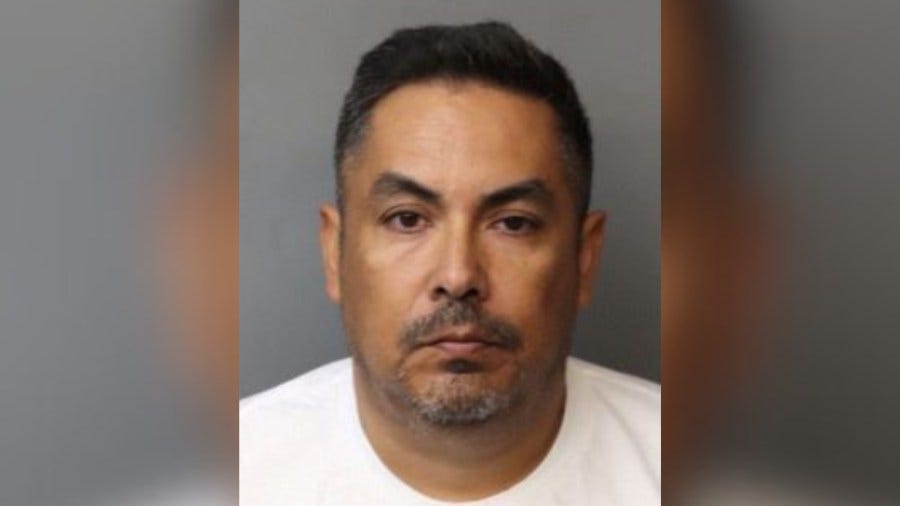
The ordeal unfolded late on Nov. 10 in a Temecula neighborhood, where 45-year-old Gerardo Rodriguez allegedly confronted the teen, pointing a gun at his truck and ordering him to stop. The boy had simply been driving home. According to his attorney, “In the moment, I think he was just scared for his life. He had a gun pulled on him, and he was told to immediately stop or else.” If that doesn’t make your blood pressure rise, it should.
Video shows Rodriguez pulling a gun from his waistband, shouting commands, and reportedly flashing a badge. “Freeze, police,” he yelled, before escalating into a string of expletive-laced orders. He then interrogated the Mexican American teen about his identity and documentation—exactly the kind of street-corner immigration theater nobody asked for.
Neighbors eventually intervened, calming Rodriguez and preventing the situation from spiraling even further. The teen’s parents rushed over with his passport, terrified they were witnessing an ad‑hoc immigration stop on their own block. Deputies later arrested Rodriguez, searched his home, and collected evidence. The family’s attorney summed up the fear reverberating across the community: “It’s gotten so bad where he thinks he can now turn his own block into his personal ICE checkpoint… This kid could’ve been shot.”
But here’s where the narrative gets messy. Homeland Security says Rodriguez isn’t an ICE employee at all. They insist he is not an ERO officer, not HSI, not on their payroll in any form—even as they also tell the L.A. Times they can’t “comment on matters still under review.” Someone’s story isn’t lining up, and KTLA is asking the same questions the rest of us are.
Source: KTLA
Editor: This is what happens when cosplay policing meets actual firearms. If a man can allegedly detain a kid at gunpoint while claiming federal authority he doesn’t have, maybe the background checks shouldn’t stop at the agency door.
Judge Rebukes DOJ Over Missteps That Could Undermine the Comey Indictment
A federal judge just tore into the Justice Department for what he called a “disturbing pattern of profound investigative missteps,” and the implications for the Comey case are enormous.
A blistering new ruling from Magistrate Judge William Fitzpatrick orders prosecutors to hand over all grand jury materials after he found “fundamental misstatements of the law,” possible exposure of privileged communications, and a transcript so irregular it raised red flags about the integrity of the entire process. It’s the sort of judicial commentary that doesn’t happen unless things have gone very, very wrong behind the scenes.
Fitzpatrick didn’t mince words. “The record points to a disturbing pattern of profound investigative missteps, missteps that led an FBI agent and a prosecutor to potentially undermine the integrity of the grand jury proceeding.” And let’s be honest—when the judge is saying this out loud, you know it’s only the tip of the iceberg. The ruling paints a picture of an indictment rushed, sloppily handled, and pushed forward by a prosecutor with no prior courtroom experience who was appointed days before the charges dropped.
The controversy lands squarely in the middle of a growing debate over whether the DOJ is being used as a political weapon. Comey and New York Attorney General Letitia James have both argued exactly that in their own filings, pointing directly at prosecutor Lindsey Halligan’s appointment as improper and the prosecutions as vindictive. Fitzpatrick’s opinion only pours more gasoline on that fire, especially as he details an “unusual series of events” surrounding how the indictment was secured, including a second indictment drafted after the grand jury had already rejected one of the counts.
Adding to the mess, Fitzpatrick flagged that an FBI agent exposed to potentially attorney‑client‑privileged communications testified before the grand jury. As he put it, “The government’s decision to allow an agent who was exposed to potentially privileged information to testify before a grand jury is highly irregular and a radical departure from past DOJ practice.” Between that and the prosecutor allegedly suggesting jurors didn’t need to rely solely on evidence they were shown, it’s hard to see how this case survives intact.
Source: AP News
Editor: The DOJ keeps acting like the rules are optional, then seems shocked when a judge notices. If your indictment process requires this many footnotes and explanations, maybe the problem isn’t the defendant—it’s the people holding the clipboard.
House Poised to Force Release of Epstein Files After Trump’s Sudden Reversal
The House is barreling toward a vote to release the Jeffrey Epstein files, and the only reason it’s happening is because Trump abruptly dropped his opposition after months of attacking his own party over it.
What had been a bipartisan, uphill push led by Representatives Thomas Massie and Ro Khanna is now on the cusp of a breakthrough, thanks to a discharge petition that bypassed GOP leadership and forced the issue onto the floor. Trump had publicly blasted Republicans backing the measure—including Massie and even Marjorie Taylor Greene—but flipped positions the moment it became clear he was about to lose control of the narrative.
On Monday, Trump insisted he’s “all for it,” saying he’d sign the bill if the Senate passes it, even though he could release the files without Congress at all. That’s not a footnote—it’s the whole point. The White House spent last week lobbying Rep. Lauren Boebert to drop her support for the release, and she still refused. Once the vote became inevitable, Trump chose to get in front of it rather than be steamrolled by it.
The shift comes amid new batches of Epstein documents released by the House Oversight Committee, including thousands of pages dropped by GOP Chair James Comer. Those files have renewed questions about Trump’s past ties to Epstein, making the timing of his sudden enthusiasm for transparency…notable. Meanwhile, Democrats have hammered Speaker Mike Johnson for delaying the swearing‑in of Rep. Adelita Grijalva, whose signature finally pushed the discharge petition over the threshold.
Ahead of the vote, Massie and Khanna are once again aligning with Epstein survivors, who have demanded full disclosure. As they wrote in a Friday letter, “Epstein and Maxwell’s crimes exposed a double standard of justice, where rich and powerful men and women evade repercussions.” Hard to argue with that—especially when both parties keep pretending they want accountability while quietly hoping someone else takes the political hit.
Source: NPR
Editor: Funny how “principled opposition” evaporates the second a vote becomes unavoidable. If Congress actually follows through, it’ll be the first time in years the powerful lose control of a story they’ve been trying to bury since Epstein mysteriously stopped breathing in federal custody.
I wrote this yesterday. Let’s see how it all plays out.
THE EPSTEIN FILES: A SPECIAL REPORT FROM THE MORNING SIXPACK
Let’s stop pretending this is your standard Washington sideshow. The Epstein Files aren’t just documents—they’re political uranium, glowing through every institution that’s tried to bury them. And right now, we’re watching the biggest “transparency” performance since the Pentagon Papers were run through a paper shredder.
Trump Signals He’s Ready to Act as U.S. Military Build‑Up Around Venezuela Reaches New Level
Trump has all but declared he’s chosen a path on Venezuela, and the scale of the U.S. military buildup shows this isn’t a drill.
After a week of high‑level briefings and a rapidly expanding American show of force in the Caribbean, Trump now says he has “sort of” made up his mind about launching military operations in Venezuela. Officials confirmed he was briefed on options ranging from airstrikes to direct attempts to remove Nicolás Maduro from power—choices that carry enormous risk not just for foreign policy but for Trump’s fragile political coalition back home.
Washington has already moved more than a dozen warships, the USS Gerald R. Ford carrier strike group, an attack submarine, and 15,000 troops into the region under “Operation Southern Spear.” Analysts say the buildup is unprecedented this century. As one expert told CNN, “It’s the most significant build up this century” and reminiscent of the 1989 U.S. invasion of Panama. Trump also announced plans to designate a Venezuelan cartel as a foreign terrorist organization, a move that would open the door for expanded targeting of Maduro’s assets and infrastructure.
Pressed by reporters, Trump said Friday, “I sort of have made up my mind — yeah… I can’t tell you what it would be, but I sort of have.” Yet 48 hours later he hinted the U.S. may also engage Maduro diplomatically, claiming Venezuela “would like to talk.” Inside the Situation Room, Trump and his national security team—including Defense Secretary Pete Hegseth, Joint Chiefs Chair Gen. Dan Caine, and Secretary of State Marco Rubio—reviewed detailed strike packages and target lists. Options include hitting cocaine production sites, air defense networks, government buildings, and military infrastructure.
But even as the military postures, legal and political barriers loom. Administration officials told lawmakers the U.S. still lacks the legal justification for strikes, though they suggested one could be crafted. Trump has also publicly contradicted himself, telling “60 Minutes” he wasn’t considering strikes despite receiving active proposals to do exactly that. And privately, advisers say he’s wary of a mission that could fail or risk American lives—especially as Maduro warns that U.S. intervention would create “another Gaza,” a “new Afghanistan,” or “Vietnam again.”
The Venezuelan regime has responded with a “massive mobilization” of its own forces. Meanwhile, Trump’s political base—led by figures who campaigned on ending foreign entanglements—could fracture if he commits to a prolonged confrontation in Latin America. As one GOP staffer put it, “The American people did not vote for Trump to draw the U.S. into a sustained conflict in Latin America… And without that support, this won’t work.”
Source: CNN
Editor: Watching Trump flirt with regime change like it’s a weekend hobby would be comical if it didn’t involve aircraft carriers and 15,000 troops. If he’s going to expand a military footprint this large, he owes the country more than a vague “I sort of made up my mind.”
Markets Slide as Tech and Banks Drag the Dow Down 557 Points
Wall Street just delivered a harsh reminder that the AI boom doesn’t make the market bulletproof, especially when bank stocks and tech giants decide to fall in unison.
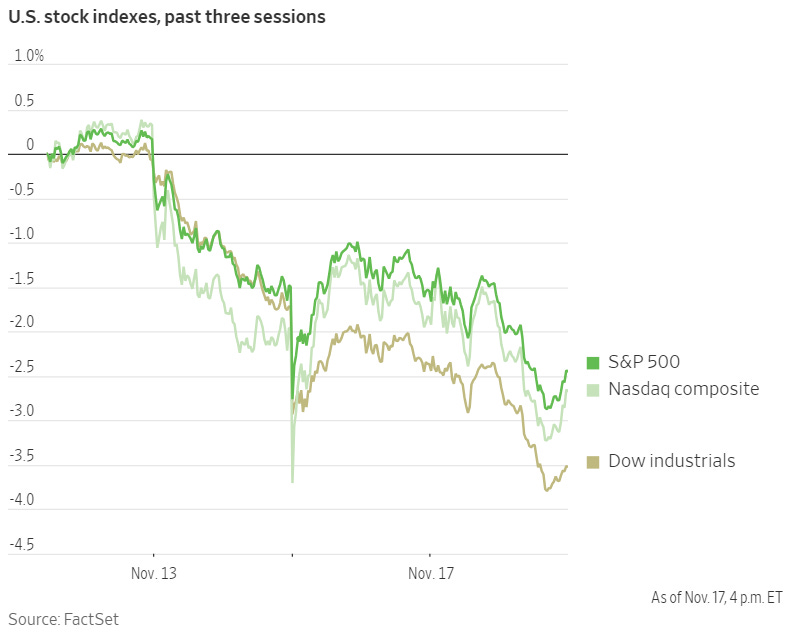
Monday’s selloff slammed major indexes, sending the Dow down 557 points as investors finally started questioning the pace and durability of the AI frenzy. Bank stocks slumped, big tech stumbled, and even Berkshire Hathaway’s new multibillion‑dollar bet on Alphabet couldn’t stop the market from sliding deeper into the red.
The pain accelerated through the afternoon, with Nvidia, Meta, Amazon, AMD, Super Micro Computer, Dell, Oracle, and CoreWeave all retreating—yet another sign that Wall Street is reassessing just how much AI optimism is priced in. Meanwhile, the Fed added to the confusion: Vice Chair Philip Jefferson said policymakers should “proceed slowly” on rate cuts, while Governor Christopher Waller insisted the central bank should *lower* rates. If the market wanted clarity, it didn’t get it.
Investors are now bracing for a pivotal week. Nvidia reports earnings Wednesday, and delayed economic releases—including the September jobs report and new data on housing and sentiment—could dictate the next market move. Retail earnings kick off with Home Depot, offering another read on consumer health in an economy that keeps giving mixed signals.
By the close, all major U.S. indexes were down roughly 1%, with the Dow off 1.2%. Bitcoin slid again after its worst weekly drop in months, falling to $91,859, and Treasury yields ticked slightly lower, with the 10‑year settling at 4.132%. The overall message from the day: the selloff is broad, momentum is fading, and investors are finally peeking under the hood of an AI rally that may be running hot.
Source: WSJ
Editor: If Wall Street needs a hint, here it is—when even the AI darlings start blinking, maybe it’s time to stop treating every dip like a buying opportunity ordained by the stock market gods.
Trump Rolls Out Red‑Carpet Welcome for MBS as Washington Rewrites the ‘Pariah’ Narrative
Trump is preparing one of the most extravagant White House welcomes of his presidency for Mohammed bin Salman, a stunning reversal for a leader once branded a pariah after the CIA concluded he approved Jamal Khashoggi’s killing.
The crown prince’s visit marks a dramatic rehabilitation arc, complete with military flyovers, flags lining Lafayette Square, and a slate of major deals that could reshape U.S.–Saudi ties. Weapons sales, AI cooperation, critical minerals agreements, and a fresh push—however unlikely—for progress toward Israeli normalization are all on the table. The White House clearly wants this meeting to land with maximum spectacle.
In a rarity for foreign leaders, Mohammed will enter via the South Lawn as fighter jets roar overhead—a privilege shared by just one other head of state this year. The pomp mirrors Saudi Arabia’s own over‑the‑top reception for Trump in Riyadh, a gesture he’s been eager to repay. As one Saudi commentator put it, the meeting “is cementing a very close relationship” that predates Trump’s return to office and deepened even as Biden quietly warmed back to Riyadh.
The two leaders are expected to sign defense and tech agreements, including a green light for F‑35 sales. “They’ve been a great ally,” Trump said Monday. “We will be doing that, we’ll be selling F‑35s.” For Mohammed, deepening security ties is essential to his plan to diversify Saudi Arabia’s economy and position himself as a stabilizing global figure—an image he’s aggressively cultivated while sidelining clerics, loosening social restrictions, and tightening domestic control.
But the pageantry can’t escape the shadow of Khashoggi. Mohammed’s global image cratered after the U.S. intelligence assessment concluded he ordered the killing, yet Washington’s so‑called isolation evaporated as soon as oil prices surged and geopolitical crises demanded Saudi cooperation. Biden’s infamous 2022 fist bump signaled as much. Now Trump wants to push normalization with Israel, though Saudi officials maintain that “there must be a clear path to a Palestinian state” before they can sell it to their public.
Source: WaPo
Editor: Washington acts like MBS was only in timeout, not tied to one of the most infamous assassinations in recent memory. Amazing how fast principles evaporate when F‑35 sales and oil politics hit the table.