


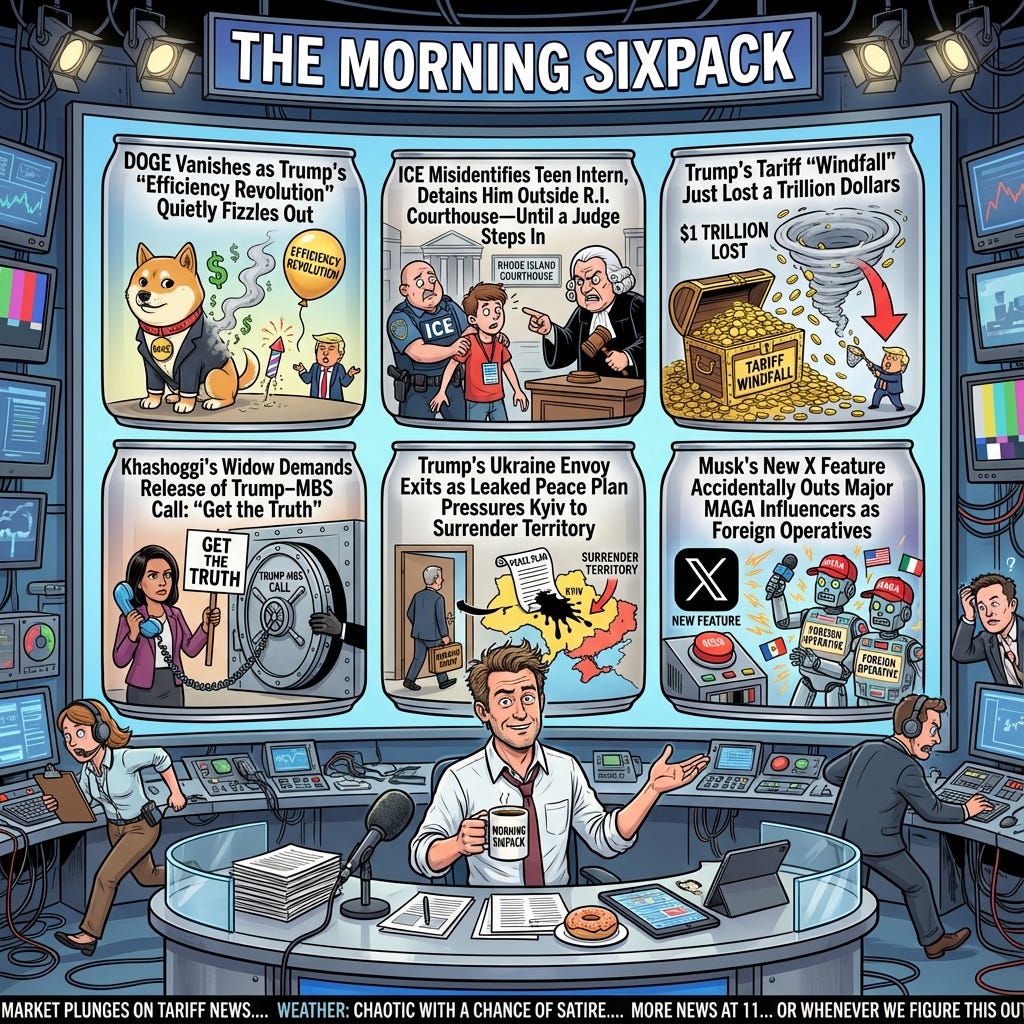
DOGE Vanishes as Trump’s “Efficiency Revolution” Quietly Fizzles Out
Trump’s much-hyped Department of Government Efficiency has evaporated long before its expiration date—and the White House would rather not talk about it.
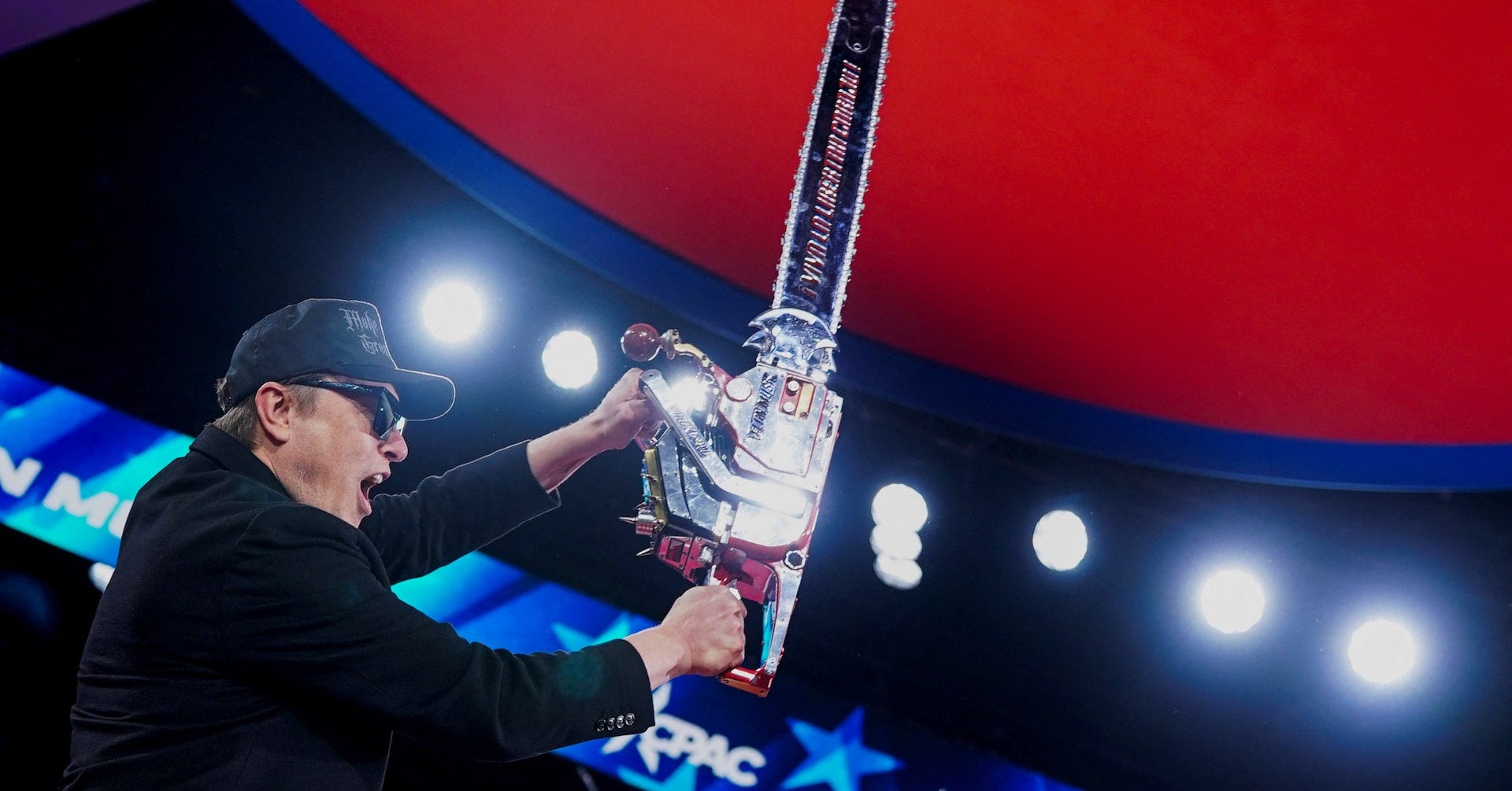
The grand project that once swaggered through Washington with chainsaws and social-media bravado has now dissolved into the federal ether. Scott Kupor, the normally buttoned-up OPM chief, delivered the epitaph with an almost casual shrug: “That doesn’t exist.” For an initiative that billed itself as the machete to federal bloat, DOGE’s disappearance is almost too on the nose.
In its early months, DOGE sprinted across the bureaucracy, chopping budgets, reshuffling agencies, and generally acting as if it had a two-season Netflix limit. But the drama faded. Functions were quietly absorbed by OPM, staff scattered to new Trump-built ventures, and the administration stopped pretending the department still lived—even though the president’s own executive order said it should run through July 2026.
The cast of characters has migrated to new stages: Joe Gebbia now helms a taxpayer-funded design makeover of government websites; former DOGE hardliners have parked themselves across HHS, State and the Navy’s research arm; and Elon Musk, once the agency’s chainsaw-wielding spirit animal, is back in Washington for dinners instead of deregulation crusades. Meanwhile, the administration is still trying to unwind regulations via custom AI—but the swagger of DOGE is gone.
And that government-wide hiring freeze? Dead. The “one in, four out” fantasy? Gone. Kupor confirmed there’s “no target around reductions” anymore. For an initiative built on spectacle, DOGE’s fadeout is pure anticlimax—less a finale, more an unattended campfire quietly burning out.
Source: Reuters
Editor: Every administration loves a bonfire of bureaucracy—until someone actually hands them the matches and a calendar. Then suddenly it’s all smoke, no fire.
ICE Misidentifies Teen Intern, Detains Him Outside R.I. Courthouse—Until a Judge Steps In
A high school intern walked out of a Rhode Island courthouse and straight into an ICE takedown that never should have happened.
The teen was leaving the Licht Judicial Complex when ICE agents grabbed him, insisting he matched their target. Superior Court Judge Joseph McBurney immediately objected, telling agents they had the wrong person—and he turned out to be exactly right. ICE later admitted the misidentification after checking their own information, but not before the situation spun wildly out of control.
The chaos began earlier when Rhode Island sheriffs spotted someone taking photos of the intern inside the courthouse. The individual said he was with ICE, was told to follow courthouse rules, and to knock off the photography. By the time the intern left the building, he was shaken—so Judge McBurney offered him a ride home. ICE agents then surrounded the judge’s car, threatening to smash the windows unless both exited. Only after a tense standoff did ICE confirm their mistake and walk it back. As Chief Justice Paul A. Suttell put it, “This egregious incident underscores both the community’s and the Judiciary’s concerns about how ICE is conducting its operations in Rhode Island.”
Local leaders didn’t hold back. Gov. Dan McKee called the wrongful detention “an outrageous and indefensible act that could have completely upended a young person’s life,” while Rep. Seth Magaziner labeled it “completely unacceptable.” Lieutenant Governor Sabina Matos went even harder, calling the encounter an “attempted abduction” and criticizing “masked thugs who can’t tell the difference between a hardened criminal and a high school student.” Hard to argue with that description after agents threatened to bash in a judge’s windows.
The incident has renewed calls to expand virtual hearings—not as a convenience, but as a shield against federal overreach. Suttell acknowledged the limits of a fully virtual system but said the day’s events reinforced the need for safer access to the courts. And honestly, when courthouse safety includes “not being wrongfully grabbed by federal agents,” that’s not exactly a high bar.
Source: WPRI
Editor: If ICE can’t distinguish a teen intern from a legitimate target even while staring down a Superior Court judge, maybe the next “efficiency reform” should focus on basic competence.
Trump’s Tariff “Windfall” Just Lost a Trillion Dollars
The Congressional Budget Office just torched a chunk of Trump’s math, wiping $1 trillion off the tariff jackpot he’s been promising.
What was once sold as a $4 trillion golden goose has now been resized to about $3 trillion—and even that figure comes with asterisks, footnotes and a whole lot of political noise. The CBO’s revised estimate lands like a cold splash on an administration eager to fund every promise—from $2,000 checks to debt reduction—on the backs of imported goods.
Director Phillip Swagel laid out the problem plainly: early models assumed Trump’s tariff regime boosted the nation’s effective rate by 18 percentage points. A deeper look shows it’s closer to 14. That gap isn’t just academic—it blows a crater in the revenue projections used to prop up the administration’s budget narrative.
The walkbacks aren’t helping. Trump has been quietly rolling back duties on China, Europe and Japan, plus shaving tariffs on auto parts, lumber, agriculture and even groceries. The White House can claim credit for cheaper coffee, sure—but every cut shaves billions off the ledger. It’s the familiar tension of Trump-era trade policy: the tariffs that cause the most pain also bring in the most cash, and you can’t have it both ways without breaking the math.
Economists are also catching more nuances in the tariff flow: more imports from Mexico and Canada slipping in duty-free, lower steel and aluminum content in taxed goods, and foreign producers slashing prices to stay competitive. Wayne Winegarden warns the CBO may still be too optimistic, noting that lost revenue elsewhere could shrink the net benefit even further.
As it stands, the CBO projects $2.5 trillion in deficit reduction over 11 years—plus $500 billion in saved interest payments—landing at the much-publicized $3 trillion total. But with a pending Supreme Court ruling that could strip Trump of core tariff powers and possibly force refunds, plus the administration’s habit of sprinkling exemptions like confetti, even this trimmed-down forecast may prove aspirational.
The bottom line: tariffs can raise money or they can minimize damage, but they rarely accomplish both. Trump keeps trying to thread that needle, and the budget keeps paying the tab for the illusion.
Source: Rolling Out
Editor: Amazing how fast a trillion dollars evaporates when someone finally reads the fine print. Turns out you can’t fund the entire federal wish list with tariffs and vibes.
Khashoggi’s Widow Demands Release of Trump–MBS Call: “Get the Truth”
Hanan Elatr Khashoggi stood on the steps of the U.S. Capitol and delivered a message that should haunt any nation claiming moral authority: release the transcript.
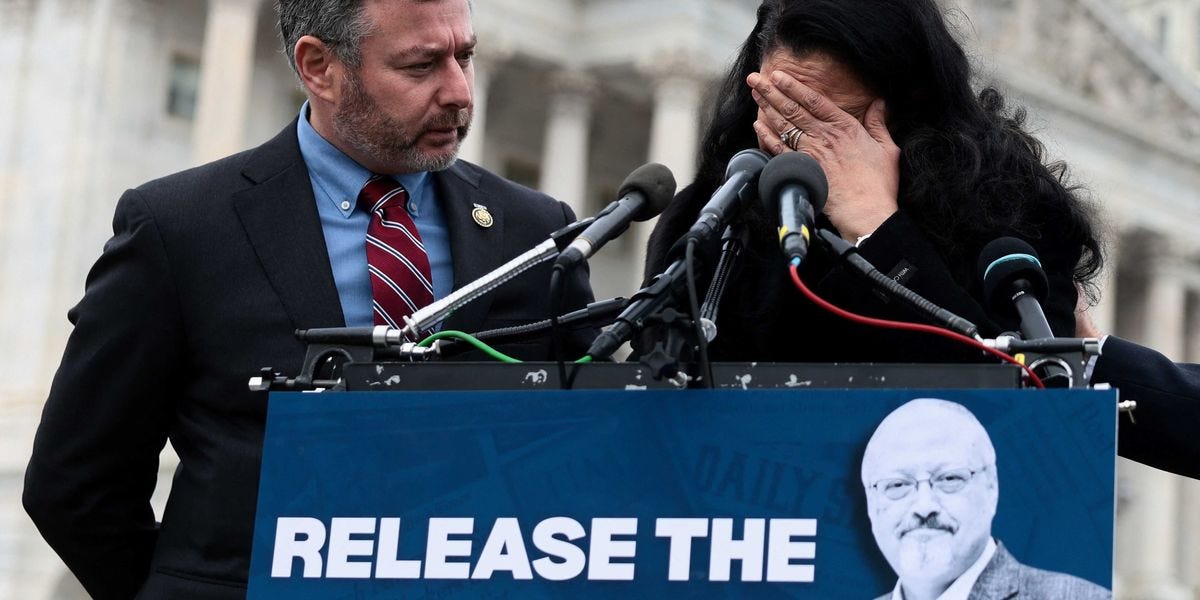
Flanked by Democratic lawmakers including Reps. Eugene Vindman and Jamie Raskin, the widow of murdered Washington Post journalist Jamal Khashoggi urged President Trump to declassify the 2019 call between Trump and Saudi Crown Prince Mohammed bin Salman—a call Vindman described as so disturbing that “people would be shocked if they knew what was said.” When the man reviewing presidential calls at the time uses language like that, you pay attention.
Khashoggi pleaded with the crowd to defend American democratic values, reminding them that millions look to the United States as a model—not a cautionary tale. Vindman, now a member of Congress, said he and 37 colleagues had formally demanded the transcript’s release, especially after Trump’s recent warm embrace of MBS at the White House. Calling the crown prince a “respected man” while announcing F-35 sales and brushing off Khashoggi’s murder as something that “happens” was a diplomatic faceplant even by Trump standards.
The widow was unflinching: there is no justification—none—for the kidnapping, torture, killing and dismemberment of her husband. “This is a terrorist act,” she said. And she’s right. Turkish investigators found Khashoggi was suffocated and dismembered—possibly while still alive—inside the Saudi consulate. The CIA concluded MBS ordered the killing. Trump dismissed that conclusion then, and he’s still shrugging it off now.
Meanwhile, the political hypocrisy stretches across administrations. Biden talked tough as a candidate but still sold weapons to the kingdom and argued MBS should receive sovereign immunity in the civil suit filed by Khashoggi’s widow. Now Trump is pursuing even deeper ties in his second term—courting up to $1 trillion in Saudi investment while the Trump Organization explores a new branded property in the kingdom. Because nothing screams “totally normal foreign policy” like negotiating luxury real estate with a government implicated in killing a U.S. resident.
At the heart of all this is a simple request: release the transcript. If nothing improper was said, there’s nothing to hide. But when lawmakers who actually heard the call say its contents would rattle the public, the silence becomes its own indictment.
Source: Alternet
Editor: If defending MBS is really this important to Trump, you have to wonder what’s on that call—and why he’s so determined to keep Americans from hearing it.
Trump’s Ukraine Envoy Exits as Leaked Peace Plan Pressures Kyiv to Surrender Territory
Lt. Gen. Keith Kellogg is heading for the exits just as a leaked U.S.–Russia draft deal demands the kinds of concessions Ukraine has spent nearly three years fighting to avoid.
Kellogg, 81, is expected to step down as Trump’s special envoy in January—a departure that lands at the worst possible moment for Kyiv. The retired general had become one of Ukraine’s few genuine allies inside a White House increasingly tilted toward Moscow’s framing of the war. His looming exit arrives mere hours after the media published a draft U.S. peace proposal that would force Ukraine to give up the entire Donbas, freeze current battle lines in the south, and even slash its military from roughly 880,000 troops to 600,000.
The leaked plan, hammered out quietly between U.S. and Russian negotiators in Geneva, would hand Russia de facto control of Donetsk, Luhansk, and Crimea, while freezing Zaporizhzhia and Kherson along today’s trench-scarred boundaries. Ukraine would also pledge not to join NATO—traded for vague “security guarantees” no one has bothered to define. And in the kicker Moscow has always wanted, the U.S. would help “reintegrate” Russia back into the global economy, potentially even restoring the G8. In other words: sanctions relief, prestige, and territory, wrapped in a bow.
For a man once suspected of being skeptical of Kyiv, Kellogg became a quietly pivotal player—facilitating hostage releases from Belarus, pushing back against internal voices like lead negotiator Steve Witkoff who favored lopsided swaps, and telling colleagues the real obstacle to peace was Russia’s stonewalling, not Ukraine’s. Zelensky valued him enough to greet him with hugs in both Washington and Kyiv. His absence at key meetings in recent months—and at the Alaska peace summit—was already raising eyebrows.
Meanwhile, Trump has set an artificial deadline for Ukraine to accept the deal by Thursday, only to later claim it’s not his “final offer” after allies balked. The mixed messaging underscores the chaos: Washington touts “tremendous progress,” while Europe and Canada watch in horror as a U.S.-drafted plan seems to codify Russian occupation. Senator Marco Rubio insists a deal is close, timeline TBD—because nothing says “stable diplomacy” like a moving target.
Kellogg’s view, according to those familiar, was that too many cooks were crowding the Ukraine file and too few were willing to say plainly that Russia, not Kyiv, is stalling. His departure leaves Kyiv with one fewer advocate inside an administration pushing a plan that reads less like a peace settlement and more like a territorial write-off.
And the State Department still doesn’t have a Senate-confirmed ambassador to Ukraine. Perfect timing.
Source: The Telegraph, My Daily Grind
Editor: When your top pro-Ukraine envoy bails just as your “peace plan” hands Moscow everything it couldn’t win on the battlefield, it’s not diplomacy—it’s capitulation with paperwork.
Musk’s New X Feature Accidentally Outs Major MAGA Influencers as Foreign Operatives
Elon Musk rolled out a transparency tool—and instantly exposed that a chunk of MAGA’s loudest “patriots” aren’t American at all.
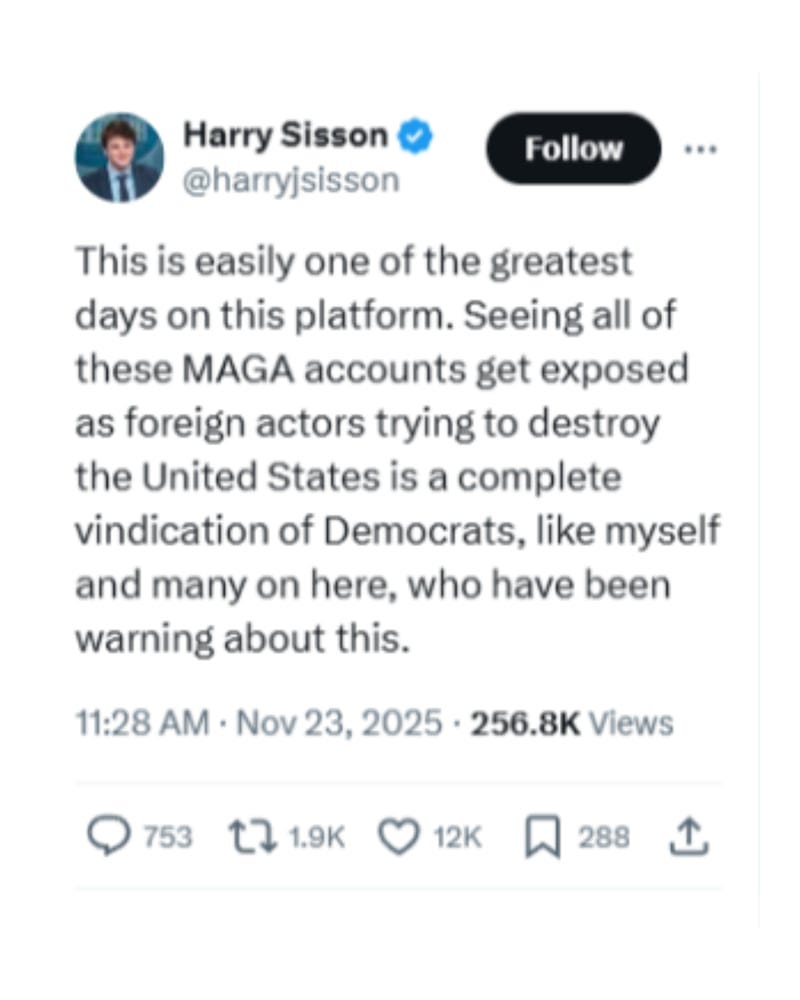
The new “About This Account” feature on X, meant to show basic background details like location and username history, detonated across the platform on Friday. Within minutes, users discovered that dozens of the site’s biggest MAGA and “America First” personalities were tweeting from places like Russia, India, Nigeria, and Eastern Europe. Democratic influencer Harry Sisson practically danced through the timeline, calling the revelations “a complete vindication” of warnings he and others have been making for years.
Some of the findings read like parody. MAGANationX—boasting nearly 400,000 followers and a bio dripping with patriotic fervor—turned out to be based in Eastern Europe. A massive Ivanka Trump fan account with a million followers, churning out anti-immigrant content on loop? That one’s coming straight from Nigeria. Left-wing influencer Micah Erfan summed it up: “It’s looking like half of their large accounts were foreigners posing as Americans all along.” Hard to argue when the receipts are right there on the profile.
X’s head of product Nikita Bier tried to blame “rough edges,” noting that locations can be obscured by VPNs and that the company is “working on it.” Conveniently, the feature disappeared for a few hours shortly after the foreign-actor floodgates opened—only to quietly reappear later. Totally normal rollout behavior for a company that once fired half its trust and safety staff and then wondered why impersonation exploded.
Experts say this is just the visible tip of a well-documented problem: foreign influence operations seeding disinformation, pressuring lawmakers, and faking domestic support for MAGA politics. Brett Meiselas of MeidasTouch urged users to consider how many elected officials have been swayed by accounts that don’t even live in the United States. Researchers flagged these patterns during the 2024 election, but now everyday users can see the rot for themselves.
It isn’t hard to understand the incentive structure. X pays users for engagement, and American political outrage is one of the most lucrative content categories on the site. For users in Nigeria, Bangladesh, or parts of Russia, the payouts can dwarf local incomes. And for Moscow-linked networks, the political upside speaks for itself.
The uncomfortable question now hangs in the air: how much of the MAGA movement’s online energy was engineered abroad? As influencer Ed Krassenstein asked, “Why are so many MAGA influencers from outside the U.S.?” Good question. And Musk’s own platform just handed us the clues.
Source: The Daily Beast
Editor: Amazing—MAGA keeps telling us to “wake up,” and it turns out half their digital army is literally clocking in from other continents.