


Democrats Win Big
Democrats walked away from Tuesday’s elections not divided, but emboldened—and that might be their biggest win of all.
Heading into the night, pundits expected the results to expose deep fractures between the party’s moderates and progressives. Instead, Democrats scored a string of victories across the map, giving both wings something to celebrate—and perhaps delaying the long-brewing ideological showdown for another day. As Rep. Alexandria Ocasio-Cortez put it, “Our assignment everywhere is to send the strongest fighters for the working class wherever possible.”
In Virginia, Abigail Spanberger’s pragmatic campaign for governor proved that competence and calm can still carry the day. “We sent a message to the whole world that in 2025, Virginia chose pragmatism over partisanship,” she told supporters. Meanwhile in New York City, Zohran Mamdani’s democratic-socialist crusade for affordability—rent freezes, universal childcare, and all—rallied young voters who’d grown weary of status-quo politics. Each victory, in its own way, validated a different flavor of the Democratic brand.
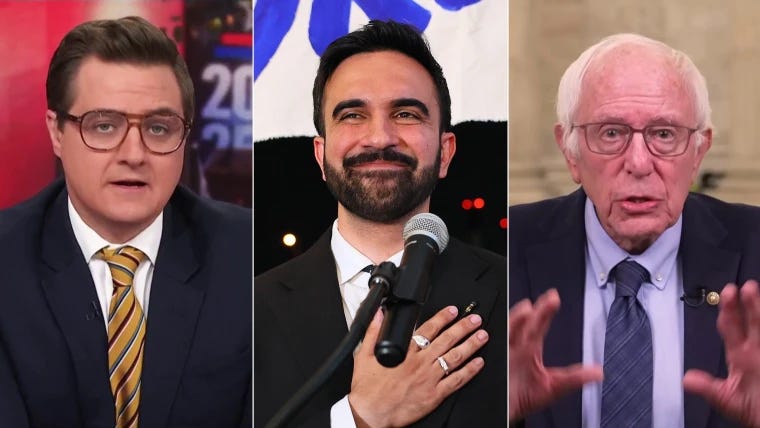
Strategist Kirsten Allen summed it up neatly: “Each candidate ran a race that reflected and excited their electorate.”
Translation—what works in Queens doesn’t necessarily play in Richmond, and that’s okay. The thread connecting both? A laser focus on the economy and cost of living. Exit polls showed those bread-and-butter issues trumped everything else in New York, New Jersey, and Virginia. The “soul of the nation” talk of 2020 has given way to “how much is gas this week?”—and voters rewarded candidates who noticed.
Of course, the party’s left flank sees more than coincidence. Bernie Sanders, ever the true believer, argued Mamdani’s victory proves bold, working-class policies aren’t radical—they’re popular. But even Mamdani’s fans admit his charisma played a big role, and 53 percent of New Yorkers called his proposals “unrealistic.”
For now, everyone gets to claim a piece of the glory. The question isn’t whether Democrats can win. It’s whether they can agree on why they did.
Source: mydailygrind.news
Editor: Let’s be real—nothing unites Democrats faster than a good election night. Give it a few months, though, and they’ll be back to fighting over who gets credit for saving the working class.
Parting shot: James Carville was right. “It’s the economy, stupid.” Here’s the real deal: We can fight on two levels. One, the economy. It’s like gravity. It may be a weak force but it’s always there. Two, cultural issues and civil & basic human rights.
Supreme Court Takes On Trump’s “Liberation Day” Tariffs—And The Limits Of Presidential Power
Trump’s sweeping new tariffs—hailed by him as “one of the most important days in American history”—are now colliding head-on with the Supreme Court.
At issue in Learning Resources v. Trump is whether the president’s power to “regulate” imports under the International Emergency Economic Powers Act actually allows him to tax them. Trump’s team argues it does, citing national emergencies and executive flexibility in foreign policy. But the law never mentions tariffs or taxes—and the justices now have to decide whether Trump has effectively invented a new presidential power out of thin air.
Supporters of the administration point to historical precedent, including a 1975 ruling that let President Nixon impose tariffs under an older statute. But critics counter that Congress has always been explicit when granting tariff authority—most notably in the Trade Act of 1974. If Congress meant to give presidents the power to raise billions through tariffs, they argue, it wouldn’t have buried it in a vague word like “regulate.” As law professor Jonathan Adler noted, “If courts defer to the president here, they’re deferring to taxation without congressional consent.”
Beyond the legal wrangling lies a fundamental constitutional fight. Is this about foreign policy—or about Congress’s “power of the purse”? Justice Neil Gorsuch and others have warned that unchecked executive taxation threatens the balance of power itself. The Court has been skeptical before of agencies claiming massive new authority from old statutes—what’s known as the “major questions doctrine.” Trump’s “Liberation Day” tariffs, which crash markets and rewrite trade policy overnight, fit that bill perfectly.
A ruling against Trump would curb his ability to unilaterally reshape trade through IEEPA—but it wouldn’t necessarily undo the damage or refund the billions already collected. The justices may instead focus narrowly on the law’s text and punt broader consequences to Congress and the lower courts. Either way, this case will test how far the Supreme Court is willing to let one man steer the world’s largest economy by proclamation.
Source: SCOTUSblog
Editor: Trump’s tariffs are the purest form of political theater—chaotic, lucrative, and legally flimsy. He’s turned “taxation without representation” into a presidential hobby, and now the Supreme Court has to clean up the mess—but will they? I seriously doubt it.
Trump’s Caribbean Power Play: Why Venezuela Is Suddenly Back in Washington’s Crosshairs
Trump isn’t just chasing drug boats—he’s drawing battle lines in America’s backyard.
The USS Gerald R. Ford slicing through the Strait of Gibraltar wasn’t a show of strength—it was a signal. U.S. firepower is coalescing in the Caribbean again, this time pointed squarely at Nicolás Maduro’s regime in Venezuela. The Pentagon’s Southern Command, long overshadowed by the Middle East and the Indo-Pacific, is suddenly center stage as President Trump revives a Cold War-era muscle flex close to home.
Trump’s justification? The “narco-terrorist” label. He’s branding Venezuela as a cocaine superhighway and using that to justify strikes and covert operations. But behind the anti-drug rhetoric is a classic geopolitical two-step—pressure the regime, test U.S. reach, and remind China and Russia who still calls the shots in the hemisphere. As one senior analyst put it, “The White House’s narcotics narrative is the cover story; regime pressure is the headline act.”
Meanwhile, Washington is playing both arsonist and firefighter—loosening sanctions to let Chevron pump Venezuelan oil while sending warships and drones toward Caracas. That blend of economic carrots and military sticks isn’t about drugs; it’s about leverage. Each move tightens the vise on Maduro while letting Trump sell “tough on socialism” back home ahead of an election cycle.
Still, questions remain: Is there real intelligence linking Caracas to trafficking, or just political smoke? What’s the endgame—coercion, regime change, or an oil deal wrapped in a flag? Congress doesn’t seem to know, and neither does the Pentagon. Until someone leaks the playbook, all we’ve got are shadow ops and plausible deniability sailing under the Stars and Stripes.
Source: Axios
Editor: Bold move to pick a fight in the Caribbean while the world’s on fire elsewhere. Nothing screams “strategic genius” like risking another proxy quagmire over oil, optics, and a dictator who’s outlasted every U.S. president since Bush.
Deadly UPS Plane Crash Rocks Louisville, Leaving Trail of Fire and Grief
A UPS cargo jet burst into flames moments after takeoff in Louisville, killing at least seven people and injuring eleven more in one of the city’s deadliest aviation disasters in years.
The McDonnell Douglas MD-11 freighter had barely left the runway Tuesday evening when it went down near Louisville Muhammad Ali International Airport, igniting a massive explosion that tore through nearby businesses and sent a thick plume of smoke stretching for miles. Governor Andy Beshear confirmed the grim toll late Tuesday, warning the number of dead could still rise. “The news out of Louisville is tough tonight,” he said, as more than a hundred firefighters battled flames consuming an entire city block.
Investigators believe one of the plane’s engines may have detached mid-air, triggering what former Department of Transportation Inspector General Mary Schiavo called an “uncontained engine failure.” She explained, “The engine spews out parts… they can cut through the plane and fuel lines. The poor pilots could do nothing at that point.” The resulting fireball engulfed the surrounding industrial area, hitting a petroleum recycling plant and multiple auto repair shops.
As the National Transportation Safety Board deploys a 28-member team to the crash site, Louisville residents are being asked to report debris but not to touch it. The crash prompted a temporary shelter-in-place order within a one-mile radius, flight cancellations at the airport, and the closure of local schools. Ten patients remain hospitalized—two in critical condition at UofL Hospital’s Burn Center.
UPS said in a statement it was “terribly saddened” by the tragedy and pledged full cooperation with investigators. Boeing, which inherited the MD-11 design after merging with McDonnell Douglas, has offered technical support. “Our concern is for the safety and well-being of all those affected,” the company said. Fire Chief Brian O’Neill confirmed the blaze is “controlled and contained,” but warned cleanup will continue for days due to fuel leaks and oil contamination.
Source: CNN
Editor: This wasn’t just a crash—it was a catastrophe built on split-second failure and sheer bad luck. The MD-11 has a reputation for tricky landings and instability, but takeoff disasters like this one are the stuff of nightmares. You can train for chaos, but you can’t outfly physics when an engine decides to tear itself apart.
Longest Shutdown in U.S. History Drags On as Trump Digs In #Day36
The federal government has now been shut down for 36 days—the longest in American history—leaving millions without paychecks, services halted, and Washington paralyzed by political stubbornness.
President Trump is refusing to negotiate with Democrats over expiring health insurance subsidies until they agree to reopen the government. Democrats, skeptical after his administration restricted SNAP food aid despite court orders, see little reason to trust him. “Stop this mess, come to the table, negotiate it,” said Sen. Amy Klobuchar, summing up the exhaustion on Capitol Hill. But as Trump meets only with Republican senators and avoids talks with Democrats altogether, the stalemate deepens.
The contrast to Trump’s first shutdown is striking. Back in 2019, he at least negotiated publicly over wall funding before caving after 35 days. This time, he’s letting the impasse rot from the sidelines. House Speaker Mike Johnson sent lawmakers home rather than compromise, and essential programs—from child care to food aid—are grinding to a halt. Transportation officials are warning of chaos in the skies if air traffic controllers miss another paycheck. Even Senate Republicans like John Thune are over it, declaring flatly, “Shutdowns are stupid.”
Behind the scenes, centrist senators from both parties are trying to piece together a deal to reopen the government while salvaging a few funding bills everyone can agree on. But the elephant in the room remains health care. Without renewed subsidies for the Affordable Care Act, millions are seeing their premiums skyrocket. Republicans want reforms before extending the program; Democrats want action before more families lose coverage. It’s a classic Washington standoff—urgent human need vs. political leverage.
To make things worse, Trump’s latest demand—that Senate Republicans end the filibuster to bypass Democrats—has gone nowhere. Even GOP leaders have balked, knowing that killing the 60-vote rule would eventually blow back when power changes hands. So instead of a functioning government, Americans get gridlock, finger-pointing, and a president who seems to think brinkmanship is a governing strategy.
Source: Associated Press
Editor: The “Art of the Deal” has officially become the “Art of the Shutdown.” Trump’s playbook now reads like a masterclass in political self-sabotage—hold the country hostage, then blame everyone else when the lights go out.
Gavin Newsom’s Prop 50 Win: A Blueprint for Democrats or Just a Power Play?
California voters handed Gavin Newsom a decisive win Tuesday, approving Proposition 50 and handing Democrats a potential five-seat pickup in Congress.
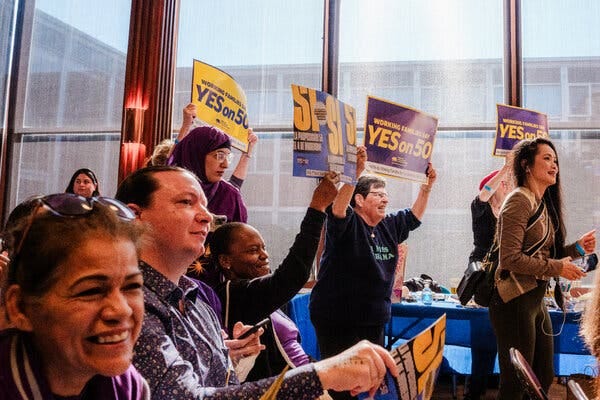
The measure overturns the state’s independent redistricting commission in favor of maps drawn by the legislature—yes, that’s a bold move—for the next few years, and it’s no secret why: Republicans, encouraged by Donald Trump’s redistricting push in states like Texas, aimed to squeeze more GOP seats in the U.S. House. Democrats responded with Prop 50. (TIME)
“It shows that he can get stuff done,” said Christale Spain, chairwoman of the South Carolina Democratic Party. “Democrats want somebody to fight back. He’s pushing back and fighting back.” (AP News) That quote nails it—Newsom isn’t just governing; he’s signaling he’s up for something bigger.
This victory lands at a moment when Democrats needed a win—and the timing couldn’t be stronger. With midterms ahead and control of Congress hanging by a thread, these five seats could tip the balance. But, as strategist Brian Brokaw warns: “Without that, Proposition 50 will have been just a blip along the way.” (AP News)
Make no mistake—this is Newsom’s launch pad. He’s raising national money, traveling outside California, and positioning himself as a bold alternative to Trump. But with major headwinds in his home state—housing affordability, wildfires, budget issues—this win doesn’t erase the baggage. The question lurking behind the triumph: can he turn legislative map-maneuvering into actual governance?
Source: The New York Times
Editor: Bold moves win headlines, but they don’t always win voters. This time, it worked. And I understand the conservative take on this, that we shouldn’t mess around with gerrymandering. I agree. Except in this case, Newsom did what had to be done.
This is the way I see it: I’m against killing people. But if somebody comes at me with a knife or gun, I will do what it takes to stop him, up to and including killing him.
You can call it self-defense. But you can’t call it hypocrisy. Not in either case.
There are times when you do “forget” your principles. This is a special case. OBVIOUSLY.