

Trump’s Power Play: Government Shutdown Becomes a Tool to Reshape Washington
The U.S. government has officially ground to a halt—again—but this time, the White House is treating the shutdown less like a crisis and more like a crowbar.
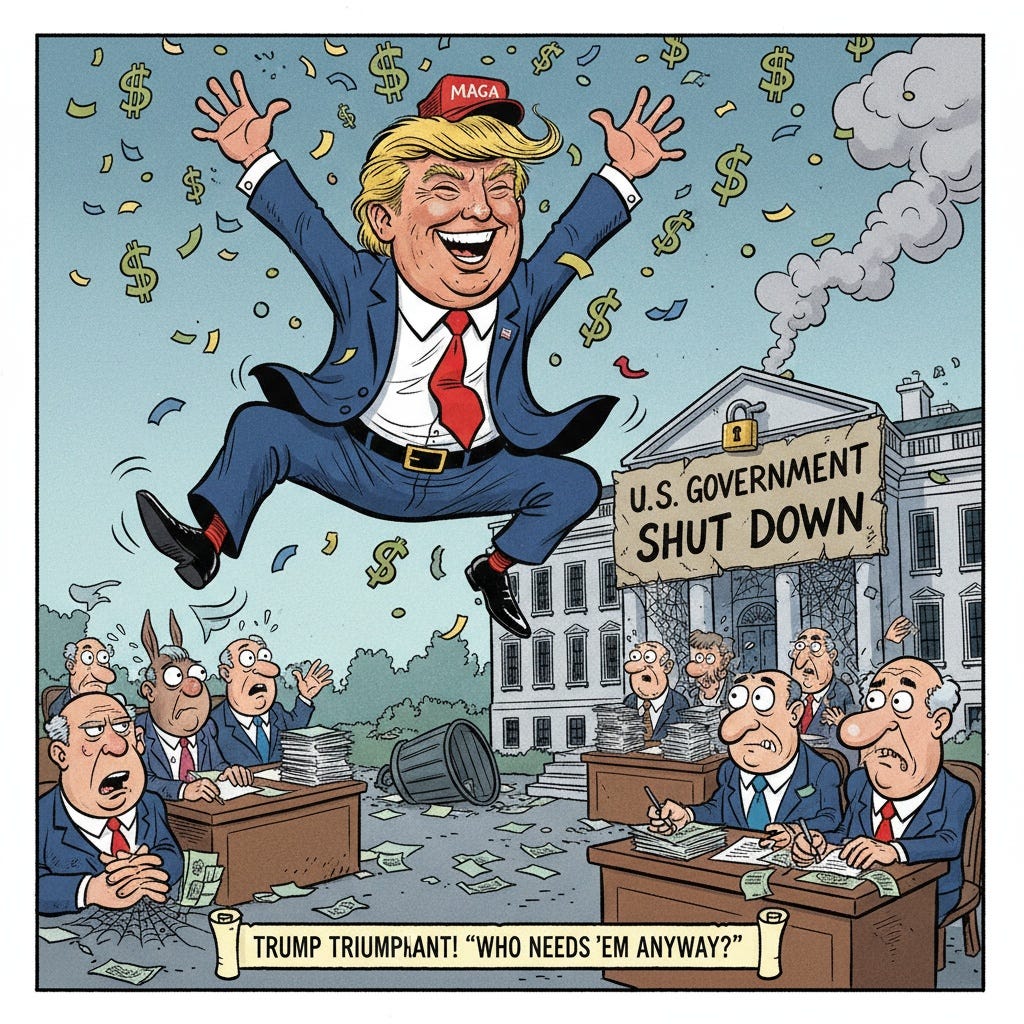
At 12:01 a.m. Wednesday, federal funding lapsed after Congress deadlocked over a temporary spending bill. The result: national parks are closing, small business loans are frozen, and thousands of federal workers are stuck in limbo—either furloughed, unpaid, or just confused. Critical security functions continue, but even many service members and law enforcement officers will be working without paychecks.
The immediate standoff comes down to health care subsidies. Democrats refuse to approve a Republican plan to fund the government through November 21 unless it includes an extension of Affordable Care Act subsidies expiring this year. Republicans, led by Trump and congressional allies, insist negotiations happen only after the government reopens. This shutdown is Trump’s fourth in two terms, but unlike 2019’s drawn-out fight, this one appears strategically engineered.
Behind the scenes, the administration is using the chaos to consolidate executive power. White House budget director Russell Vought has ordered agencies to prepare for mass firings, not just temporary furloughs. Guidance from the Office of Management and Budget includes rewriting federal grant regulations and openly challenging Congress’s constitutional control over spending. As Trump bluntly told reporters:
“We can do things during the shutdown that are irreversible, that are bad for them, and irreversible by them, like cutting vast numbers of people out, cutting things that they like, cutting programs that they like.”
Translation: This isn’t just political brinkmanship—it’s a structural remodeling of government on the fly.
The effects are already radiating out. Confused federal employees trickled into offices Wednesday morning to collect instructions—or their belongings. In D.C., tourism officials scrambled to reassure visitors with a “DC is Open” campaign, hoping to prevent a repeat of the 2013 tourism nosedive. The city’s economy, which only recently rebounded from the pandemic, now faces another potential gut punch.
Meanwhile, Trump’s aggressive use of “pocket rescissions” and budgetary sleight of hand has inflamed tensions on Capitol Hill. By blocking congressionally approved spending, he’s reignited constitutional debates over executive power reminiscent of his first impeachment. This shutdown isn’t just about keeping the lights off; it’s about rewriting who controls the switch.
Source: The Washington Post (gift article)
Editor: Trump isn’t just playing chicken with Congress—he’s trying to hotwire the car while everyone else argues over the keys. This is less a budget fight than a quiet coup via administrative memo. And judging by how flat-footed lawmakers look, he might just pull it off.
Obamacare Subsidies Turn Into the Fuse for Washington’s Shutdown Bomb
Millions of Americans are caught in the political crossfire as Congress battles over whether to keep enhanced Affordable Care Act tax credits alive.
At the core of the government shutdown fight isn’t just spending levels or procedural gridlock—it’s health care. Enhanced ACA subsidies, which make insurance cheaper for over 22 million people, are set to expire at the end of the year. Democrats are refusing to pass any funding bill that doesn’t extend them. Republicans, backed by Trump, are balking at the price tag and political implications. The result: a federal government grinding to a halt while millions brace for higher premiums.
These subsidies cap how much of your income goes toward ACA insurance and were expanded under Biden in 2021, then extended in 2022. Without congressional action, they’ll expire in December. The math is brutal: according to KFF, average annual out-of-pocket premiums could jump from $888 to $1,904, and the Congressional Budget Office projects 4.2 million Americans will lose coverage if Congress lets the enhanced credits lapse. Extending them would cost $350 billion through 2034—money Democrats insist is essential, and Republicans call bloated.
Trump, never one to skip a headline, claims Democrats want “more than $1 trillion to fund healthcare for unauthorized immigrants.” That’s a stretch. What Democrats actually want is to roll back restrictions Trump signed into law in July that stripped ACA and Medicaid eligibility from “lawfully present” immigrants such as refugees and asylum seekers. The CBO says those restrictions save $131 billion over 10 years but leave 1.4 million people without coverage. Democrats want those rules reversed; Republicans see a political wedge they’re happy to hammer.
The politics are complicated. Republicans hate Obamacare on principle, but they’re also keenly aware that the subsidies are popular in red and purple states like Texas, Georgia, and Alaska—where Senate races are on the line next year. Even some GOP lawmakers, like Lisa Murkowski, want to see the subsidies extended, at least temporarily. Others in the House want them phased out entirely. Behind the scenes, negotiators are floating one-year extensions, eligibility caps, and anti-fraud provisions as bargaining chips.
The fight over these tax credits has become the lynchpin of any deal to reopen the government. What should be a wonky budget line item is now a live political grenade, and both parties are yanking the pin from opposite ends. Health care, immigration, and electoral math have converged into a single, combustible issue.
Source: The Wall Street Journal (gift article)
Editor: This is classic Washington: Take a crucial policy affecting millions of households, wrap it in election-year posturing, and then use it as a bargaining chip to hold the entire government hostage. If dysfunction were an Olympic sport, Congress would podium every time.
Federal Agencies Send Blisteringly Partisan Emails Blaming Democrats for Shutdown Threat
Multiple federal agencies blasted out nearly identical emails accusing Democrats of “forcing” a government shutdown—an unprecedented partisan move inside official government communications.
On Tuesday, employees across agencies like Interior, Homeland Security, Health and Human Services, Treasury, and the Peace Corps received staff-wide messages blaming congressional Democrats for blocking a continuing resolution to keep the government funded through Nov. 22. The emails claimed President Trump “strongly supports” the funding bill and accused Democrats of holding it up over “unrelated policy demands.” Typically, internal government communications steer miles clear of overt political rhetoric—but this administration is once again playing by its own rules.
The messages were crafted carefully, likely to tiptoe around federal ethics laws like the Hatch Act and the Anti-Lobbying Act, which restrict political activity and lobbying using government resources. Ethics experts noted the wording was “highly inappropriate, highly irregular, but not illegal.” As Donald Sherman of CREW put it:
“This is too cute by half and wouldn’t clear legal vetting in a normal administration.”
The emails avoided explicit electioneering or direct calls to pressure Congress, but they pushed the boundaries of what’s typically acceptable for federal agencies.
The White House’s Office of Management and Budget reportedly directed the messaging, but declined comment when asked. Meanwhile, Democrats accused the administration of deliberately manufacturing a shutdown crisis to slash federal jobs and advance unrelated policy goals. Senate Minority Leader Chuck Schumer blasted the GOP proposal, saying, “Their bill has not one iota of Democratic input. That is never how we’ve done this before. It’s up to the Republicans whether they want a shutdown or not.”
HHS went further, telling reporters it was “unfortunate that this message had to be sent because of Congressional Democrats holding the government hostage,” and claimed Democrats’ actions threatened health services for millions. Meanwhile, HUD posted a pop-up on its public website accusing “the radical left” of trying to “inflict massive pain on the American people” with a $1.5 trillion “wish list.” Ethics watchdogs were aghast; Kedric Payne of the Campaign Legal Center said he’d “never seen anything like it.”
This kind of partisan messaging from inside the government represents a dramatic break from long-standing norms. Previous administrations—even during tense shutdowns—treated internal communications as neutral operational updates. Now, entire agencies are being used like megaphones for political blame games.
Source: The Hill
Editor: This isn’t just bending the rules—it’s turning federal email servers into campaign blast lists. The administration didn’t just cross a line here; it pretended the line never existed.
Trump Proposes Using U.S. Cities as Military “Training Grounds” in Fiery Speech to Top Brass
In a speech that blurred the line between national defense and domestic control, President Trump told hundreds of generals and admirals the military must combat an “invasion from within” and train in America’s cities to do it.

At Marine Corps Base Quantico on Tuesday, Trump convened military leaders from around the world on short notice to outline a sweeping, norm-breaking vision for the military’s role at home. He called for using “dangerous cities” as live training environments and declared that internal threats were “no different than a foreign enemy but more difficult in many ways because they don’t wear uniforms.” Flanked by Defense Secretary Pete Hegseth, Trump tied his domestic security agenda directly to Pentagon culture wars, making the military a stage for political theater.
Hegseth opened with a scorched-earth attack on what he called “woke” policies inside the armed forces. He demanded senior officers either embrace his agenda or resign, declaring, “The era of politically correct, overly sensitive don’t-hurt-anyone’s-feelings leadership ends right now at every level.” Trump followed by warning attendees, “If you don’t like what I’m saying, you can leave the room — of course, there goes your rank, there goes your future.” The crowd of generals responded mostly with silence, a sharp contrast to the rally-like atmosphere at Trump’s speeches to rank-and-file troops.
The administration’s agenda included loosening disciplinary rules, rolling back hazing protections, and imposing “male-level” fitness standards across combat roles. Hegseth mocked environmental initiatives and diversity programs, calling the Pentagon’s past emphasis on inclusion “an insane fallacy.” His stance on physical standards was blunt: “If women can make it, excellent; if not, it is what it is.” Critics say this is less about readiness and more about cultural grievance. As Janessa Goldbeck, a Marine veteran and CEO of Vet Voice Foundation, put it, Hegseth “has a cartoonish, 1980s, comic-book idea of toughness he’s never outgrown.”
Trump also doubled down on expanding the military’s domestic footprint. He’s already violated the 150-year-old Posse Comitatus Act by deploying National Guard and active-duty forces in cities over state objections. Now, he wants urban centers themselves to become training arenas, arguing this would prepare troops for unconventional threats at home. Sen. Jack Reed blasted the meeting as “an expensive, dangerous dereliction of leadership,” warning that Hegseth’s ultimatum to senior officers—conform or step aside—was “profoundly dangerous.”
This gathering wasn’t a routine briefing; it was a deliberate flex. By pulling generals off global missions to lecture them on culture wars and domestic deployments, Trump and Hegseth made clear they intend to reshape the military in their own image—politically, culturally, and operationally. What used to be unthinkable is now a Tuesday at Quantico.
Source: AP News
Editor: Turning American cities into military playgrounds isn’t “tough,” it’s authoritarian cosplay. And dragging generals into a culture-war seminar while the government teeters on shutdown? That’s less Commander-in-Chief and more reality TV showrunner.
U.S. Job Market Takes a Sudden Nosedive as Private Employers Slash 32,000 Jobs
America’s labor market just threw investors and economists a curveball: private payrolls unexpectedly dropped by 32,000 jobs in September, the worst showing in months.
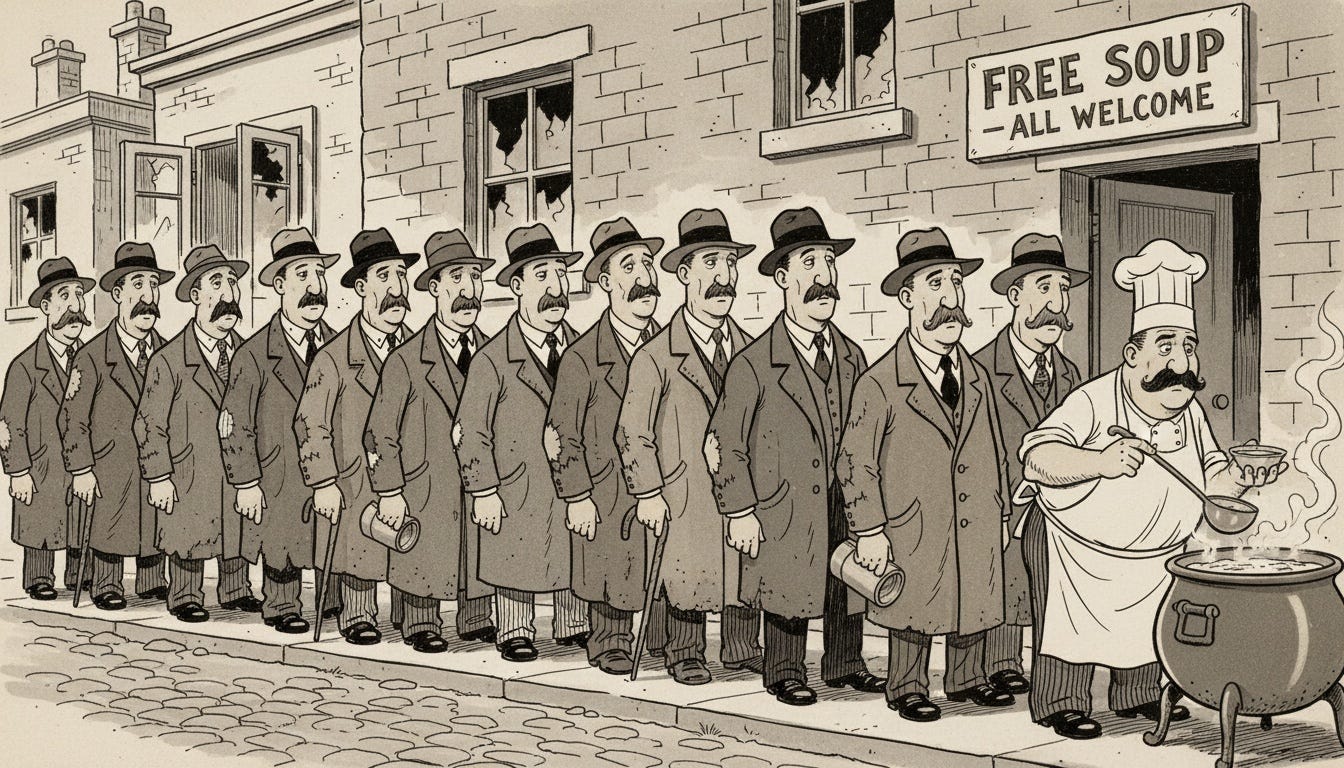
Analysts had predicted a modest gain of 50,000 private-sector jobs, but the ADP employment report released Wednesday flipped that forecast on its head. Even worse, August’s numbers were massively revised downward—from a previously reported gain of 54,000 to a loss of 3,000. Hospitality took the hardest hit, shedding 19,000 jobs, while manufacturing posted another 2,000-job decline. The Midwest was pummeled, losing 63,000 positions, while the Northeast eked out a 21,000-job gain. The trendline isn’t just volatile—it’s sliding in the wrong direction.
The timing couldn’t be worse. With the federal government now officially shut down after lawmakers failed to reach a funding deal, the Labor Department’s closely watched jobs report has been suspended. That leaves investors and policymakers flying blind, forced to rely on private data like ADP’s to gauge the economy.
“The suspension of economic statistical releases will make it harder to track the state of the economy during the shutdown,” said Bill Adams, chief economist at Comerica Bank.
Markets are already bracing for sharper swings as traders parse private numbers that typically play second fiddle to government data.
Small businesses are cutting jobs at an accelerating pace, while large companies are tiptoeing forward with selective hiring. Construction dropped another 5,000 positions, continuing a yearlong decline, and goods-producing industries trimmed 2,000 more. The ADP data, produced in partnership with Stanford’s Digital Economy Lab, is notoriously bumpy month to month, but the consistent downward revisions paint a clear picture: momentum is fading, fast.
Ironically, Wall Street may see a silver lining in the grim jobs picture. A cooling labor market increases pressure on the Federal Reserve to cut interest rates again. The central bank already reduced rates for the first time this year in September, dropping its benchmark to the 4.00–4.25% range. Economists expect another cut in October to spur hiring and ease borrowing costs, which could buoy large corporations but do little for struggling small businesses.
Fed Chair Jerome Powell acknowledged the uneven pain in the job market, noting that “people who are more at the margins — kids coming out of college, minorities — are struggling to find jobs.” With economic data going dark during the shutdown and job losses accelerating, the Fed may become the only player left trying to keep the lights on.
Source: Daily Mail
Editor: This is the part of the roller coaster where the track drops and everyone pretends they’re not worried. Payrolls are shrinking, data’s gone dark, and the Fed is holding the wheel with one hand while watching the economy skid on black ice.
GOP Blocks Swearing-In of New Democrat, Stalling Final Signature Needed to Force Epstein Files Vote
House GOP leaders refused to swear in Rep.-elect Adelita Grijalva this week, effectively blocking the last signature needed to trigger a bipartisan vote to release Jeffrey Epstein’s files.
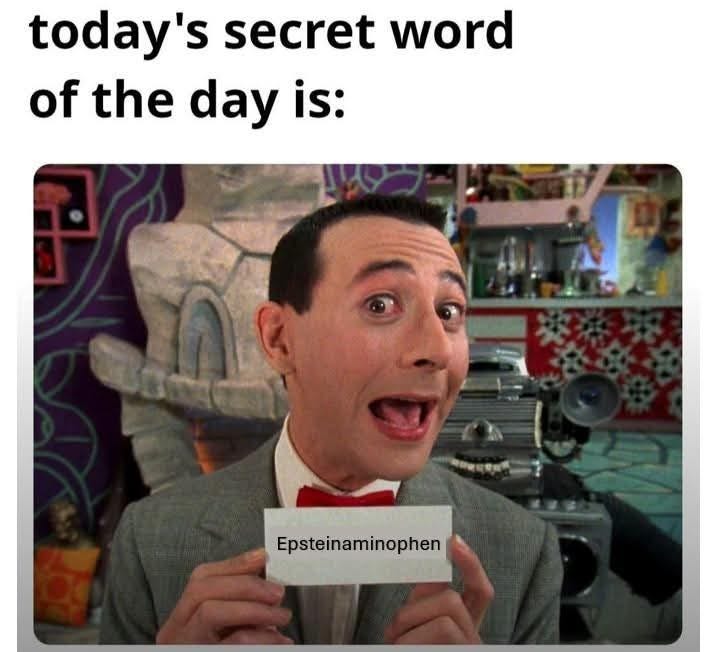
Grijalva (D-Ariz.), elected last week in a special election to replace her late father, had planned to sign the discharge petition immediately upon taking office. That petition currently has 217 signatures—just one short of forcing a floor vote on legislation Republican leadership and President Trump are trying to bury. Democrats expected her to be sworn in during Tuesday’s brief pro forma session, but Speaker Mike Johnson and his allies declined, kicking the can to Oct. 7 when regular business resumes.
Grijalva didn’t mince words. “There’s no reason why I couldn’t have been sworn in, and it’s very problematic, because we’re facing a government shutdown,” she said, noting that Florida Republicans were sworn in during a similar session earlier this year.
Johnson’s office claimed they’re simply following “standard practice,” but the move conveniently stalls a bipartisan push that GOP leadership clearly doesn’t want advancing on their watch.
The discharge petition, spearheaded by Reps. Thomas Massie (R-Ky.) and Ro Khanna (D-Calif.), aims to bypass Republican leadership and force the release of Epstein-related documents. It’s attracted an unlikely alliance, with signers including Marjorie Taylor Greene, Nancy Mace, and Lauren Boebert. If Grijalva were sworn in this week, the petition would immediately hit the 218-signature threshold required to force the vote. Instead, leadership is running out the clock.
Editor’s prediction: The vote eventually takes place and then the real vote takes place and it FAILS. Watch this space…
Tuesday’s session turned chaotic when Democrats tried to force votes and demand Grijalva’s swearing-in, only to be gaveled down by Rep. Morgan Griffith (R-Va.). Meanwhile, Democratic women lawmakers sent a formal letter to Johnson urging immediate action, pointing out that swearing-ins typically happen within 24 hours of a special election. “This instance should be no different,” wrote Rep. Teresa Leger Fernández (D-N.M.), chair of the Democratic Women’s Caucus.
Republicans argue the Epstein disclosure bill doesn’t sufficiently protect victims and that oversight committees are already investigating. But it’s hard to ignore the political calculus: one freshman Democrat is all that stands between leadership and a forced vote they clearly don’t want. And conveniently, that vote has now been delayed until after the shutdown drama plays out.
Source: The Hill
Editor: Blocking a swearing-in to stall the release of Epstein files is a new level of congressional cynicism. “Standard practice” my foot—this is procedural gamesmanship dressed up as calendar management. If you ever needed proof that bipartisan transparency ends where political self-preservation begins, here it is in all its swampy glory.