


Maduro Rattles His Saber as U.S. Forces Crowd the Caribbean
Venezuela’s dictator is playing war games with toy soldiers while the U.S. quietly parks an armada on his doorstep.
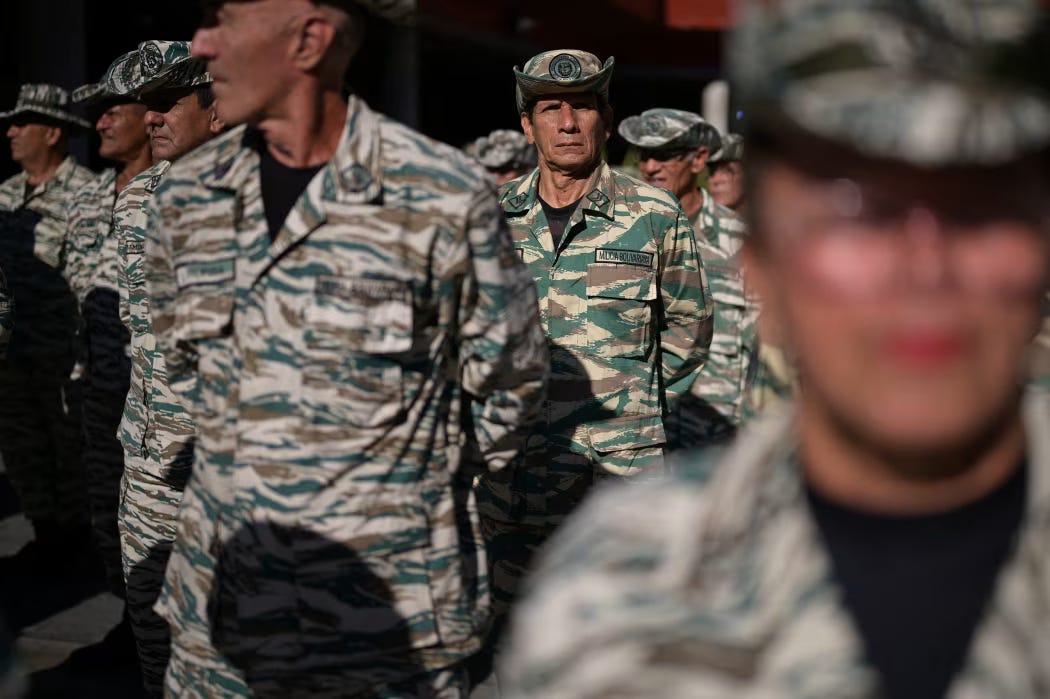
Nicolás Maduro is mobilizing troops and civilian militias, warning his people to “get ready to earn peace” as the largest U.S. military buildup in the Caribbean since the 1980s unfolds offshore. State media paints America as a “Nazi-like” empire bent on stealing Venezuela’s oil, while the Pentagon calmly moves aircraft carriers, F-35s, and special ops units within striking distance.
On Venezuelan TV, elderly militiamen jog through obstacle courses and crawl under barbed wire to prove the homeland’s readiness for “combat.” In reality, the country’s 125,000-man army is hollowed out—underfed, underpaid, and riddled with Maduro loyalists. Former officers now in exile call it a Potemkin defense force meant to scare the U.S. into waiting things out. “They know it’s a lost cause but they’re trying to buy time,” said one.
Meanwhile, Washington’s patience is wearing thin. Trump has already green-lit at least five strikes on “drug boats,” killing 27 people and drawing fire from lawmakers who call the killings extrajudicial. The Pentagon’s presence now includes Navy destroyers, submarines, B-52s, and the Army’s elite “Night Stalkers.” The message is simple: we can hit anything we want, anytime we want.
Inside Venezuela, the strongman rallies supporters with threats and bravado. “Raise your hands if you want to be a slave to the gringos,” he barked this week. Maduro leans on Colombian guerrilla allies like the ELN to keep control, while his top henchmen—Cabello and Padrino López—pose in fatigues and promise to fight “like fierce beasts.”
But even as he beats his chest, Maduro’s economy is collapsing again, with inflation projected at 682 percent next year. Ordinary citizens whisper their real hope: not for war, but for the strongman to finally fall. “I’d like the economy to get better,” said one Caracas resident. “It’s important for a change in government for that to happen.”
Source: Wall Street Journal
Editor: Maduro is puffing his chest like a bullfrog on borrowed time. The U.S. doesn’t need to invade—his regime is already collapsing under its own corruption. The only thing keeping him afloat is propaganda and oil fumes.
Theatrics are easy when your soldiers are hungry and your jets can’t fly without Russian spare parts.
House GOP Blocks Epstein Files Vote by Refusing to Seat Democrat
Speaker Mike Johnson is holding up a new Democrat’s swearing-in—and with it, the vote to force release of the Epstein files. #EpsteinFiles
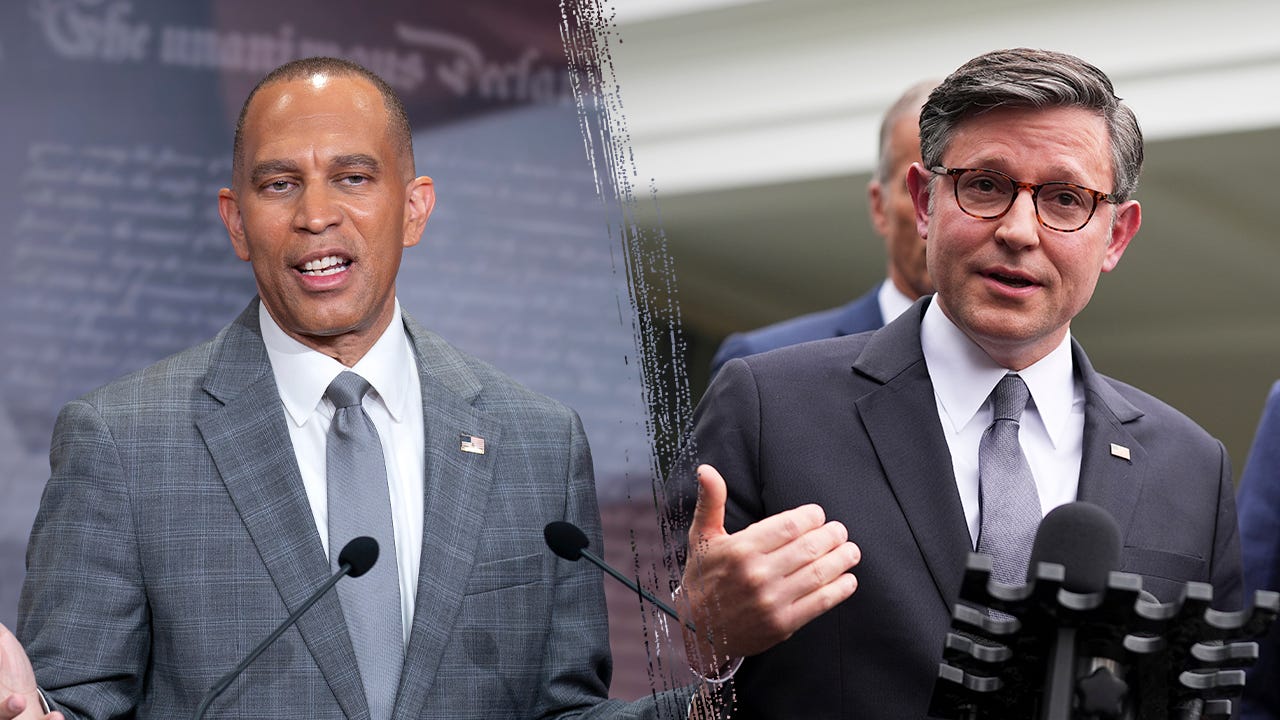
House Minority Leader Hakeem Jeffries (D-N.Y.) is demanding Johnson seat Rep.-elect Adelita Grijalva (D-Ariz.), whose absence keeps Democrats one vote short of triggering a discharge petition to expose Jeffrey Epstein’s secret network. Grijalva’s election was certified weeks ago, but Johnson’s refusal to hold even a symbolic session to swear her in reeks of political obstruction.
“Her election has been officially certified by the state of Arizona,” Jeffries wrote in a blistering letter. “Yet, for more than three weeks House Republicans have denied the people of Arizona’s 7th district their rightful representation in Congress.” In other words: Johnson’s holding democracy hostage until he gets what he wants—a budget deal and a stalled government.
Grijalva, who won a special election on Sept. 23 to replace her late father, has been camped out in D.C., begging to be sworn in. She doesn’t care about the ceremony—she just wants to serve. But Johnson, suddenly obsessed with “pomp and circumstance,” claims she deserves a full House audience. That’s rich considering he used the same pro forma sessions earlier this year to seat two Florida Republicans practically overnight. The difference? Grijalva’s signature would be number 218—the one that breaks the Epstein files wide open.
Johnson insists his opposition to the bill is about protecting Epstein victims’ privacy, not shielding political allies. Democrats aren’t buying it, especially after reports that Trump’s name appeared in Epstein’s infamous “birthday book” and, according to the Wall Street Journal, in unreleased DOJ files. Johnson says his Oversight Committee lawyers are already “combing through” the documents in New York—a nice way to say, we’ll release them when hell freezes over.
The deeper this drags on, the worse it looks. One side wants transparency and accountability; the other wants delay and distraction. If Johnson really cared about integrity, he’d seat Grijalva, hold the vote, and let the chips fall. Until then, the House isn’t just gridlocked—it’s complicit.
Source: The Hill
Editor: Johnson’s moral compass spins like a roulette wheel in a hurricane. “Pomp and circumstance”? Please. This isn’t about pageantry—it’s about power. The Speaker knows Grijalva’s vote could blow the Epstein coverup wide open, and that’s why he’s keeping her in the waiting room.
The swamp doesn’t drain itself—it just clogs the pipes and calls it procedure.
‘Operation Move Earth’: How Assad’s Regime Dug, Moved, and Hid Tens of Thousands of Bodies
What began as shallow trenches in Syria’s soil became a conveyor belt of death—and the dictator tried to bury the evidence twice.
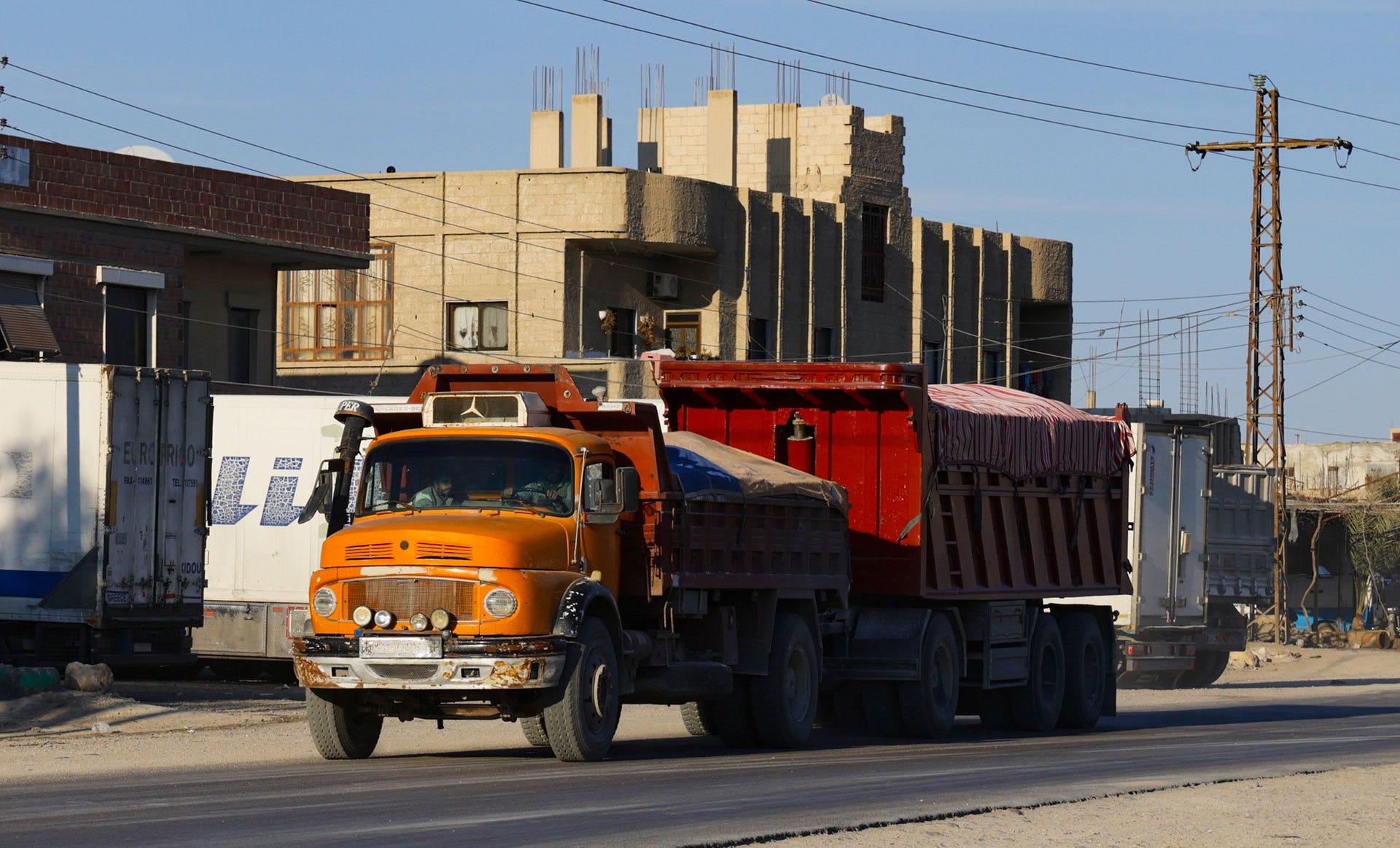
Newly uncovered witness testimony, satellite imagery, and military documents confirm that Bashar al-Assad’s government systematically executed and buried tens of thousands of Syrians between 2013 and 2018—then dug them up and reburied them to erase the crime. The gruesome operation, code-named Move Earth, was carried out under orders that no one was to speak, photograph, or stop driving, “on pain of death.”
At first, the bodies came by the truckload from prisons like Tishreen and Sednaya—blindfolded, bound, often naked. “I couldn’t sleep or eat for the first two weeks because of the horror of what I saw,” one bulldozer operator told Reuters. “But after that, something inside me snapped and I got used to it.” The early graves were too shallow; dogs dug up remains and locals complained of the stench. By 2014, the regime had refined its killing logistics: 4-meter-deep trenches, dozens of meters long, filled night after night. Witnesses estimate between 60,000 and 80,000 people were buried at Qutayfah alone.
When Assad realized the mass graves could expose his crimes, his generals launched Operation Move Earth—a euphemism for moving human remains. Colonel Ismandar, a logistics officer whose name appears on official burial records, told drivers to say they were “hauling dirt.” But they were hauling bodies—some reduced to bone, others freshly killed. “Some were merely decomposed skulls and bones, while others were still fresh,” said one officer overseeing the work. The stench followed them through the desert as the trucks made four trips a week for two years, moving corpses from Qutayfah to a new site near Dhumair.
By 2021, Dhumair’s trenches stretched for 2 kilometers, each one roughly 2 meters wide and 3 meters deep. Reuters reporters visiting the site this year found human bones and skull fragments scattered on the surface. Locals told of trucks breaking down mid-route and mechanics fixing them with full loads of bodies still inside. “Everywhere you look,” one mechanic said, “there are people buried beneath the earth.” The Assad regime kept no official record, and survivors say the government deliberately undercounted the dead—babies and children among them—to mask the full scale of the slaughter.
Assad’s generals deny everything, and the new Syrian government under President Ahmed al-Sharaa has stayed silent. But satellite evidence, court testimony, and survivors’ accounts tell the same story: an industrial-scale coverup of war crimes, ordered from the palace and executed with military precision. One former commander put it bluntly: “I challenge you to find anything issued in Bashar al-Assad’s name. He knew reckoning would come one day, and he wanted to keep his hands clean.”
Source: Reuters
Editor: Assad didn’t just bury his victims—he buried the truth with them. Now the desert is whispering it back. These weren’t battle casualties; they were human beings erased by bureaucracy and bulldozers. Every tyrant eventually fears the same thing: that the earth remembers.
Millions March in ‘No Kings’ Protests as Trump Dismisses Democracy—Again
From Los Angeles to D.C., Americans are pouring into the streets to remind Donald Trump that this country doesn’t do monarchs.

Organizers of the nationwide “No Kings” rallies say millions will march this weekend against the president’s growing authoritarian streak—one punctuated by ICE raids, troop deployments to blue cities, and that absurd birthday military parade Trump threw himself this summer. “The purpose here is to stand in solidarity, to organize, to defend our democracy and protect each other and our communities, and just say enough is enough,” said Lisa Gilbert of Public Citizen, one of the event’s leaders.
The protests come as the White House appears utterly indifferent. When asked about the growing demonstrations and Trump’s critics calling him a monarch in all but name, press secretary Abigail Jackson shrugged, “Who cares?”—which, to be fair, could double as the administration’s motto. Trump’s defenders, like House Speaker Mike Johnson, have labeled the protests “hate America rallies,” a line that might play well in MAGAland but rings hollow when you’re literally watching millions of Americans demanding accountability.
This weekend’s turnout could exceed the five million who hit the streets in June. The organizers’ message, emblazoned across the No Kings website, says it all: “The president thinks his rule is absolute. But in America, we don’t have kings and we won’t back down against chaos, corruption, and cruelty.” It’s a not-so-subtle jab at Trump’s increasingly imperial behavior, from ordering National Guard deployments against political enemies to insisting on parades celebrating himself.
Sociologist Liz McKenna says that while protests of this magnitude rarely deliver immediate policy shifts, they still shape public consciousness. “The strategy on the part of the organizers is to show that ‘we’re not backing down,’” she said. But she also noted that mass movements today often fizzle without institutional follow-through—a fair warning for activists trying to outlast Trump’s chaos machine.
Whether the movement sparks real change or just another photo op remains to be seen. What’s clear is that millions of Americans still believe democracy’s worth marching for—even if the guy in the White House believes he was born to rule it.
Source: NPR
Editor: Trump throws tantrums, not parades, but the effect’s the same—ego before country. When the White House’s response to millions of citizens protesting tyranny is “Who cares?”, it’s safe to say the crown’s already on his head. The people are just reminding him it’s rented.
The irony? The man obsessed with loyalty can’t seem to inspire it anywhere outside his own reflection.
Trump Dangles $40 Billion Over Argentina’s Head—With a Political String Attached
Donald Trump just told Argentina their $40 billion bailout depends on who wins their election.
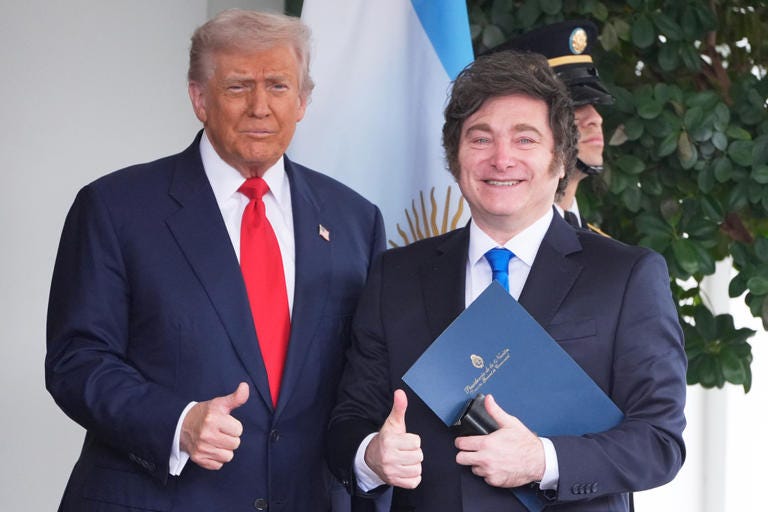
The administration announced plans to double U.S. financial support for President Javier Milei’s struggling government—another $20 billion in loans and credit from private banks and sovereign funds—on top of an existing $20 billion Treasury swap line. Treasury Secretary Scott Bessent called it “a private-sector solution,” but Trump made it clear the “solution” could vanish if Milei’s party loses next week’s midterms.
“If he loses, we are not going to be generous with Argentina,” Trump said after a White House meeting with Milei. The Argentine peso immediately slipped another 0.7%, and Wall Street wobbled before recovering slightly. Translation: when the U.S. president turns global economics into political poker, the house always wins—and everyone else pays the tab.
Argentina’s opposition lit up instantly. Former President Cristina Fernández, now under house arrest, posted on social media: “Trump to Milei in the United States: ‘Our agreements depend on who wins election.’ Argentines … you already know what to do!” Centrist leader Martín Lousteau accused Trump of caring less about Argentina and more about saving Milei, saying bluntly, “Nothing good can come of this.” Maximiliano Ferraro of the Civic Coalition went further, calling Trump’s words “a blatant act of extortion against the Argentine Nation.”
While Bessent painted the new $20 billion package as a win-win—“many banks are interested in it and many sovereign funds have expressed interest,” he said—the bigger story is that Trump tied foreign aid to political allegiance. He framed it as helping “our neighbors,” but his neighbors apparently need to vote the right way first.
Argentina’s peso is still tumbling, its people are furious, and its democracy just got an unwelcome reminder: when Trump talks about “America First,” he really means Trump First.
Source: Associated Press
Editor: It takes a special kind of arrogance to use a foreign nation’s financial crisis as campaign leverage. Trump’s version of diplomacy is a loan shark in a red tie—help for a price, loyalty included. The man’s never met a moral boundary he didn’t see as negotiable.
If extortion were an export, America’s trade deficit would be gone by morning.
Trump Pulls Back on Missile Deal After Call With Putin, Leaving Zelenskyy Hanging
Trump told Ukraine it can’t have U.S. missiles—right after a cozy phone call with Putin.
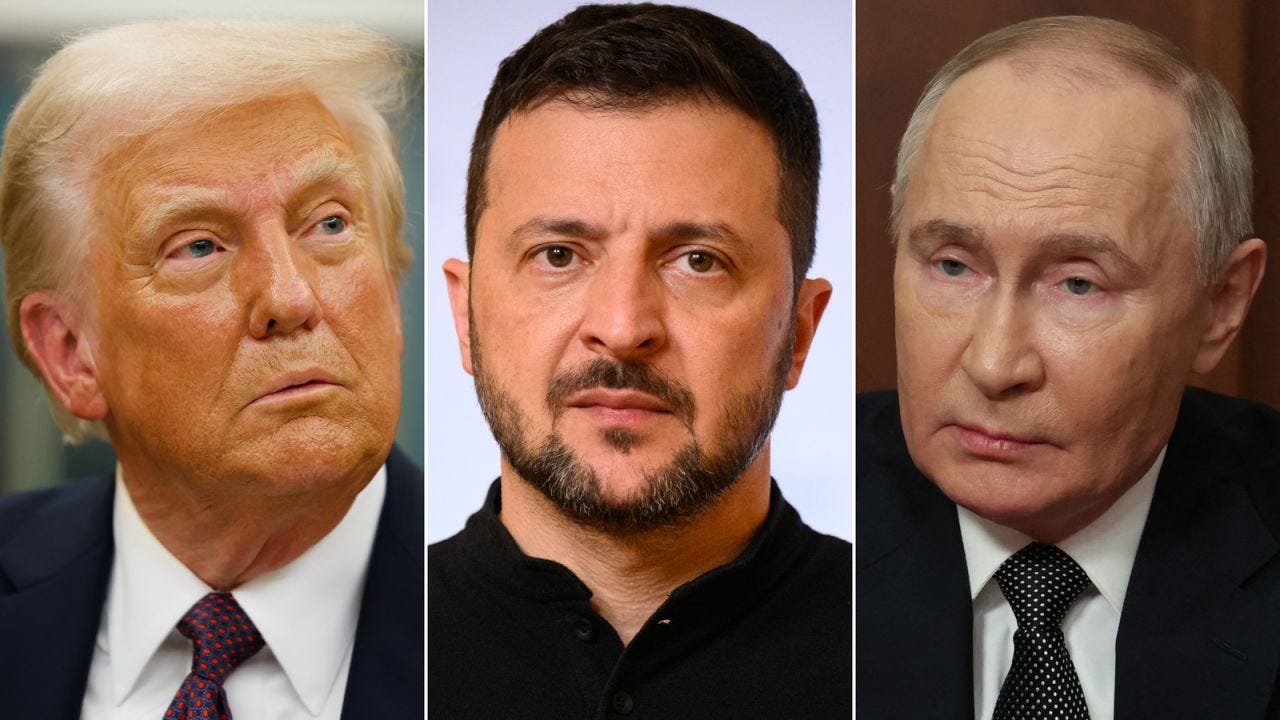
Ukrainian President Volodymyr Zelenskyy arrives in Washington hoping to secure long-range Tomahawk cruise missiles to strike deep inside Russian territory. Instead, he’s walking into a White House that’s suddenly gone cold. After a lengthy conversation with Vladimir Putin, Trump backed away from the idea entirely, telling reporters, “We need Tomahawks for the United States of America too. We have a lot of them, but we need them. I mean we can’t deplete our country.”
That statement, equal parts nationalistic and transactional, came just hours after Putin warned that arming Kyiv would “cause substantial damage to the relationship between our countries.” Message received. Trump’s tone toward Ukraine has shifted from bullish to bureaucratic, and now Zelenskyy’s trip looks less like diplomacy and more like damage control.
Zelenskyy had hoped to show strength by securing the weapons and by pitching U.S.-Ukraine energy deals—offering to store American liquefied natural gas in Ukraine’s vast facilities to expand “the presence of American businesses.” But what he really needs is leverage. His foreign minister said even talking about the Tomahawks had pushed Putin toward negotiations, insisting, “Strength can truly create momentum for peace.” Trouble is, Trump seems more interested in preserving his relationship with Moscow than Kyiv’s survival.
The White House insists peace is the priority. Trump has cast himself as the self-appointed dealmaker of world conflicts, fresh off what he calls a “successful” Israel-Hamas ceasefire. He’s even announced an upcoming meeting with Putin in Budapest to “discuss ways to end the war.” But every so-called peace overture seems to come with a wink toward the Kremlin—and a shrug toward Ukraine.
Trump told reporters the U.S. might have to mediate “separate but equal” talks between Putin and Zelenskyy, a phrase that would make any history teacher cringe. The problem isn’t logistics—it’s loyalty. Zelenskyy is showing up with hope and handshakes; Putin’s already got Trump on the line.
Source: Associated Press
Editor: Trump treating U.S. missiles like Monopoly pieces while Putin moves tanks across borders isn’t “art of the deal”—it’s art of appeasement. Every time Trump flirts with Moscow, Ukraine pays the price. The only thing he’s arming is Putin’s confidence.