

Jane Goodall’s Final Lesson: A Life That Blurred the Line Between Us and the Wild
Jane Goodall changed the way humanity sees itself—and now, at 91, the legendary primatologist and environmental advocate has passed away while still on tour inspiring new generations.
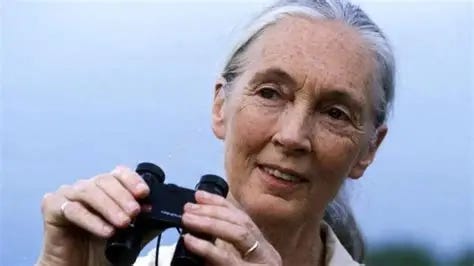
Her death, announced by the Jane Goodall Institute, marked the end of a life spent living among chimpanzees, challenging scientific orthodoxy, and campaigning for a planet she refused to give up on. Goodall died of natural causes in California during a U.S. speaking tour, a testament to her relentless mission to educate and inspire until the very end.
Goodall’s career began in the African wild, where she broke scientific taboos by naming the chimpanzees she observed instead of numbering them. Her groundbreaking discoveries—that chimps use tools, have complex emotions, and even wage war—fundamentally redrew the map between human and animal behavior. “What the chimps have taught me over the years is they’re so like us. They’ve blurred the line between humans and animals,” she once said. That line never recovered, and frankly, we’re better for it.
Her ability to captivate hearts as well as minds made her a global icon. From National Geographic covers to packed auditoriums, Goodall used storytelling—not academic detachment—to shift public consciousness. Even in her later years, she was known to let out a pitch-perfect chimp whoop during speeches before diving into climate change, biodiversity loss, and the moral responsibility of humans as stewards of the planet. She balanced brutal ecological truths with a simple, stubborn hope: that people could change course.
The world responded in kind. Honors poured in: the Presidential Medal of Freedom from Joe Biden, the Templeton Prize for blending science and spirituality, and tributes from leaders like António Guterres, who called her “our dear Messenger of Peace.” She inspired generations of scientists, activists, and everyday people—including young researchers who credit her with making it “OK to feel something” in science. That emotional bridge might be her greatest legacy.
Born in London in 1934, inspired by Tarzan, and hired by Louis Leakey with no formal degree, Goodall bulldozed through the academic gatekeeping of her time. She spent her last decades fighting for animals and the environment through advocacy, education, and even podcasting during the pandemic. Her final act? Launching a tree-planting initiative for schoolchildren on the day she died. That’s commitment.
Source: Associated Press
Editor: Jane Goodall didn’t just study nature—she held up a mirror to humanity and dared us to do better. While most people slow down in their 90s, she was still out there hustling for the planet. We have fewer excuses now.
Manchester Synagogue Attack on Yom Kippur Declared Terrorism After Deadly Rampage
A car rammed into worshippers and the attacker began stabbing anyone in reach—two people are dead, three critically injured, and a community is shaken to its core.

The attack unfolded outside the Heaton Park Hebrew Congregation Synagogue in Crumpsall, Greater Manchester, at around 9:30 a.m. during Yom Kippur, the holiest day in Judaism. Armed police responded within minutes, fatally shooting the suspect seven minutes after the first 999 call. Counterterrorism officials later declared the assault a terrorist incident, prompting citywide lockdowns at multiple hospitals.
Witnesses described a scene of chaos and terror. A car plowed into synagogue gates before the driver emerged wielding a knife. “The second he got out of the car he started stabbing anyone near him,” said neighbor Chava Lewin. Worshippers rushed to barricade doors as the attacker targeted a security guard and tried to break into the building. Armed officers arrived within minutes and neutralized the threat, but not before lives were lost.
The attack came on a day when the synagogue was packed with worshippers observing Yom Kippur. The offender wore what appeared to be a suicide vest, forcing bomb disposal units to intervene before confirming it was non-explosive. Police have arrested two additional individuals connected to the incident as the investigation, now led by counterterrorism units, unfolds. Streets surrounding the synagogue remain locked down as authorities comb for evidence and secure the area.
Political and community leaders condemned the attack, linking it to a broader rise in antisemitism across the UK. Green Party leader Zack Polanski, who grew up in Manchester’s Jewish community, said, “This horrific attack feels deeply personal for me... It is a sad reflection of the growing antisemitism we’ve witnessed for several years, as well as rising hate crime.” A report released the same day by the Institute for Jewish Policy Research revealed that 47% of British Jews now see antisemitism as a “very big problem,” up from 11% in 2012.
Prime Minister Keir Starmer returned to Downing Street to chair an emergency COBRA meeting. GMP Chief Constable Sir Stephen Watson praised the “immediate bravery” of synagogue security staff and worshippers, noting their actions likely prevented a far higher death toll. The swift police response, combined with the community’s defensive actions, turned what could have been a mass casualty event into a contained, though devastating, tragedy.
Source: Metro
Editor: Terrorism on Yom Kippur isn’t random—it’s symbolic, meant to terrorize far beyond the immediate victims. But here’s the thing: They failed to break this community. Quick police work and gutsy worshippers turned a planned massacre into a foiled atrocity. Still, the rising tide of antisemitism in Britain isn’t theoretical anymore. It’s here, and it’s deadly.
Supreme Court’s Emergency Moves Supercharge Trump’s Power—And Rewrite the Rules on the Fly
The Supreme Court’s conservative majority has quietly turned its “emergency docket” into a presidential power boost, repeatedly greenlighting Trump’s most aggressive policies before courts can fully rule on them.
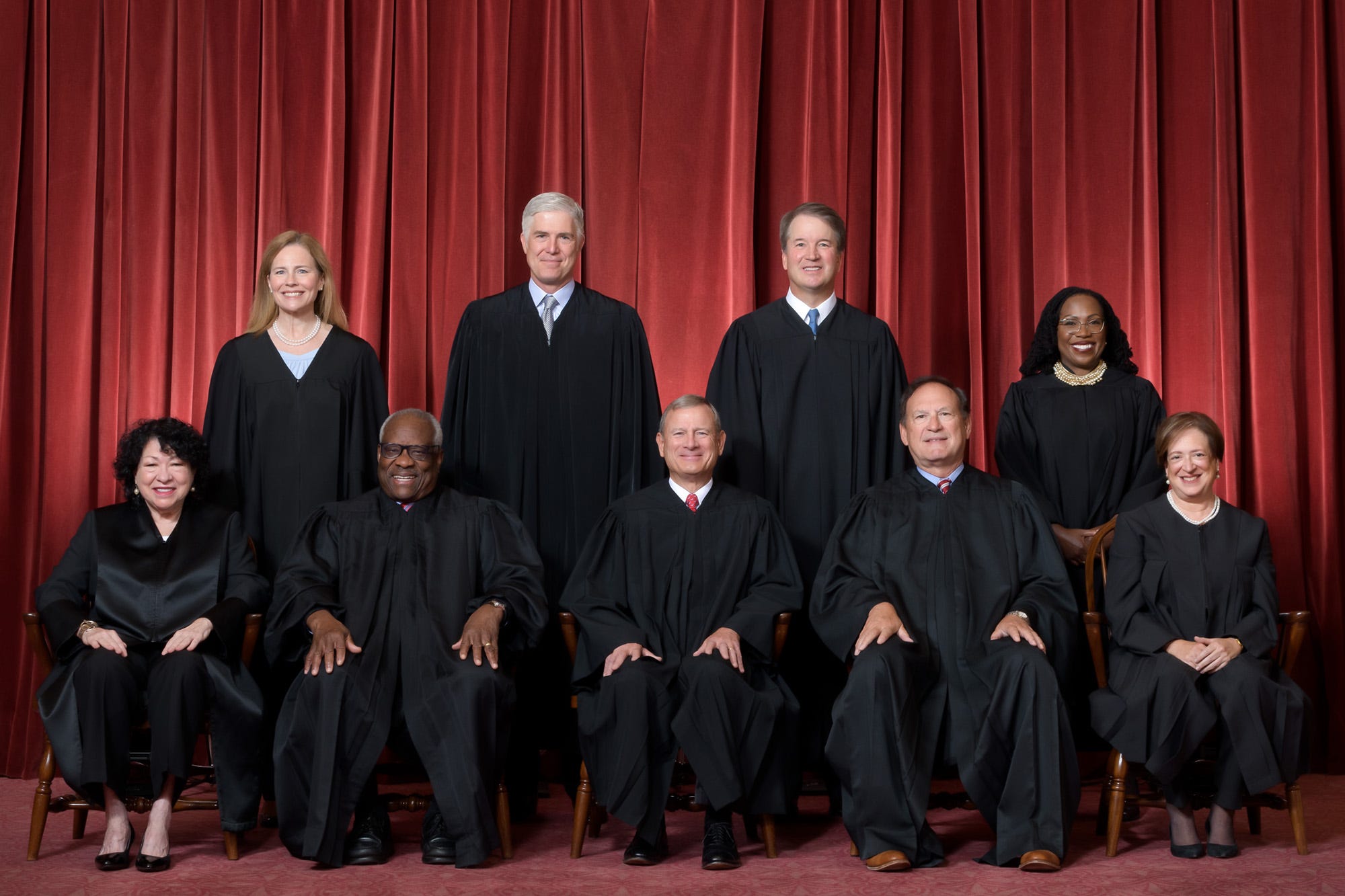
In just eight months, the Court has sided with Trump 21 out of 23 times through rapid-fire emergency orders—often with minimal arguments and no hearings. These decisions have let Trump withhold billions in foreign aid, fire thousands of federal employees, restrict birthright citizenship, and deport migrants under centuries-old laws before judges can weigh in. Justice Elena Kagan warned in a dissent that the Court is venturing into “uncharted territory” by using shortcuts usually reserved for urgent procedural matters to decide sweeping policy fights.
The conservative supermajority has adopted at least six different legal maneuvers to hand Trump early wins, from claiming lower court errors to citing its own prior emergency rulings as binding precedent. This approach has effectively expanded the emergency docket’s reach without formally admitting it. As Bradley University law professor Taraleigh Davis put it, if Trump’s team knows they’ll “likely receive a stay on the emergency docket, they can implement controversial policies immediately and fight the legal battle with the policy already in effect.” In other words, win first, argue later.
Critics say these emergency rulings don’t just maintain the status quo—they reshape it. The Court has allowed Trump to ban transgender people from the military, slash NIH grants targeting minority and LGBTQ research, and fire agency officials with statutory protections. “If they give the president the benefit of the doubt, that might mean that your husband ends up in an El Salvador prison... that means your research doesn’t get funded,” warned Tulane law professor Stephen Griffin. The stakes aren’t theoretical; they’re immediate and often irreversible.
Even some judges are rattled. Historically, emergency orders weren’t treated as binding precedent, but the Court’s new habit of treating them that way forces lower courts to follow reasoning that hasn’t been fully litigated. Justice Ketanji Brown Jackson compared the process to Calvinball—the comic-strip game with no fixed rules—adding, “We seem to have two: that one, and this administration always wins.” The result is a legal landscape where the rules shift on the fly, and the president’s power stretches into places Congress never intended.
The Court may eventually revisit some of these policies on their merits, but for now, its conservatives appear keen to give Trump every procedural advantage while avoiding a direct confrontation. As NYU’s Peter Shane observed, “The majority may be trying hard to avoid, or at least maximally postpone, being put in a position when the court is issuing the administration an unambiguous order that Trump may defy.” Translation: they’re playing constitutional chicken—and letting Trump drive the bus.
Source: Reuters
Editor: The emergency docket was supposed to be a pressure valve. Instead, it’s become a political crowbar, prying open new powers for Trump while the Court shrugs and says, “We’ll deal with it later.” The Founders didn’t write Calvinball into the Constitution, but apparently the six conservatives on the bench are improvising the rules as they go.
Most Americans Blame Trump and GOP for Government Shutdown, Poll Finds
Nearly half of Americans point the finger at Donald Trump and congressional Republicans for the federal government shutdown, citing gridlock and a refusal to compromise despite Republicans controlling all levers of power.
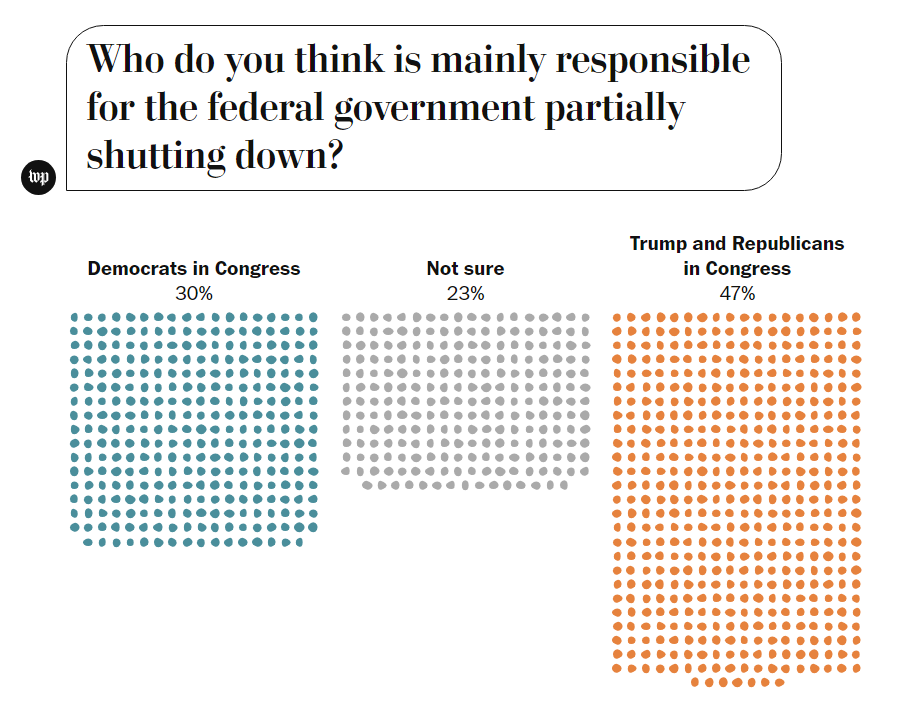
A new Washington Post poll of 1,010 adults reveals that 47% blame Trump and the GOP for the partial shutdown, compared to 30% who fault Democrats, with 23% undecided. The public also remains moderately worried about the shutdown’s impact, with two-thirds expressing concern but not yet panic. The poll highlights a familiar dynamic: Republicans hold power but are losing the blame game.
Political independents are a key factor. They’re more than twice as likely to blame Trump and Republicans (50%) as Democrats (22%), echoing patterns from previous shutdowns where GOP brinkmanship backfired in public opinion. “Because all branches of government are currently controlled by Republicans yet they are somehow blaming Democrats for their inability to get something figured out that both parties agree on,” said a 48-year-old independent woman from Montana. Oof. Hard to spin that one.
The shutdown is tied to a standoff over federal health insurance subsidies, which are set to expire at the end of 2025. A commanding 71% of Americans want these subsidies extended, including majorities of Democrats and independents. But Republicans are divided—62% want the subsidies to expire, while 38% support keeping them. That split is fueling the political stalemate and shaping how voters assign responsibility.
Interestingly, while many Americans support Democrats’ policy goals, fewer support their strategy of holding the line if it prolongs the shutdown. Forty-seven percent say Democrats should stick to their demands to extend subsidies even if it keeps the government closed, while 24% say they should compromise. Among Republicans, nearly half want their party to hold firm on ending subsidies, despite the shutdown fallout. This is trench warfare by spreadsheet.
The poll shows early blame distribution mirrors previous Trump-era shutdowns, when GOP leadership consistently bore the brunt of public frustration. The lone exception was in 2023, when a near-shutdown saw more Americans prepared to blame Biden and Democrats—before a last-minute deal averted disaster. Republicans later rewarded that pragmatism by ousting Speaker Kevin McCarthy days afterward. Patterns repeat; only the cast changes.
Source: Washington Post (gift article)
Editor: When you control the presidency, Congress, and the message machine, and still get blamed for a shutdown... that’s not bad luck—that’s bad governing. This isn’t Democrats outmaneuvering Republicans. It’s Republicans picking a political knife fight with themselves and then complaining about the blood.
Trump Seizes on Shutdown to Target ‘Democrat Agencies’ for Cuts
President Trump is using the government shutdown as political leverage, announcing plans to slash federal programs he labels “Democrat agencies” while blaming Senate Democrats for blocking short-term funding.
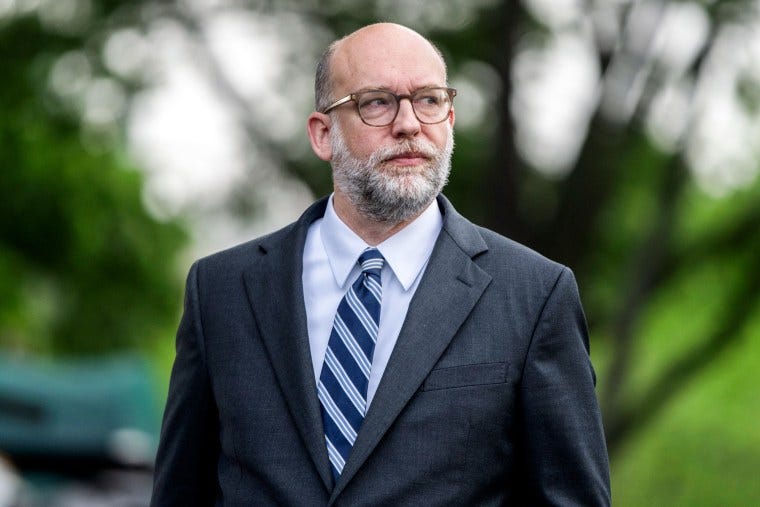
Speaking from the White House, Trump said he’ll meet with Office of Management and Budget Director Russell Vought—yes, the Project 2025 guy—to decide which agencies to cut and whether those cuts will be temporary or permanent. “I can’t believe the Radical Left Democrats gave me this unprecedented opportunity,” Trump wrote on Truth Social. “They are not stupid people, so maybe this is their way of wanting to, quietly and quickly, MAKE AMERICA GREAT AGAIN!”
The shutdown, now in its second day, stems from a standoff over Affordable Care Act premium subsidies set to expire next year. Democrats refused to back the GOP’s short-term funding bill without extending the subsidies, while Trump’s team is digging in, falsely claiming the subsidies benefit undocumented immigrants. (They don’t. Undocumented immigrants aren’t eligible under the ACA. Full stop.) Senate Democrats held their line, and Republicans failed to muster the votes to pass their continuing resolution by the October 1 deadline.
White House spokesman Kush Desai went on the offensive, accusing Democrats of “holding the federal government, economy and country hostage to give illegal immigrants free healthcare.” Trump has since escalated the fight, framing it as a chance to permanently downsize federal agencies he sees as political opponents—an unmistakable throwback to his first term’s ideological wish list. The administration clearly views the shutdown not as a setback, but as a strategic opening.
Meanwhile, Trump’s own Treasury Secretary, Scott Bessent, warned on CNBC that this political gambit comes with a price tag. “This isn’t the way to have a discussion, shutting down the government and lowering the GDP,” he said. Internal White House economic projections back him up: every week of shutdown could knock $15 billion off U.S. GDP and cost roughly 43,000 jobs if it stretches to a month. For a president who loves to brag about the economy, that’s a risky game of chicken.
In short, Trump is treating the shutdown like a budgetary crowbar—leveraging it to gut programs he doesn’t like, blaming Democrats for the impasse, and ignoring the economic blowback his own advisers are waving flags about. It’s less governing than it is high-stakes political trench warfare, with federal workers and the economy caught in the middle.
Source: UPI
Editor: Only Trump could look at a government shutdown and see a Black Friday sale on public agencies. The man’s turning a fiscal crisis into a clearance event for his political enemies—never mind the GDP hitting the floor while he does it.
Trump Administration Prepares Mass Federal Layoffs as Shutdown Deepens
The Trump administration is moving to fire federal employees within days as part of its shutdown strategy, with OMB Director Russell Vought telling House Republicans the cuts are imminent.
On a Wednesday conference call—the first day of the shutdown—Vought warned GOP lawmakers that layoffs would begin in “one to two” days, blaming Democrats for the funding stalemate. Vice President JD Vance later confirmed the plan in the White House briefing room, saying, “We are going to have to lay some people off if the shutdown continues. We don’t like that. We don’t necessarily want to do it. But we’re going to do what we have to keep the American people’s essential services continuing to run.”
The administration insists the firings aren’t politically motivated, but the language in Vought’s memo suggests otherwise. Agencies have been instructed to issue reduction in force notices to employees in programs “not consistent with the President’s priorities.” Translation: if your work isn’t on Trump’s agenda, your job’s on the chopping block. Vought, a Project 2025 architect, has long pushed to purge the federal workforce, and the shutdown has handed him the perfect pretext.
The layoffs are just one domino in a broader crisis. The Women, Infants and Children (WIC) nutrition program could run out of funding within a week if the government doesn’t reopen. Military and federal employee pay is on hold. National parks are limping along partially open. And both the Senate and House have failed to pass competing funding bills, despite Republicans holding a 53–47 majority in the Senate. The stalemate has now frozen key government services and paychecks in record time.
Democrats are calling out the maneuver for what they see as ideological warfare. “So all this talk that we see right now, as if it has anything to do with the shutdown that Republicans have caused — no, it’s their ideology,” said House Minority Leader Hakeem Jeffries. “Cruelty is the point when it comes to the Republican Party.” It’s hard to argue when the first major move out of the gate is layoffs, not negotiations.
This isn’t just a shutdown—it’s a purge in motion. By weaponizing the lapse in funding, the administration is fast-tracking its long-desired shakeup of the civil service, consequences be damned. Federal workers aren’t just collateral damage here—they’re the main target.
Source: NBC News
Editor: Firing public servants during a manufactured shutdown is like setting your house on fire so you can blame the smoke detectors. This isn’t fiscal discipline—it’s political arson with a pink-slip delivery service attached.
I was wondering who the first polls on the shut down were going to blame. What I'm wondering even more is the numbers will shift the longer this goes so which direction? The obvious is maga controls everything! Everything courts, doj, fbi everything, not just congress and the whittle house.
Here is the thing I'm not guessing at. Trump spoke in front of 100's of military brass about them using American cities for "training grounds for our military". If that don't make you shit your drawers then WTF! Steve Miller (the guy that plays with dolls) shouts to gun-wielding cops " you are now UNLEASHED". What does that really mean? That tells me that if you're not maga you are now officially a target. Are these pre-warnings of "The Civil War"?