


Inflation Creeps Higher as Fed Faces a Lose-Lose Choice
U.S. inflation ticked up to 3% in September—just enough to remind everyone that “mission accomplished” on price stability is still a fantasy.
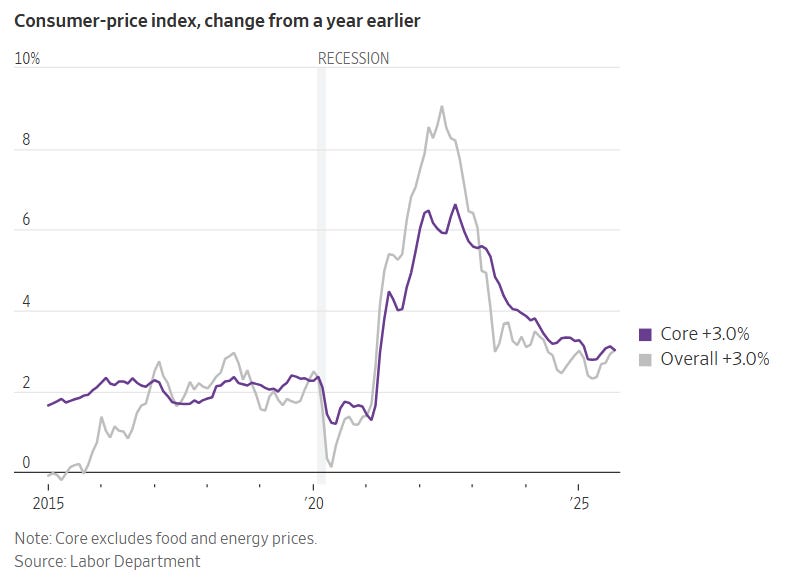
After months of easing pressure, inflation’s latest move north shows prices remain stubbornly above the Federal Reserve’s 2% target. The Labor Department’s report—delayed by the recent government shutdown—revealed consumer prices rose 3% over the past year, up slightly from August’s 2.9%. Core inflation, which excludes food and energy, also landed at 3%. Not catastrophic, but still too hot for comfort.
The details show how messy this fight has become. Energy prices climbed 1.5% in September thanks to gasoline spikes, while food and housing costs stayed elevated. Some tariff-sensitive items like furniture and apparel are also seeing price bumps. Economists had expected a 3.1% rise overall, so this counts as a “small win,” if your idea of winning is paying more for groceries while pretending it’s progress.
Meanwhile, job growth is sputtering. The Fed already cut interest rates last month after hiring nearly froze this summer, and with only 22,000 jobs added in August, the central bank is stuck between rescuing the labor market and keeping inflation from roaring back. Fed Chair Jerome Powell summed it up grimly: “There really isn’t a risk-free path now.”
Trump’s trade policies aren’t helping either. His latest round of tariffs—on pharmaceuticals, trucks, and home goods—plus a 100% tariff threat on Chinese imports, has traders nervous. Tariffs raise costs for businesses and consumers alike, which makes fighting inflation while slapping import taxes about as effective as dousing a fire with gasoline.
The Fed meets next week, and insiders expect another rate cut, though members are divided on how deep to go. Either way, the path forward looks like a tightrope over a bonfire—one wobble and the economy could either overheat or fall flat.
Source: Wall Street Journal
Editor: The Fed’s target for inflation is two percent. Three percent is fully 50 percent off the mark. Not a good look.
Trump’s Great Alaska Land Grab: Paving Paradise for Profit
The Trump administration just greenlit a road through one of the most pristine wildlife refuges in America—because apparently nothing says “progress” like bulldozing a national treasure.
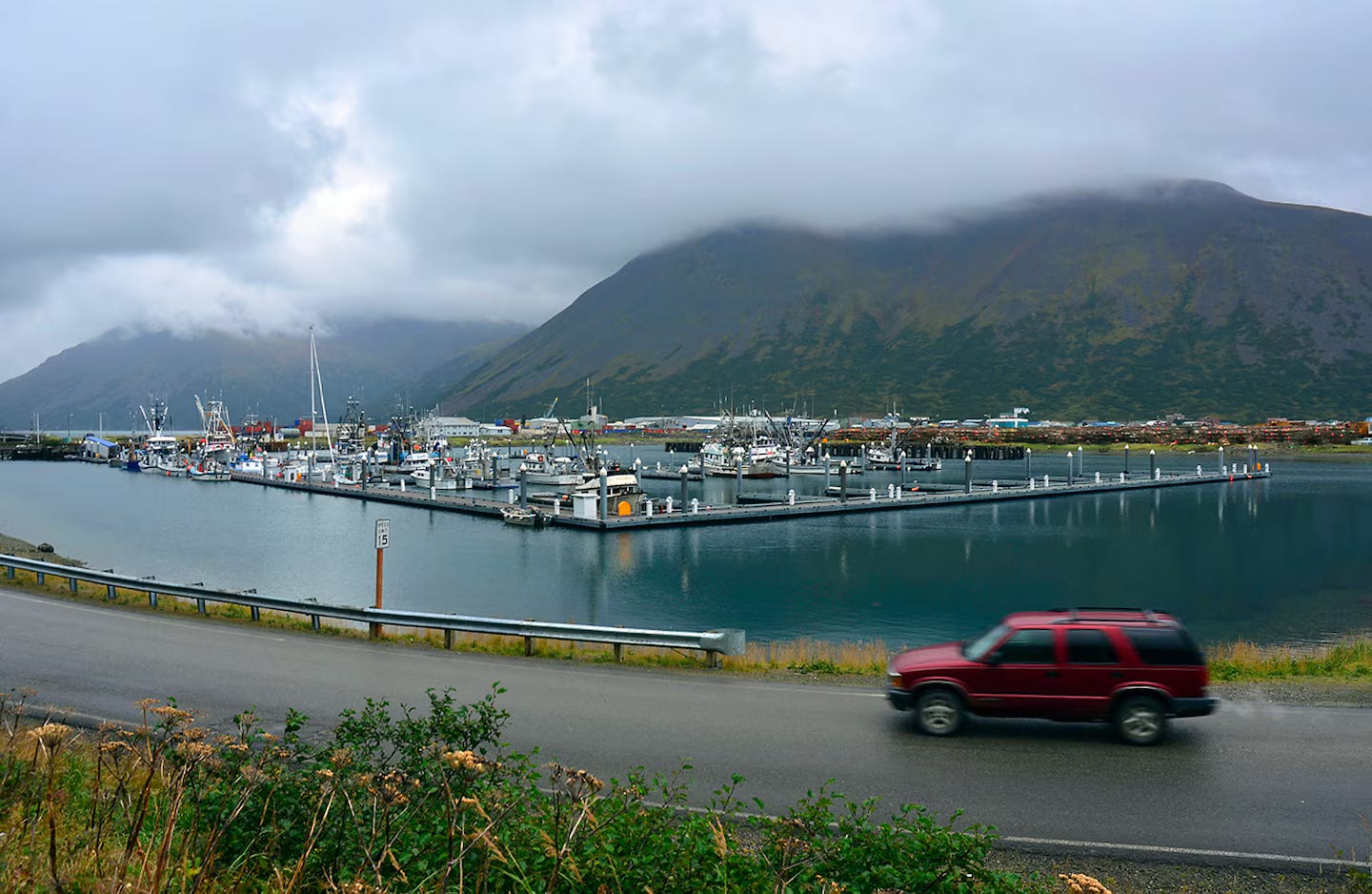
The Interior Department announced Thursday it’s moving forward with a controversial land swap allowing a road through the Izembek National Wildlife Refuge in southwest Alaska, a place so ecologically rare that it’s often called “America’s Galápagos.” The 18-mile stretch will slice through critical wetlands and feeding grounds for emperor geese, caribou, and brown bears—all so residents of King Cove can have quicker access to an airport 18 miles away in Cold Bay.
Interior Secretary Doug Burgum defended the move, calling it “preposterous” that it took 40 years to “put people first.” He claimed it’s a win-win: handing over 500 acres to a local Native corporation in exchange for expanding the refuge elsewhere. “We’re going to be able to protect wildlife and we’re going to be able to save the lives of the people that live there,” Burgum said. But environmental experts aren’t buying it. Nicole Whittington-Evans of Defenders of Wildlife countered bluntly: “The science is clear that roads have a profound impact on wildlife and habitat.” Translation: this is how extinction gets a head start.
The fight over this road has dragged on for decades, with previous administrations—Carter, Obama, and even Biden—blocking or reversing versions of it. Trump’s team, however, just can’t quit Alaska. Alongside the Izembek deal, they also approved drilling in 1.56 million acres of the Arctic National Wildlife Refuge and signed off on a 211-mile industrial corridor, the Ambler Road Project, to access copper and cobalt mines. So much for conserving anything that isn’t profitable.
Dan Ritzman of the Sierra Club didn’t mince words: “These decisions will collectively wreak havoc on fragile Alaska ecosystems in the most disruptive way possible.” But that’s kind of the Trump playbook, isn’t it? If it’s wild, protected, or sacred—it’s for sale.
Source: Washington Post
Editor: Only this administration could look at Alaska’s untouched wilderness and think, “You know what this needs? Asphalt and oil rigs.”
Trump Blows Up Trade Talks With Canada Over a Reagan Ad
Donald Trump just torpedoed trade talks with America’s northern neighbor—because Canada dared to use Ronald Reagan’s own words against him.
In his latest outburst, Trump announced that “ALL TRADE NEGOTIATIONS WITH CANADA ARE HEREBY TERMINATED,” after seeing a Canadian political ad featuring Reagan warning that tariffs lead to trade wars and job losses. The ad—produced by Ontario’s provincial government—spliced together audio from a 1987 Reagan radio address criticizing protectionism. Trump called it “fraudulent,” while the Ronald Reagan Presidential Foundation accused Canada of “selective editing” and is now weighing legal action.
“Markets shrink and collapse; businesses and industries shut down; and millions of people lose their jobs,” Reagan says in the ad, a line Trump apparently took as a personal attack. The irony? Reagan’s original message was pro–free trade—something Trump has never understood nor cared about. The current president’s tariffs on Canadian steel, aluminum, and autos have already jacked up costs and soured relations.
Canadian Prime Minister Mark Carney had been trying to repair the damage from years of tariff battles, but this latest blowup could kill those efforts entirely. Trump also accused Canada of trying to “influence the U.S. Supreme Court,” a claim as baseless as it is bizarre. Meanwhile, Ontario Premier Doug Ford, who approved the ad, said with a smirk: “I heard that the president heard our ad. I’m sure he wasn’t too happy.” Mission accomplished.
Trump’s trade war has already driven U.S. tariffs to their highest levels since the Great Depression, and with talks dead, businesses on both sides of the border are bracing for another round of economic whiplash. The USMCA’s review next year just got a lot more awkward.
Source: Reuters
Editor: Only Trump could get in a fight with Canada—over Ronald Reagan. At this point, if maple syrup spoke out against tariffs, he’d probably sanction that too.
U.S. Sends B-1 Bombers Near Venezuela as Trump Cranks Up the Pressure
The Trump administration just sent supersonic bombers to Venezuela’s doorstep—because nothing says “anti-cartel strategy” like flexing Cold War hardware over the Caribbean.
Two B-1 Lancer bombers roared out of Dyess Air Force Base in Texas on Thursday and flew near Venezuelan airspace, marking a major escalation in Washington’s military campaign against drug traffickers—and, not coincidentally, Venezuelan President Nicolás Maduro. The bombers, capable of carrying 75,000 pounds of ordnance, joined a growing fleet of U.S. warships, drones, submarines, and fighter jets already patrolling the region.
Last week, B-52s and F-35s performed a similar “attack demonstration” off Venezuela’s coast, part of an increasingly muscular show of force. Pentagon officials insist these are anti-narcotics operations, but even some in Washington admit the mission has blurred into geopolitical theater. Retired Air Force General David Deptula called the flights a display of “seriousness and intent,” noting the bombers bring “enormous capabilities… endurance, payload, range and precision.” Translation: we can hit you anywhere, anytime.
Trump told reporters the initial report was “not accurate,” but then hinted land strikes could be next. “There are few boats traveling on the water, so now they’ll come in by land to a lesser extent, and they will be hit on land also,” he said Wednesday. That’s as subtle as Trump gets about widening a conflict. Meanwhile, Congress—still under Republican control—hasn’t figured out whether any of this even needs authorization. Senate Majority Leader John Thune shrugged: “I’m not sure I know the answer to that.” Comforting.
Maduro has called the flights a prelude to regime change and deployed troops along his coastline. Colombia’s leftist President Gustavo Petro, accused by Trump of aiding smugglers, fired back that the U.S. is committing atrocities. The world’s drug problem is real—but bombing South America into submission probably isn’t the cure.
Source: Wall Street Journal
Editor: If history’s any guide, every time America starts “sending a message” with bombers, it’s the rest of the world that ends up picking up the tab—and the shrapnel.
U.S. Expands “War on Cartels” With Deadly Night Strike in the Caribbean
The Trump administration just took its drug war global—again—ordering a nighttime missile strike that killed six suspected smugglers in the Caribbean.
Defense Secretary Pete Hegseth announced Friday that the U.S. military carried out its 10th strike on what it called a drug-running vessel, this time linked to the Venezuelan gang Tren de Aragua. The attack, conducted in international waters, marks the first night operation since Trump’s anti-cartel campaign began in September. In a video posted online, a projectile streaks down from the sky before blowing a small boat to pieces—no survivors reported.
“If you are a narco-terrorist smuggling drugs in our hemisphere, we will treat you like we treat Al-Qaeda,” Hegseth declared. “Day or NIGHT, we will map your networks, track your people, hunt you down, and kill you.” The language wasn’t accidental. The administration is now openly comparing its cartel crackdown to the post-9/11 war on terror, but with far less oversight—and a lot more improvisation.
The strikes have accelerated rapidly—from one every few weeks to three just this week—and they now span both the Caribbean and the Pacific. The escalation comes as the U.S. flies bombers near Venezuela, raising suspicions this “war on drugs” may be morphing into something much bigger. Venezuela’s Defense Minister claims Washington’s real goal is “to force a regime change,” while Trump, never one to hide behind diplomacy, said Thursday, “I think we’re just going to kill people that are bringing drugs into our country, OK? We’re going to kill them. They’re going to be like, dead.”
Congress isn’t thrilled. Lawmakers from both parties have warned that Trump is bypassing legal limits by conducting unauthorized military operations in foreign waters—and possibly beyond. “Expanding the geography simply expands the lawlessness and the recklessness,” said Sen. Richard Blumenthal. Yet, the Republican-controlled Senate voted down a resolution that would have required Trump to seek formal war authorization. So the strikes continue—and so does the mission creep.
Source: Associated Press
Editor: Nothing says “smart foreign policy” like declaring war on boats in international waters and pretending it’s about public health. We’ve officially traded diplomacy for drone footage. This is murder.
ICE’s Expanding Spy Network Is Quietly Targeting Americans
What started as an immigration tool is morphing into a nationwide surveillance dragnet—with ICE tracking not just immigrants, but protesters and private citizens.
While a federal judge weighs whether ICE’s protest tactics in Chicago violate the Constitution, the agency is quietly building one of the most advanced—and invasive—domestic surveillance systems in U.S. history. Backed by Trump’s One Big Beautiful Bill Act, ICE has unleashed a $1.4 billion spending spree on facial recognition, iris scanning, smartphone spyware, and real-time social media tracking. The agency insists it’s all to catch undocumented immigrants, but the scope tells a different story.
ICE now taps into over 80,000 AI-powered license plate cameras owned by private firm Flock Safety, scanning and cataloging every passing vehicle by make, model, and identifying features. No warrants, no oversight—just constant monitoring. Civil liberties groups warn that the line between national security and mass surveillance has effectively been erased. As Maria Villegas Bravo of the Electronic Privacy Information Center put it, “Your phone contains all your communications, all your expressions…it has your contact lists, it has your social media. Any political organizing people do is typically on social media now, or over the phone.” Translation: if you protest, you’re probably being watched.
Trump’s September executive order labeling antifa a domestic terrorist organization opened the door for ICE to use its new tools on U.S. citizens. Acting ICE Director Todd M. Lyons even bragged about tracking “ringleaders” and “professional agitators” supposedly bused in from out of state. But legal experts argue that surveillance without warrants—especially of political movements—is a direct attack on both the First and Fourth Amendments. The administration’s crackdown on social media groups that share ICE sightings only reinforces that this isn’t about safety—it’s about silencing dissent.
And while the public’s attention is on the visible abuses—the raids, the protests, the arrests—the real danger is what’s happening quietly in the background: a government agency, flush with funding and unchecked power, using Silicon Valley’s tools to monitor Americans in real time. The architecture of a permanent surveillance state isn’t coming. It’s already here.
Source: Reason
Editor: ICE was supposed to track undocumented immigrants, not your grandma’s Honda Civic leaving the grocery store. At this rate, Orwell’s “1984” reads less like fiction and more like the training manual.
Regarding the topic, your explanation of the Fed's lose-lose choice is so clear, just like your last articles on this subject. How do central banks even begin to model such a probleme?