

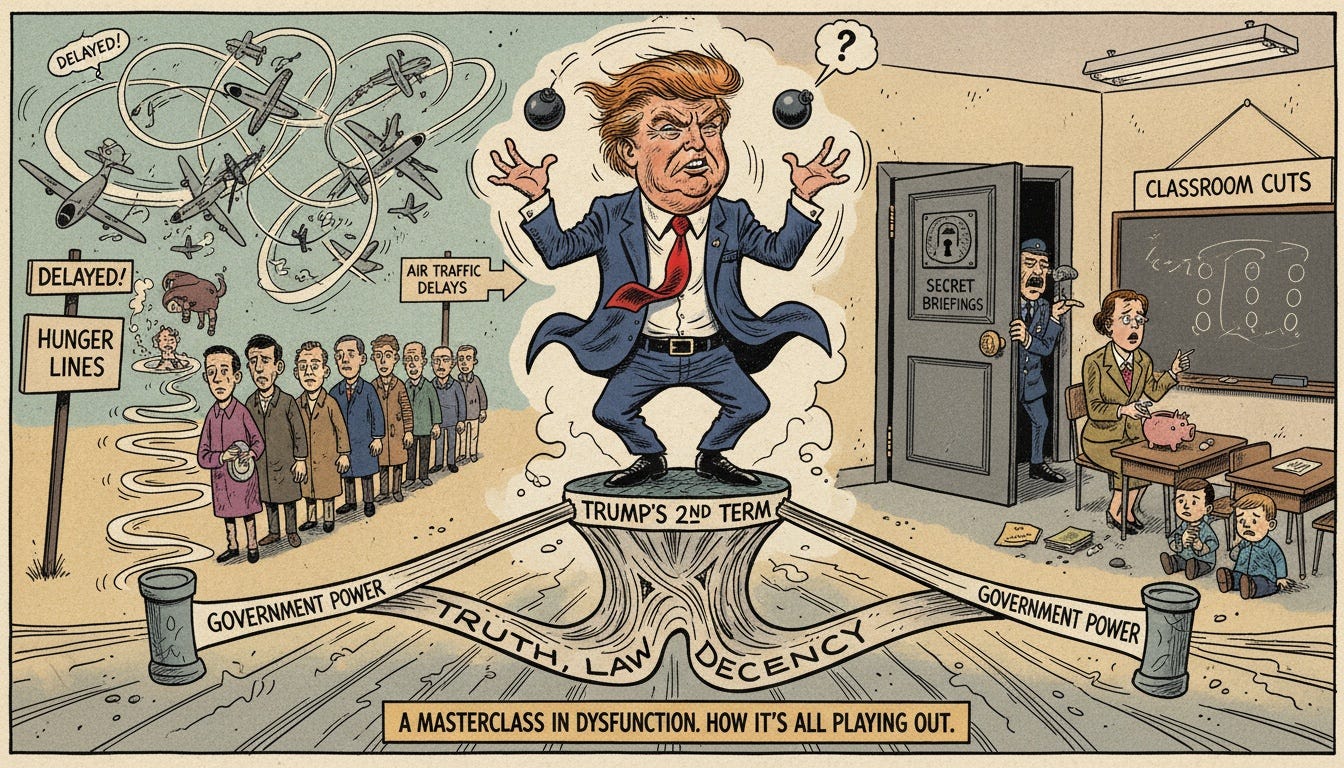
From hunger lines to air traffic delays, classroom cuts to secret military briefings, Trump’s second term is spiraling into a masterclass in dysfunction. Each crisis is a new test of how far government power can stretch—and how easily truth, law, and basic decency can bend under pressure. Here’s how it’s all playing out.
SNAP Cuts and Head Start Closures: Trump’s Shutdown Just Got Real
Millions of Americans are about to feel the real pain of Trump’s government shutdown—food and child care are on the chopping block.
Starting Saturday, two pillars of America’s social safety net—SNAP (food stamps) and Head Start—will effectively shut down due to the ongoing government stalemate. The timing couldn’t be worse. Families relying on food assistance and affordable child care will wake up to find both lifelines cut, all while Washington bickers over budget leverage and political points.
The SNAP program feeds over 42 million Americans every month. Without new funding, those benefits vanish in November, leaving millions of families scrambling to put food on the table. “These folks should not be used as pawns in this political game,” said Dottie Rosenbaum of the Center on Budget and Policy Priorities. The Agriculture Department admits it doesn’t have the $9.2 billion needed for November benefits, and yet refuses to tap its $5.5 billion contingency fund—money intended for “natural disasters.” Because apparently, hunger isn’t a disaster unless it involves a hurricane.
Trump, asked about the crisis aboard Air Force One, assured reporters, “We’re going to get it done.” That’s the political equivalent of saying “thoughts and prayers” after a mass shooting. Meanwhile, governors from 24 states are suing the administration to release emergency funds. Even some red-state leaders are calling it out, with Kentucky Gov. Andy Beshear noting, “All he has to do is be willing to do it.” For many families, SNAP isn’t a handout—it’s survival.
The shutdown will also slam the nation’s Head Start programs, which provide free early education and child care to 750,000 children from low-income families. Come Saturday, 134 Head Start programs are set to close unless they find private funding. “It’s a program-by-program situation,” said Sarah Rittling of the First Five Years Fund. “But the fact is, there is only so much contingency planning you can do when you are reliant on a federal check.” Translation: expect working parents to lose child care overnight.
For weeks, Beltway pundits treated the shutdown as a “D.C. problem.” This weekend, that bubble bursts. When families can’t buy groceries and kids lose their classrooms, the pain becomes national—and personal. The only thing “great” about this moment is how clearly it shows who’s actually fighting for America’s most vulnerable.
Source: The Washington Post
Editor: This is what happens when governance turns into grievance. Trump’s team would rather prove a point than feed a kid. Hunger and chaos as political tools—what a legacy. At this rate, “Making America Great Again” should come with an asterisk and a food drive.
ACA Open Enrollment Begins—But Millions Face a Massive Health Insurance Hike
Millions of Americans logging on to sign up for Obamacare this weekend are about to get slammed with skyrocketing health insurance premiums—and no one in Washington seems ready to fix it.
The ongoing government shutdown has stalled a critical vote on extending enhanced ACA subsidies, leaving 22 million Americans at risk of seeing their premiums more than double in 2026. Without congressional action, the average increase will hit 114%, according to KFF. As financial planner Carolyn McClanahan put it bluntly, “Consumers are going to get huge sticker shock, because prices are going up.” Translation: your wallet’s about to feel the cost of Washington gridlock.
The enhanced subsidies—first passed under Biden and extended in 2022—are now the central hostage in Trump’s second-term standoff with Democrats. The credits were designed to keep coverage affordable for middle- and low-income Americans, but they’re set to expire December 31. Democrats want them renewed as part of a deal to end the shutdown; Republicans want a separate vote. The result: health care chaos, just in time for open enrollment.
The fallout won’t just hit the uninsured. A 60-year-old couple making $85,000 could see annual premiums jump by $22,600, while a 45-year-old earning $20,000 in a non-Medicaid state could see their cost jump from $0 to $420. Experts warn that many will simply drop coverage altogether, pushing the system into a vicious cycle of rising costs and shrinking participation. “If young, healthy people don’t enroll,” said KFF’s Cynthia Cox, “insurers would be left with a relatively older, less healthy population”—which means even higher premiums down the road.
Even if Congress eventually acts, the damage may already be done. “There’s a very real possibility people will log on Nov. 1 and say, ‘Gosh, I can’t afford that premium,’ and they don’t come back,” said Jonathan Burks of the Bipartisan Policy Center. In other words, the sticker shock itself could become the death spiral.
Source: CNBC
Editor: Only in America do we treat health care like a luxury subscription—cancel anytime, just pray you don’t get sick. Meanwhile, Congress keeps arguing over who gets to hold the match while the system burns.
Judge Signals She’ll Force Trump Admin to Release SNAP Funds Amid Shutdown Chaos
A federal judge just told Trump’s team to stop “lawyering” and start feeding people.
U.S. District Judge Indira Talwani said Thursday she’s likely to order the Trump administration to use emergency reserves to fund November’s SNAP benefits, a move that could temporarily stave off hunger for 42 million Americans caught in the government shutdown. “Congress has put money in an emergency fund, and it is hard for me to understand how this is not an emergency,” Talwani said. Her frustration was clear: “I want agency action, not lawyering.”
The case—brought by 23 Democratic attorneys general and three governors—challenges the USDA’s refusal to release $5.5 billion in contingency funds meant for crises like this one. Without that money, SNAP payments would have stopped on Saturday, cutting off the only food source for millions of low-income families. The administration insists the funds are for natural disasters, not “Congressional dysfunction.” Talwani wasn’t buying it. “You need to figure out how to stretch that emergency money for now,” she told government lawyers.
Even if Talwani orders the funds released, the $5.5 billion only covers about half of what’s needed for a month of benefits. Still, it could mean partial payments—some relief for families as the shutdown grinds past its fourth week. This would mark the first time in SNAP’s 60-year history that the program’s funding has been disrupted by political brinkmanship. Food pantries are already overwhelmed, with people lining up early and weeping as they ask how they’ll feed their kids. “This extra work we’re doing, this scrambling, none of it has to happen,” said Ashley Domm of Bread for the City in D.C. “There are emergency funds just sitting there waiting to be deployed.”
The USDA, meanwhile, has plastered its website with partisan messages blaming Democrats for “holding out for healthcare for illegal aliens and gender mutilation procedures.” Experts say such language could violate the Hatch Act, which bans political messaging by civil servants. In plain terms: the department that feeds America’s poor is now doing PR for the White House while pantries run out of food.
Congress, predictably, is still stuck in neutral. A bipartisan Senate bill to fund SNAP drew 62 votes—including 15 Republicans—but GOP leadership refuses to move it forward without a full shutdown deal. Until then, millions are left waiting on a court order to keep their kids from going hungry. This is what “America First” looks like when compassion comes dead last.
Source: The Washington Post
Editor: The fact that a judge has to tell the federal government to feed its own people says everything about where we are. At this point, it’s less “land of the free” and more “land of the food-insecure.”
Flights Grounded as Air Traffic Controllers Walk Off Amid Trump’s Prolonged Shutdown
America’s airports are starting to break under the weight of Trump’s government shutdown—flights are delayed, controllers are unpaid, and chaos is landing on schedule.
Air traffic controller absences forced major delays and temporary shutdowns at several airports Thursday, including Orlando International, JFK in New York, and Reagan National outside Washington. At one point, Orlando International was forced to halt all arrivals after the FAA warned there were “no certified traffic controllers available.” By evening, the average delay there hit nearly three hours, with some flights delayed up to 12 hours. A handful of flights were outright canceled—stranding thousands just as the travel season ramps up.
Transportation Secretary Sean Duffy and Vice President JD Vance—yes, that JD Vance—warned earlier in the day that a “disaster” was imminent if the shutdown dragged into November. “A lot of our people can go through the miss of one paycheck,” Duffy said. “None of them can get through two paychecks.” In other words, the folks keeping planes from colliding are now expected to do it for free.
The FAA’s workforce was already short-staffed before the shutdown, with about 3,000 vacancies across 14,000 positions. Controllers have been working grueling overtime shifts for months, and the unpaid labor has finally hit its breaking point. Duffy called the growing delays proof that the FAA’s “staffing triggers” are working—because nothing says safety like grounding flights due to lack of staff and calling it “orderly management.”
As the shutdown heads into its second month, the cracks are turning into chasms. Every day it continues, the system that underpins America’s aviation safety gets weaker. And this is just the preview—holiday travel season is right around the corner.
Source: The New York Times
Editor: You know it’s bad when “no one to land the planes” becomes a Friday headline. Trump’s government is turning into the world’s most expensive game of chicken—except this one’s played at 30,000 feet.
Trump’s Education Secretary Says the Quiet Part Out Loud: She Wants to Kill Her Own Department
As the government shutdown drags on, Education Secretary Linda McMahon isn’t trying to fix it—she’s using it as proof her department shouldn’t exist at all.
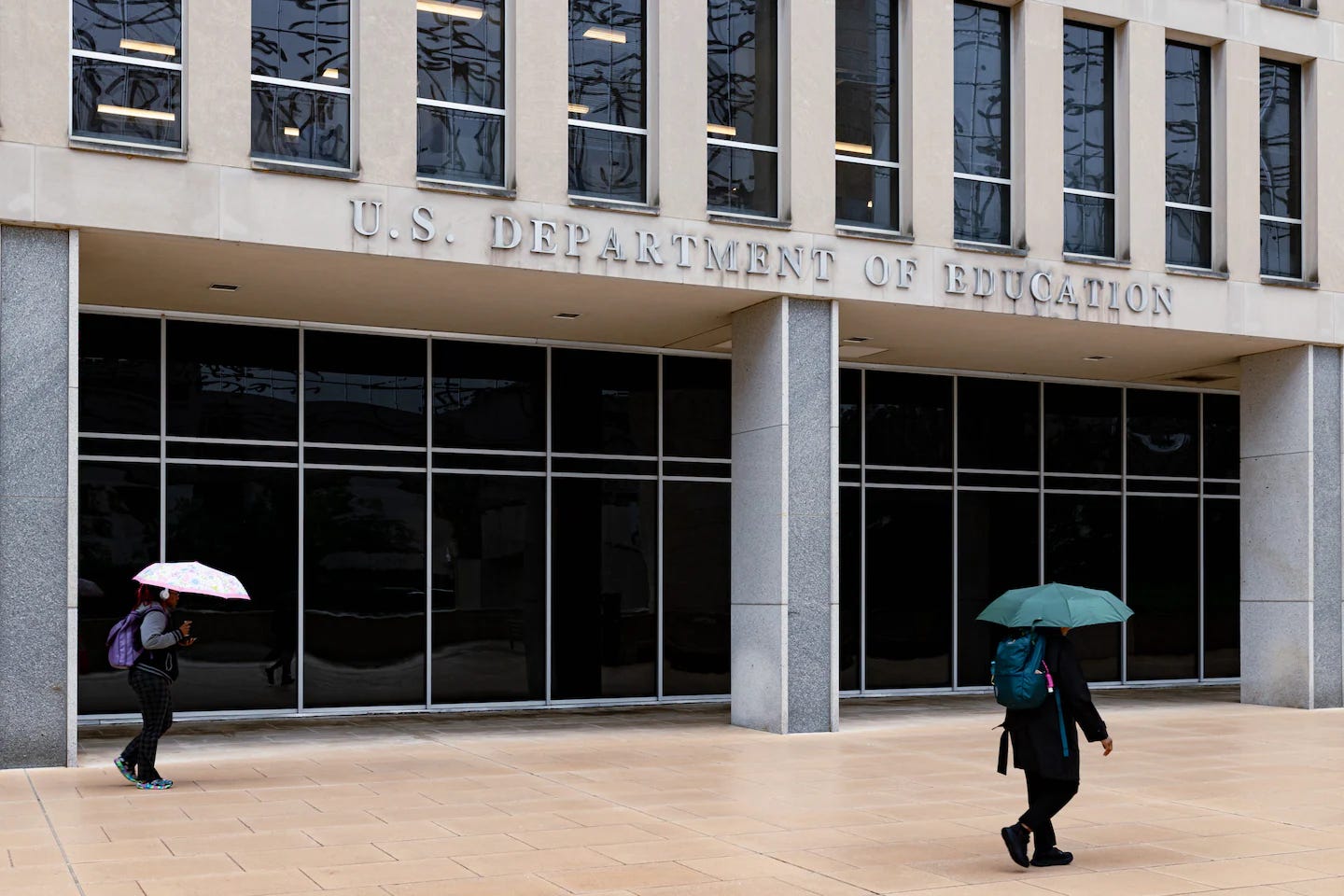
While schools across America worry about dwindling grants, stalled reimbursements, and frozen special education support, McMahon is cheering the silence. “Two weeks in, millions of American students are still going to school, teachers are getting paid, and schools are operating as normal,” she wrote on social media. Days later, she doubled down: “We don’t need a birthday cake. We need an eviction notice.” Translation: The person in charge of U.S. education policy wants to evict herself—and take the entire federal education system down with her.
Under Trump’s shutdown, the Education Department has ground to a halt. No new grants. No civil rights investigations. No technical assistance to help schools navigate special education or equity laws. More than 90% of staff have been furloughed, leaving just 330 people to keep the lights on in a department that once employed over 4,000. McMahon calls it “proof of concept.” Critics call it a dismantling of public education under the guise of “local control.”
The ripple effects are already hitting classrooms. Head Start preschools and school meal programs are running out of funds. Federal reimbursements for lunches could dry up within two months, forcing districts to front the money themselves. “Districts are really worried that they’re going to have to dig deep into their pockets to fund meals,” said Julia Martin, an education policy expert. Meanwhile, the Office of Special Education—responsible for ensuring students with disabilities receive federally mandated services—has been gutted, prompting warnings that states will soon be violating federal law simply because no one’s around to answer their questions.
McMahon and Trump aren’t waiting for Congress to kill the department—they’re already carving it up. Career education programs have been shipped to the Labor Department, and plans are underway to move the $1.6 trillion student loan portfolio to Treasury. Special education could go to Health and Human Services, civil rights enforcement to Justice. Bit by bit, the agency is being hollowed out while the Secretary boasts about its irrelevance.
Source: Associated Press
Editor: When the Education Secretary’s dream job is eliminating education oversight, maybe the department’s not the problem—it’s her. You can’t run a country on slogans about “freedom” while starving kids and silencing classrooms.
Trump Orders Nationwide “Quick Reaction Forces” as National Guard Prepares for Civil Unrest
The Trump administration has quietly ordered the creation of state-level military units trained to quell domestic unrest—23,000 troops ready to deploy against Americans at a moment’s notice.
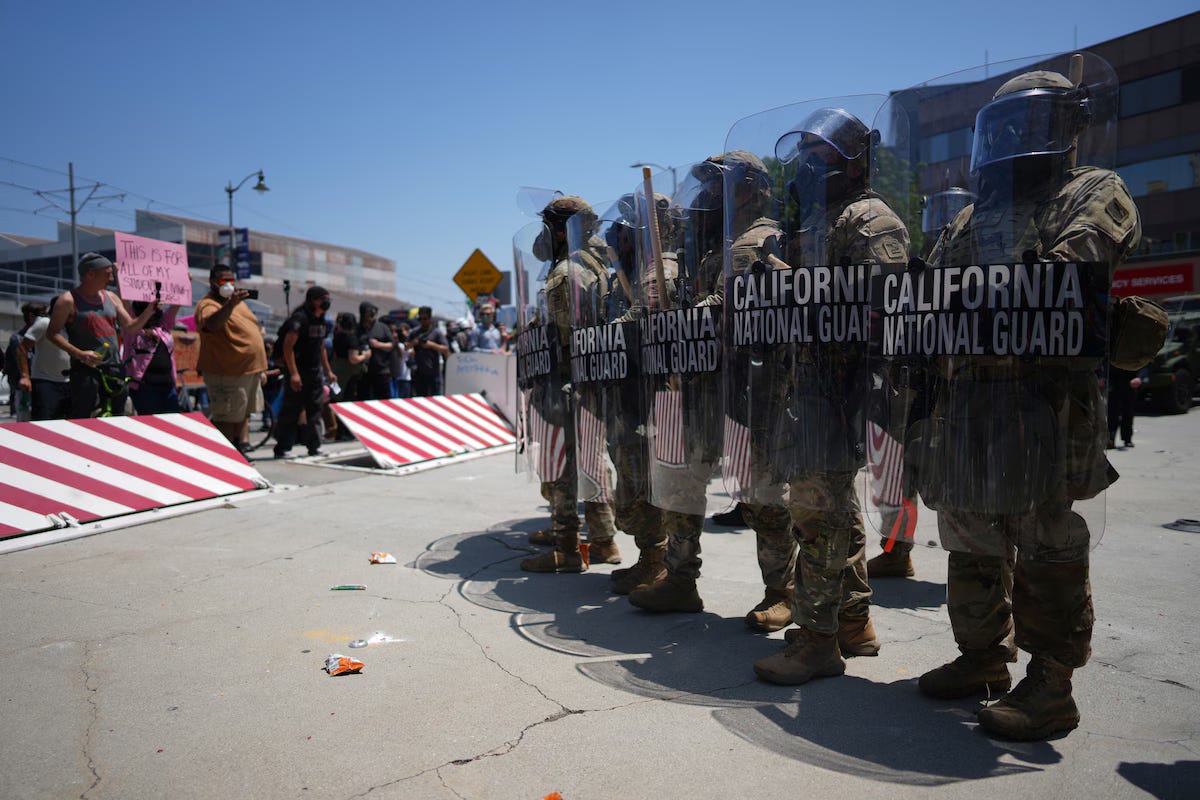
A series of memos obtained by the Associated Press shows that National Guard units in all 50 states and U.S. territories have been instructed to form “quick reaction forces” capable of mobilizing within hours. Each state’s contingent—typically around 500 troops—will receive specialized training in riot control, including the use of batons, body shields, Tasers, and pepper spray. The directive, signed by Major Gen. Ronald Burkett, marks a sweeping escalation of the Trump administration’s willingness to use military force inside U.S. borders.
The memo builds on Trump’s August executive order establishing rapid-deployment forces for “nationwide emergencies.” In practice, it gives the federal government a standing army of soldiers equipped and trained to handle “civil disturbances” anywhere in the country. Defense Secretary Pete Hegseth declined to discuss “particulars” when asked about the plan but confirmed there were “multiple layers of National Guard response forces” ready for domestic use. Translation: they’re building the infrastructure for martial law—just without calling it that.
The Trump administration has repeatedly deployed National Guard troops to U.S. cities, often over the objections of local leaders, citing threats ranging from immigration to “urban crime.” Now, with court challenges pending over troop deployments in Chicago and Portland, the White House appears to be codifying a permanent, nationwide mechanism for future crackdowns. Each state’s Guard must have its force operational by January 1, 2026, with extra funding, trainers, and non-lethal weapons provided by the National Guard Bureau.
The training manual reads like a protester’s worst nightmare: “crowd management techniques,” “domestic civil disturbance,” and “use of nonlethal individual weapons.” The memo even specifies deployment speeds—25% of each unit within eight hours, all within 24. For a president who once bragged about “dominating the streets,” it’s clear the administration’s definition of “law and order” now comes with helmets, shields, and pepper spray.
Source: Associated Press
Editor: Nothing says “land of the free” like preparing 23,000 soldiers to police your own citizens.
BONUSES
#1 Trump Admin Shares Secret Target List With GOP Senators Only, Excluding Democrats From Military Briefing
The Trump administration handed a classified list of Caribbean military targets to select Republican senators—while locking Democrats out of the room.
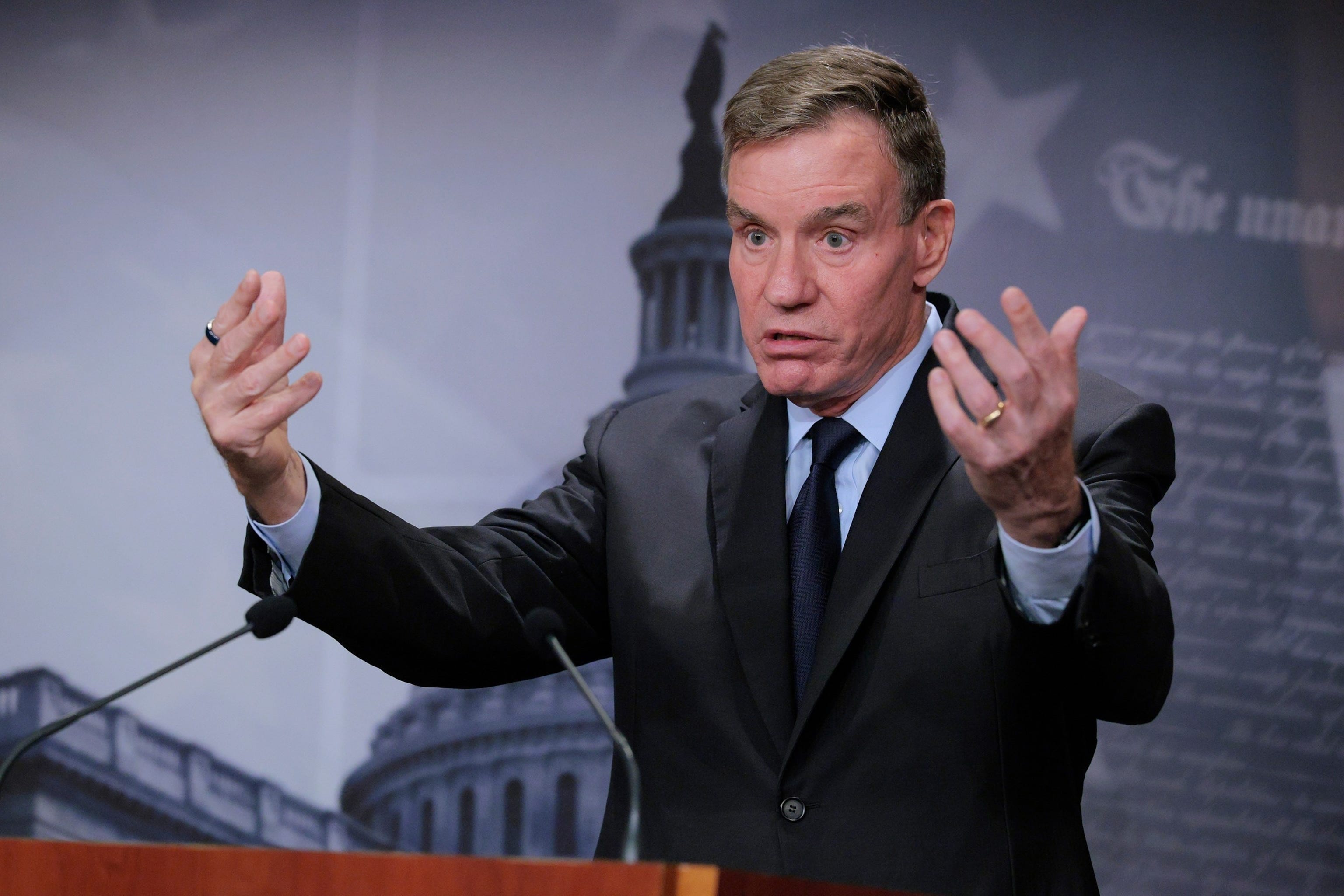
In a closed-door session this week, the White House briefed more than a dozen Senate Republicans on its ongoing airstrike campaign against alleged drug cartels in the Caribbean. The briefing included a secret target list and a legal rationale for the attacks—details that had been requested for weeks by both parties but shared only with one. The move infuriated Democrats, who called it a deliberate attempt to sidestep congressional oversight. “When an administration decides it can pick and choose which elected representatives get the understanding of their legal argument…it ignores all the checks and balances,” said Sen. Mark Warner, the top Democrat on the Senate Intelligence Committee.
The strikes stem from Trump’s August decision to label drug cartels as “terrorist organizations,” giving him sweeping authority to launch military action without congressional approval. His lawyers now claim the U.S. is in an “armed conflict” with the cartels—a stretch that legal experts say blurs the line between law enforcement and war. Since early September, the U.S. military has conducted 14 strikes, killing 61 people and releasing footage of boats exploding across the Caribbean. Defense Secretary Pete Hegseth bragged on X, “The Western Hemisphere is no longer a safe haven for narco-terrorists bringing drugs to our shores.”
What’s less clear is why only Republicans were trusted with the full briefing. The Pentagon insists it’s been “bipartisan,” but even GOP Sen. Mike Rounds admitted the exclusion was “unfortunate” and vowed to press the White House to include Democrats next time. Others, like Sen. James Risch, defended the decision, saying, “The president has absolute authority—not only authority, the duty—to protect the American people.” The justification echoes Trump’s longstanding belief that congressional approval is more a courtesy than a requirement.
On the House side, the administration did hold a bipartisan briefing—but conveniently left out the lawyers who could explain the legal reasoning. Rep. Sara Jacobs said officials admitted the targets were cocaine smugglers, not fentanyl traffickers, and that the U.S. doesn’t need to identify who’s on the boats before striking. “They just need to prove a connection to smuggling,” Jacobs said, questioning whether the administration’s claims hold up under international law—or basic morality.
If the intent was to demonstrate transparency, it failed spectacularly. What this episode actually proves is that Trump’s government is willing to bomb first, explain later—and only to people wearing the right color tie.
Source: ABC News
Editor: When your “oversight” meetings are invite-only for one party, that’s not national security—it’s political theater with missiles. Apparently, accountability’s off the guest list too.
#2 RFK Jr. Walks Back Tylenol-Autism Claims, Calls Evidence “Suggestive” But Not Conclusive
After weeks of warning pregnant women against Tylenol, Health and Human Services Secretary Robert F. Kennedy Jr. now admits there’s no solid proof it causes autism—but he’s still fanning the flames.
Kennedy told reporters Thursday that current research “is not sufficient to say it definitely causes autism,” though he described the data as “very suggestive.” He pointed to animal studies, blood clotting research, and observational data to justify his lingering concerns. “There should be a cautious approach to it,” he said, despite the absence of evidence linking acetaminophen—the active ingredient in Tylenol—to developmental disorders.
The comments mark a walk-back from Kennedy’s earlier statements alongside President Trump, when both men—neither of whom have medical credentials—publicly discouraged pregnant women from using acetaminophen. That announcement, unsupported by scientific consensus, prompted confusion among doctors and parents alike. The White House has since quietly stepped away from those warnings, though Kennedy insists his position “hasn’t changed.”
Texas Attorney General Ken Paxton recently sued Kenvue, Tylenol’s manufacturer, alleging health risks without offering definitive proof. Meanwhile, the CDC reported that 1 in 13 children was diagnosed with autism by age 8 in 2022—a rate five times higher than in 2000—but scientists say that reflects better screening and broader diagnostic criteria, not painkiller use. Yet Kennedy’s comments risk reigniting another round of pseudoscientific panic just as public health agencies try to restore trust in medicine.
For now, the takeaway is clear: there’s no credible evidence Tylenol causes autism. But in today’s political climate, that won’t stop some officials from treating nuance like a conspiracy.
Source: UPI
Editor: Kennedy’s crusade against common medicine is what happens when science takes a backseat to vibes. It’s one thing to question Big Pharma—it’s another to crowdsource your medical policy from Facebook groups.