


France’s Leadership Carousel Spins Off Another Prime Minister
France just lost its fifth prime minister in under two years—and this one didn’t even last a month.

Sebastien Lecornu abruptly resigned on Monday after just 26 days in office, becoming the shortest-serving prime minister in French history. His political demise was sealed by a toxic cocktail of unpopular austerity measures, a fractured coalition, and an opposition that smelled blood the second he announced his cabinet.
The Elysee Palace confirmed his resignation barely a day after Lecornu unveiled his new team, prompting opposition parties to immediately threaten a no-confidence vote. He was tasked with passing a budget featuring deep spending cuts to tame France’s runaway deficit. Voters hated it. Lawmakers hated it. His own coalition barely tolerated it. The outcome was inevitable.
Speaking outside Hotel Matignon, Lecornu admitted the obvious: “The absence of conditions to remain prime minister left me no choice.” He blamed parties “who continue to posture as if they had a majority” and the “partisan appetites” of coalition factions already jockeying for 2027. Translation: everyone’s too busy measuring the drapes for the presidential palace to actually govern.
The opposition pounced. Far-right National Rally figures called for fresh elections “within weeks,” while Marine Le Pen declared, “We’re at the end of the road.” The left-wing New Popular Front’s Mathilde Panot urged Macron himself to resign, noting, “Three prime ministers defeated in less than a year. The countdown has begun. It is now clear to everyone. Emmanuel Macron must go.” Markets recoiled at the chaos, with the CAC40 tanking and borrowing costs spiking to near yearly highs. Even the euro caught some shrapnel, falling half a point against the dollar.
Source: UPI
Editor: France’s government is starting to resemble a high-speed revolving door with a broken lock. Macron’s trying to push austerity on a country allergic to it, while his coalition partners are sharpening knives instead of pencils. Elections “within weeks”? Yeah, good luck passing a budget when everyone’s too busy lighting political Molotov cocktails.
Somewhere in Brussels, a finance minister just opened their third bottle of wine.
Trump White House Threatens Mass Layoffs as Shutdown Standoff Drags Into Week Two
The Trump administration is preparing to lay off thousands of federal workers if shutdown talks stay deadlocked.
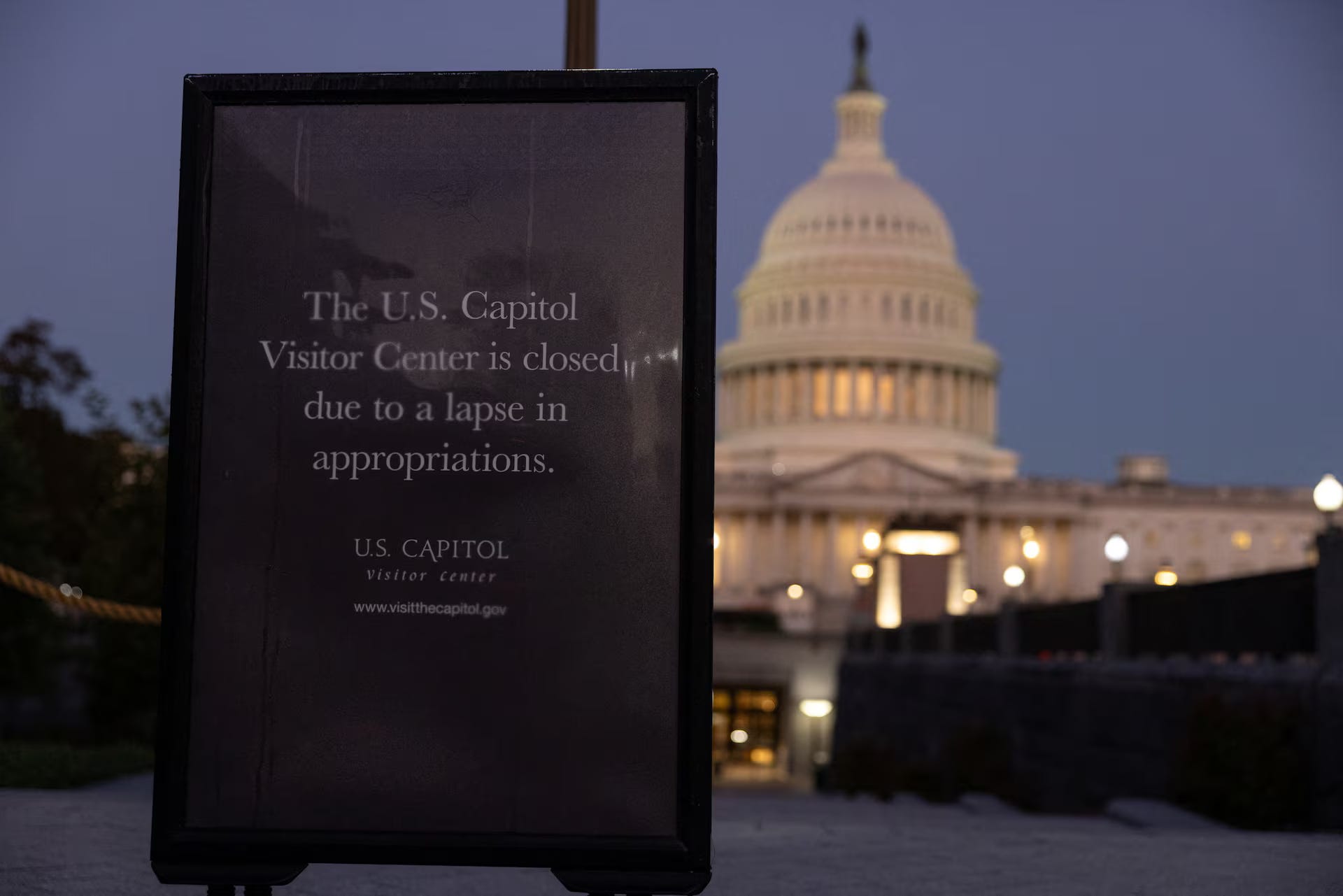
As the partial government shutdown hit its fifth day, White House officials made clear that pink slips are ready to fly if Democrats don’t cave. Kevin Hassett, director of the National Economic Council, told CNN that President Trump and budget chief Russell Vought are “lining things up and getting ready to act if they have to.” Translation: they’ve got the axe polished and waiting by the door.
Trump, never one to leave a threat hanging, casually told reporters later, “It’s taking place right now,” when asked about layoffs. No elaboration, no details—just a throwaway line about starting mass firings of government employees. The Office of Management and Budget, ground zero for Trump’s long-running crusade to shrink the federal workforce, offered radio silence.
Negotiations, meanwhile, are frozen in place like a deer in the headlights. Democrats want permanent health insurance subsidies and guarantees the White House won’t slash spending after any deal is struck. Republicans insist the government must reopen first. Senate Majority Leader John Thune summed up the GOP position bluntly: “It’s open up the government or else.”
Both chambers are set for yet another round of failed votes, with neither party budging. Rank-and-file senators are holding informal talks, but even they admit there’s no progress. “At this point, no,” said Democratic Senator Ruben Gallego when asked if a deal was closer. With Trump threatening layoffs and both sides digging in, the shutdown isn’t just a budget fight anymore—it’s a hostage situation with federal workers as leverage.
Source: Reuters
Editor: Nothing says “fiscal responsibility” quite like threatening to fire civil servants while refusing to negotiate in good faith. This is classic Trump brinkmanship: turn up the heat, then act like everyone else started the fire. Democrats are playing for policy; Trump’s playing for dominance. And the people caught in the crossfire? Federal employees who just want to pay their rent.
VA Disability System Overrun by Dubious Claims and Fraud Schemes, Costing Taxpayers Billions
America’s veterans disability system has become a gold mine for scammers, exaggerators, and opportunists—while legitimate claims get stuck in the muck.

A massive Washington Post investigation uncovered a ballooning flood of disability claims, many for minor ailments like eczema, hemorrhoids, and hay fever, costing billions annually and overwhelming the Department of Veterans Affairs. Meanwhile, veterans with devastating combat injuries face clogged backlogs and outdated rules that reward treatable conditions more generously than lost limbs. The result: a program designed for wartime amputees is now a bureaucratic jackpot for paperwork warriors.
The numbers are staggering. VA will spend $193 billion this year to compensate 6.9 million veterans. Claims for tinnitus have exploded twentyfold since 2001, reaching 3.3 million recipients. Sleep apnea claims have surged elevenfold, with payouts often exceeding those for amputees. Some veterans file claims for 20+ conditions, inflating their disability ratings to 100 percent—and the perks that come with it. As one former VA employee put it, “Our job was not to look for the truth, but to grant what we could.”
Fraud cases are increasingly brazen. One veteran pretended to be paraplegic, collected $244,000, then faked his death in a canoe to dodge investigators. Another claimed blindness for nearly three decades while holding a valid driver’s license. A bodybuilder faked frailty for $245,000 while posting gym selfies pressing 650 pounds. Even VA employees have joined in: some forged records for personal gain, while others ran bribery schemes to “grease the wheels” for stalled claims.
The system is ripe for exploitation because it still operates largely on the honor system. Regulations from the 1940s haven’t kept pace with modern medicine, and Congress has repeatedly lowered proof standards to avoid political fallout. “One inherent problem [VA] must contend with is that it operates on an honor system with its veterans,” Justice Department prosecutors wrote in a 2021 fraud case. Translation: if you can say it with a straight face, you might just get paid.
Source: WaPo
Editor: Let’s be clear: Veterans deserve every dime for legitimate service-connected injuries. But when someone fakes paralysis, flees in a canoe, and still beats the system for years, something’s rotten. VA’s disability program has morphed into a bloated piñata—except the candy is taxpayer money, and the blindfolded kids are politicians too scared to fix it.
OpenAI’s Mega-Deal with AMD Cranks Up the Heat on Nvidia’s AI Dominance
OpenAI just inked a multibillion-dollar chip deal with AMD that could reshape the entire AI hardware race.
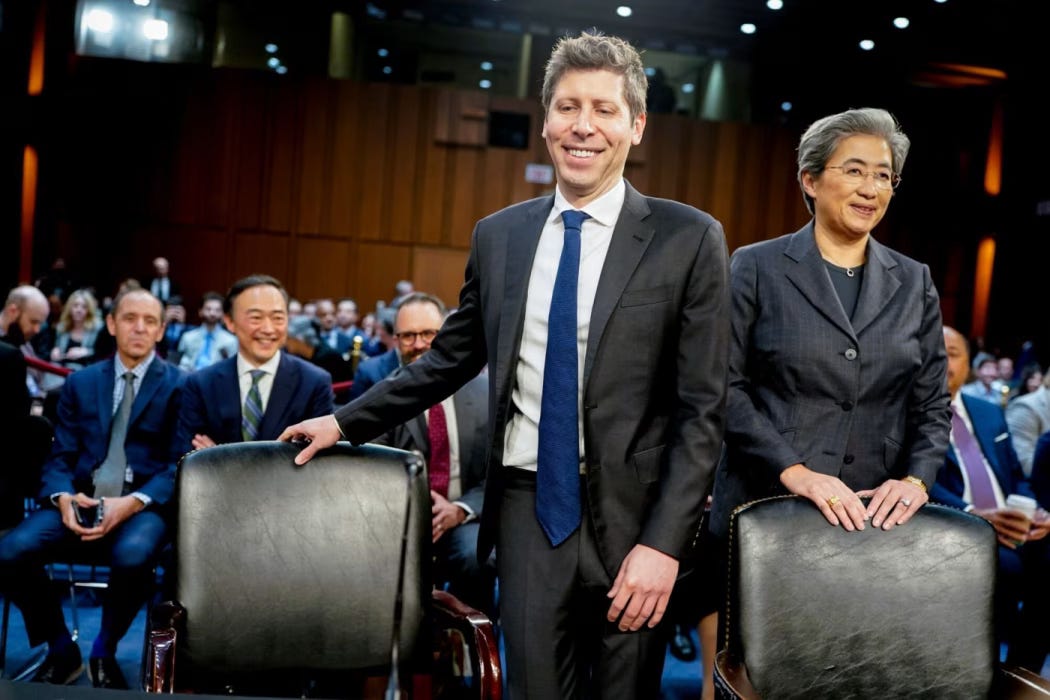
In a five-year pact, OpenAI agreed to buy 6 gigawatts’ worth of AMD’s upcoming MI450 chips, giving AMD a long-awaited shot at Nvidia’s iron grip on the AI chip market. The deal includes tens of billions in revenue for AMD and a sweetener for OpenAI: warrants for up to 160 million AMD shares at one cent apiece, if deployment milestones are met. Investors loved it—AMD stock opened 33% higher Monday morning.
For AMD, this is their biggest swing yet at Nvidia’s dominance. While AMD has long ruled the gaming and PC chip space, it’s struggled to break into the ultra-lucrative AI supercomputing sector. OpenAI plans to use the chips for inference—the grunt work that powers real-time AI interactions—and CEO Sam Altman made clear the urgency: “It’s hard to overstate how difficult it’s become to get enough computing power.”
The deal arrives as the entire AI industry goes on a historic spending spree that makes the railroad boom look frugal. OpenAI, Nvidia, Oracle, and others are racing to lock up trillions in chips, data centers, and power to feed insatiable demand. OpenAI alone is expected to spend $16 billion renting compute this year and potentially $400 billion by 2029, despite projected 2025 revenue of “only” $13 billion. Altman’s bet is simple: whoever controls the compute, controls the future of AI.
Nvidia isn’t retreating. It recently announced a $100 billion circular financing deal with OpenAI to deploy up to 10 gigawatts of Nvidia hardware, plus it’s launching its Vera Rubin chip next year—promising double the power of its Grace Blackwell line. But with AMD now tied tightly to OpenAI’s ambitions, the AI chip war just turned into a three-dimensional chess match played at trillion-dollar stakes.
Source: WSJ (gift article)
Editor: This isn’t just a chip deal; it’s Sam Altman buying compute like a doomsday prepper hoarding canned beans. AMD finally gets a seat at the grown-ups’ table, Nvidia gets a credible rival breathing down its neck, and the rest of the world gets to watch trillion-dollar tech giants play tug-of-war over the world’s GPU supply.
Hegseth Digs In: Pentagon Press Crackdown Isn’t Backing Down
Defense Secretary Pete Hegseth made it clear the Pentagon’s sweeping new press restrictions are here to stay, no matter how loud journalists complain.
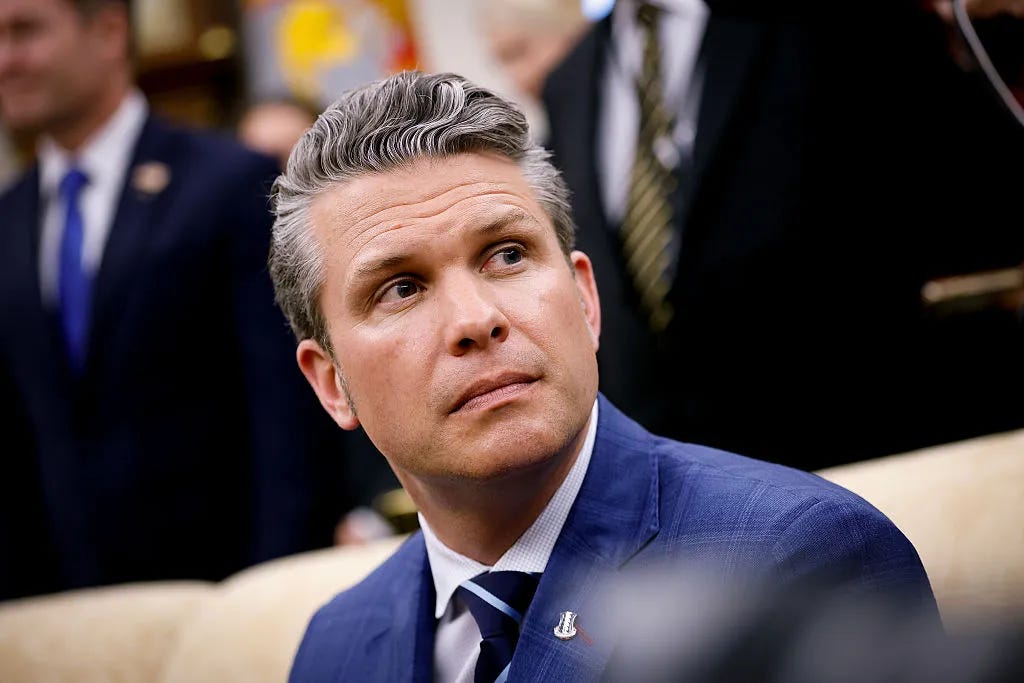
Appearing on Fox News Sunday, Hegseth dismissed backlash from reporters over new rules governing Pentagon access and information release. “The Pentagon press corps can squeal all they want, we’re taking these things seriously,” he said. “They can report, they just need to make sure they’re following rules.” His message was blunt: the Pentagon’s tightening the leash, and the press better get used to it.
Since Hegseth took office in January, the Pentagon has revamped its media policies and, in a symbolic power move, even moved to rename the Department of Defense as the “Department of War” (pending congressional approval). A September memo now requires credentialed reporters to sign agreements promising not to release any department information—even unclassified—without prior authorization. Reporters who cross the line risk losing their credentials for “unauthorized disclosure.”
The policy changes don’t stop at paperwork. In May, the Pentagon barred journalists from roaming large sections of the building without official escorts, a stark departure from previous norms. The September memo doubled down, mandating escorts for interviews or in-person engagements. Hegseth brushed off criticism, saying, “We’re setting clear rules at the Pentagon. We’re not playing games.”
Press freedom groups see something far darker. The Society of Professional Journalists blasted the new restrictions, calling them “the most egregious violation of press freedom under the First Amendment” and warning that this is part of “a disturbing pattern of growing government hostility toward transparency and democratic norms.” In other words: what starts as ‘common sense’ security often ends up as censorship in uniform.
Source: The Hill
Editor: Hegseth isn’t just tightening the screws—he’s building a whole new press cage. Calling it “common sense” doesn’t change the fact that these policies look a lot like pre-approval censorship dressed up as security. If the Pentagon wanted less scrutiny, mission accomplished. But if they wanted to project confidence and transparency, this is… not it.
Trump Pushes Israel-Hamas Ceasefire Plan as Hostage Deal Takes Center Stage
Under mounting pressure to end the Gaza war after two brutal years, Israel and Hamas are heading into high-stakes talks over President Trump’s sweeping new peace proposal.

Negotiators from both sides will meet Monday in Egypt, with U.S., Qatari, and Egyptian mediators working to hammer out a 20-point plan that could finally halt the fighting. The centerpiece of the deal involves a massive hostage-for-prisoner exchange and a phased Israeli military pullback inside Gaza. Secretary of State Marco Rubio told Fox News that Hamas has “agreed to the president’s hostage release framework,” but major sticking points remain.
The proposed exchange is significant: Hamas would release roughly 20 living hostages and the remains of about 25 others in return for 250 Palestinian prisoners serving life sentences and 1,700 Gazans detained during the war. Israel would also return 15 Gazan bodies for each hostage’s remains. The goal is to complete the exchange within 72 hours of approval, though experts warn that’s a logistical nightmare. Both sides still need to agree on which prisoners would walk free—a political minefield on its own.
Trump’s plan goes beyond prisoner swaps. It demands Hamas disarm and give up any future role in governing Gaza—two points the group has rejected in every prior negotiation. It also calls for Israel to reposition its troops inside Gaza, with Trump claiming on social media that Israel has already agreed to an initial withdrawal line. “When Hamas confirms, the Ceasefire will be IMMEDIATELY effective,” he declared, adding that the exchange and withdrawal would follow. Hamas, however, may try to redraw those lines, especially since Trump’s buffer proposal leaves Israeli troops deeper inside Gaza than earlier frameworks.
Political pressure is mounting on both sides. Netanyahu is caught between far-right coalition partners threatening to topple his government and the Israeli public demanding an end to the war. Hamas faces desperation from a war-weary population living in ruins after nearly two years of devastation. Trump has made it clear that if Hamas refuses the deal, Israel will get the green light to annihilate what remains of the group. Whether this is finally the deal that sticks or just another false dawn depends on whether both sides are more tired of war than they are addicted to winning.
Source: NYT
Editor: Only in Trump’s foreign policy world do you get a “20-point peace plan” that sounds more like a franchise operations manual than a ceasefire agreement. Both sides are exhausted, the stakes are massive, and the clock is ticking—but if history is any guide, negotiators will probably turn this into yet another round of blame ping-pong before anyone signs on the dotted line.