

Bondi’s Reckoning: Congress Grills Trump’s Enforcer as DOJ Burns
Pam Bondi walks into Congress today not as the nation’s top law enforcement officer, but as Trump’s political battering ram—and the Justice Department is paying the price.
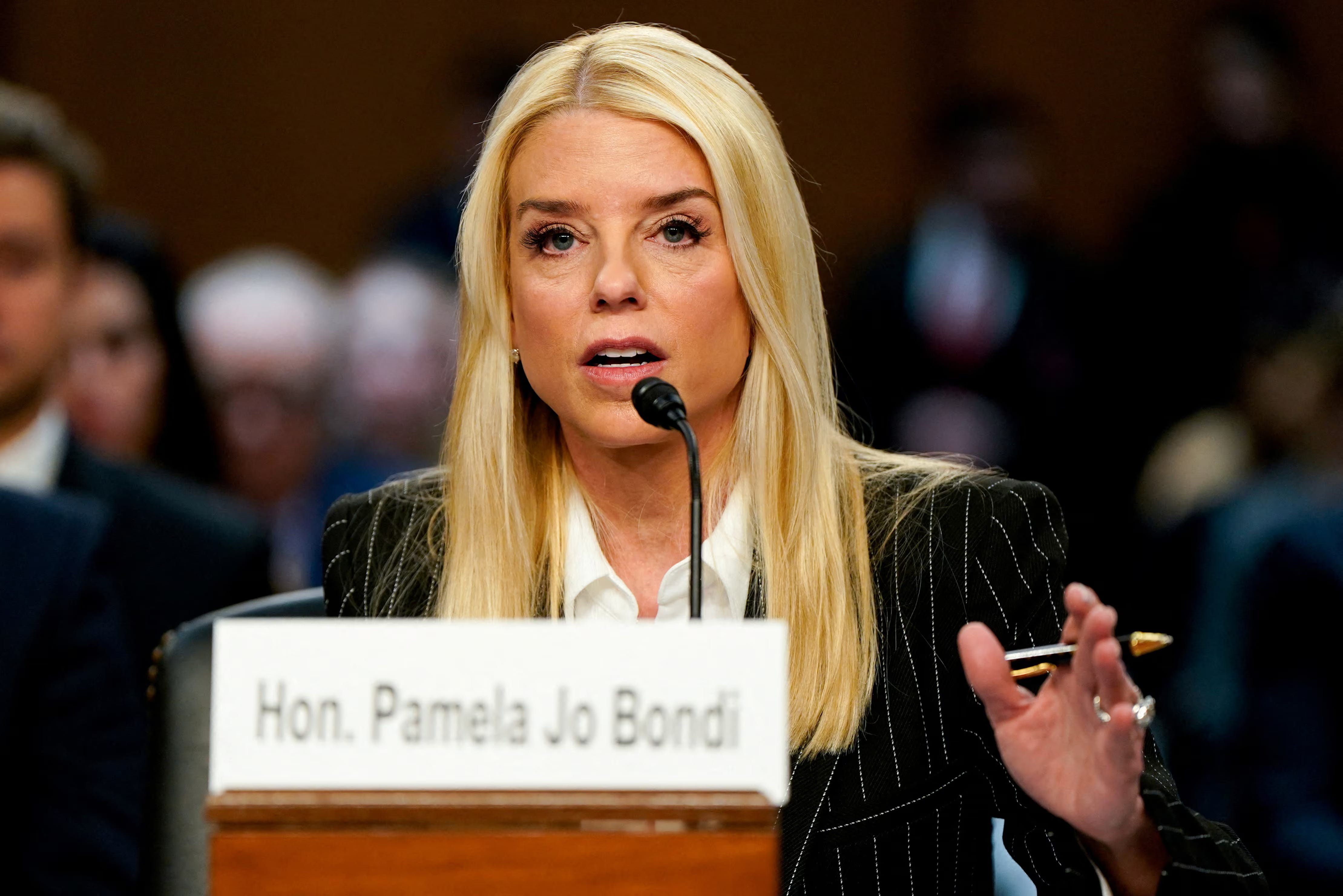
For eight chaotic months, Bondi has tossed out the rulebook in favor of Trump’s playbook, leaving the DOJ riddled with firings, investigations without basis, and a dangerous shift in priorities. Today’s oversight hearings give Congress a rare moment to expose how her Trump-first agenda has warped the Department’s mission to uphold the law, protect civil rights, and keep Americans safe.
Her record is a grab bag of power plays and institutional sabotage. Bondi oversaw the firing of senior FBI officials, greenlit baseless investigations, and even reportedly tipped off Trump that his name is in the Jeffrey Epstein files. She hired a pardoned Jan. 6 protester who threatened cops, redirected counterterrorism resources to immigration cases, and weaponized indictments—like the one against James Comey—over the objections of career DOJ staff.
This isn’t “law and order.” It’s political warfare in a DOJ blazer.
Bondi’s also been busy kneecapping regulatory efforts. She weakened the ATF, abandoned attempts to restrict rapid-fire gun devices, pursued a national voter roll scheme, rubber-stamped corporate mergers against expert advice, and reversed protections for journalists’ records. If there was a guardrail, she greased it. “I was the hunted and now I’m the hunter,” Trump bragged this summer. She’s clearly on the same hunt.
The historical parallels to Watergate aren’t subtle—they’re screaming. Nixon had internal guardrails: his AG resigned rather than break the law, and bipartisan leaders forced him out. Today, those guardrails are gone. Bondi eagerly carries out Trump’s agenda, congressional Republicans avert their gaze, and institutional independence is treated like a nuisance. The Justice Department’s “neutral zone” has been replaced by a partisan staging ground that would make Nixon grin from the grave.
And Congress? Democrats can’t force her hand, but they can frame the moment. By connecting Trump’s corruption to Republican enablement, they can remind voters that accountability used to be bipartisan. Graham and Cornyn once called out DOJ abuses under Bush; now they’re silent as Bondi shreds precedent. History will remember that silence. Oversight might not topple Bondi, but it can make the rot visible.
Source: My Daily Grind News
Editor: Bondi’s not just playing politics—she’s institutionalizing Trumpism inside the DOJ, one corrupt maneuver at a time. And the GOP’s role as her cheer squad is as glaring as it is cowardly.
Nothing says “banana republic” like turning the Justice Department into your personal hit squad while Congress politely clears its throat.
“Tower’s Closed, Good Luck”: Government Shutdown Brings Chaos to the Skies
A pilot ready for takeoff at Hollywood Burbank Airport radioed the tower—and was told it was closed. Welcome to air travel in a government shutdown.
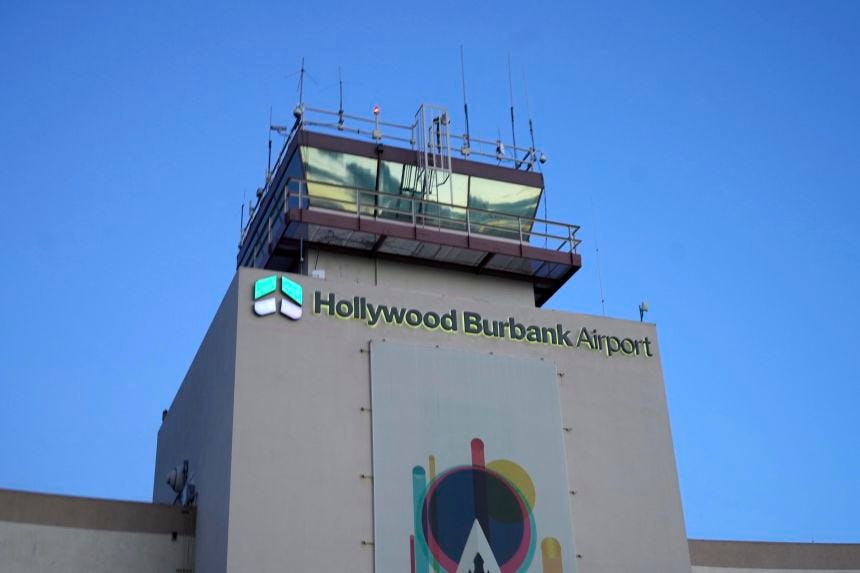
What should’ve been a routine exchange turned into a grim snapshot of how political dysfunction is rippling through America’s aviation system. The Burbank control tower was shuttered Monday due to staffing shortages, forcing pilots to self-coordinate like they were at a rural airstrip. Across the country, air traffic controller no-shows and unpaid shifts led to cascading delays at major hubs, stranding passengers and stressing an already stretched system.
Twelve FAA facilities reported staffing shortages Monday night, including towers in Phoenix, Denver, Newark, and Chicago. At Burbank, the tower shut down completely at 4:15 p.m., with delays pushing two and a half hours. Pilots were suddenly responsible for their own safety protocols. “Burbank traffic, this is Southwest 737 (flight) 2998 departing runway 15 at Burbank,” one pilot announced over the common frequency, hoping anyone else in the airspace was listening. This isn’t some sleepy landing strip in Iowa—it’s Burbank, Los Angeles County’s busy alternate airport.
Controllers are working without pay and, unsurprisingly, calling out sick more often. Transportation Secretary Sean Duffy spelled it out: “So now what they think about as they’re controlling our airspace is, ‘How am I going to pay my mortgage? How do I make my car payment?’ Do I think they’re more stressed right now in our towers? Yes. Is our airspace unsafe? No.”
Read that again.
That “no” is doing a lot of heavy lifting. The FAA is already throttling departures to keep things “safe,” a bureaucratic way of saying delays are about to get worse.
This isn’t just a short-term nuisance—it’s a structural failure years in the making. A 2023 aviation safety report warned that repeated shutdowns disrupt controller hiring, delay modernization, and choke infrastructure investment. With nearly 11,000 controllers already working brutal hours and a chronic staffing shortage, it doesn’t take much to push the system to the brink. A few sick calls here, a subsidy expiration there, and suddenly Alaska’s rural communities and major airline hubs are equally stranded.
The last time this happened—2019—it took just ten controllers calling in sick to end the shutdown after air travel ground to a halt. We’re heading down that road again. Only now, the system’s even more fragile, and the political class seems perfectly content to let aviation dangle while they posture on Capitol Hill. Air travel supports 5.2% of U.S. GDP, but sure, let’s gamble with that to score partisan points.
Source: CNN
Editor: Air traffic control isn’t some optional subscription service you can pause when Congress throws a tantrum. It’s the circulatory system of the economy. And right now, it’s running on fumes and unpaid labor.
Flying shouldn’t feel like a group project where everyone’s hoping the other guy remembered to check for incoming planes.
Stephen Miller’s Endgame: Crush the Left, Redefine Dissent as Terrorism
Stephen Miller is openly arguing that opposing Donald Trump’s agenda is equivalent to terrorism—and he wants to use the machinery of the state to stamp it out.

Over the weekend, Miller went on one of his trademark digital tirades, declaring on X that “there is a large and growing movement of leftwing terrorism in this country. It is well organized and funded. And it is shielded by far-left Democrat judges, prosecutors and attorneys general. The only remedy is to use legitimate state power to dismantle terrorism and terror networks.”
Translation: criticize Trump and suddenly you’re an enemy combatant. If you’re reading this, that means YOU.
The immediate trigger for Miller’s outburst was a court ruling blocking Trump’s attempt to federalize 200 National Guardsmen in Oregon. But the deeper story here is that Miller—Trump’s ideological attack dog and policy architect—has fully embraced a worldview that treats any institutional pushback as rebellion. In his and Trump’s universe, unfavorable rulings are treason, critical journalists are saboteurs, and Democrats aren’t a political party but, as Miller put it in August, “a domestic extremist organization.”
This is a long evolution for Miller, whose early political career revolved around a single obsessive issue: immigration. Over time, his nativism fused seamlessly with Trump’s authoritarian impulses, turning him into the de facto chief strategist of a second-term agenda built on weaponizing the state against enemies. Trump’s Oregon power grab is just one example. He’s used ICE as a blunt instrument, detained citizens without due process, sent masked agents to beat protesters, and justified it all with the flimsiest evidence—like someone posting a photo of an unmarked government vehicle online. Yes, that’s one of their “terrorism” examples.
The Miller-Trump formulation is simple: Trump alone embodies the will of the people, therefore any opposition to him is inherently illegitimate. Judges, lawmakers, activists, and ordinary citizens who resist are not opponents—they’re insurgents. Miller wrote, “This is an organized terrorist attack on the federal government and its officers, and the deployment of troops is an absolute necessity to defend our personnel, our laws, our government, public order and the Republic itself.” That’s not legal reasoning. That’s a wartime manifesto.
Miller’s real move isn’t reacting to violence; it’s manufacturing a pretext to justify crushing dissent. Charlie Kirk’s assassination was the spark for the first round of authoritarian rhetoric; now Miller’s pivoted to immigration protests as the excuse du jour. The violence doesn’t drive the crackdown—it merely decorates the press release. He’s not hiding it. He’s daring the country to accept it.
Source: The Atlantic
Editor: Miller’s laying down the ideological tracks for Trump’s second-term train—and it’s headed straight for the Constitution. He’s not ranting in a corner; he’s shaping federal policy. And the worst part? Half of Washington is acting like this is just more “Stephen being Stephen.”
When someone tells you they plan to use state power to crush their enemies, believe them. The terror they wish to wreak is the ONLY thing they don’t lie about.
Texting From the Sidelines: Trump’s Strange CNN Interview Fuels New Health Questions
Donald Trump just gave CNN an entire interview over text message—and it’s reigniting serious speculation about his health and stamina.
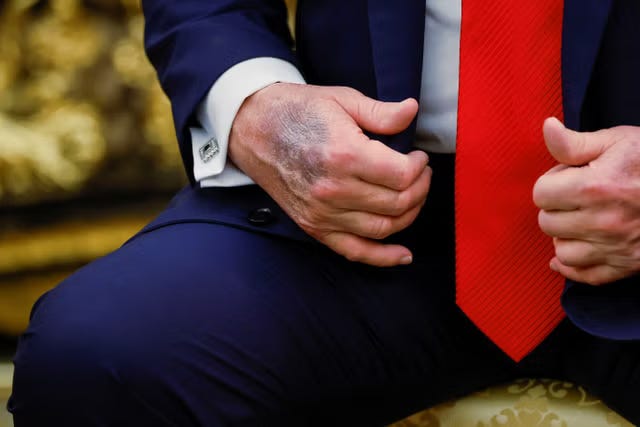
At 79, the president has already faced months of scrutiny over slurred speech, unexplained bruises, swelling in his ankles, and a noticeable reduction in public appearances. But this weekend’s written Q&A with CNN anchor Jake Tapper took the weird factor up a notch. Instead of a live call or on-camera segment, Trump responded to foreign policy and shutdown questions via what appeared to be personal text messages—an unusual move for a man who famously avoids written communications of any kind.
Tapper displayed the exchange during State of the Union, narrating Trump’s terse replies about the Middle East peace plan and the government shutdown. When asked what happens if Hamas tries to hold power in Gaza, Trump replied simply: “Total Obliteration.” On Senator Lindsey Graham’s skepticism of Hamas disarming, he wrote: “We will find out. Only time will tell!” And when asked how the shutdown ends, he offered: “Good, we are winning and cutting costs big time!” Tapper didn’t explain how the network verified that Trump himself authored the replies—not a minor detail when the entire interview hinges on text messages.
The format is especially eyebrow-raising given Trump’s history. He rarely texts, he hates email, and during his first term he openly complained when aides took notes in meetings. He’s also been far less visible lately, leaving most shutdown messaging to Vice President JD Vance. That’s a sharp contrast to his first term, when Trump couldn’t resist holding court before cameras at every opportunity. Now, he’s limiting appearances and relying on unconventional, controlled communication methods.
Medical questions have dogged Trump all summer. His doctor previously disclosed he has chronic venous insufficiency after reporters noticed his swollen ankles. Visible bruises on his hands have sparked theories of IV treatments, which the White House denies, blaming them on “vigorous handshakes.” Observers have also noted slurred speech and unsteady walking during recent events. He’s taken fewer unscripted questions and avoided press briefings altogether, which only fuels speculation that something more serious is being concealed.
Whether this text-only interview was a tactical choice to avoid tough questioning or a necessity due to health concerns, it’s undeniably odd. Presidents don’t usually outsource real-time dialogue to their thumbs unless there’s a reason. And right now, the White House is pretending there isn’t one.
Source: The Independent
Editor: If your communications strategy involves texting Jake Tapper like a teenager dodging a phone call, something’s off. Either Trump’s team is insulating him from scrutiny, or the boss just can’t keep up anymore. Neither is reassuring.
When the leader of the free world switches from podiums to iMessages, it’s not “innovative outreach.” It’s a red flag with read receipts.
Ghislaine Maxwell’s Legal Hail Mary Fails—But a Trump Pardon Could Be Her Wild Card
The Supreme Court just rejected Ghislaine Maxwell’s appeal, closing the legal door on her conviction—but leaving one last escape route: Donald Trump.
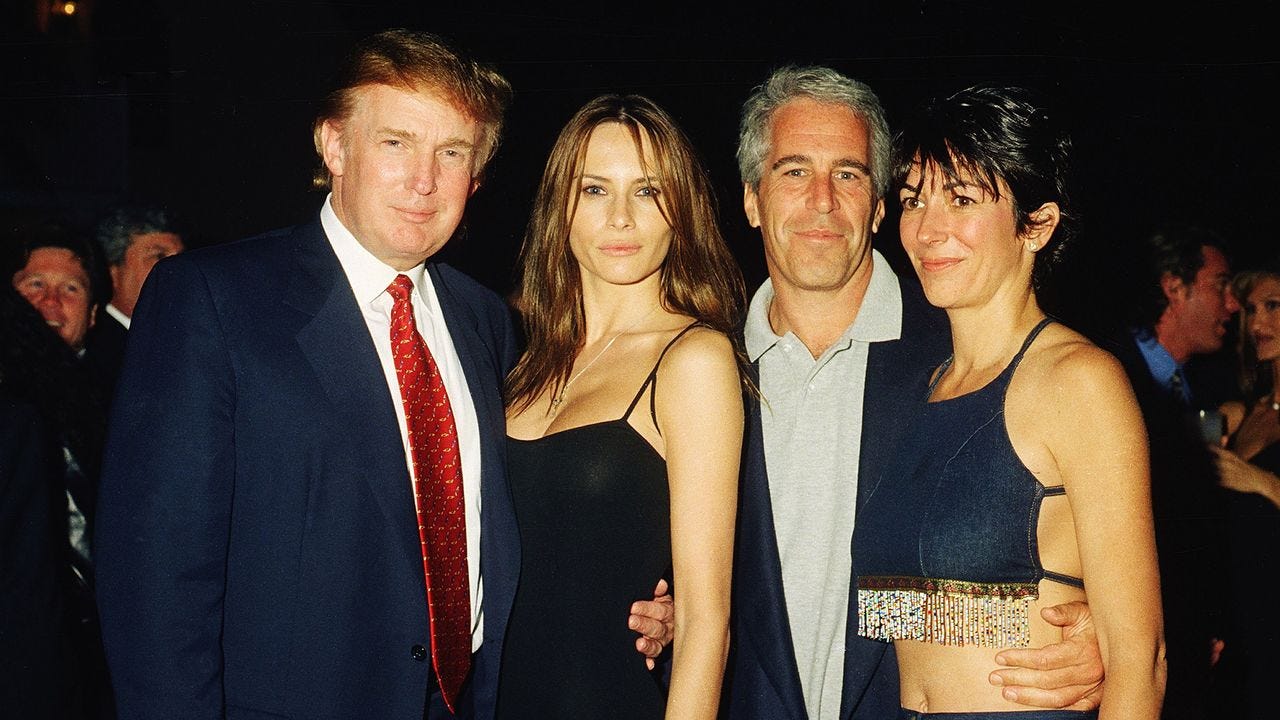
Maxwell, Epstein’s longtime accomplice and fixer, had pinned her hopes on a 2007 federal plea deal that shielded “potential co-conspirators” from prosecution. Her lawyers argued that the deal, made in Florida, should have protected her from later charges in New York. “The United States cannot promise immunity with one hand in Florida and prosecute with the other in New York,” her attorney David Oscar Markus argued. On Monday, the Supreme Court declined to hear her case, likely ending her judicial options.
At 63 and serving a 20-year sentence, Maxwell is now left with the kind of lifeline that doesn’t come from a courtroom—it comes from the Oval Office. Her decades-long social orbit overlaps heavily with Trump’s: their families mingled in New York high society, they appeared together at Mar-a-Lago, and Maxwell has publicly insisted she “never saw Trump do anything wrong.” Trump himself, when asked in 2020 about her arrest, said, “I just wish her well, frankly.” You don’t have to be a conspiracy theorist to connect those dots.
Trump’s comments after the Supreme Court ruling didn’t exactly close the door on a pardon, either. “I haven’t heard the name in so long,” he said. “I can say this, that I’d have to take a look at it.” He then added he would “speak to the DOJ,” noting that many people—including Diddy, for some reason—have asked him for pardons. And in his second term, Trump has been far more cavalier about wielding pardon power than before, a reality that should make a lot of people nervous.
Behind the scenes, Maxwell’s camp hasn’t been idle. Just days after DOJ lawyers urged the Court to reject her appeal, she met privately for two days in a Florida courthouse with Todd Blanche, Trump’s former hush money lawyer and now the No. 2 at the Justice Department. Shortly afterward, she was transferred to a lower-security prison in Texas. When tapes from that meeting surfaced, they featured Maxwell defending Trump and offering little else—promptly amplified by MAGA-friendly media.
For Maxwell-watchers, this is now less a legal drama than a political one. The appeal is dead, but the Trump factor is very much alive. Lady Victoria Hervey, a Mar-a-Lago regular and longtime Maxwell acquaintance, put it bluntly: “I think it’s highly possible” a pardon is in the works. Whether that’s wishful thinking or insider knowledge remains to be seen—but in Trump’s America, legal impossibilities have a funny way of becoming political favors.
Source: Vanity Fair
Editor: If you’re Ghislaine Maxwell and your best shot at freedom hinges on Trump’s mood swings and personal grudges, that’s not a legal strategy—that’s a Vegas bet. And frankly, the house usually wins.
When justice depends on whether the president “takes a look at it,” the system isn’t broken. It’s being pawned.
Wall Street Sounds the Alarm: Private Data Shows U.S. Job Growth Has Practically Flatlined
With the government shutdown freezing official jobs reports, Wall Street heavyweights are filling the void—and their numbers paint a grim picture.
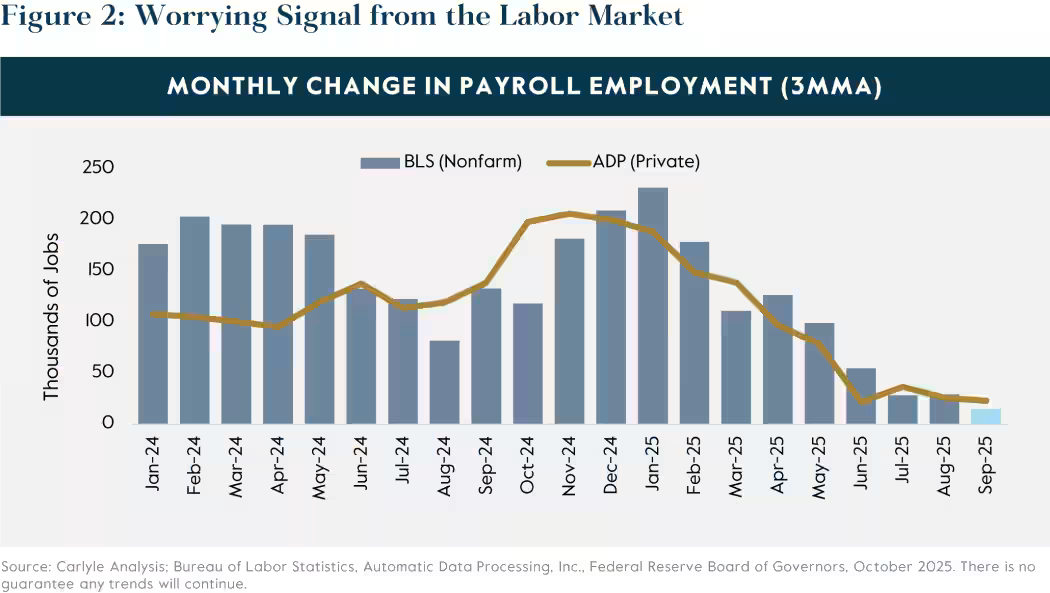
Private equity giant Carlyle estimates the U.S. economy is adding only about 15,000 jobs per month, a figure so anemic it’s basically a rounding error for a country of 330 million. Their analysis joins other private-sector estimates, including ADP’s claim that 32,000 jobs were actually lost last month and Revelio Labs’ rosier 60,000 gain. Without the usual Bureau of Labor Statistics data, everyone from traders to the Fed is squinting at proprietary spreadsheets to figure out what’s really happening.
Bank of America took its own crack at the numbers, estimating year-over-year payroll growth at just 0.5%. For context, the BLS figures in the three months before the shutdown had ranged between 0.85% and 0.97%—so yes, that’s a noticeable downshift. ADP leaned on its payroll processing empire, Revelio scraped LinkedIn postings, and Carlyle mined data from its portfolio companies. All of them use some form of benchmarking against BLS numbers, but those benchmarks are now stuck in limbo thanks to Washington’s self-inflicted paralysis.
The result? Markets are guessing in the dark. Traders are now betting on a quarter-point rate cut at the Fed’s Oct. 29 meeting, essentially daring Jerome Powell to act based on patchwork data. The 2-year Treasury yield dipped to 3.61%, while stock futures hovered near record highs. It’s a strange split-screen moment: a cooling jobs market colliding with an exuberant Wall Street, each side watching the other for clues.
The real danger here isn’t just the slowdown itself—it’s the uncertainty. When the official jobs data machine stalls, everything from monetary policy to investor sentiment turns into a high-stakes guessing game. Economists can model and hedge all they want, but without reliable government numbers, it’s like trying to navigate with a cracked compass.
Meanwhile, the Fed is flying blind at a critical juncture. A misread could mean cutting rates too aggressively into an inflationary environment, or waiting too long while the labor market quietly deteriorates. Either way, the data vacuum created by political brinkmanship is forcing some very expensive educated guesses.
Source: MarketWatch (gift article)
Editor: Only in America could the world’s largest economy decide to hit pause on its own economic dashboard midflight and then let private banks and hedge funds take over navigation. If this were a movie, the title would be Mission: Unemployable.