



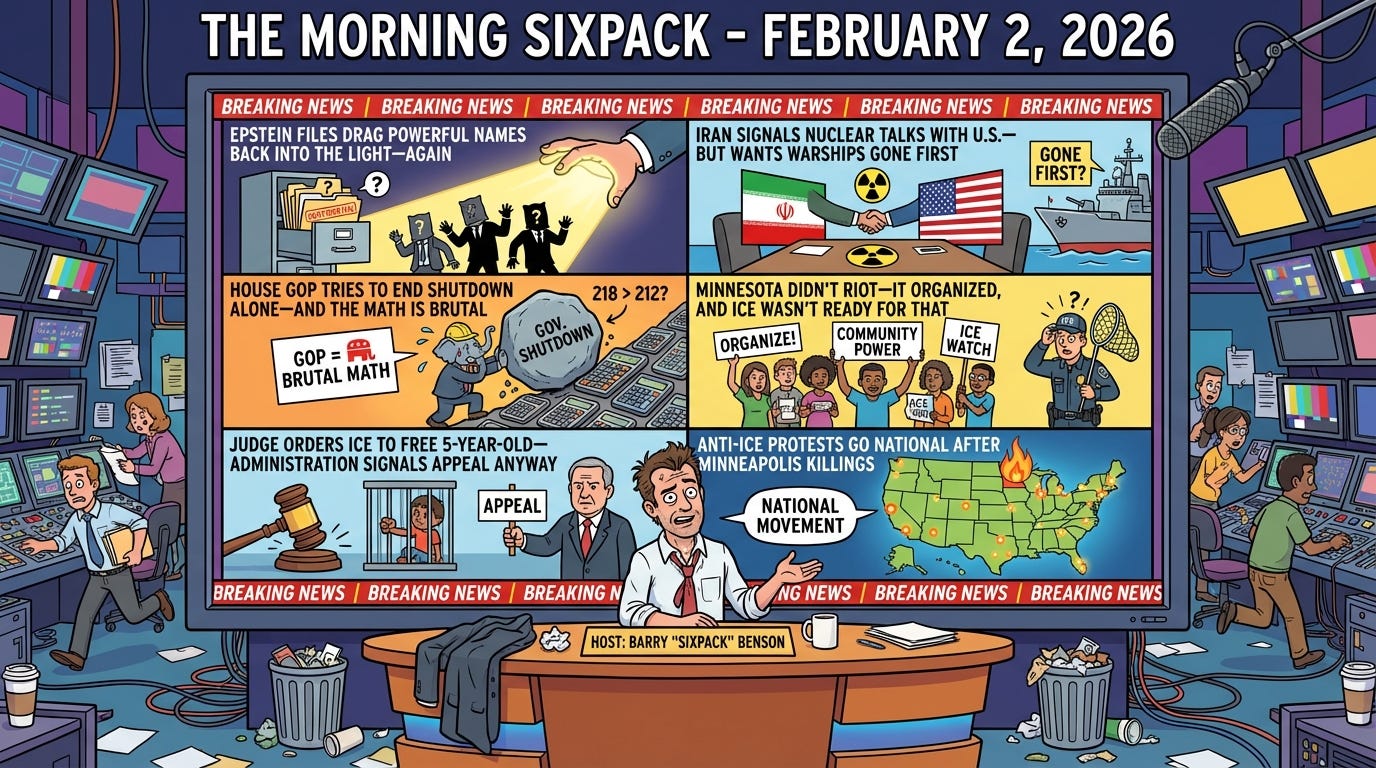
The Morning Sixpack Podcast: Power, Pressure, and Pushback
Washington tried to reset the narrative this week. The country didn’t cooperate. From elite scandal to street-level resistance, this episode connects the dots between power, accountability, and the people caught in between.
The Epstein files didn’t accuse anyone new—but they reminded everyone who kept answering the phone.
A Justice Department document release resurfaced a familiar list of presidents, billionaires, royalty, and power brokers who stayed connected to Jeffrey Epstein long after his reputation was toxic. No charges, plenty of denials—but the emails, photos, and access paint a portrait of how insulated influence really is.
House Republicans are trying to reopen the government solo, and the margin for error is basically zero.
With Democrats refusing to help without immigration guardrails, Speaker Mike Johnson is gambling that near-total GOP unity can end a shutdown. Hard-liners are making demands, the clock is ticking, and governing by math alone is proving brittle.
A judge ordered ICE to release a 5-year-old—and the administration is already hinting at an appeal.
Liam Conejo Ramos is home in Minnesota with his father after weeks in family detention, but the legal fight may continue. The case became a flashpoint over enforcement tactics, accountability, and how far the government is willing to go to make an example.
Iran says it’s open to nuclear talks—but only if U.S. warships back off first.
Backchannel diplomacy could restart in Turkey, with Tehran signaling flexibility on uranium in exchange for sanctions relief and de-escalation. Washington’s demands remain steep, and the standoff feels less like negotiation than a test of who blinks first.
Minnesota didn’t riot when ICE surged—it organized.
As federal agents flooded Minneapolis, residents responded with food networks, neighborhood patrols, and nonviolent observation. Two protesters were killed. The movement grew. And a core MAGA assumption—that fear would fracture the community—collapsed under what locals call simple neighborism.
Now that resistance has gone national, ICE protests are everywhere.
After the Minneapolis killings, coordinated demonstrations erupted across all 50 states. Walkouts, rallies, benefit concerts, and freezing marches sent a message: this isn’t a local flare-up—it’s a legitimacy crisis for how immigration enforcement is being carried out.
The throughline is impossible to miss. When institutions protect power instead of people, pressure doesn’t disappear—it multiplies. And this week, it showed up in courtrooms, on Capitol Hill, on the streets, and in the cold, refusing to go home.


